The B-29 Superfortress was not designed to be nice. It was a pressurized, four-engine behemoth built for one specific purpose: to carry 20,000 pounds of explosive steel to the Japanese mainland. It was one of the machines that ended World War II by turning cities into cinder blocks. It was serious about its job too, carrying eight .50-caliber machine guns in remote-controlled turrets, plus two more .50-cals joined by one 20mm cannon in the tail turret. Just the sound of it in the sky caused fear.
But over the deep, empty blue of the Pacific Ocean, this weapon of mass destruction accidentally started the Department of Defense’s longest-running humanitarian tradition. There was no directive for a photo-op given. There was no pitch meeting with colorful storyboard, no risk assessment, and certainly no 30-page “OPORD” from Washington. It happened because a bored aircrew, flying a warmachine with no war of its own, saw some people waving at them and decided to do something nice.
Related: 5 Military tech breakthroughs of 2025 that are straight out of science fiction
And, militarily speaking, they should have been grounded for it. However, we are all grateful they weren’t. Enjoy the story of some bored airmen who ended up supplying decades of smiles.
The Rogue Drop of 1952
Let’s set the scene: It’s Christmas 1952. The Korean War is raging to the north, but down in Guam, the 54th Weather Reconnaissance Squadron is flying boring, endless loops over Micronesia hunting for typhoons. You believe flying circles in a shaky aluminum tube all day sounds pretty great. People pay good money for this type of adventure. Well, you haven’t smelled the inside of a B-29 after a long flight. It smells like hydraulic fluid and a Brazilian butt lift.
The crew of the flight was cruising over the tiny atoll of Kapingamarangi, a speck of sand 3,500 miles southwest of Hawaii that makes “remote” look like Disneyland during tax return season. The island had no electricity, no running water, and we doubt Uber Eats. As the bomber roared overhead, the crew saw the islanders rushing out to the beach, waving at the lumbering, silver giant in the sky.
In a moment of impulse, or maybe they were all hypnotized by the constant drone of the engines, the pilot didn’t check with command. He never asks for permission. He just opened the bomb bay door and got to delivering holiday cheer.
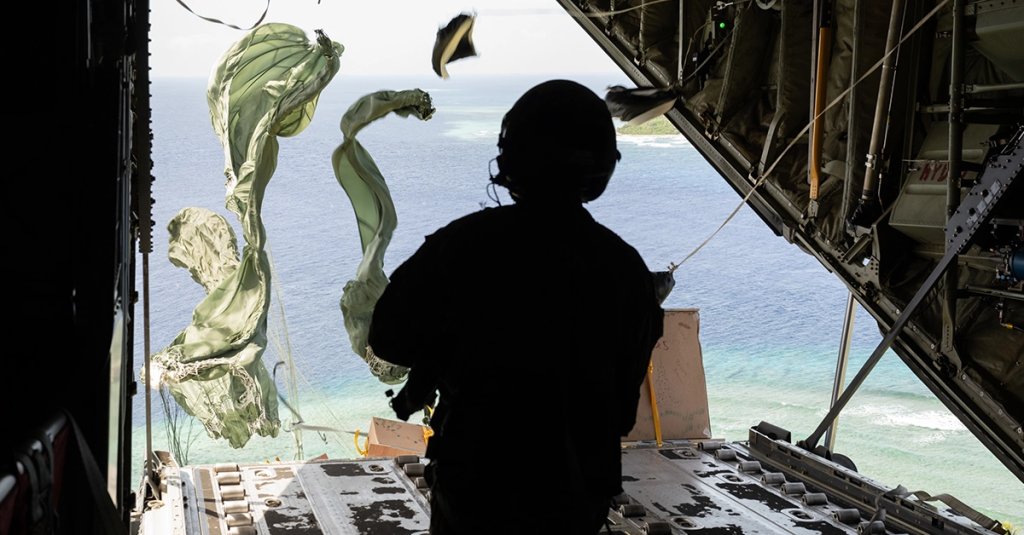
The crew gathered up whatever they had lying around, their own flight rations, a few items scavenged from the galley, and maybe a stray chocolate bar or two. They rigged the bundle to a parachute with a ripcord, possibly securing it with 100-mile-an-hour tape, to ensure its safe arrival, put on their best boots, then kicked it right out the open bomb bay.
They watched it softly drift down to the beach, in one piece. That unauthorized “bombing run” should have gotten them a stern talking-to involving the words “misappropriation of government property,” and “start doing pushups until my arms get tired.” Instead, it became the stuff of legend.
From Warfighter to Santa’s Sleigh
Word of the drop got back to Andersen Air Force Base, and this is where the story defies all military logic we’ve been accustomed to. Usually, when you throw government equipment out of a plane for funsies, you end up cleaning porta-potties with a bucket and string until you are dishonorably discharged. But instead of court-martialing the crew, the commanders looked at the PR potential and asked, “Hey, do you think we can do it again?”
By the following year, Operation Christmas Drop was officially launched. The same bombers that had firebombed Tokyo were now being loaded with school supplies, machetes, fishing nets, and toys. It is a perfect irony that defines the American military experience. We spend billions building the most advanced hardware on Earth: stealth bombers, hypersonic missiles, and drones that can see the dinner on your plate from orbit, but put a 22-year-old in the cockpit, and his first instinct when he sees kids on a beach is to figure out how to drop candy bars on them, without knocking them all unconscious.
Training Disguised as Charity
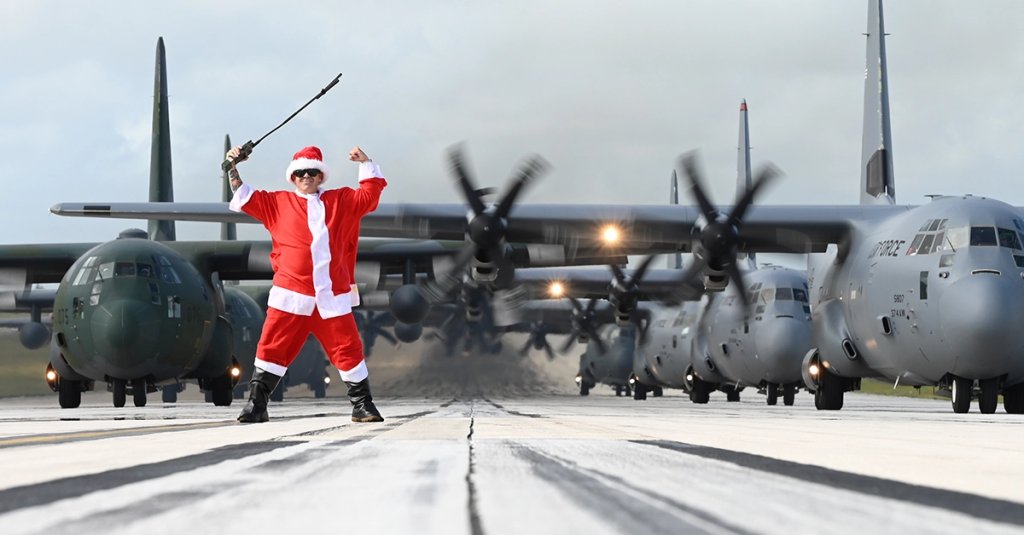
Fast forward to 2025. The B-29s are long gone, replaced by the C-130J Super Hercules, the workhorse of the sky that sounds like a lawnmower serenading a jet engine. As of Dec 10, 2025, the Air Force is conducting the 74th iteration of the drop. It has grown from a single rogue B-29 to a massive coalition operation involving Japan, Australia, and Canada.
Why does the brass keep funding it? This isn’t just for charity. It’s potentially the best training in the Pacific.
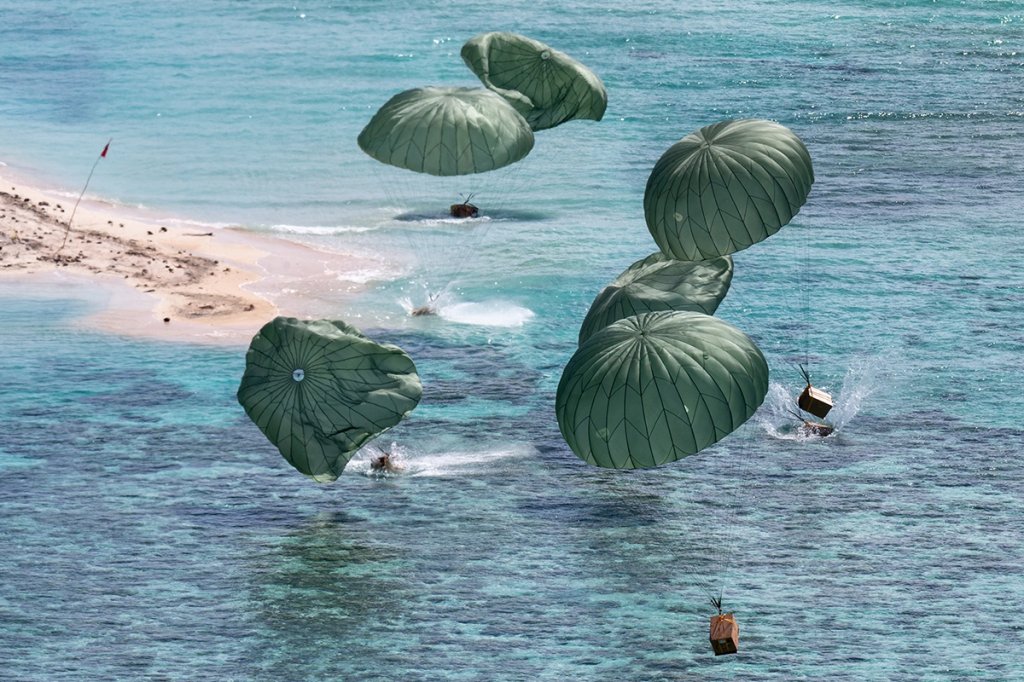
You think dropping a pallet of toys on a tiny island is easy, don’t you? Try doing it from 300 feet at 140 knots using Low-Altitude parachutes. If you miss the drop zone, the “package” goes into the ocean, and the sharks get to taste those crayons instead of little Timmy.
Another box this operation ticks off is on the military training checklist. Every box of supplies dropped on Micronesia is also a “live fire” exercise of sorts for a loadmaster. If they can hit a beach with a box of toys today, they can hit a Forward Operating Base with a crate of 7.62mm ammo tomorrow.
But this somehow sums up the beautiful contradiction that is the American servicemember. Trained for battle but instinctually ready to serve others. For the families in those remote areas, the engines of the American flying monstrosity aren’t a sound to fear; it’s the sound of Santa’s sleigh.
For the young crews in the back of the plane, sweating through their flight suits, tinnitus slowly taking over, and missing their own families back home, the moment the chute deploys, carrying the little these men had to offer, is a reminder of why they signed up; it makes the world around them feel right again. They did not join simply to be fighters; they joined to protect and, occasionally, to drop acts of kindness into the void.
So if you look up at the sky this December and see a gray cargo plane banking hard over the water, don’t worry. It’s just the Air Force practicing its aim, one toy at a time. Santa has his reindeer, but the Airlift Wing has turboprops and frankly, better navigation. While you are sitting silently in a bathroom, avoiding your holiday guests, please take the time to remember the others who were bored one day long ago, then accidentally created an annual tradition.