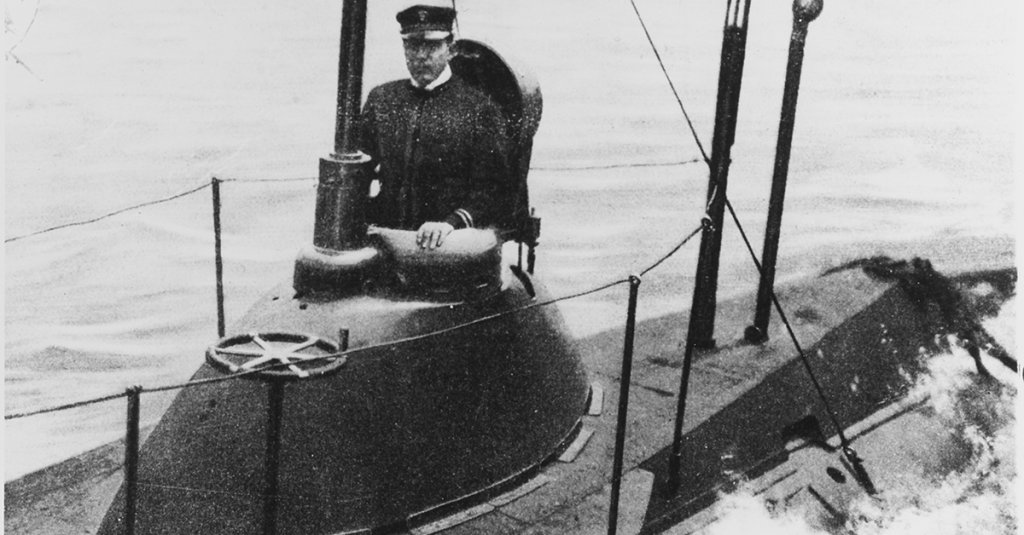
Theodore Roosevelt led the Rough Riders up San Juan Hill, survived an assassination attempt, and almost died while exploring the Amazon.
Roosevelt did what he wanted to do when he wanted to do it. And what he wanted to do on August 25, 1905, was to go underneath the surface of Long Island Sound in New York aboard the USS Plunger, one of the U.S. Navy’s first submarines.
Related: Teddy Roosevelt is the reason for military PT tests
It was a stormy day, but bad weather (or anything else, for that matter) rarely stopped the nation’s 26th president. Ignoring the Secret Service’s advice, Roosevelt surreptitiously rowed alone through the rain and wind toward the Plunger.
“TR was chomping at the bit to get out to her,” recalled Tweed Roosevelt, the president’s great-grandson and the family historian. “… The crew must have been rather startled, but they obeyed when TR ordered them to conduct a series of dives.”
Learning Through Trial and Error
Submarines were a new technology in the early 20th century.
While submarines date to the American Revolution, the Navy commissioned its first sub, the USS Holland, in 1900. The Plunger came along three years later. At the time, the U.S. military generally considered what subs it had as experimental vessels. Much of what it learned about them came through trial and error.
Unnecessary risks, such as demonstrating a submarine’s capability for a president, were best avoided. Catastrophic accidents were an everpresent concern, as the British and French learned in submarine tragedies earlier in 1905, according to a 2018 article from the U.S. Naval Institute.
Roosevelt was not swayed. The headstrong president’s cabinet previously talked him out of accompanying the Holland’s crew underwater. He wasn’t going to miss his second chance.
Putting on a Show
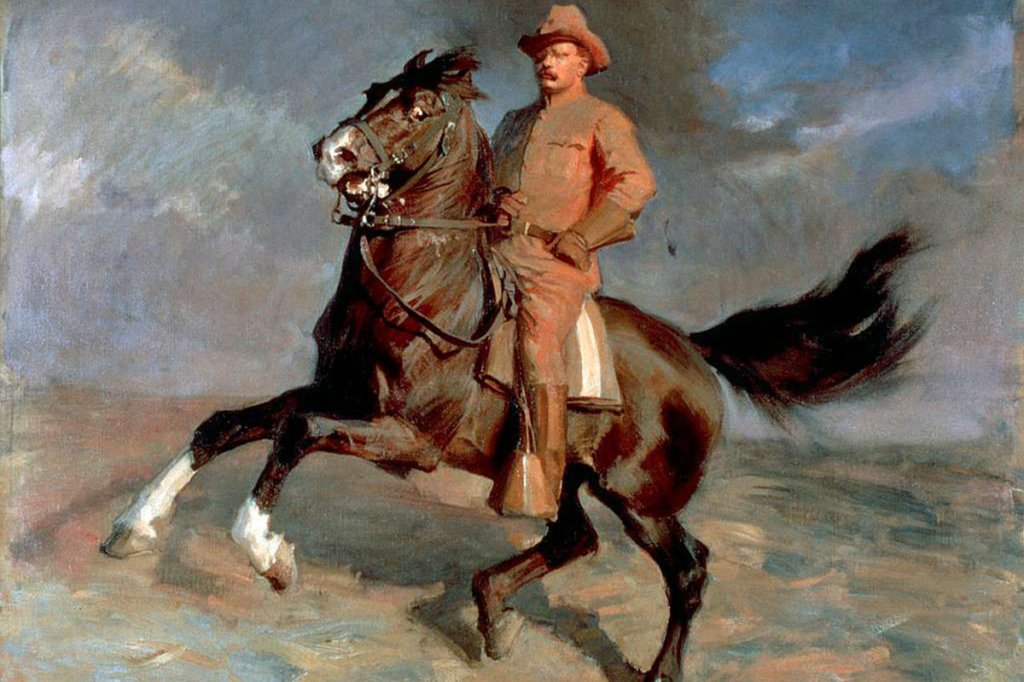
Inside the Plunger, Roosevelt served as both a participant and observer during the 2 hours, 40 minutes he was confined under the surface.
Not one simply to stand around, Roosevelt took the helm, operated various controls, and fired a “blank” torpedo, per the USNI article. What he witnessed amazed Roosevelt, and Lt. Charles P. Nelson, the Plunger’s commander, ensured he was entertained.
A follow-up newspaper article with the enticing headline “President Roosevelt under water three hours in Plunger” provided further details. The Plunger descended 40 feet to the bottom of Long Island Sound, remaining there for 30 minutes. It swiftly moved through the water while alternately going above and below the surface. The Plunger touched the bottom of the sound again, then emerged above water in a minute.
Finally, the article described how the Plunger went down 20 feet, turned off its lights, and showed Roosevelt how its nine-man crew worked on the boat completely shrouded in darkness.
“So Much Enjoyment in So Few Hours”

USS Plunger (SS-2): A Pioneering Submarine in U.S. Naval History
Once the demonstration was over, Roosevelt effusively praised the experience. “So much enjoyment in so few hours” made the day memorable, the former assistant secretary of the Navy enthused.
Despite his myriad adventures, Roosevelt had never experienced anything like it. No, it didn’t compare to the times he defied death while battling malaria or surviving a trolley car accident, but in its own way, the exhilaration he felt on the sub was unlike any of his other adventures (and misfortunes).
Speaking like the military veteran that he was, he considered it his role as commander in chief to show service members that he wouldn’t ask them to do anything he wasn’t willing to undertake himself.
He was not disappointed. Neither was at least one member of the Plunger’s crew.
“I would not want a better shipman than the president,” the unidentified machinist said. “He is a democratic sort. One more trip, and he would be ready to take any one of our places.”
A “Worse Than Absurd” Situation
Roosevelt was so moved by his time on the Plunger that he acted quickly on his personal experience.
A few days after his visit, Roosevelt wrote to Navy Secretary Charles P. Bonaparte, coincidentally the grand nephew of Napoleon Bonaparte, and urged a series of changes that would improve submariners’ lives. Roosevelt described a “worse than absurd” situation in which submariners were undertaking tremendous risks with little benefit in return.
“They received landsman pay, and in terms of seniority and promotion, they were in line after sea-duty sailors,” the USNI noted. “Officers had no quarters on board the submarine or ashore.”
Roosevelt outlined five ways in which enlisted submariners’ lives could be improved, and later in 1905, he signed an executive order that provided extra pay for enlisted sailors serving on submarine torpedo boats.
Fairly Compensating Submariners
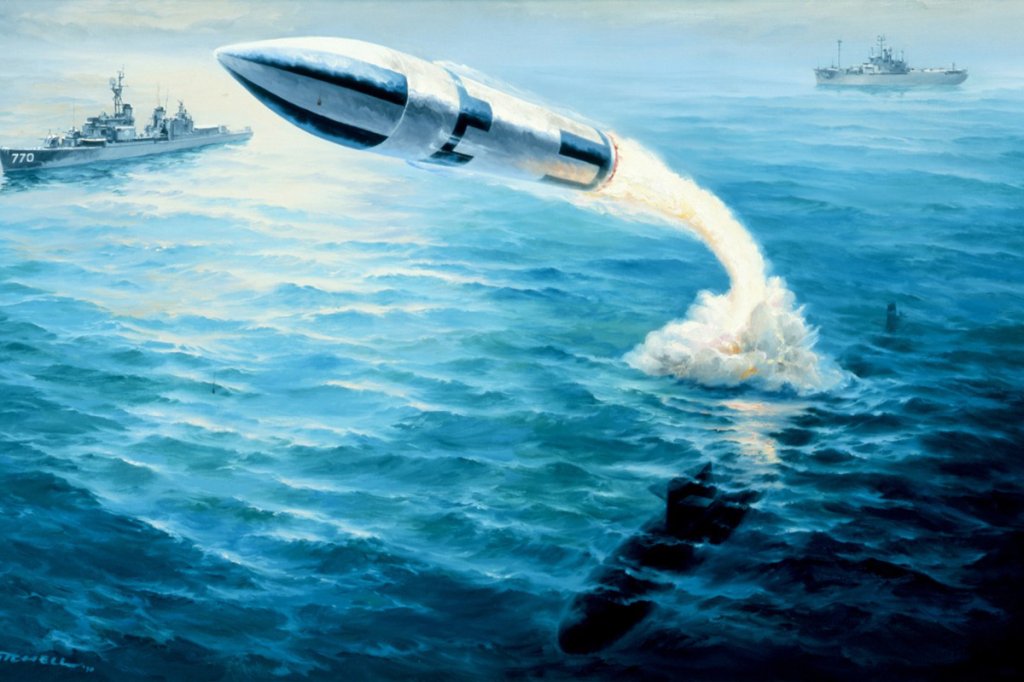
Roosevelt, who died in 1919 at the age of 60, never got to see the full potential of what submarines can do. He never got to watch the USS Theodore Roosevelt ballistic missile submarine, which was in service for 20 years before being decommissioned in 1981.
Submariners likely would have received hazardous duty pay at some point without Roosevelt’s direct knowledge of their plight, but he deserves credit for taking action. Because of his transformative visit to the Plunger, Roosevelt saw something clearly with his own eyes:
Submarine crews should be compensated fairly for the dangers they faced, and that needed to happen as soon as possible. Roosevelt, the ultimate man of action, saw that it did.