The Kalashnikov might be the most recognized rifle on Earth. It’s an icon on national flags, a tool for insurgents and freedom fighters, as well as the signature weapon of countless media personalities. It is a symbol of almost everything related to firearms, and that ubiquity has created a barrage of barracks-historian myths.
Related: This is how an AK-47 works
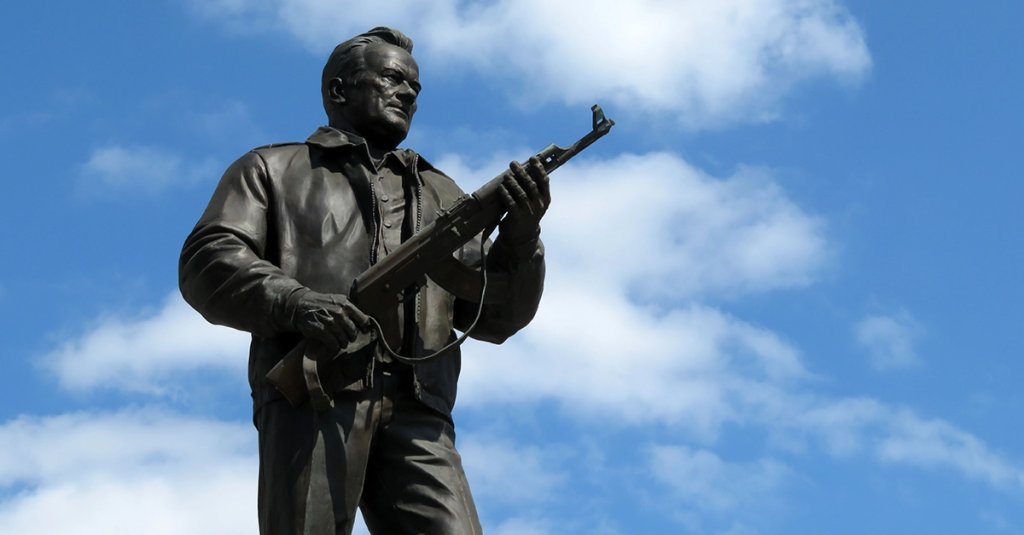
Most of what is known about the AK is a mismatch of half-truths, video game statistics, or a plot device. The rifle wasn’t born in a high-tech KGB lair. It was conceived in 1942 in a Soviet hospital by Sgt. Mikhail Kalashnikov, a 23-year-old tank commander recovering from his wounds. He wasn’t trying to build a sharpshooter’s dream; he was sketching a tool to save his fellow soldiers, one that wouldn’t quit while the enemy bore down on them.
The result was the Avtomat Kalashnikova model 1947. However, even that name isn’t entirely accurate. It’s time to hash out the myths and facts about the rifle we think is called the AK-47.
Myth: It’s a Copy of a Nazi Rifle
Time for the first rumor breakdown: The idea that the AK-47 is a direct copy of the German StG 44 is popular yet most likely false.
While the German rifle’s concept, an intermediate cartridge on a select-fire platform, was a clear influence, the guts of the weapons are mechanically different. The StG 44 uses a tilting bolt mechanism. Kalashnikov’s design uses a simple, brutally effective long-stroke gas piston and a rotating bolt, a system more akin to an M1 Garand.
Kalashnikov’s true innovation was radical internal simplicity and overt toughness, creating a rifle built like a bull, not a bunny.
Fact: Most People Have Never Seen a ‘Real’ AK-47

The name “AK-47” is a blanket term for a rifle most have never actually had their hands on. The original AK-47, adopted in 1949, was a heavy, unwieldy weapon with a milled steel receiver that was complex and expensive to produce.
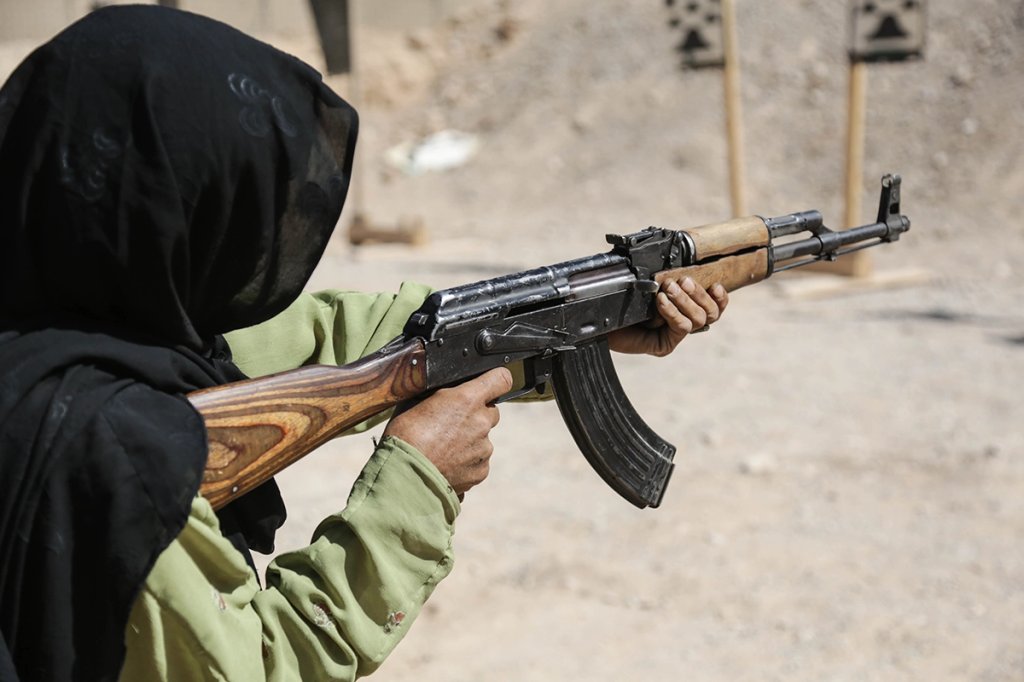
The rifle that truly armed the world, the one seen from Mali to Vietnam, is the AKM (Avtomat Kalashnikova Modernizirovanny). Introduced in 1959, the AKM used a stamped sheet-metal receiver, making it significantly lighter, cheaper, and, more importantly, faster to mass-produce.
That stamped receiver, the slanted muzzle brake, and the ribbed dust cover are the true hallmarks of the global Kalashnikov.
Myth: ‘Inaccurate’ Is a Design Flaw
Ask any prior deployed soldier, the AK is famously flagged for being inaccurate when compared to the M4/M16. This isn’t a flaw; it was a deliberate compromise.
Kalashnikov was crafting a weapon for a massive, conscript-heavy army. He decided to prioritize a relentless volume of fire over the ability to hit targets at distance; lessons he learned from his time in the field. The rifle’s loose tolerances, which are the very thing that cause it to shake, rattle, and shoot somewhat inaccurately, are also what allow it to cycle through a variety of obstacles.
It is “combat accurate” within 300 meters, which is where most Russian infantry engagements typically occurred. It was designed to go bang every single time, under conditions that would send other weapons to the armorer.
Fact: The Man Behind the Gun Was a Brand, Not a Tycoon
As a Soviet hero, Mikhail Kalashnikov received medals and state privileges, not royalties. The Stalin-era Soviet Union wasn’t particularly concerned with intellectual property law, and the design belonged to the state.
It was only after the fall of the Berlin Wall that Kalashnikov began to profit from his name, launching a brand of vodka and other items. The designer of the most successful rifle in history saw almost no profit from the estimated 100 million-plus units produced worldwide.
Fact: The Price Tag Is a National Panic Meter
The AKM is more than a weapon, though; it’s a financial instrument. The worldwide average cost is low, but its actual value serves as a barometer for social unrest.
When a nation is stable, an AK might be purchased for a few hundred dollars. When things are about to go bad, that price spikes. In 2024, reports from hotspots like Haiti and Sudan showed black market prices for ‘simple firearms’ had exploded; this tends to be a useful indicator that state control is failing and an uprising is imminent. A cheap Kalashnikov means stability; an expensive one usually means it’s time to stock up on rations.

Fact: The Best Kalashnikovs Might Be American Made
What will surprise some? The Kalashnikov is no longer just a foreign weapon. For decades, Soviet quality control was notoriously unreliable. Some rifles were near-perfect, while others were haphazard trash.
Today, due to import bans and sanctions, a stronger-than-expected industry of American-made AK-style rifles has emerged. Companies like Palmetto State Armory are producing rifles with modern, high-end manufacturing, accompanied by the added bonus of American quality control.
For the first time, the “enemy’s rifle” is a staple of the U.S. civilian market, and many would argue the American versions are built to a better, more consistent standard than many of their Cold War cousins.

Where are Saddam Hussein's golden weapons?
The AK-47’s legacy is not about being the ‘best’ rifle on earth; it’s about the soldiers using it having unwavering faith that it will fire. It isn’t the most accurate, the lightest, or the most advanced. Its legend was cemented by being the most dependable, a friend you can always count on when it feels like everything around you is hostile.
This rifle has even outlasted the country that built it. It’s also a story that is still being written, with both sides of the Russo-Ukrainian War utilizing various variants, ranging from Cold War-era AK-74s to the modern AK-12. There’s almost a poetic irony that the weapon platform designed solely to save their ancestors is now being used against their descendants.
It remains a symbol of conflict and revolution, a testament to function over finesse. Used throughout history to subjugate and to liberate; to tamp down dissent and to nurture the roots of uprising. The world is forever changed by one young man’s desire to give his countrymen peace of mind in times of unrest.