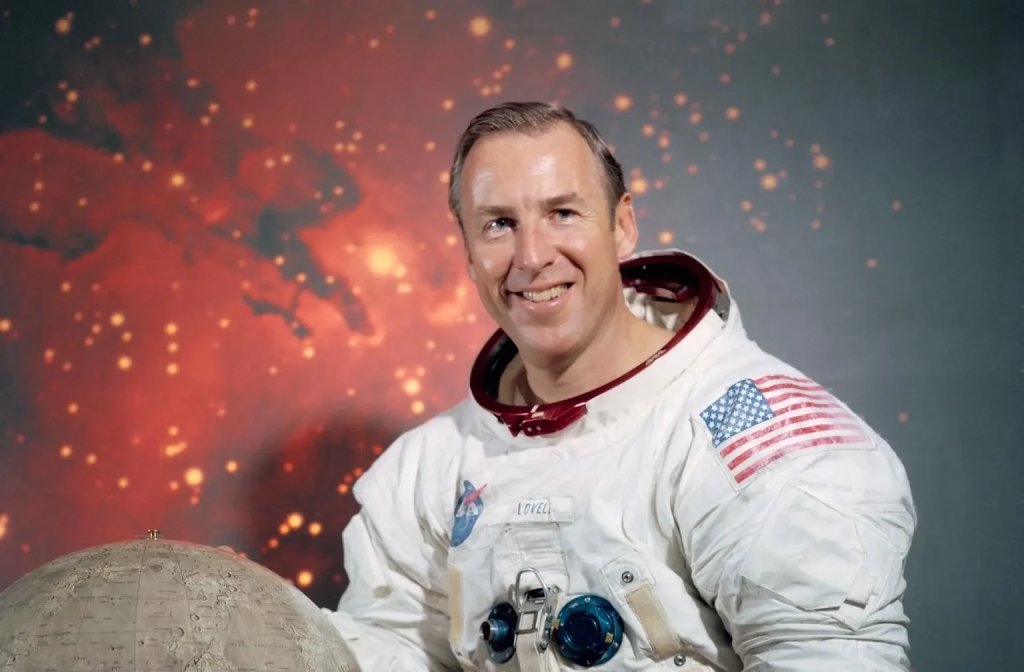
Navy Captain and NASA astronaut Jim Lovell is perhaps best known for uttering some of the most infamous words in the history of space travel: “Houston, we have a problem.” In addition to Apollo 13, the naval aviator flew on three other NASA spacecraft missions.
NASA announced Lovell’s passing on August 7, 2025, at the age of 97.
Growing up, Lovell developed an interest in rocketry and built flying models. Through the Navy’s Flying Midshipman program, he studied engineering at the University of Wisconsin between 1946 and 1948. When cutbacks were made to the program, Lovell applied to the U.S. Naval Academy and was admitted through the nomination of Wisconsin Congressman John Brophy. He graduated from Annapolis in 1952 and married his high school sweetheart, Marilyn, that same year.
Lovell attended flight training at Naval Air Station Pensacola, Florida, and earned his Wings of Gold in February 1954. He was assigned to Fleet Composite Squadron 3 (VC-3) in California, flying McDonnell Banshee night fighters from the USS Shangri-La. After his deployment, Lovell provided pilot transition training for the FJ-4 Fury, F3H Demon, and F8U Crusader fighter aircraft.
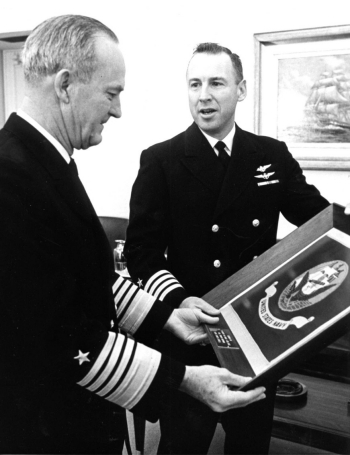
In January 1958, Lovell attended test pilot school at Naval Air Station Patuxent River, Maryland. In his class with fellow future astronauts Wally Schirra and Pete Conrad. Although he was the top graduate of the class, Lovell was assigned to radar tests instead of flight tests in an effort to spread talent across the Navy.
Lovell was selected as an astronaut candidate for Project Mercury later in 1958, but didn’t make the cut. The Weapons Systems Test Division at Patuxent River was established in 1960 through the consolidation of the Armament Test and Electronics Test divisions at Patuxent River 1960, and that was when Lovell became the program manager for the McDonnell Douglas F-4 Phantom II. The next year, he reported to Naval Air Station Oceana, Virginia, to serve as a flight instructor and safety engineering officer.
In 1962, Lovell was selected as part of the second group of NASA astronauts, known as the “Next Nine.” The Next Nine trained to fly on the Gemini and, ultimately, Apollo missions. In 1965, Lovell made his first spaceflight on Gemini VII and was part of the first rendezvous of two manned maneuverable spacecraft. The next year, Lovell made his second spaceflight on Gemini XII.
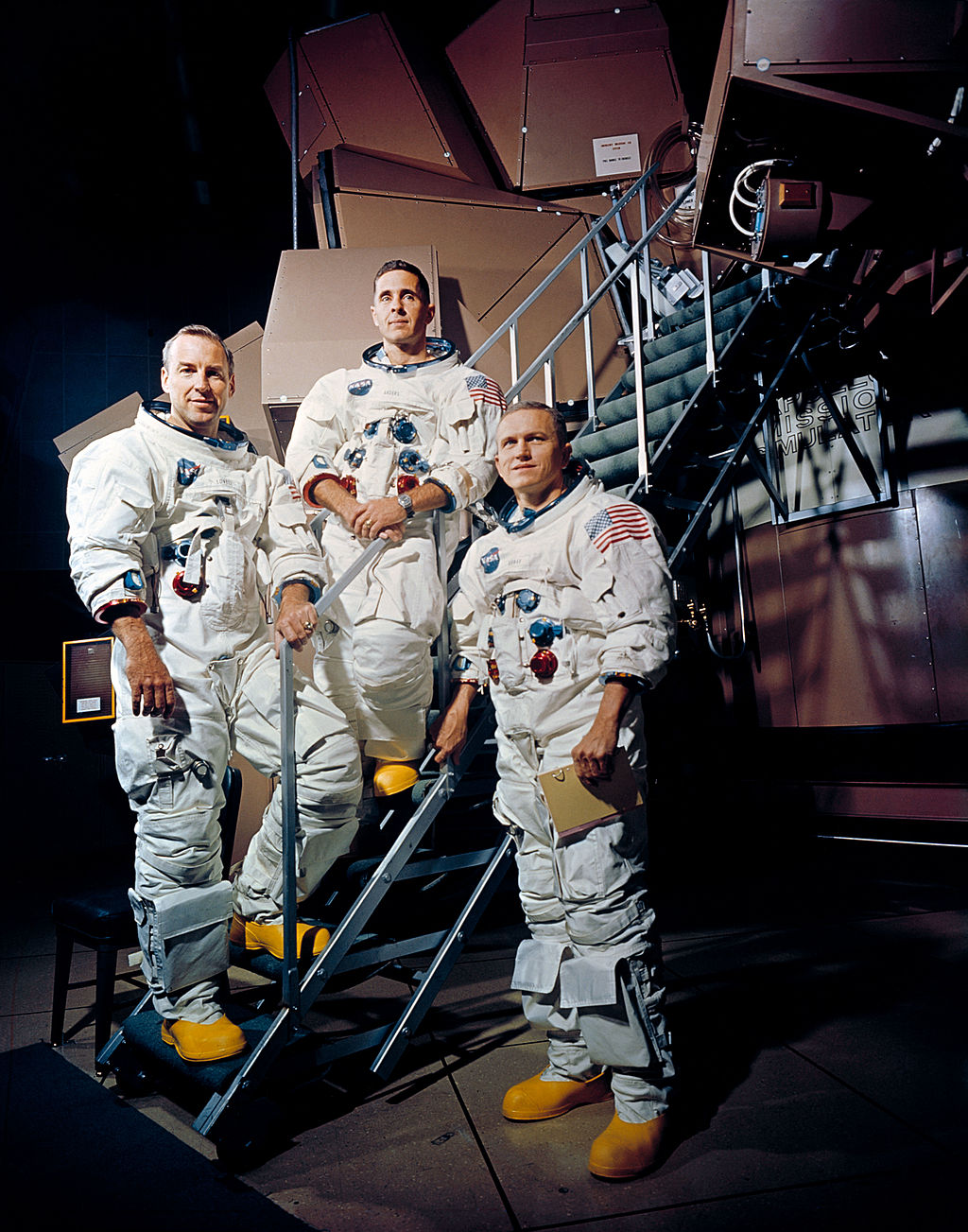
In 1968, Lovell flew aboard Apollo 8, the first spaceflight to leave the influence of Earth’s gravity, the first to use the Saturn V rocket, and the first to travel to the Moon. On Christmas Eve 1968, Lovell and his two crewmates read from the Book of Genesis during their broadcast back to Earth. The spacecraft lost contact with Earth when it orbited the far side of the Moon. When contact was reestablished, Lovell radioed, “Please be informed, there is a Santa Claus.”
Unfortunately, this cheery Christmas transmission is not the one for which Lovell is known.
Lovell’s most famous transmission is from the 1970 Apollo 13 mission, and is actually often misquoted. What he radioed from the damaged spacecraft was, “Houston, we’ve had a problem.” The harrowing story of Lovell and his crew is immortalized in the 1995 Ron Howard film “Apollo 13.”
The problem aboard Apollo 13 happened during a routine liquid oxygen tank stir, when a fire started in one of the tanks. With oxygen bleeding from the command and service Module Odyssey, Lovell and his men used the Apollo Lunar Module as a space lifeboat for power, oxygen, and propulsion. With the help of NASA engineers and astronauts on Earth, the crew calculated a return trajectory that was achieved through precisely timed engine burns and manual thruster adjustments.
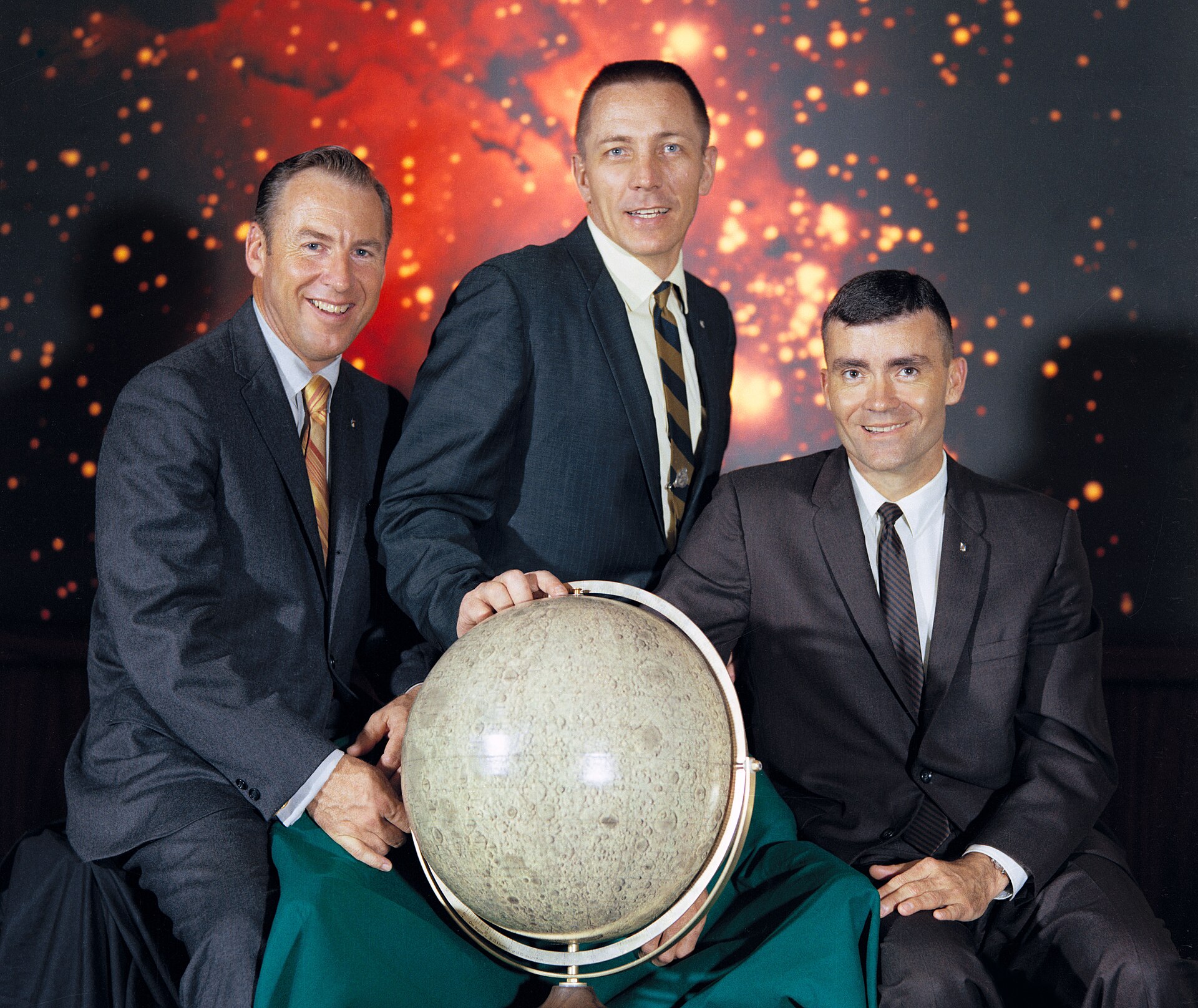
Six days after lifting off from Florida, Apollo 13 splashed down in the South Pacific Ocean on April 17, 1970. Lovell is one of only three men to have traveled to the Moon twice, and the only one who has not set foot on it. Between his Gemini and Apollo missions, Lovell racked up an incredible 715 hours and five minutes in space, a record that stood until Skylab 3 in 1973.
After retiring from the Navy and NASA, Lovell served as the CEO of the Bay-Houston Towing Company and President of Fisk Telephone Systems. His last job was executive vice president of the Centel Corporation in Chicago, Illinois, before he retired in 1991.
Marilyn died in 2023 at the age of 93. After Frank Borman’s death that same year, Lovell became the oldest living astronaut. His own death leaves 91-year-old Fred Haise as the last surviving crew member of Apollo 13. Lovell made 107 carrier deck landings and earned the Navy Distinguished Service Medal with gold star, Distinguished Flying Cross with gold star, Presidential Medal of Freedom, Congressional Space Medal of Honor, NASA Distinguished Service Medal, and the NASA Exceptional Service Medal with star.