
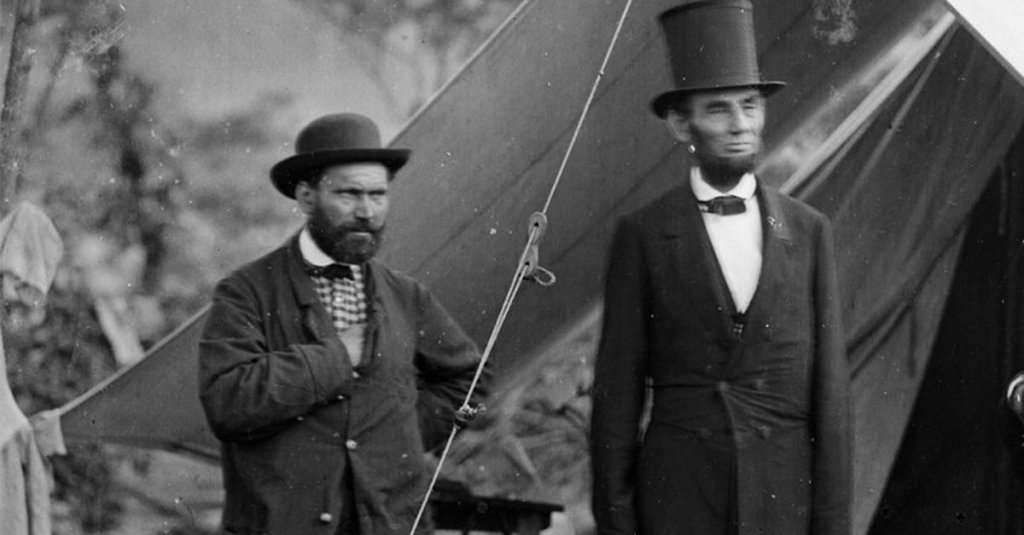
The story of the Pinkerton National Detective Agency is inseparable from the story of the modern United States. From safeguarding President-elect Abraham Lincoln to building one of the earliest organized intelligence networks during the Civil War and shaping the country’s frontier legends, the Pinkerton Agency played a consequential role in the American experience.
Its operatives protected the railroads that came to bind the country together, pursued criminals across the American West, and were central to the most violent labor conflicts of the industrial age.
Related: How this Civil War spy became a legendary lawman in the Wild West
As America marks 250 years of independence, the unblinking eye of Pinkerton reminds us that the United States—right or wrong—often used institutions operating in the gray area between public authority and private initiative to maintain order.
A Private Detective Empire
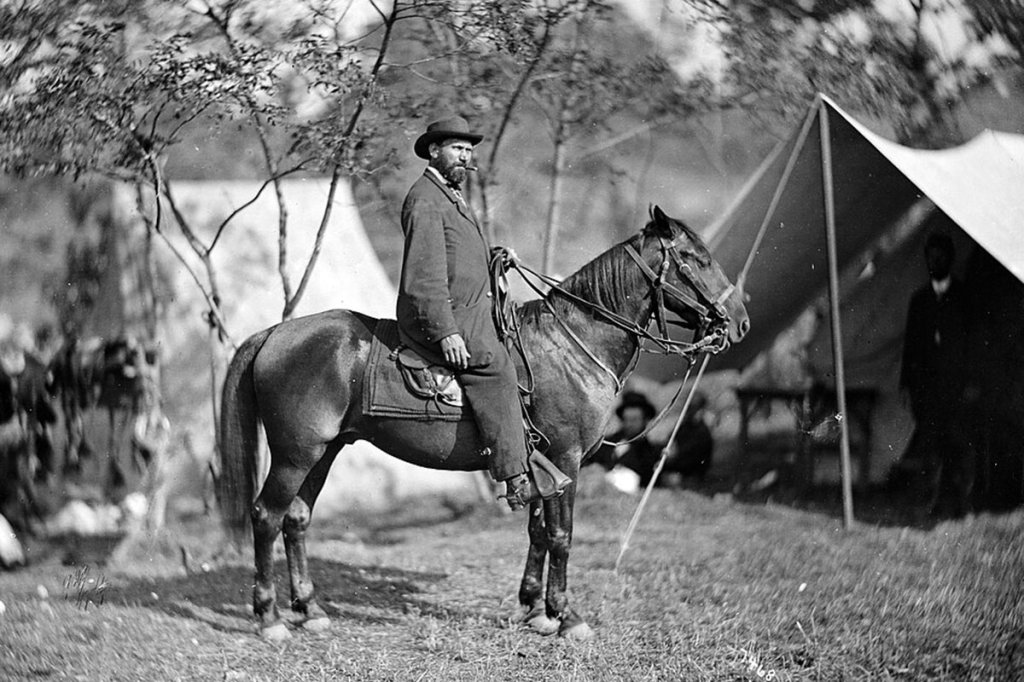
Scottish immigrant Allan Pinkerton founded what became the most powerful and controversial private law enforcement organization in American history.
Established in Chicago when the United States was still surging westward and drifting into civil war, the Pinkerton National Detective Agency began as a small investigative firm focused on railroad security.
Within a decade, it was entrusted with protecting a president. Within a generation, it functioned as a private intelligence service, a national crime-fighting bureau, and a paramilitary force for defending industrial capital.
Its founder immigrated to the U.S. in 1842, fleeing political unrest in Scotland. Trained as a cooper, he settled near Chicago, a rapidly growing frontier city shaped by commerce and ambition.
An ardent abolitionist, Pinkerton’s moral convictions shaped his worldview. His entry into investigative work came almost by accident, when he uncovered a local counterfeiting ring. His success in exposing the operation drew the attention of local officials, leading to a formal appointment as a detective.
In 1850, Pinkerton established his own agency. The timing proved decisive.
Building a Reputation for Efficiency
An explosive expansion of railroads during the mid-19th century transformed the country’s economy. Rail lines connected markets, transported settlers west, and carried sums of money, gold, and government securities across vast stretches of lightly policed territory.
All were ripe for theft, sabotage, and embezzlement. Railroad executives needed security that was organized, mobile, and dependable, and Pinkerton provided it.
From its inception, the agency emphasized discipline and professionalism. Agents were salaried rather than paid per arrest, reducing incentives for corruption. Pinkerton imposed strict behavioral codes, prohibiting drinking on duty and demanding meticulous reporting.
At a time when many local law enforcement offices were loosely structured and politically entangled, Pinkerton offered something new: centralized coordination.
Perhaps his most lasting innovation was record-keeping. The agency compiled detailed files containing photographs, physical descriptions, aliases, criminal histories, and known associates. These records created one of the earliest centralized criminal databases in the United States.
In an era before federal investigative bodies existed, Pinkerton’s information network allowed agents to track suspects across state lines with unprecedented efficiency. When the Civil War began, the Pinkerton name was synonymous with reliability, discretion, and relentless pursuit.
Pinkerton’s reputation was soon tested.
The Baltimore Plot
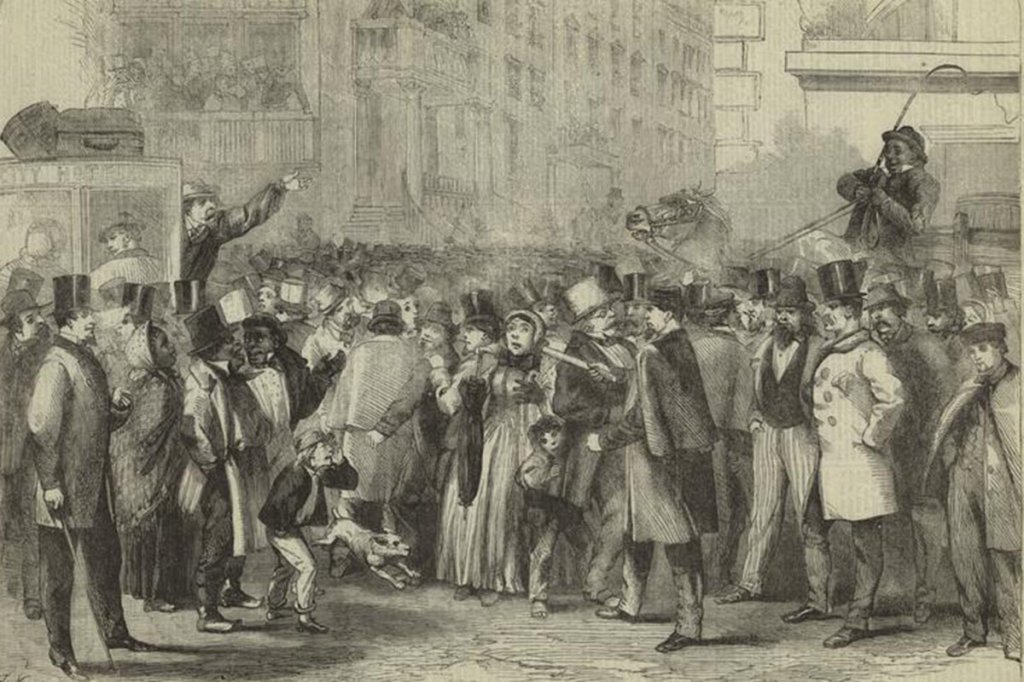
In early 1861, President-elect Abraham Lincoln began his journey by rail from Illinois to Washington, D.C., for his inauguration. The political climate was combustible. Several southern states had already seceded from the Union, and violence simmered beneath public ceremonies.
Rumors flew about a possible attack on Lincoln during a scheduled stop in Baltimore, a city filled with Confederate sympathizers. Railroad officials sought Pinkerton’s assistance, and the agency dispatched operatives to investigate the rumors.
Among those agents was Kate Warne, America’s first professional female detective. Warne’s social access proved invaluable. Posing as a rebel sympathizer, she attended gatherings and cultivated relationships that allowed her to gather intelligence that might have been inaccessible to male operatives.
Pinkerton’s team uncovered a coordinated plan to attack Lincoln during his transfer between rail stations in Baltimore, and so it advised altering the president-elect’s travel plans. Lincoln, initially skeptical of secrecy that might appear cowardly, ultimately agreed.
Disguised and traveling under the cover of darkness, Lincoln passed quietly through the city and arrived safely in Washington.
Historians continue to debate the extent of the conspiracy and whether the threat was as imminent as Pinkerton believed. What is beyond dispute is the political consequence. Pinkerton intervened at a moment when the survival of the Union depended heavily on Lincoln and his leadership.
Civil War Intelligence
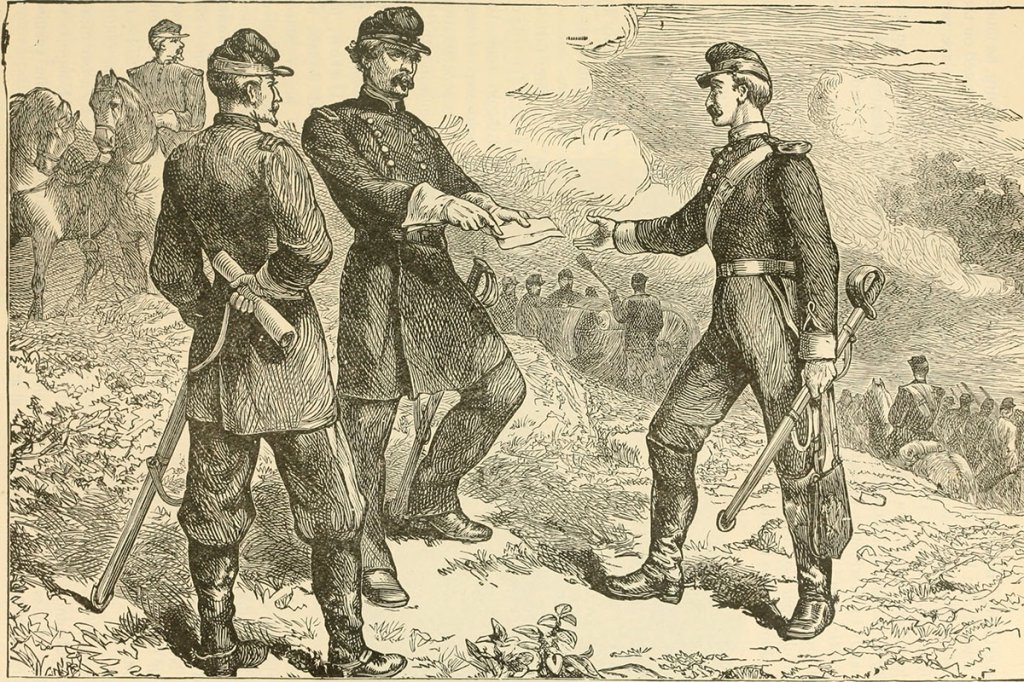
With the war underway, Pinkerton transitioned from private investigator to intelligence chief. Serving under Union Gen. George B. McClellan, Pinkerton organized and directed intelligence operations for the Army of the Potomac.
Operating under the alias Maj. E.J. Allen, he coordinated field agents who crossed into rebel territory to gather information on troop strength, fortifications, supply lines, and political developments. Agents conducted prisoner interrogations, analyzed captured documents, and submitted structured reports to the Union.
In many respects, Pinkerton’s organization was one of the earliest systematic intelligence services in American military history. He introduced standardized field reporting procedures and emphasized counterintelligence measures designed to detect enemy spies. But it was not without controversy.
Pinkerton’s estimates of Confederate troop strength frequently exceeded reality, sometimes dramatically. These inflated numbers reinforced McClellan’s cautious approach, contributing to delays and missed opportunities. Critics later argued that overly conservative intelligence assessments hindered Union offensives.
The Civil War demonstrated the need for organized intelligence at the national level. It also produced a generation of men trained in reconnaissance, logistics, and disciplined operations. After the war, many found new purpose in Pinkerton’s peacetime operations.
Veterans in the Ranks
After the Civil War ended, hundreds of thousands of Union veterans returned home to uncertain futures. Civilian life often felt unstructured after years of regimented service. Pinkerton recognized opportunity and responsibility.
He actively sought veterans whose skills translated into investigative and security work. Cavalrymen used to long-distance pursuit proved adept at tracking fugitives across rugged terrain. Infantry veterans understood coordinated movement, chain-of-command discipline, and defensive positioning.
Within the agency, veterans found familiarity, clear hierarchies, mission-focused operations, and camaraderie forged through shared hardship. Pinkerton’s internal culture mirrored military structure. Teams were deployed strategically. Reports moved up defined chains of authority. Accountability was enforced.
The veterans reshaped the agency. Pinkertons were not merely investigators armed with notebooks and warrants. Many were seasoned soldiers prepared for confrontation. The line between detective work and paramilitary deployment grew increasingly thin.
As the nation expanded, formal law enforcement often lagged behind settlement. Vast territories lacked centralized policing. Train robberies, stagecoach holdups, payroll thefts, and organized banditry threatened economic growth.
Pinkerton agents filled the vacuum, building a reputation for relentless pursuit. Operating across state and territorial lines, they bypassed jurisdictional limitations that constrained the local law. Centralized records allowed suspects identified in one region to be tracked elsewhere. Coordinated pursuit across hundreds of miles became possible.
Pinkerton operatives became fixtures in the national imagination as they pursued criminal syndicates and train robbers. But as the frontier gradually closed and America industrialized, the agency’s focus shifted from outlaw bands to organized labor—a shift that diminished its glamour.
Corporations increasingly hired Pinkerton agents to protect facilities during strikes. The agency infiltrated unions, gathered intelligence on its leaders, and supplied armed guards when tensions escalated. To many laborers, Pinkerton agents were less like neutral investigators and more like instruments of corporate power.
The conflict reached a boiling point in 1892.
The Homestead Strike
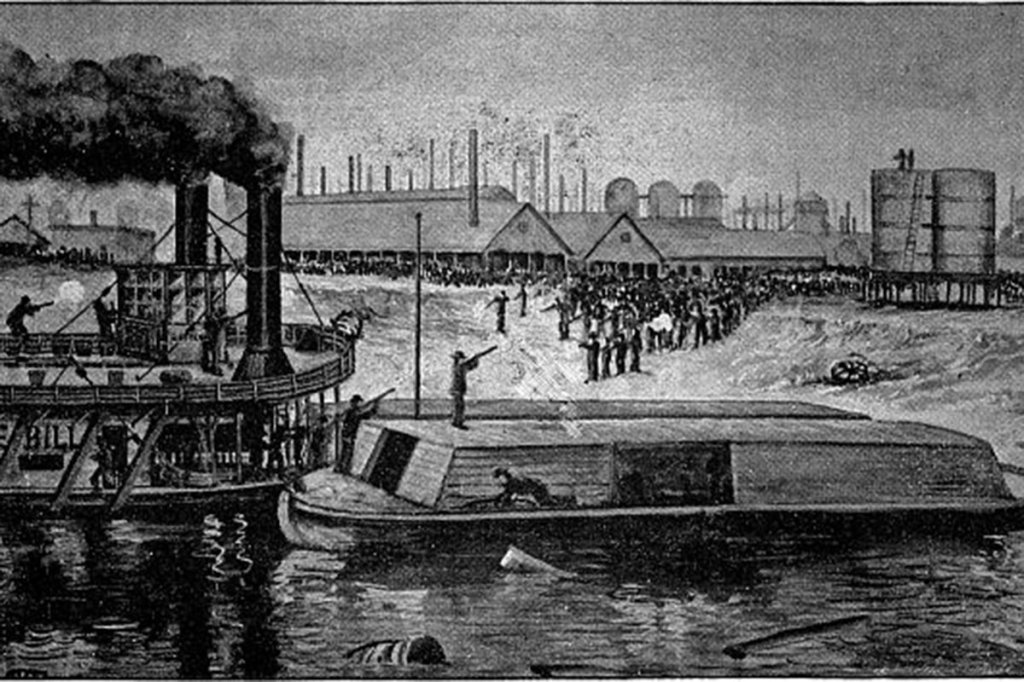
At the Carnegie Steel plant in Homestead, Pennsylvania, wage reductions and contract disputes sparked a confrontation between management and workers. When negotiations collapsed, the company locked out employees and fortified the mill with fencing and barbed wire.
Carnegie Steel hired hundreds of Pinkertons to secure the facility and escort replacement workers inside. In July 1892, Pinkerton agents approached the mill aboard river barges. Armed strikers awaited them.
The two sides fought for 12 hours. Shots were exchanged, and casualties mounted as national newspapers published vivid accounts of armed agents engaged in open combat with American workers.
Eventually, the state militia intervened to restore order, but the damage to Pinkerton’s reputation was done. To many Americans, the confrontation symbolized the danger of concentrated private power wielded in the service of industrial capital.
In 1893, Congress passed the Anti-Pinkerton Act, restricting the federal government from employing members of the agency. Though the law did not dismantle Pinkerton operations, it reflected public unease about private forces operating with quasi-military authority.
Today, Pinkerton operates as a subsidiary of Securitas AB, a global security firm headquartered in Sweden. Its modern services focus on risk management, corporate security, and investigative consulting rather than armed strikebreaking.
The paramilitary image of the 1890s may have faded, but the foundational emphasis on intelligence, coordination, and vigilance remains.
Don’t Miss the Best of We Are The Mighty
• The Civil War started and ended at the same guy’s house
• The forgotten Civil War legacy of America’s most notorious prison
• The US Navy’s first submarine was a hand-cranked wooden egg
Featured

Loading comments…
Comments couldn’t be loaded. Please refresh the page.