
Improvise, adapt, and overcome. This is a mantra of the U.S. Marine Corps, but throughout American history, U.S. troops have demonstrated their capacity for extraordinary innovation and determination.
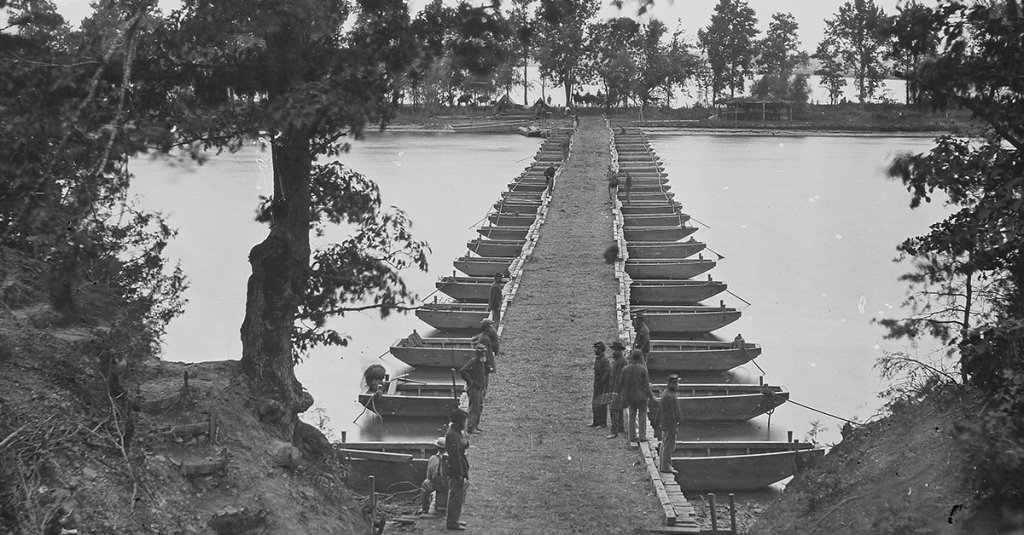
One of the most powerful examples of that determined spirit came during the Civil War, when Union troops under Ulysses S. Grant constructed an enormous pontoon bridge across the James River.
Also Read: The forgotten Civil War legacy of America’s most notorious prison
Built in just seven hours, the bridge stretched more than 2,000 feet across a powerful river, enabling the secret movement of more than 100,000 soldiers, thousands of wagons, artillery pieces, and tens of thousands of animals toward the Confederate supply center at Petersburg, Virginia.
For historians, the crossing stands as one of the Civil War’s most impressive feats of military engineering. For educators, it’s an extraordinary opportunity to show students that battlefield tactics don’t only decide wars.
Logistics, engineering, strategy, and teamwork often play just as critical a role. When I teach the Civil War, the James River pontoon bridge becomes a powerful example of how American ingenuity and determination can shape the course of history.
The story of this bridge is not simply about wood planks and floating boats. It’s about leadership, innovation, and solving extreme challenges under pressure. It also reveals Grant’s strategic brilliance.
Understanding how this remarkable bridge came to be requires stepping back into the final years of the Civil War, when our nation’s fate still hung in the balance.
The Civil War in 1864
By 1864, the Civil War was entering its fourth year. The conflict had become the bloodiest war in American history, with casualties continuing to mount on both sides.
Although the Union possessed significant advantages in industry, population, and resources, Confederate armies repeatedly proved themselves capable of resisting those advantages on the battlefield.
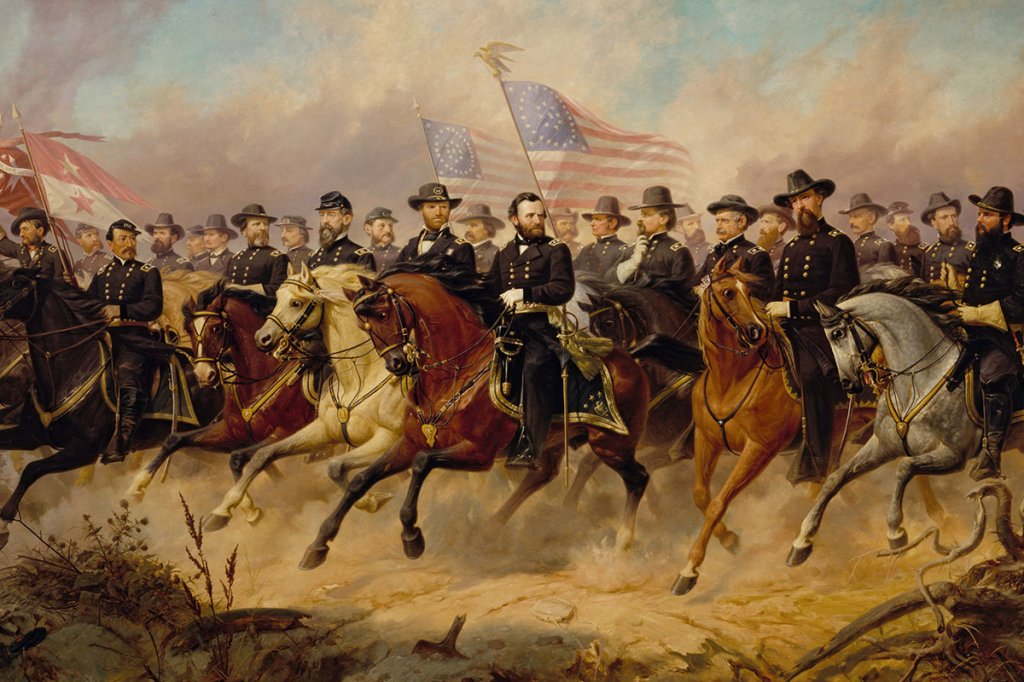
In March of that year, President Abraham Lincoln made a crucial decision that shaped the remainder of the war. He promoted Ulysses S. Grant to the rank of lieutenant general and placed him in command of all Union armies.
Grant earned Lincoln’s confidence through repeated successes in the war’s western theater. His victory at Vicksburg, Mississippi, in 1863 gave the Union control of the Mississippi River and effectively split the Confederacy in two. Lincoln famously remarked that he could not spare this general because “he fights.”
Grant now faced the immense task of defeating the Confederacy’s most formidable army: Robert E. Lee’s Army of Northern Virginia. Lee repeatedly outmaneuvered the Union throughout the war. His reputation for tactical brilliance made him almost a mythic figure among Confederate soldiers and civilians alike.
Grant understood that defeating Lee required more than a single dramatic battle. Instead, he intended to apply constant pressure to the Confederates, forcing Lee’s army into a war of attrition that the South could not sustain.
The Overland Campaign
Grant’s strategy took shape in the Overland Campaign, a relentless series of battles fought across Virginia during the spring of 1864.
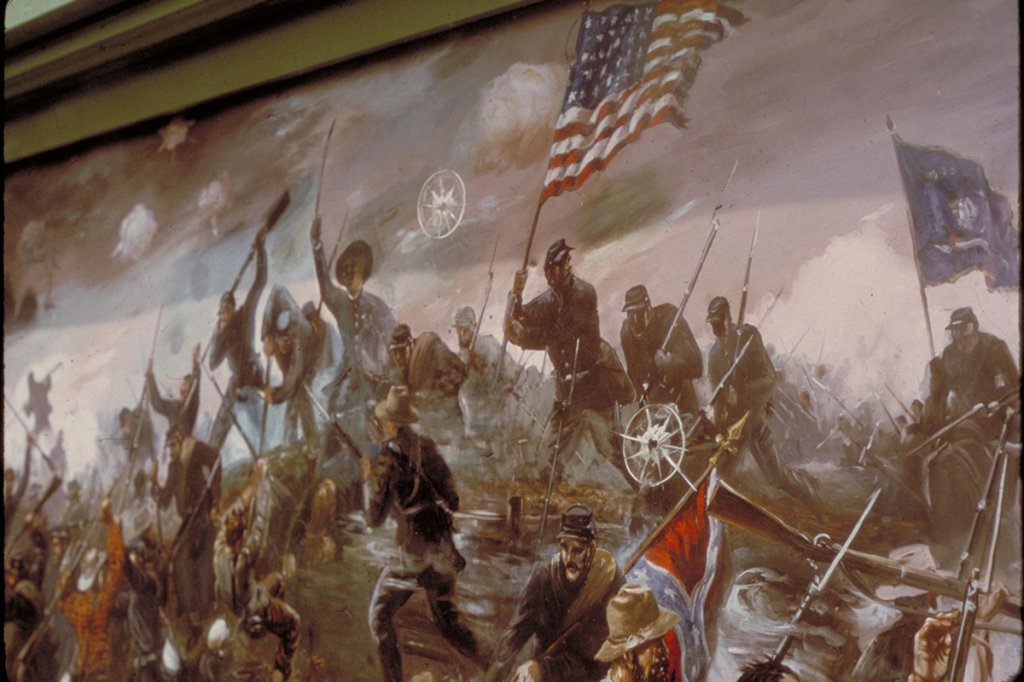
It began in May when Union and Confederate forces clashed at the Battle of the Wilderness. Dense woods turned the battlefield into chaos. Visibility was limited, formations collapsed, and raging fires spread through the brush, trapping wounded soldiers between the lines.
Rather than retreat after the battle as earlier Union commanders had, Grant continued moving south. He led his troops to another brutal confrontation at Spotsylvania Court House, where both sides constructed elaborate trench systems and fought in vicious close-quarters combat.
By June 1864, the sides met at Cold Harbor, where thousands of Union soldiers were killed or wounded in a matter of minutes when they charged the well-fortified Confederate positions there.
Grant later acknowledged that the assault was a mistake and one he deeply regretted, but even as the Union army recovered from Cold Harbor, he was already considering his next move. Rather than continuing to attack Lee’s entrenched forces directly, he devised a plan to shift the war’s strategic focus.
Petersburg
To Grant, the key to defeating the Confederate army in Virginia was not necessarily capturing Richmond through frontal assaults. Instead, the more decisive target was the transportation network that sustained both Richmond and Lee’s army.
That network converged at Petersburg, located just south of Richmond. This city served as the logistical hub of the Confederate war effort in Virginia. Several critical railroads passed through, carrying food, ammunition, and reinforcements to Confederate troops.
If the Union seized Petersburg or cut its rail lines, Richmond would be impossible to defend, Lee’s army would be cut off from supplies, and the Confederate capital would eventually have to be abandoned.
Grant therefore made the bold decision to move his entire army south of the James River and strike Petersburg before the Confederates could react.
The James River
Standing between Grant’s army and Petersburg was a formidable natural barrier: the wide and powerful James River.
Grant selected a crossing near Weyanoke Point, where the river was more than 2,000 feet wide and carried a strong current. Crossing such a river with an army the size of Grant’s would be an enormous logistical undertaking.
Building traditional bridges required days or even weeks. Ferrying the army across in small boats was far too slow and risked exposing the entire movement to Confederate scouts.
If Lee discovered the Union army in the middle of such a crossing, he could strike while Grant’s army was divided and vulnerable, with disastrous consequences.
Engineering the Bridge
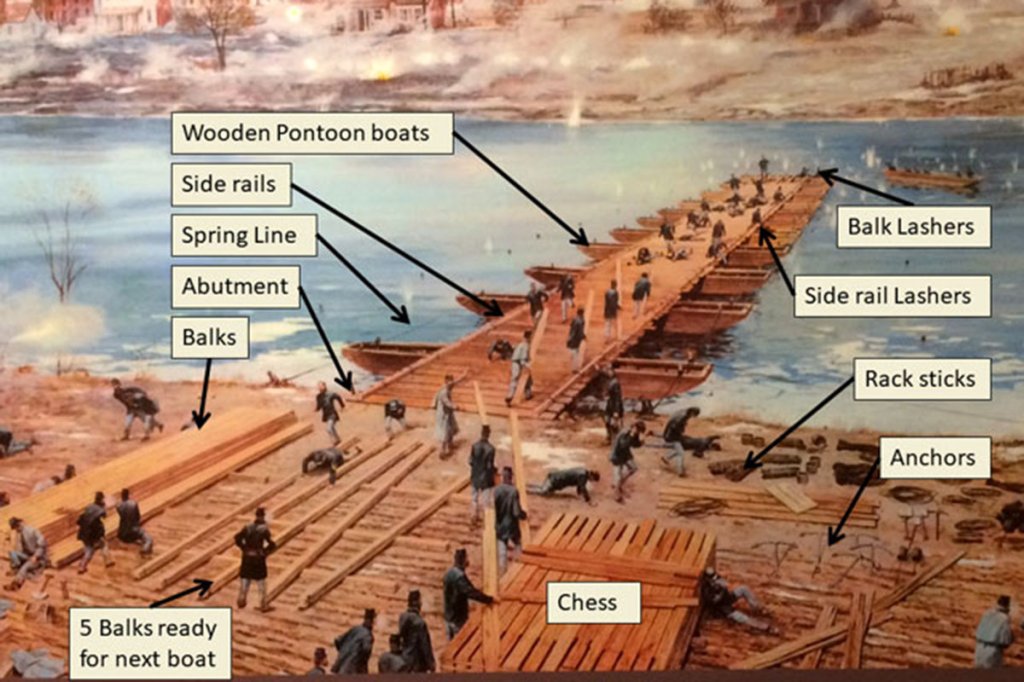
Grant’s solution was a massive pontoon bridge. Pontoon bridges had been used in warfare for centuries. These floating bridges relied on boats or pontoons anchored in place with a roadway constructed across them.
They could be assembled relatively quickly, but they still required skilled engineers and careful planning to ensure they could support heavy loads. The bridge Grant ordered pushed the limits of what was possible.
Union engineers had to create one spanning roughly 700 yards across the river, making it one of the longest pontoon bridges ever built during a military campaign.
Responsibility for the project fell to the highly skilled soldiers of the U.S. Army Corps of Engineers and specialized engineering units. These soldiers, many of whom had backgrounds in carpentry, mechanics, and building trades before the war, were also experts in building roads, fortifications, and bridges.
Their technical skills were about to be the most critical aspect of the Overland Campaign’s success
7 Hours of Extraordinary Work
Working in darkness and under immense pressure on the night of June 14, 1864, the Army engineers assembled the bridge piece by piece.
The foundation required 101 pontoon boats carefully positioned across the river, each anchored in place before heavy wooden beams and planks were laid across the top to form the roadway.
The current of the James River created a serious challenge. Without proper anchoring, the boats could drift out of position or place dangerous strain on the structure. To stabilize it, engineers anchored cables along the riverbanks and secured the boats with heavy anchors.
They positioned several schooners midstream to provide additional support against the force of the current.
Despite the task’s complexity, the engineers worked with remarkable efficiency. The result after seven hours was a floating roadway stretching across one of Virginia’s largest rivers.
As soon as the bridge was ready, Union forces began crossing. Over the next three days, an astonishing movement of troops and equipment passed over it. More than 100,000 soldiers marched across the structure along with the requisite supplies, artillery, horses, and mules.
Despite the massive scale of the crossing, Confederate forces did not immediately realize what was happening. Grant’s army successfully slipped away from Lee’s defenses north of the river and repositioned itself for a new offensive.
The Siege of Petersburg
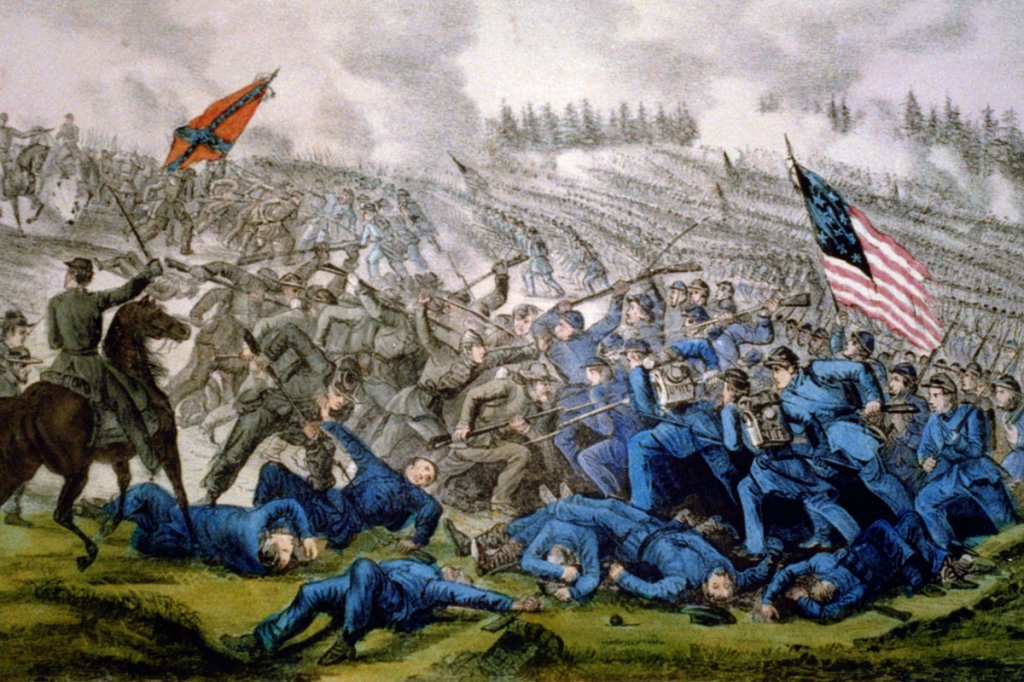
Although early Union attacks failed to capture the city outright, the campaign gradually tightened the noose around the rebel troops defending Petersburg. Over the next 10 months, Grant extended his lines and cut one railroad after another, sapping Petersburg and Richmond of supplies and equipment.
By April 1865, Confederate defenses finally collapsed. The fall of Petersburg forced the evacuation of Richmond and set the stage for Lee’s surrender to Grant at Appomattox Court House.
The bridge itself did not survive long after the operation. Union troops dismantled the structure after they completed their movement across the river. Like many wartime constructions, it served its purpose and then disappeared from the landscape.
For decades afterward, the bridge’s precise location remained uncertain. Historians knew it was constructed somewhere near Weyanoke Point, but the exact crossing point was debated.
In 1986, researchers studying a photograph taken during the Civil War by Alexander Gardner made a remarkable discovery. By comparing the landscape visible in Gardner’s image with the geography of the Flowerdew Hundred Plantation, historians identified the precise location where the bridge had once spanned the river.
Today, the site stands as a quiet reminder of one of the most impressive feats of engineering during the Civil War.
Teaching the Power of Engineering
When I teach the Civil War, the story of the pontoon bridge across the James River becomes one of the most powerful teaching moments in my classroom. It allows me to help students see that history is not shaped only by famous generals or dramatic battles. It’s also decided by the engineers, builders, and soldiers whose problem-solving abilities make major operations possible.
The bridge’s hasty but successful construction demonstrates that logistics, engineering, and planning can be just as decisive as battlefield tactics.
I make a point of showing my students photographs of the bridge itself so they can visualize the scale of what Union engineers accomplished that June. One of the most effective teaching tools I use is Gardner’s famous photograph, which captures the massive floating bridge spanning the river.
Looking at that image helps students move beyond simply reading about the bridge and instead begin to grasp the sheer size and complexity of the operation. They begin to imagine what it must have looked like as more than 100,000 Union soldiers crossed a floating structure stretching over two thousand feet across the river.
The students can picture the pontoon boats, the planked roadway, the wagons and artillery rumbling across the bridge, and the engineers who made it all possible in only a few hours. They begin to appreciate how creativity, planning, and collaboration can change the course of history.
In many ways, lessons like this also reinforce a broader truth about the American experience: when confronted with enormous challenges, Americans find new ways to improvise, adapt, and overcome.
Don’t Miss the Best of We Are The Mighty
• How Civil War infantrymen slaughtered one another
• That time President Lincoln had front-row seats to a Confederate surprise attack
• A War of 1812 veteran saw the Battle of Gettysburg from his porch, then joined it
Featured


Loading comments…
Comments couldn’t be loaded. Please refresh the page.