
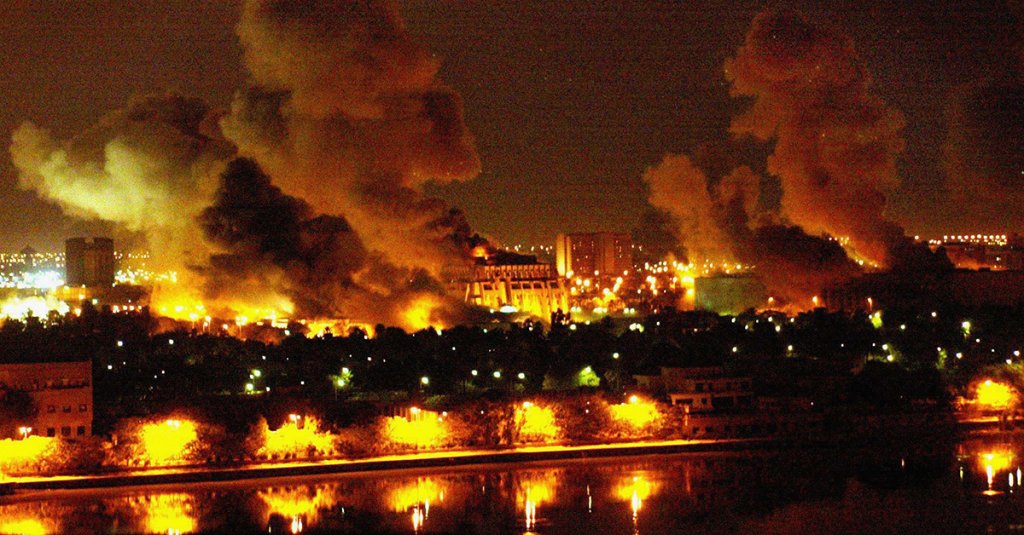
The group of men arrived at the Central Bank of Iraq before sunrise on March 18, 2003.
Hours before the bank officially opened for the day, Qusay Hussein—the younger of Iraqi President Saddam Hussein’s two sons—presented a signed letter from his father. The letter authorized a withdrawal so large that it required three large trucks to take it away.
Also Read: Operation Tapeworm: How the US Army’s most elite hunted down Saddam’s sons
As Qusay and Saddam’s personal bodyguard watched, several men loaded stacks of $100 bills, totalling a staggering $900 million of American money. They also grabbed approximately $100 million in euros to add to their theft. Generally considered the largest bank robbery ever, the $1 billion heist occurred a day before a United States military-led coalition began airstrikes in Baghdad to start Operation Iraqi Freedom.
No one tried to stop the robbers.
“When you get an order from Saddam Hussein, you do not discuss it,” an unidentified Iraqi official told The New York Times for an article about an incident that was published on May 6, 2003.
Weapons of Mass Destruction
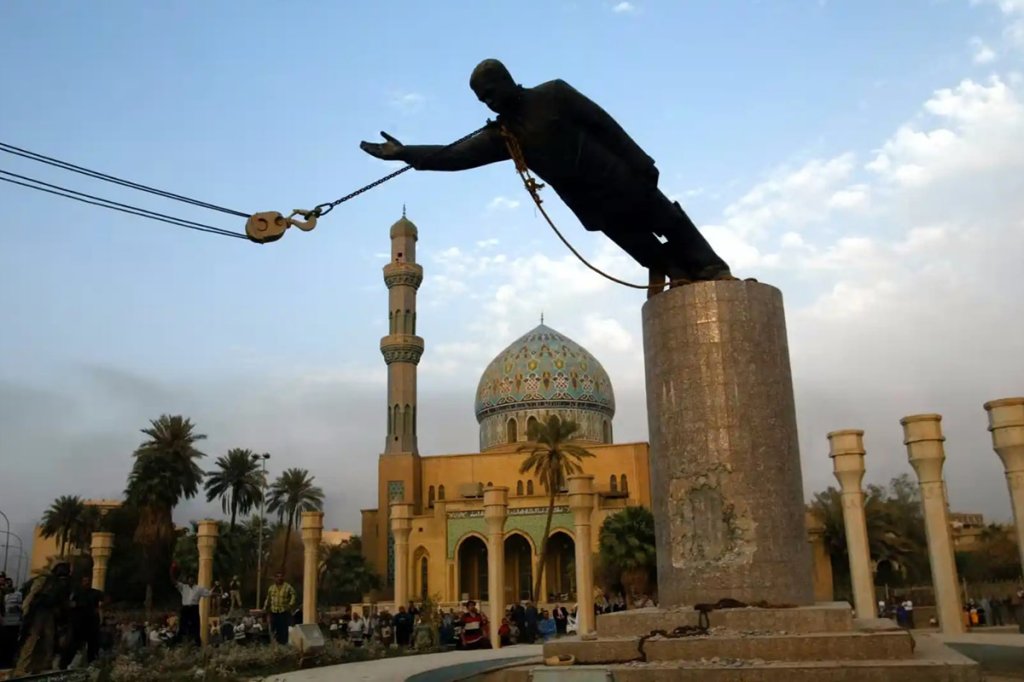
President George W. Bush wanted Saddam out of power in the worst way.
During his 2002 State of the Union speech, Bush grouped Iraq with Iran and North Korea in what he deemed “the axis of evil” and said it possessed weapons of mass destruction. Based on faulty intelligence, that claim later proved false. Nonetheless, it didn’t stop the United States from leading a military coalition that included forces from Great Britain, Australia, Denmark, the Netherlands, and Poland.
Saddam first assumed power in 1979, a year after Bush lost in his first run for political office. Saddam ruled Iraq as an authoritarian state for nearly a quarter-century, but the expiration date on this tyrannical reign was fast approaching. It took the American military and its partners a mere three weeks before they captured Baghdad on April 9, 2003. Saddam and his sons, Uday and Qusay, went into hiding as Iraqi citizens celebrated their ouster.
The $1 billion that they stole remained unaccounted for, leaving many to wonder: Where did it go?
Where’s the Money?
Theories arose as to what happened to all those riches.
According to reporting from The New York Times, some questioned whether the money was to help finance Saddam’s government in exile as part of a “post-occupation strategy.” Others wondered whether it made its way out of Iraq and across the border into Syria. Could the stolen financial windfall be used to fund terrorist operations?
No one knew for sure, leaving many more anxious than normal to retrieve what the Hussein regime took in that early morning robbery.
One U.S. Treasury Department official believed part of the $1 billion in ill-gotten gains was discovered in a palace that Saddam owned, the Times reported. The $650 million total certainly raised suspicion. However, an Iraqi official dispelled that notice, claiming the huge sum likely belonged to Uday Hussein. After all, Uday “was known for hoarding vast stores of personal cash,” according to the article.
While that discovery was a supposed dead end, the Times followed up with a report on May 15, 2003—roughly two months after the heist—that almost all of the money was found.
Recovering a Lot of the Loot
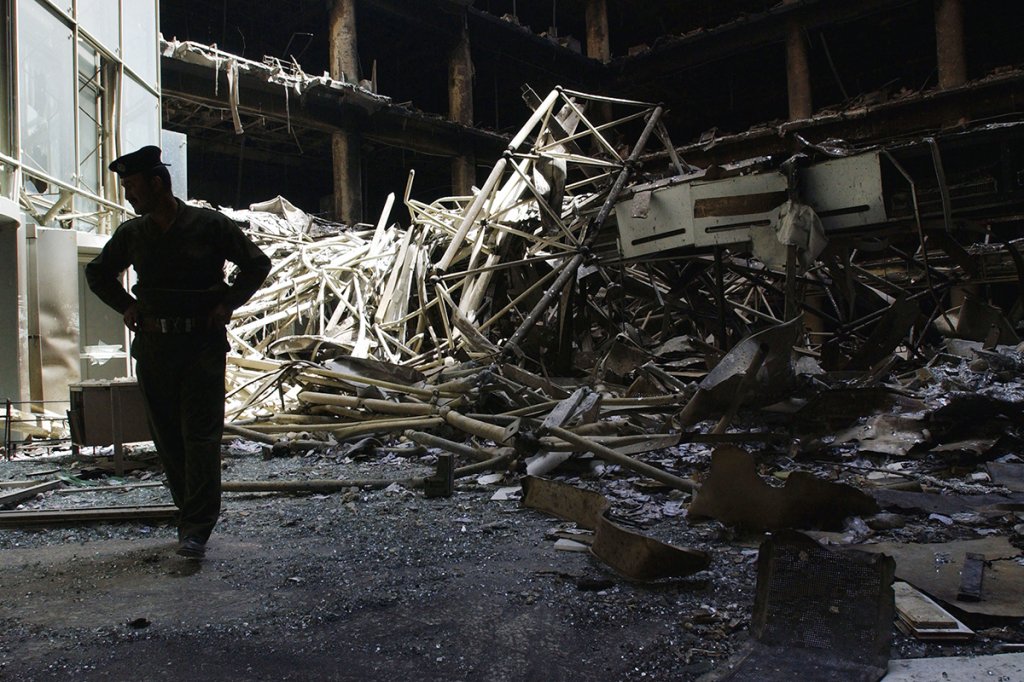
The money did not make its way to Syria.
The United States revealed it recovered approximately $950 million inside Iraq; they believed that to be the lion’s share of what Qusay and his cronies took from the Central Bank of Iraq on March 18. (After Baghdad fell, looters pillaged the bank and set it on fire, reducing it to rubble.) They discovered the money neatly separated in 191 boxes that included packing slips, the Times reported.
While $1 billion is a huge amount of money, it represented a fraction of what Saddam’s regime pilfered from Iraq. That figure likely was much higher, perhaps approaching $40 billion. No one knew for sure, however, a fact that one U.S. official acknowledged by referring to any projection as “wild-eyed guesstimating.”
The U.S.-led coalition eventually brought Saddam and his sons to justice. U.S. forces killed Uday and Qusay after a “fierce gun battle” July 22, 2003, at their hideout in Mosul, Iraq.
Finding Saddam took a while longer, but he could not hide forever. The American military found the deposed dictator on December 13, 2003, trying to avoid detection in a spider hole near his hometown of Tikrit. An Iraq court found Hussein guilty for ordering the death of 148 Shiite villagers in 1982, leading thousands to celebrate, and sentenced him to death.
“The Saddam Hussein era is in the past now, as was the era of Hitler and Mussolini,” Iraqi Prime Minister Nouri al-Maliki said after the trial’s conclusion.
Saddam died by hanging on December 30, 2006.
Don’t Miss the Best of We Are The Mighty
• Why Saddam Hussein’s Fedayeen troops wore Darth Vader helmets
• The controversial Marine grenade hero of Fallujah that Washington still argues about
• The Marine Corps’ forgotten battle in Iraq
Featured

Loading comments…
Comments couldn’t be loaded. Please refresh the page.