As of January 2026, the AI ascension is hitting new highs; it’s also hitting a literal and metaphorical wall. Large Language Models (LLMs) are undoubtedly getting “smarter,” but the nation’s power grid is becoming increasingly vulnerable in order to drive this innovation.
Microsoft is restarting Three Mile Island. What could go wrong? Amazon is buying everything that isn’t bolted down, and maybe even the bolted-down stuff by now, too. But those are long-term plays, and the tech giants are itchy addicts looking for a quick energy fix.
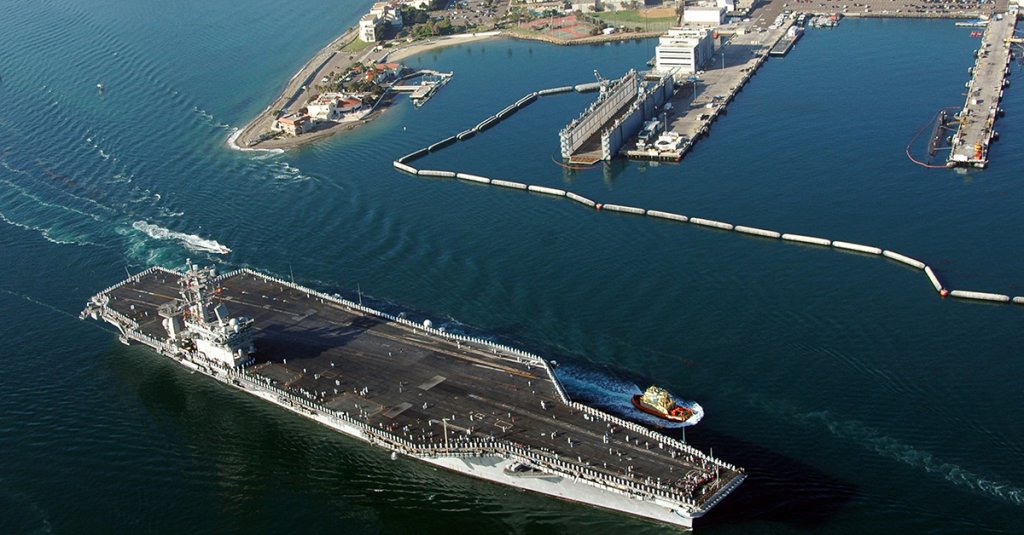
That desperation has led them to the only place on Earth with a surplus of those sweet, sweet gigawatts of pure, clean, combat-cut power: the United States Navy.
Related: What’s really real with SOCOM’s AI targeting tests right now
The latest proposal to hit the Department of Energy suggests taking the nuclear reactors from retired carriers and using them to literally keep the artificial intelligence boom’s heart beating. It is a wild, slightly unhinged idea that sorta makes sense on paper… if you squint hard after a shot of bourbon in your morning coffee.
Unfortunately for the tech bros, the Naval Nuclear Propulsion Program doesn’t operate from a mansion, surrounded by monitors, all showing live feeds of their Scrooge McDuck vaults. They operate on rules written in legacy and blood; they don’t take kindly to breaking tradition.
The Thirst Trap
To understand why anyone would suggest cutting a reactor out of a 100,000-ton warship, you have to look at the country’s rising utility bills.
AI isn’t just lines of code; it is a physical infrastructure that is currently eating the American power grid alive at a rate that is causing concern. For instance, a standard Google search burns about 0.3 watt-hours of electricity. A generative AI query can burn anywhere from ten to a hundred times that amount. Now, extrapolate that to cover billions of people around the globe, prompting these things daily, and you aren’t just running servers; you are running, essentially, a medium-sized country.
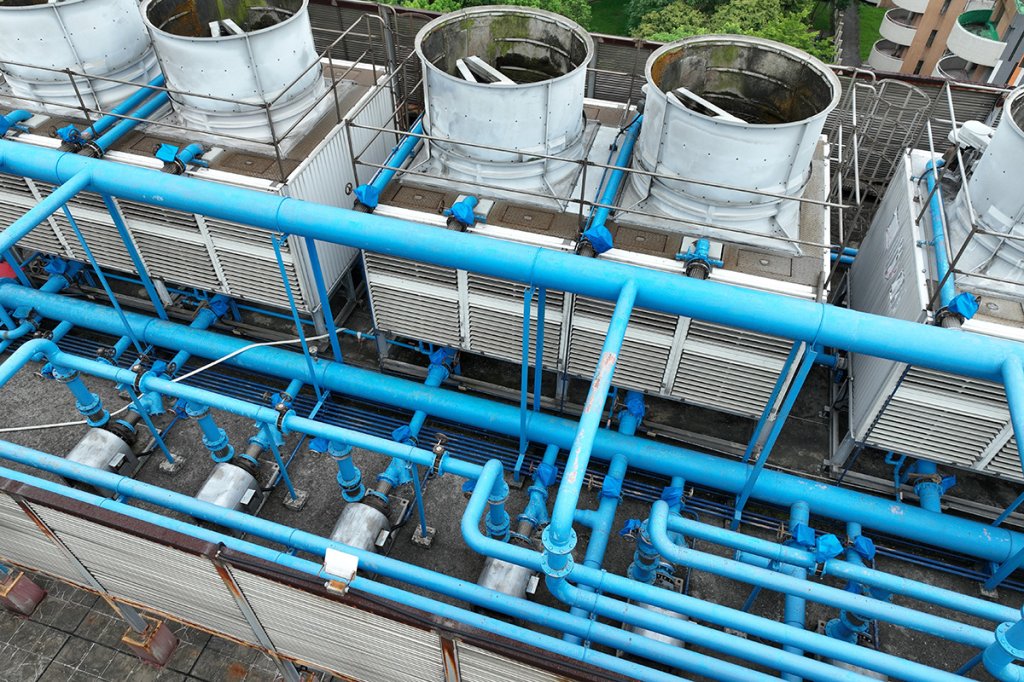
Then there is the water problem: These AI data centers are giant sponges soaking up the world’s water supplies. In a 2025 study, it was estimated that training a model like GPT-4 consumed enough water to fill a nuclear cooling tower. Before that, a 2023 study said that for every 20 to 50 queries you type into a chatbot, the data center “drinks” roughly a 500-milliliter bottle of water to keep its processors from melting. These findings would not go undisputed for long.
Big Tech fought back with its own study; not surprisingly, recent data from Google and OpenAI (two companies that have benefited immensely from AI being let loose) indicate lower water usage per query for the current models. OpenAI suggests a single query uses about 0.32 milliliters of water, while Google’s Gemini system reported 0.26 milliliters per query for median prompts.
Regardless of which data is correct, the sheer number of global users alone means that data center hubs like Northern Virginia and Texas will drive up residential utility costs and consume their environment. Your grandma’s electric bill is spiking because the grid has to expand for the algorithms, not because her toaster is tuned up.
Make no mistake, the tech giants are scared. They need cities’ worth of power, power that is on 24/7, regardless of snow, rain, heat, or gloom of night. Here is where anxious billionaires start to straddle the line between genius and cartoon super villainy.
If these conglomerates want people to survive long enough to start dating their machines, they need nuclear power. And they need it yesterday.
The Proposal
Enter HGP Intelligent Energy. Its proposal identified a very specific, untapped resource: the United States Navy’s mothball fleet.
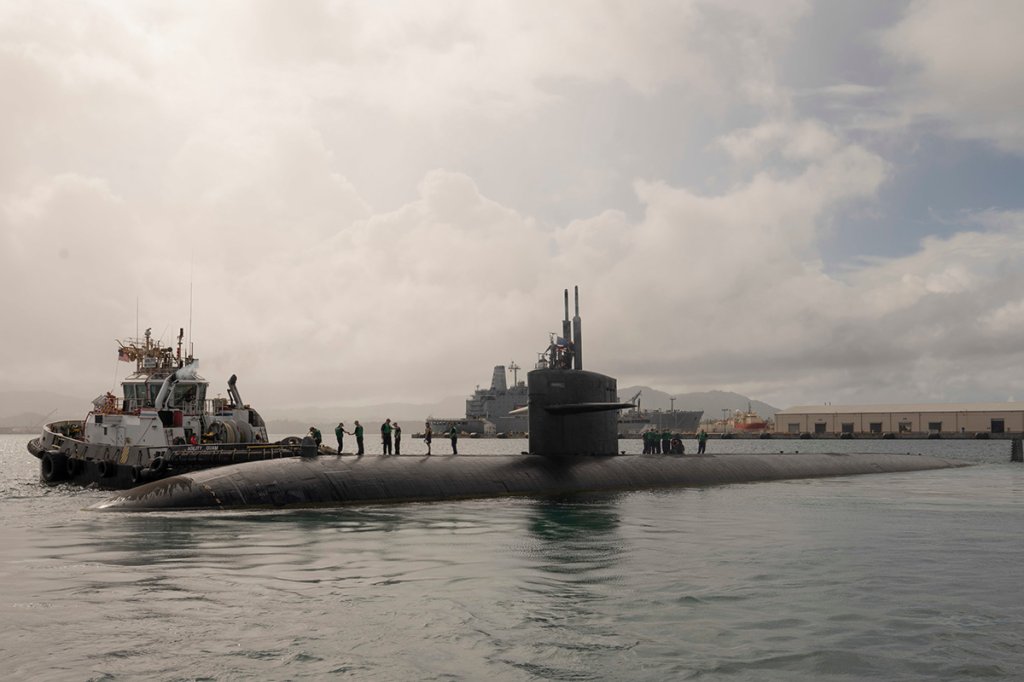
The plan? To target, then extract the A4W reactors from retired supercarriers and the S6G units from Los Angeles-class attack submarines. A single carrier plant produces enough energy to push a floating metropolis through the ocean for 20 years without refueling. HGP estimates it can repurpose these units for about $1.8 billion, a windfall compared to the approximately $10 billion price tag for a new commercial plant.
First choice was probably to house these monsters in shuttered Spirit Halloweens across the nation; instead, HGP proposed a facility at Oak Ridge National Laboratory, where these battle-hardened reactors would sit in silos hardened by just being in the Appalachian region. It is here where the churning out of the 500 megawatts needed to train the next generation of intelligence might be done.
Unfortunately, extraordinary endeavours require extensive logistics, and this is when reality usually sets in.
In Real Life

Submarine Nuclear Power | Engineering behind it Nuclear Reactor How it Works
The reason you can’t just plug a Nimitz into the grid really comes down to three letters: HEU. Highly enriched uranium.
Civilian nuclear power plants run on low-enriched uranium (LEU), typically enriched to about 3%-5% of uranium-235. It is safe, stable, and, more importantly, incredibly hard to weaponize. On the other hand, naval reactors are built for combat performance, not non-proliferation treaties. They run on HEU often enriched to more than 93%.
That is what is meant whenever you hear “weapons-grade material.”
A naval reactor is effectively a bomb-proof casing designed to hold this fuel while taking torpedo hits to the dome. Moving that reactor to a corporate data center requires more than just “Two Guys and a Truck.” You aren’t just moving a power plant; you are moving a strategic national asset. The security requirements alone would turn a server farm into a black site surrounded by highly vetted Marine Corps guards at the front gate.
Then there is the culture. The Naval Nuclear Propulsion Program, founded by the legendary Adm. Hyman Rickover, is the strictest engineering organization on Earth. The people involved are utterly brilliant; however, they are not known for their sharing nature. Their technology is classified not just because of the fuel, but because the noise-dampening and flow designs are what keep our submarines silent, safe, and lethal.
Handing that tech over to a civilian operator, even one with clearance, is a dead-on-arrival for the Pentagon.
An Actual Solution
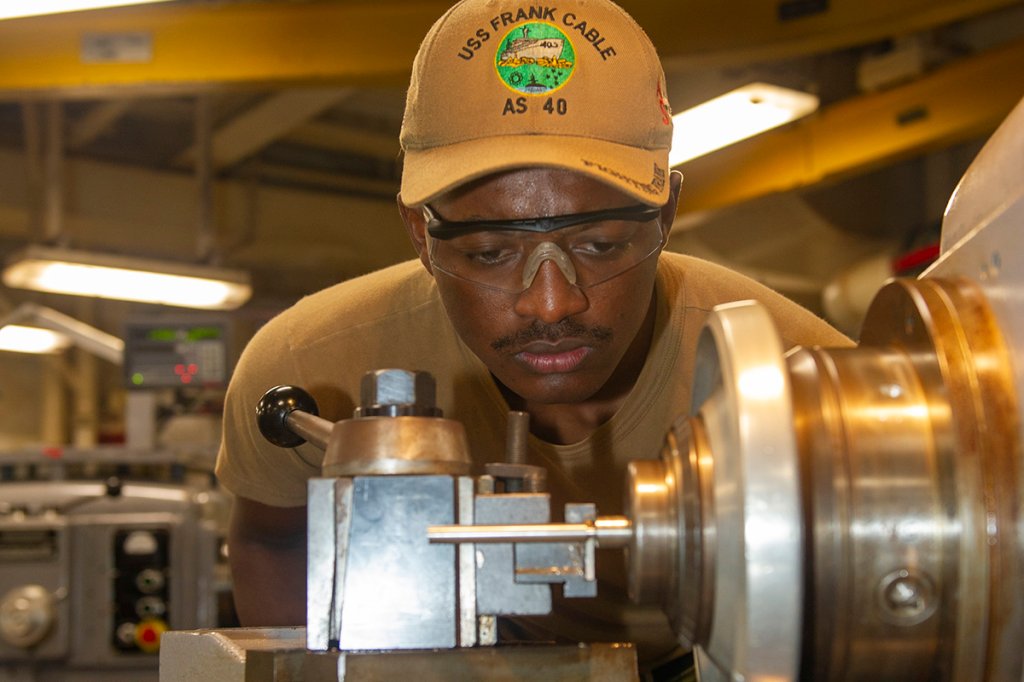
So if we can’t use the old ships, are we just going to let AI peter out? Not exactly. Because while the hardware is currently off-limits, the method is still quite viable.
The real breakthrough of 2026 isn’t scavenging old hulls; it’s copying how they were built. For decades, the civilian nuclear industry failed because it treated every power plant like a cathedral, a unique, custom-built, massive project that took 15 years to finish. The Navy, meanwhile, built reactors like you would cars. They built them in shipyards, on assembly lines, using standardized parts and modular designs.
This is where companies like Blue Energy are coming to the forefront.
Operating out of the beautiful Port of Victoria in Texas, Blue Energy isn’t asking for old submarine parts or classified material; instead, they are using the shipyard itself. By partnering with infrastructure firms like Crusoe, they are building modern, civilian-grade reactors using the same modular manufacturing techniques that churned out the Virginia-class submarines.
The first step is to pre-fabricate the units, then float them to the site, and finally install them, all in mere fractions of the time it takes to pour concrete for a traditional dome.
This is the crème de la crème of the energy world. It doesn’t use weapons-grade fuel, and it doesn’t require a security clearance to plunge the toilets. What it does do is carry the DNA of the Navy’s past success far into the future. In essence, it turns nuclear power from a construction project into a manufacturing product.
The Verdict
The HGP proposal is a fascinating thought experiment that highlights just how dire the energy crunch has become. Unfortunately, the U.S. Navy helps the world by keeping its secrets, not by selling them to the highest bidder.
We don’t need the Nimitz’s heart to power our AI fantasies; we need the lessons learned from decades of the best and brightest in the business. The reactors that power the coming century won’t arise from the scrapyards. They will be born from an assembly line, built by the only people who ever figured out how to do nuclear power right the first time, and the future might just be better off for it.