As Frank Rubio progressed through the early part of his U.S. Army career, he didn’t give much serious thought about becoming an astronaut.
The idea might have intrigued him, but he didn’t think it was within reach. That all changed when Rubio applied to become part of NASA’s class of astronauts in 2017. Rubio’s application was one of more than 18,000 that the United States’ preeminent space agency received that year.
Related: The Artemis II mission mirrors the military life we already live
Defying the seemingly insurmountable odds, Rubio survived the cut.
“I honestly didn’t know much about space and human spaceflight,” Rubio told the Army in a 2024 video. “… Exploration and adventure have always been a part of my life. It’s part of my personality, so when I did come to find out about the mission, it was a very natural fit.”
A US Record 371 Consecutive Days in Space
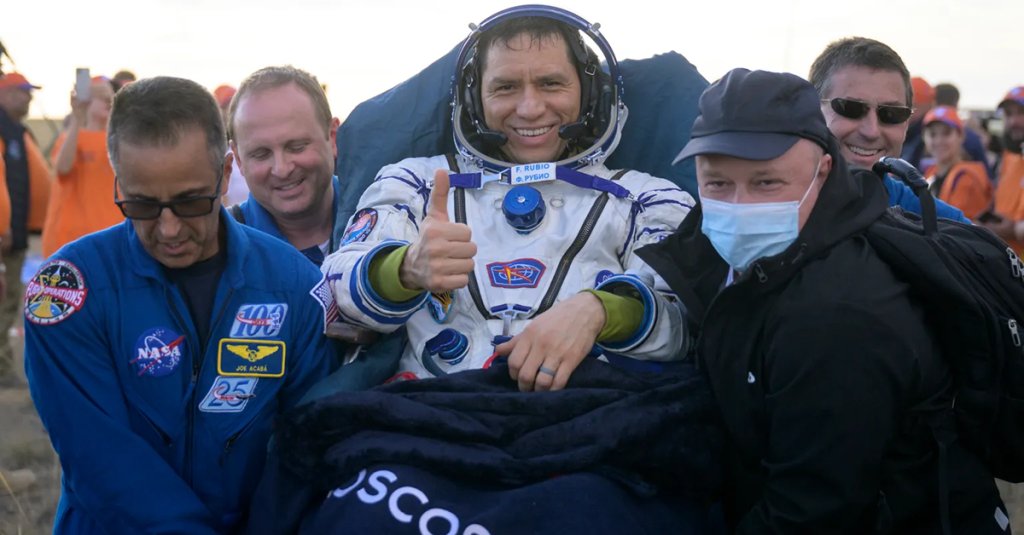
That mission eventually put Rubio, 50, into the record books for the longest single spaceflight in U.S. history. His 371-day run aboard the International Space Station ended on September 27, 2023, and eclipsed Mark Vande Hei’s record by 16 days. (Russian cosmonaut Valery Polyakov spent 437 consecutive days in space in the mid-1990s.)
Rubio got to space through an unbeatable mixture of hard work, opportunity, and determination.
Rubio’s single mother, an immigrant from El Salvador, raised him to push through obstacles and never to make excuses. The Army gave Rubio several opportunities, including flying Black Hawk helicopters and becoming a flight surgeon at Redstone Arsenal in Alabama.
The up-and-coming pilot and doctor was intent on not wasting those chances.
“I went into [the Army] thinking I’m going to do my five years and get out and have a long civilian career, and I ended up loving it,” Rubio told the service’s official website. “Every day, you come to work, and you’re facing a new challenge in so many different ways.”
Rubio, who has achieved the rank of colonel, praised the Army for giving him an important life skill: the ability to adapt in any situation. Whether on Earth or above it, that knowledge does not just go away.
Flying Black Hawks in Combat
Rubio graduated from the U.S. Military Academy in 1998. During his time at West Point, he joined the academy’s parachute team. Rubio, who became an experienced skydiver, spent a lot of time in the air as a cadet.
Once he joined the Army, his career remained on an upward trajectory. Rubio became comfortable behind the controls of a Black Hawk. He was credited with more than 1,100 flight hours, with more than half coming during deployments to Bosnia, Afghanistan, and Iraq.
Of course, a Black Hawk never gets too far off the ground compared to, say, the International Space Station. The ISS is 250 miles above the Earth’s surface, so Rubio was going somewhere that only a select group of humans have experienced firsthand.
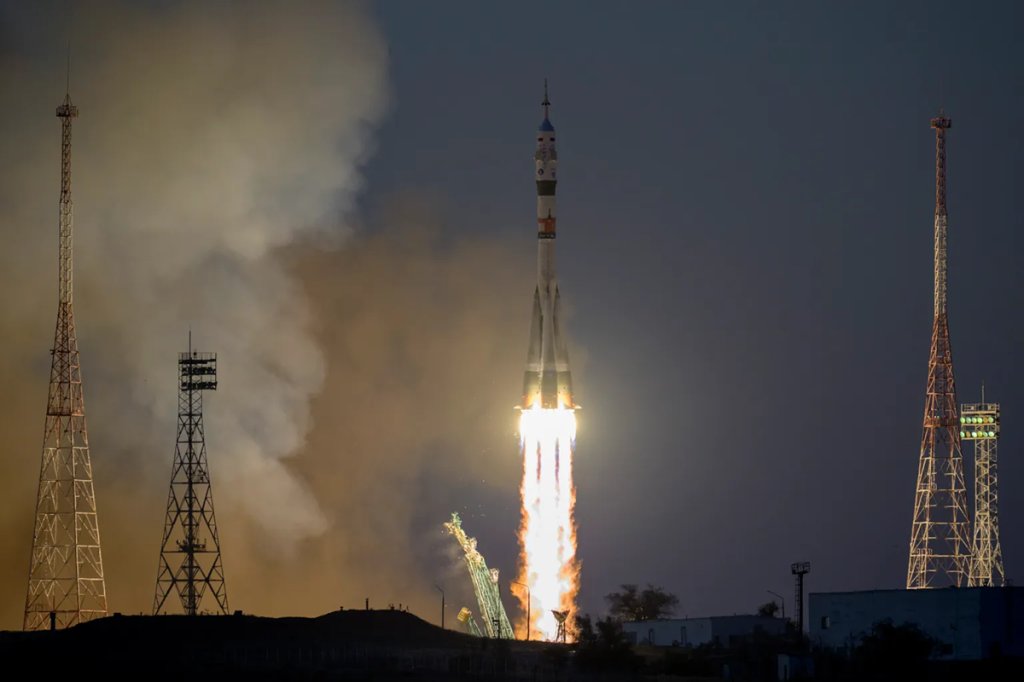
Five years of astronaut training, though, had prepared Rubio for his trip to space on September 21, 2022, when he (along with cosmonauts Sergey Prokopyev and Dmitri Petelin) took off from Kazakhstan on a Soyuz MS-22 spacecraft.
Their time on the ISS was supposed to last only six months until an issue arose.
‘An Incredible Challenge’
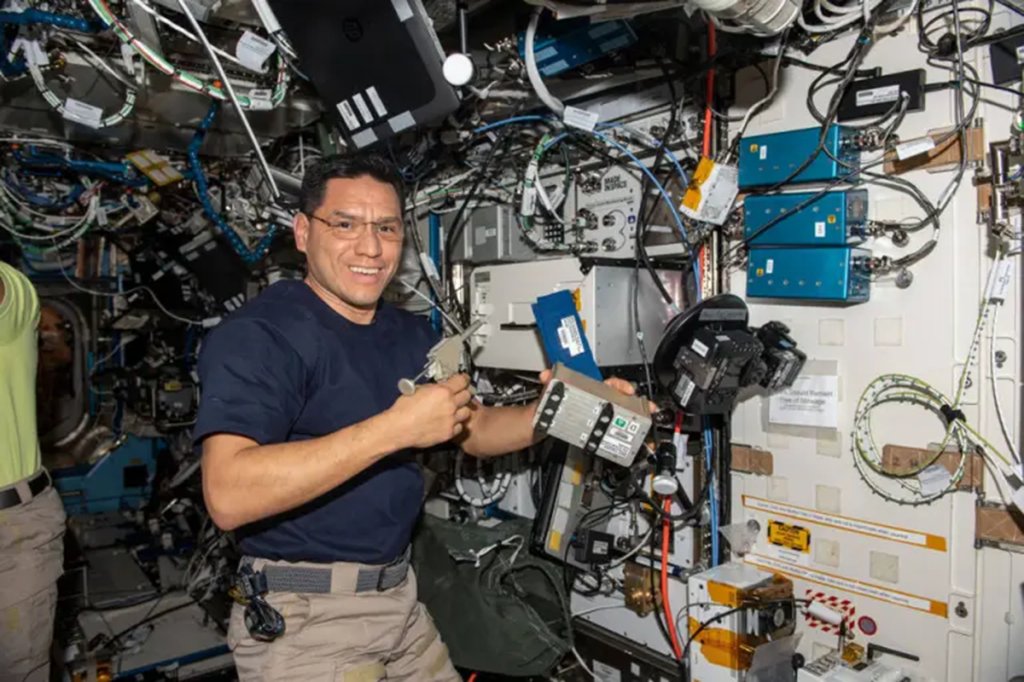
A coolant leak extended their stay, but Rubio, as always, adapted.
Not that it was easy.
“It’s been a mixed emotional roller coaster to a certain degree, because personally, it was an incredible challenge, and it was difficult,” Rubio told National Public Radio (NPR) in September 2023 from the ISS. “Professionally, it was incredibly rewarding. It’s a huge honor.”
An empty spacecraft was sent to the International Space Station to transport Rubio and the two cosmonauts home. During his time there, Rubio completed 5,963 orbits around our planet and became only the fourth U.S. astronaut to spend at least 300 days in a row in space. Besides Rubio and Vande Hei, the others are Scott Kelly at 340 days and Christina Koch at 328 days.
Koch is currently in space on the record-setting Artemis II mission. It established the mark for the farthest human spaceflight and took an unprecedented trip around the other side of the moon on April 6, 2026.
Rubio hasn’t gone that far. He is infinitely familiar, though, with seeing our planet from high, high above. Take it from him: It’s a spectacular view.
“It absolutely makes you appreciate the beauty of our earth and appreciate what we’re capable of as humanity,” Rubio told Time magazine two years ago. “It’s all pretty special.”
Don’t Miss the Best of We Are The Mighty
• 5 things astronauts do for fun while in space
• New Army contract will turn Black Hawk helicopters into drone-launching motherships
• Sikorsky’s new autonomous unmanned Black Hawk helicopter is here
Featured