
Leading up to the 2025 Association of the United States Army (AUSA) Annual Meeting, Lockheed Martin teased news of a development to the Sikorsky Black Hawk line of helicopters.
Yes, we got a trailer from a defense contractor before GTA VI.
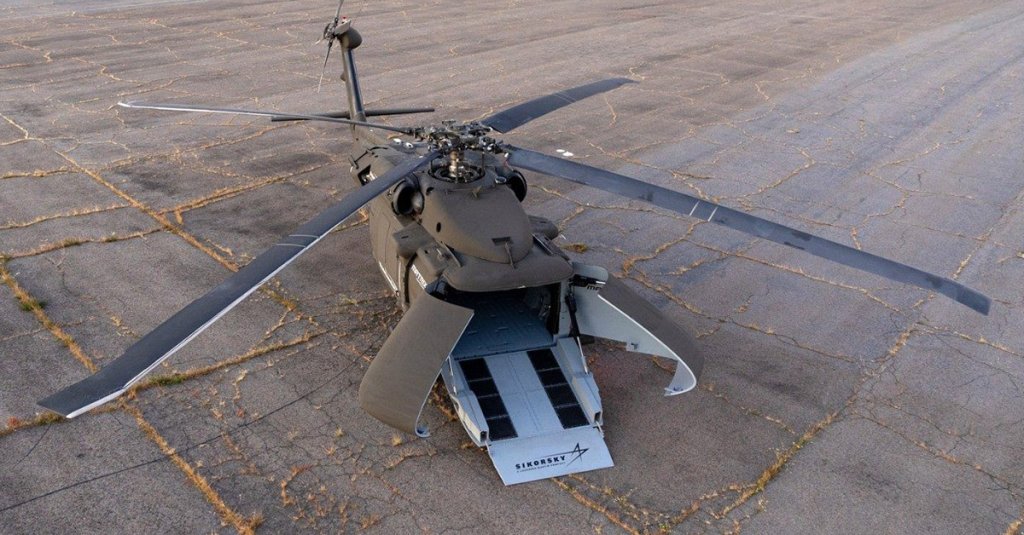
On Oct. 13, 2025, the first day of AUSA, Lockheed Martin unveiled the S-70UAS U-Hawk. An autonomous, unmanned aircraft, the U-Hawk went from concept to reality in just 10 months. Converted from the workhorse UH-60L Black Hawk, the U-Hawk is configured to lead and resupply air assault missions… without a cockpit, seats, or crew stations.
Instead, the U-Hawk’s cockpit has been replaced with clamshell doors and a ramp like those found on cargo planes; this adds a 25% increase to cargo capacity over the manned Black Hawk. Conventional flight controls have been replaced with a third-generation, low-cost, fly-by-wire system integrated with Lockheed Martin’s MATRIX autonomy technology.
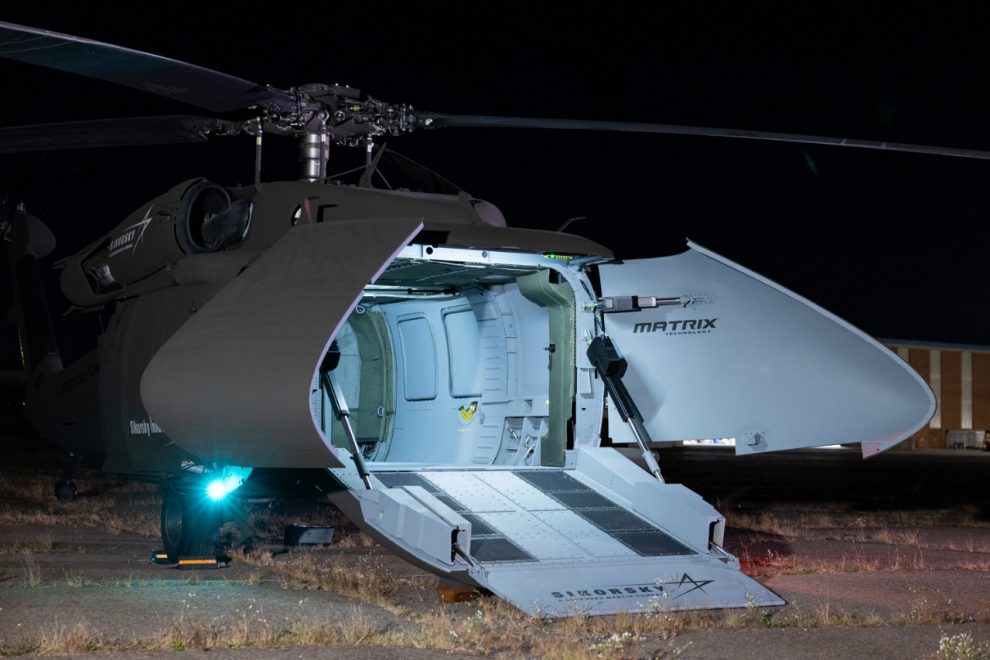
The improved cargo features of the U-Hawk allow it to transport and deliver ground vehicles and supplies more quickly. With a stretched interior cargo space, the autonomous helicopter can also accommodate longer cargo, like missiles. Accommodating modern technology, the U-Hawk can also carry and launch swarms of drones for both reconnaissance and kinetic strikes.
These capabilities are augmented by the U-Hawk’s ability to use internal fuel tanks to extend its range and time on station. The U-Hawk retains the Black Hawk’s ability to load cargo through the side door and externally lift up to 9,000 pounds with its cargo hook.
“Sikorsky is innovating a 21st century solution by converting UH‑60L Black Hawks into a fully autonomous utility platform,” Rich Benton, Sikorsky vice president and general manager, said in a press release. “We developed this prototype from concept to reality in under a year, and the modifications made to transform this crewed Black Hawk into a multi-mission payload UAS can be replicated at scale quickly and affordably. The U-Hawk continues the Black Hawk legacy of being the world’s premier utility aircraft and opens the door to new capabilities as a UAS.”
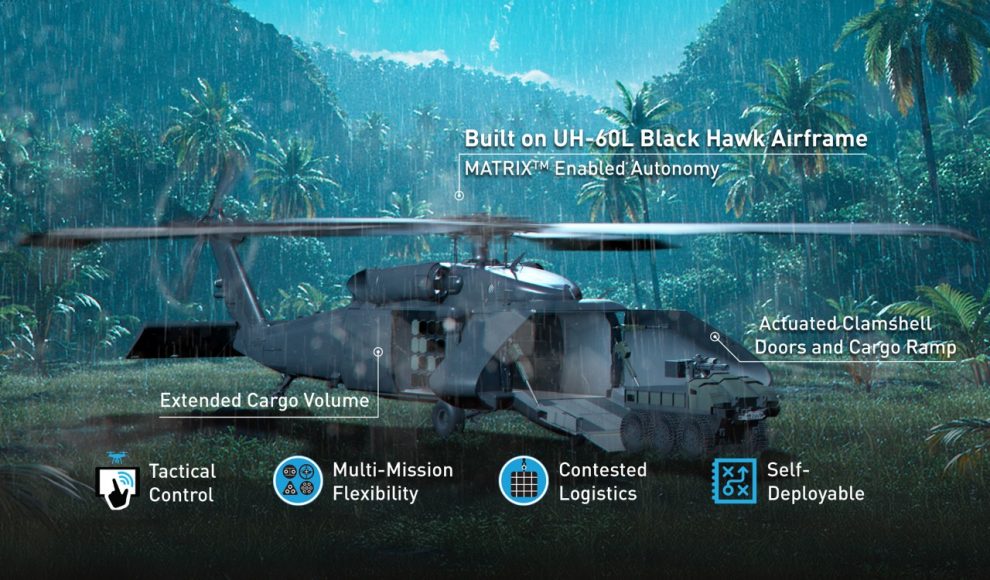
Rather than a remote pilot on the ground, the U-Hawk is controlled by an operator. Using a tablet, the operator gives the aircraft commands to open the cargo doors and shut them when loading is complete. Mission goals are input on the tablet, and the MATRIX autonomy system creates a flight plan. Using cameras, sensors, and algorithms, the U-Hawk flies safely and autonomously to its destination.
“The U‑Hawk offers a cost‑effective utility UAS by leveraging commonality with the existing UH‑60 fleet, and its uncrewed nature reduces both operating and maintenance costs,” said Igor Cherepinsky, Sikorsky’s Innovations Director, in a press release. “We focused on efficiencies in the retrofit by designing and manufacturing vehicle management computers, actuation components, and airframe modifications. We will incorporate those efficiencies into future modifications and manufacturing for our family of UAS products.”

Introducing the S-70UAS™ U-Hawk™
Lockheed Martin reports the U-Hawk’s first flight is expected in 2026. Although the Army has selected the Bell MV-75 to replace the Black Hawk, the U-Hawk may serve a valuable role as an autonomous wingman to the upcoming tilt-rotor, manned aircraft. Commercial passengers may feel uneasy about boarding a flight without a pilot, but troops in the near future may have no choice but to trust their lives to HAL 9000 in a Black Hawk.

Loading comments…
Comments couldn’t be loaded. Please refresh the page.