Some things are universal. If you’re going to start a war, make sure you’re also the one who finishes it. To be ill-prepared for any reason is dumb and just drags out the conflict, yielding pointless loss of life and suffering for both sides. In the history of the world, wars have been prolonged and lost for many, many stupid reasons.
Things like ignorance, hubris, and incompetence come to mind.

Racism is all three of those things. Especially when a leader is about to send thousands — or even tens of thousands — of his most loyal troops into a situation they can’t possibly win because that leader thinks victory is assured just because he’s white. Or Chinese. Or Japanese. So, let’s be honest with ourselves: The most spectacular examples of military leadership did not belong to any one race.
As a matter of fact, if there’s any one person who can claim dominance over all other military minds, you don’t have to worry about race for two reasons. First, because he killed nearly everyone, regardless of race. Second, because he had sex with all the survivors, and most of us are now related to him anyway.

When a country goes to war, it needs to come prepared to earn that win. No army, no matter how weak or obsolete, is going to just let anyone roll all over them because the invader thinks they’re genetically or racially superior. Yet, in the history of warfare, the hubris of “superiority” keeps happening over and over again.
1. Battle of Isandlwana
By the time the redcoats got into it with the Zulu in 1879, the British had been in Africa for a long time and were pretty good at subduing natives. Experience taught them that small groups of European forces, equipped with superior technology, could outgun native warriors, even when outnumbered.
It turns out there was a diminishing rate of return to that theory.
British forces in South Africa prepared to invade Zululand with less than 1,800 redcoats and colonial troops, a few field guns, and some rockets. When they made their first stop, they made zero effort at preparing any kind of defensive position. The British didn’t even bother to scout or recon where the opposing Zulu force was. If they had, they would have known much sooner that their camp was surrounded by an estimated 30,000 Zulu Impi.
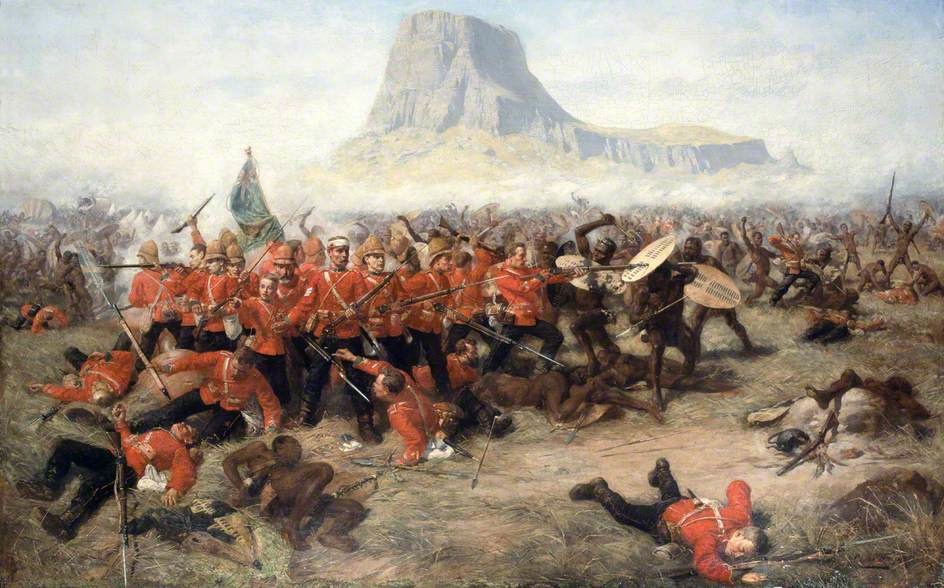
The Impi slaughtered the British; They just absolutely creamed them in “an ocean of blood.” Although the redcoats fought fiercely, 30,000 is a hard number to beat. Despite a British victory later at Rorke’s Drift, their invasion of Zululand fell apart. The worst part is that the British High Commissioner for Southern Africa didn’t even have to invade the territory. No one authorized his invasion. He just thought so little of the Zulus that he figured it must be an easy task.
But the British would have to finish what they started. The second time the British invaded Zululand (because, of course, they did), they brought more men and technology to win a decisive victory.
2. The Battle of Adwa
Italian forays into colonizing Africa didn’t always go according to plan. When carving up Africa for colonization, the other European powers seemed to leave the most difficult areas to subdue for Italy. The Italian army had to subjugate modern-day Libya, Somalia, Eritrea, and Ethiopia. How do you think that went?

In another example of “we’re white so we must be better” thinking, the Italians—who barely got themselves together as a country in 1861—tried to exploit Ethiopia, an already rich, complex, and advanced society. Italy attempted to misinterpret a treaty signed with Ethiopia to subdue it as a client state, but Ethiopian Emperor Menelik II wasn’t having any of it. So, the Italians invaded.
After a year of fighting, they made it deep into Ethiopian territory. But as both armies began to struggle to feed themselves, the Italian government wanted a break in the stalemate. Instead of an orderly retreat to rest and reprovision, the Italians decided to attack, believing that 17,000 Italians with old guns fighting more than 100,000 Ethiopian troops would be less embarrassing than having to retreat before the Ethiopians.
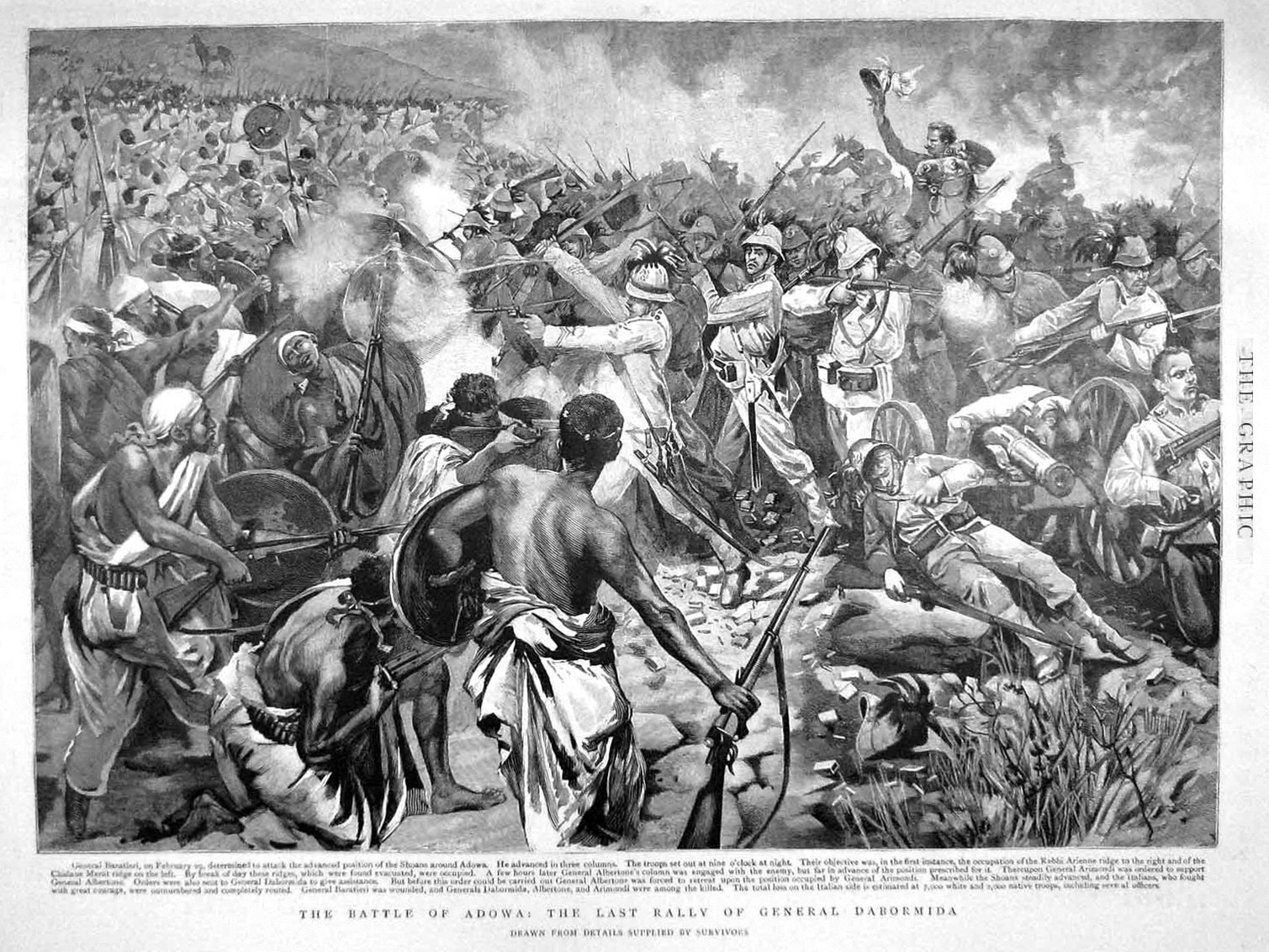
Well, the Italians mostly died—but they didn’t have to. The Ethiopians not only had significantly more manpower, but they weren’t exactly armed with spears either. They also had modern rifles. And cavalry. And more of everything, all on their home turf. The Italian invasion was just a bad idea from the start.
They didn’t just take high casualties at Adwa; the Italians saw two-thirds of their army killed, wounded, or captured. For Ethiopia, it guaranteed their independence from European meddling or subjugation, forcing Italy to recognize Ethiopia as such–at least, until Benito Mussolini came to call with airplanes and chemical weapons.
3. The Entire Russo-Japanese War
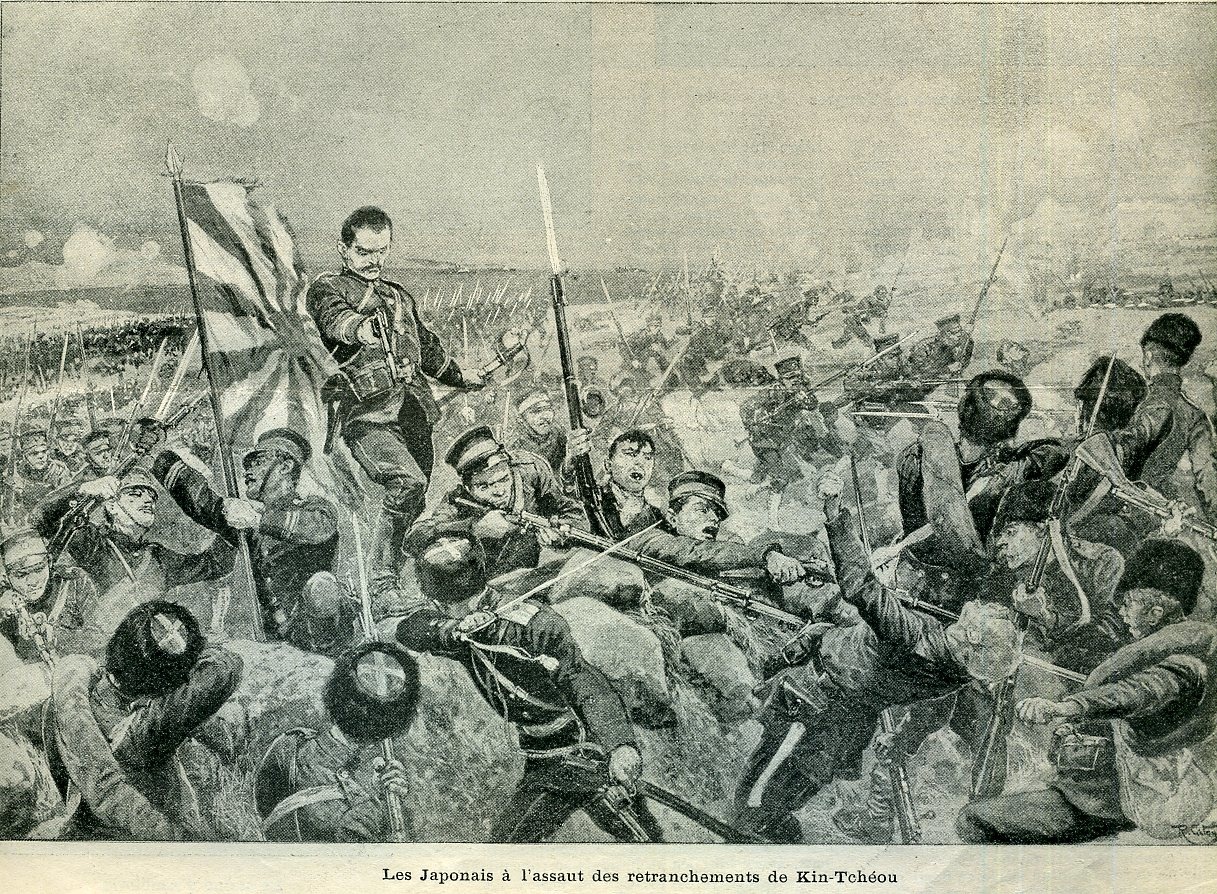
At the turn of the 20th Century, Japan and Russia were in direct competition for dominance over Korea and Chinese Manchuria. Russia was expanding the Trans-Siberian Railway to reach its eastern shores. It did so through China, eventually expanding to the city of Port Arthur, which the Japanese thought they’d won in a previous war with China. Both Russia and Japan became convinced that a war was coming. Because it was.
For some reason (racism), the Russians didn’t seem worried, even though they were far away from any kind of reinforcement, and the Japanese had an advantage in manpower and proximity. But the “yellow monkeys,” as they were portrayed in the Russian press, gave the Russian military zero pause. The Czar and his advisors were sure Russia would win any war with an Asian country. Japan repeatedly attempted to negotiate with the Russians, but to no avail. War could have easily been averted, but the Czar was sure Japan wouldn’t attack.
Since Russia had advisors with Menelik II in Ethiopia, you’d think they’d be wary of racist overconfidence, but you’d be wrong, because Japan definitely attacked.

When Japan attacks, it does it in a big way (more on that later). It attacked the Russian Far East Fleet and bottled it up at Port Arthur, destroying it with land-based artillery. Japan then captured all of Korea in two months. The Japanese then moved into Manchuria. The Russians fell back, waiting for land reinforcements via the Trans-Siberian Railway and the Russian Baltic Fleet, which pretty much had to circumnavigate the globe to get to the war.
Neither the reinforcements nor the Baltic Fleet were put to good use. Russia lost 90,000 troops when the Japanese captured the Manchurian capital at Mukden. And the Baltic Sea Fleet (now called the 2nd Pacific Fleet) was annihilated by the Japanese on its way through the Tsushima Strait. Things got so bad for the Russians that Teddy Roosevelt had to negotiate an end to the war.
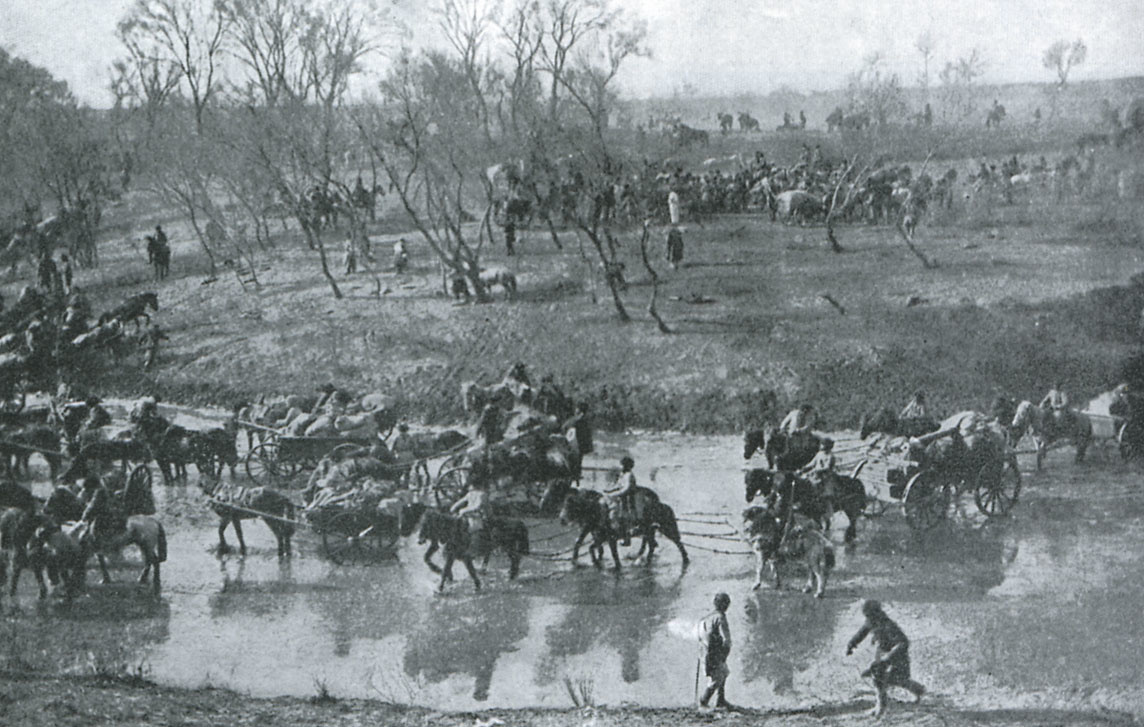
4. World War II in the Pacific
Well, just as the Russians proved they learned nothing about racism by watching Menelik trounce the Italians, the Japanese learned nothing about racism from their victory over Russia.
By 1937, Japan had emerged from the Great Depression, well ahead of the rest of the world. Coupled with significant military victories in wars with China and Russia, as well as World War I, Japan was riding pretty high. But this isn’t the start of the Japanese superiority complex. The country actually tried to have a race equality declaration written into the League of Nations.
But we all know how well the League of Nations turned out.
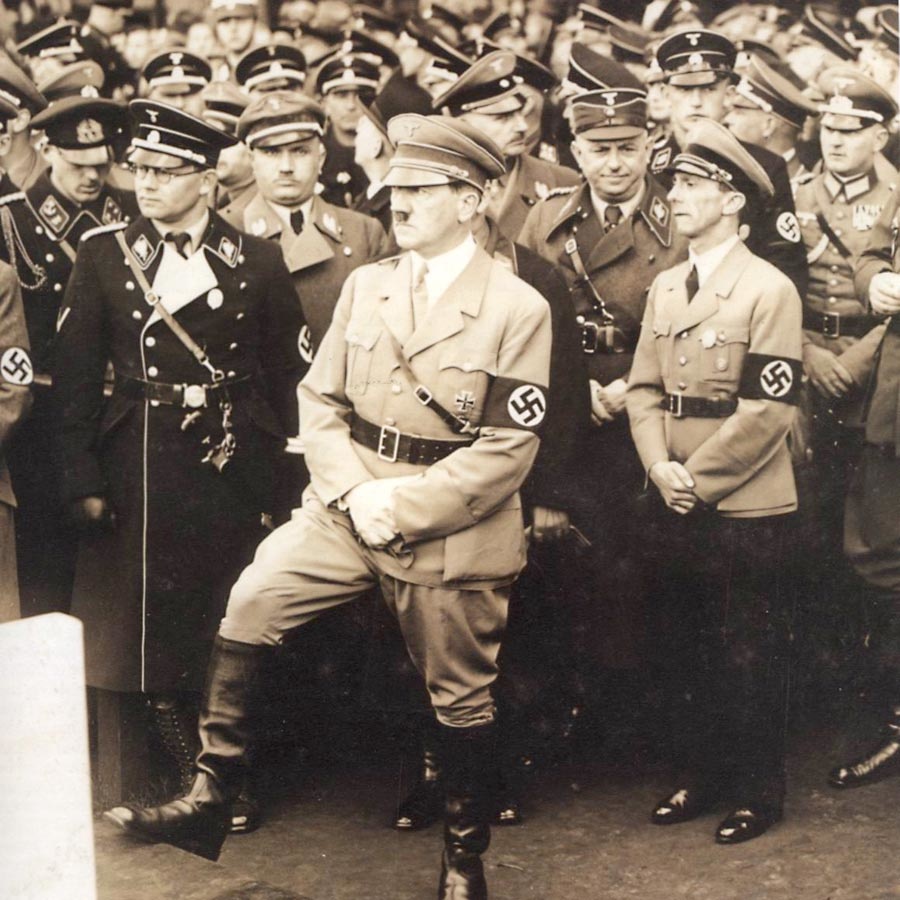
The Japanese became contemptuous of white Americans and Europeans and saw themselves as a superior race. The inferior white races were considered soft and weak in comparison. When Japanese officials were met with racism while visiting foreign countries, it only exacerbated their issue.s
They saw whites as overly individualistic, a society that would crumble at the first sign that it needed to unify or die. Japan soon came to believe its divine role was to be the champion of Asians, to liberate the colonies of the Western powers, and lead a new bloc of Eastern power. Their view of themselves as a superior race was so extreme that it would weigh heavily on the Asian peoples they “liberated.”
But before any of that happened…
The fact is that American citizens didn’t really want the U.S. to go to war with Japan. But Japan needed raw materials to continue its military campaigns in Asia, especially China. So, when the United States cut them off from American oil and scrap metal, there was only one way to go about getting it.

There were actually many ways Japan could maintain its expansion in Asia without bombing Pearl Harbor or going to war with Europe and the United States, but it opted to bomb the Americans, who had the only fleet that could stop the Japanese Navy. With the Americans out of the picture, Japanese forces could then take oil and rubber from the British and Dutch colonies in Asia. The Japanese believed that if they destroyed the U.S. fleet, America would just give up and let them have it.
That’s how weak-willed the Japanese thought Americans were. That line Admiral Yamamoto supposedly said about waking a sleeping giant? He never said that. But Japan found out pretty quickly about these guys called “United States Marines.”
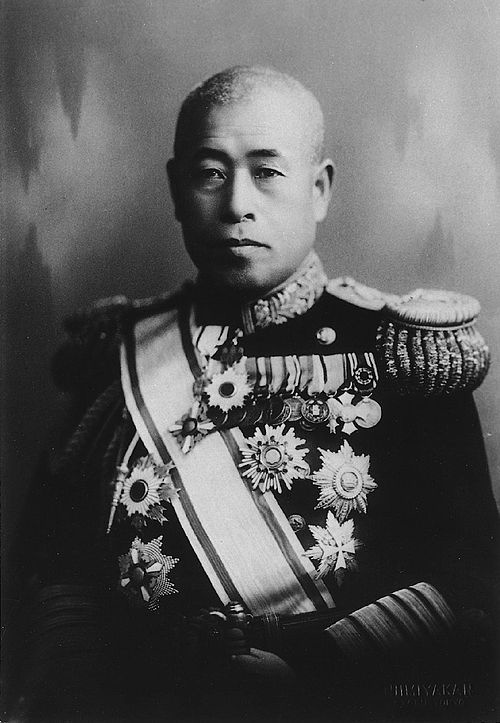
Japan’s leadership knew they couldn’t win a long war against the U.S., but it was their racial bias that allowed them to believe the Americans would just give up after Pearl Harbor. They assumed Japan was so superior that losing the Pacific War came as a shock and surprise to most of the Japanese people.