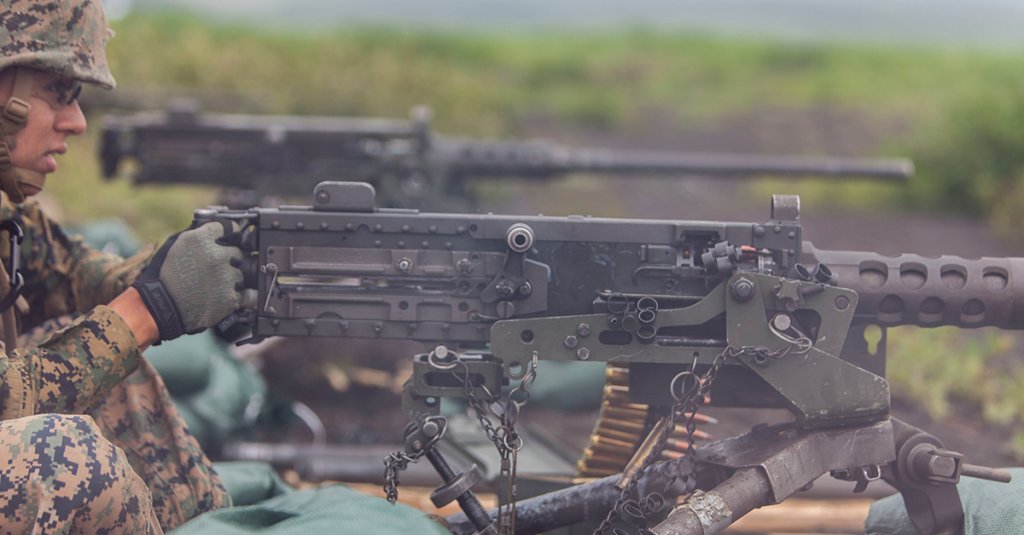
In the long lineage of American infantry weapons, everything eventually fades away. The M1 Garand, a rifle that defeated fascism, is now a museum piece. The M14 had a brief, troubled run before being relegated to ceremonial duty. The M60, for all its grit and jungle love, was eventually retired to the scrapyard. Even the M16 and M4 platforms have evolved so many times they are barely recognizable as they have been Ship of Theseus’d.
Then there is the M2 .50-Caliber Machine Gun.
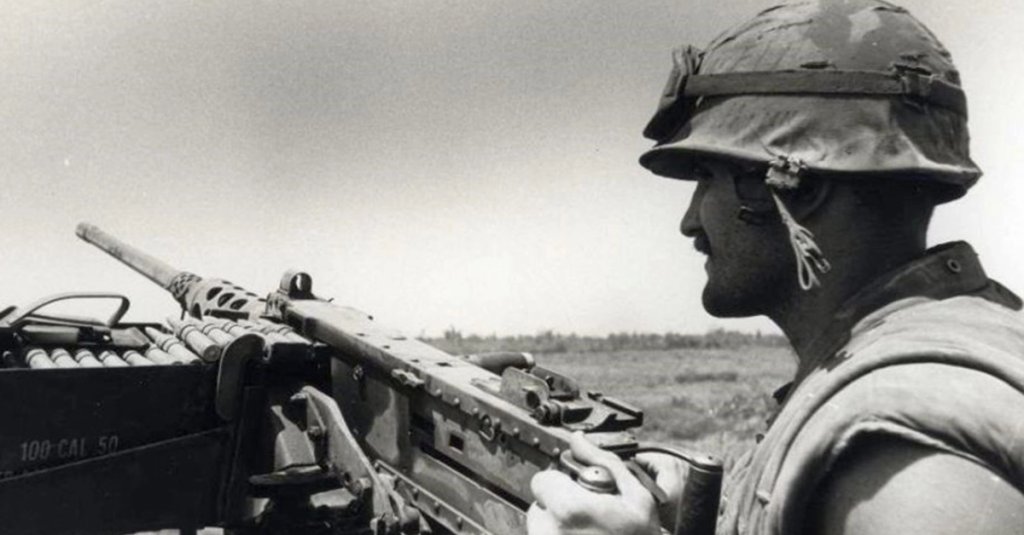
John Browning designed the core of this beast in 1918. It entered service soon after in the 1920s. It fought the Nazis in Europe, the Japanese Military across the Pacific, waves of Chinese infantry in Korea, the jungle ambushes of Vietnam, the urban sprawls of Iraq and Fallujah, and she will be fighting the Martian hordes in 200 years. It is the only weapon in the arsenal where a great-grandfather, a grandfather, a father, and a son could have all fired the exact same model in combat.
Related: The M60 ‘Pig’ caught plenty of hate, but the love was real
She is not a girlfriend you have a “toxic relationship” with, like the M240B, and she is not a finicky piece of technology that needs babying, like the M249 SAW. The Ma Deuce is the matriarch of the American arsenal. She is the terrifying grandmother who sits at the head of the table, and when she speaks, every other weapon system shuts up and listens.
The Ritual of the Gauge
For the generation of veterans who served before the widespread adoption of the quick-change barrel kits (M2A1), the relationship with the Ma Deuce was defined by a specific, anxiety-inducing chore: Headspace and Timing (now a fixed function and no longer required on the M2A1).
This was not like cleaning an M16, where you just scrubbed and CLP’d until your sergeant got bored. This was a chore with the highest stakes. Remember the feeling of searching for the smooth metal “Go/No-Go” gauge after your Squad Leader yells you awake at 130AM? Your fingers trying to find the perfect timing on that tiny, toothy dial (crap, did I turn it 12 times or 15?). Get it right, and the gun would run like a John Deere tractor. Make a mistake, and there was a very real risk of the weapon blowing up in your face like an old Saturday morning cartoon.
That ritual created a gunner hierarchy in the platoon. There were those who could hop into the turret and make this baby go, and then there were the operators who truly understood the gun’s internal operation. The “ker-chunk” of the bolt going home on a properly timed .50-cal was a sound that lowered the heart rate of everyone in the convoy. Even though modern upgrades have made this obsolete, the memory of that gauge remains a secret handshake among those who know (ever use a nickel and dime when your headspace/timing gauge was nowhere to be found?).
The Ribcage Rocker
We also remember twitchy nervousness when firing a machine gun. You pull a trigger with your index finger. It feels small. It feels like an extension of you.
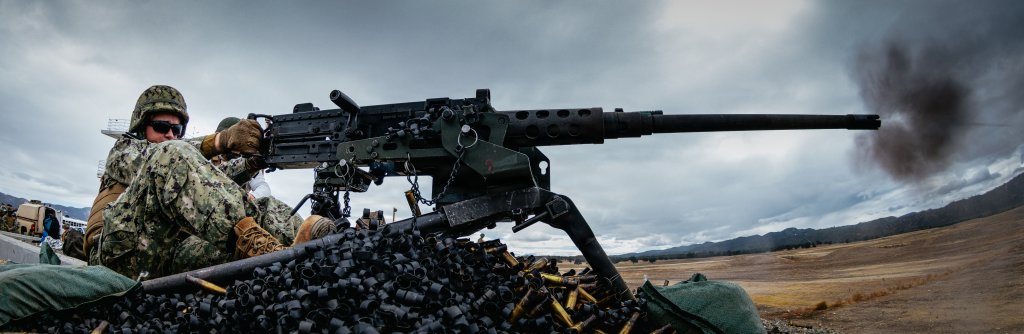
Firing the Ma Deuce is an entirely different sensory experience. You do not hold it; you mount it. You do not pull a trigger; you press a butterfly paddle with your thumbs like an old arcade game gimmick. The ergonomics are closer to operating heavy construction machinery than firing a small arm. It feels less like shooting and more like executing a command at your computer, hitting the spacebar on a keyboard designed to delete things from existence.
There is no frantic vibration like you feel with a SAW. When the M2 rips, the entire vehicle shakes. It is a slow, consistent thumping that travels through the grips, up your arms, and settles into your ribs. It feels industrial. It forces you to look over the top of the receiver with a kind of detached judgment, watching the tracers pump out slower than you expect, only to impact with a violence that actually causes awe.
Death, Taxes, and the M2
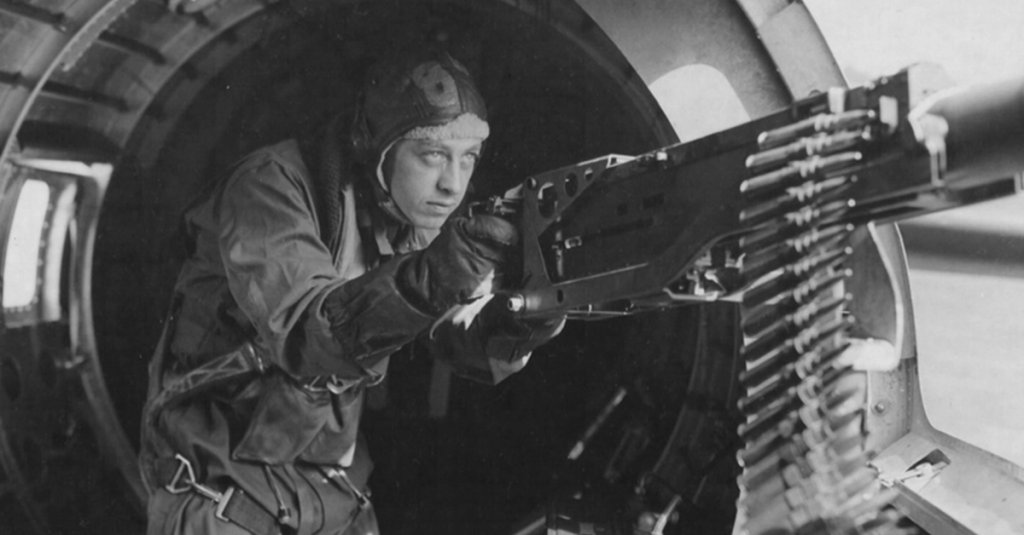
It’s the main reason the M2 has survived for a century without a replacement: nothing else ignores the cover and concealment doctrine quite like a .50 BMG round.
When you engage a target with 5.56mm or even 7.62mm, you are worried about angles, deflection, and the thickness of the cover the enemy is hiding behind. You are literally playing a game of geometry. The Ma Deuce does not play games. It does not poke holes in the enemy’s cover; it treats obstacles as if they do not exist.
A single round carries enough kinetic energy to turn a cinder block wall into a poof of dust. It turns light vehicles into shredded metal and turns heavy cover into an afterthought rather than an absolute. Then there’s the moment you realize the enemy has no real way to hide from you.
You stop shooting at the enemy and start shooting at the infrastructure they are using to survive. Shooting from windows, then ducking to reload? You just gave an M2 gunner the easiest of targets. All they have to do is dismantle their world, one half-inch slug at a time, or punch through it like they were ducking out in the open.
It is a level of destructive renovation that changes the entire philosophy of a fighting force. When the heavy thump of the .50 starts, the enemy stops maneuvering and starts praying, then they start regretting all the choices they’ve ever made, in a moment of existential dread.
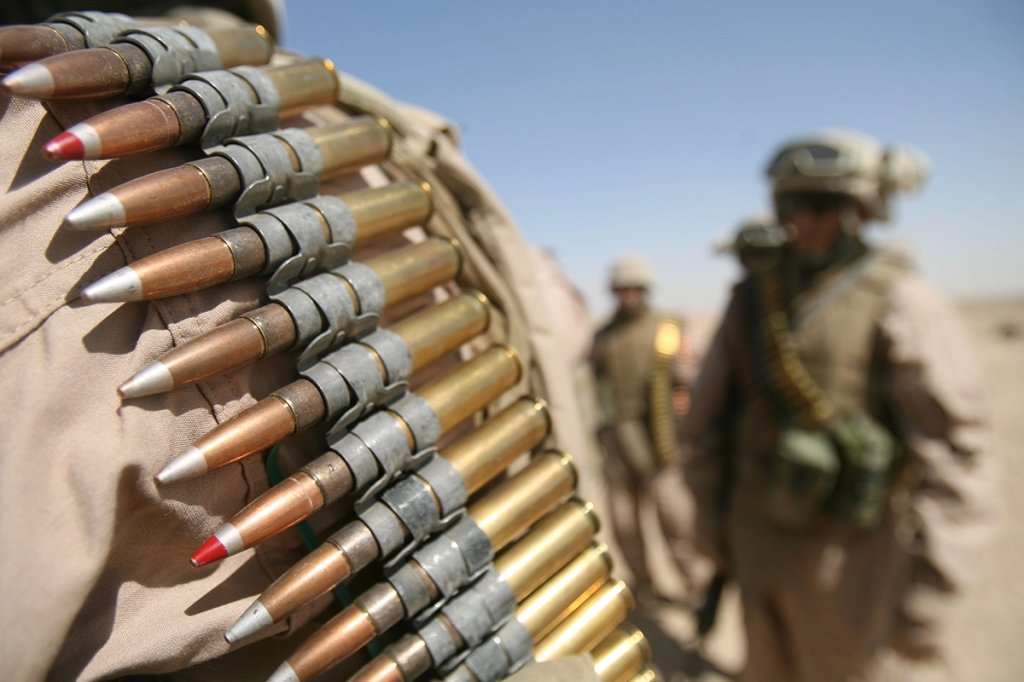
We live in an era of super-high-tech warfare. We have drones of all shapes, sizes, and materials. There are loitering munitions and optically guided missiles. Yet, every time the United States military deploys to a new conflict, the first thing we do is bolt a hundred-year-old heavy machine gun to the roof of a vehicle; all military personnel have learned to expect it.
We do this because technology can fail, batteries can die, and software can glitch or be messed with. But a short-recoil-operated, air-cooled, belt-fed design from 1918 relies only on old-fashioned science. It works because it has always worked and it always will. The Ma Deuce outlived the politicians who started the wars, the officers who planned them, and the soldiers who fought them. She has watched the world change from the turret of a Sherman tank, the door of a helicopter, and the crow’s nest of an MRAP.
She is cold; heavy as sin; eternal. She will outlive you and everyone you’ll ever love; she might be time itself. Long after the plasma rifles and quantum weapons have become standard issue, there is a good chance someone, somewhere, will mount this monster as the last star in the sky dims out forever.
Don’t Miss the Best of We Are The Mighty
• The Indian Scouts that forged the legacy of American Special Forces
• When Patton met MacArthur in the mud of St. Mihiel
• The difference between Special Forces and special operations (and why words matter)