If the M60 machine gun was the jealous, high-maintenance spouse whose father pushed that shotgun wedding, the M72 Light Anti-Tank Weapon (LAW) was the reckless fling you prayed would answer your call when things got desperate at 2 AM.
Related: The M60 ‘Pig’ caught plenty of hate, but the love was real
It didn’t demand a complex emotional relationship. It asked for nothing. It simply lived quietly on your rucksack, a waterproof tube of zen, waiting for the one specific moment when your patrol ran into something that 5.56mm rounds couldn’t solve.
For the troop in the jungle, the M72 wasn’t just a rocket launcher. It was a tube made for “Oh Sh*t”.
Molding the “Crew-Served” Mentality
There is something instantly likable about the LAW, to understand why you have to look at what came before it. In World War II and Korea, if you wanted to kill a tank or bust that bunker, you called up the Bazooka team. The M20 Super Bazooka was effective, sure, but it was an obnoxious burden. It was basically a steel stovepipe that required a gunner and a loader. It was a “system,” and systems tend to be cumbersome, and they also provide the enemy with more targets.
The Vietnam War changed the way we shot, moved, and communicated. The jungle didn’t allow for clean lines of fire or dedicated heavy weapons teams, nor did it allow for easy maneuvering. When a patrol tripped an ambush or stumbled upon a fortified NVA bunker complex, you didn’t have time to wait for the heavy weapons squad to move up from the rear. Every second you waited was another second the point man was pinned down.
The infantry needed something that didn’t require a crew: what they needed was “individual” artillery.
Thus, in 1963, the M72 was brought onto this planet. It was the democratization of heavy firepower. Suddenly, any rifleman could carry the power to crack a T-54 tank like the Liberty Bell or collapse a tunnel entrance, strapped to his back like some sort of Greek God.
It weighed barely five pounds, less than a rifle, yet could destroy armor, and then be treated as a disposable commodity. You didn’t have to clean it, no wasting time maintaining it, just step up to the plate and take your swing.
“Shunk-CLACK”
While the M60 had its rhythmic “chug-chug” heartbeat, the M72 LAW had a sound just as iconic to the men who used it: the mechanical violence of its extension.
The weapon itself actually looked like something you saw in the back of an old comic, sending off 25 cents in a self-addressed, stamped envelope, arriving, to your mother’s horror, in 8-12 weeks. It was a telescoping tube made of green fiberglass, capped with rubber on both ends… yup. It looked less like a weapon of war and more like a mailing tube for architectural blueprints.
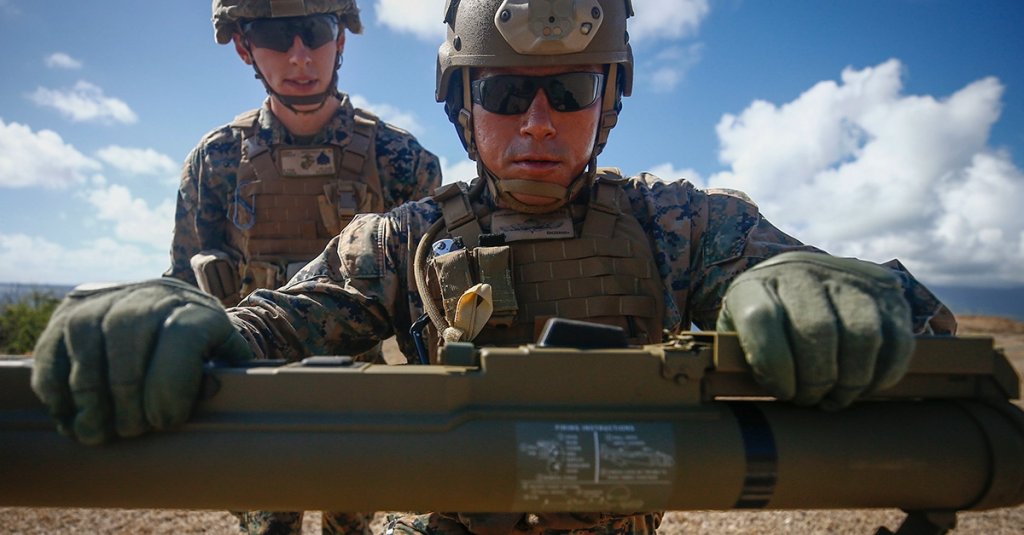
Where was the genius in this Nerf gun prototype? It was in how it meshed with the ground units. In a firefight, fine motor skills tend to evaporate quickly. Your hands shake, sometimes your vision tunnels, and your IQ can drop about 50 points. The designers of the LAW had this in mind when building this thing. That’s why the instructions weren’t hidden in a manual back at base; they were printed right there on the side of the tube in bold, child-proof cartoons.
The process itself was a fluid motion that some NCOs would fondly speed-drill into your skull. You yanked the rear cover pin, allowing the sling assembly to fall away like a shedding skin. You pulled the front cover, and then came the moment of truth. You grabbed the inner tube and yanked it backward hard. If you did it right, you were rewarded with that oddly satisfying, hollow shunk-CLACK as the tube locked into the firing position and the sights popped up on springs.
That sound was the signal that things were about to get really loud, real quick. It was transformative by its nature. One second, you were holding a plastic tube; the next, you were holding a live 66mm rocket with a high-explosive anti-tank (HEAT) warhead, ready to bail your mates out of whatever hijinks they had gotten into this time.
Denial and Desperation
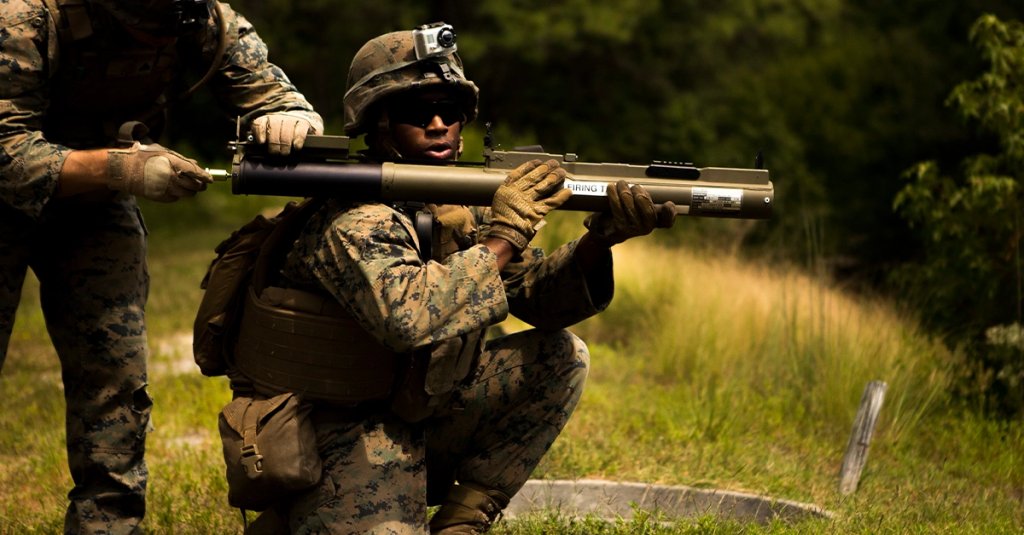
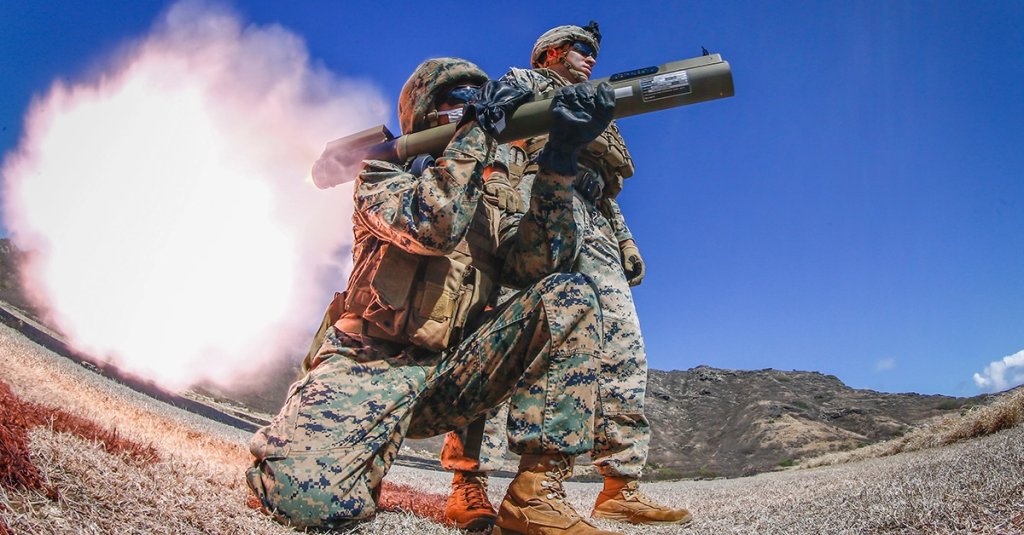
Firing the LAW was a full-sensory experience that bordered on terrifying. Unlike a rifle, where you tuck the stock tight into your shoulder to manage the recoil, the LAW sat precariously on top of your shoulder. Trust in your training, as well as the sights, was a must. We aren’t talking modern optics; these looked flimsy and vibrated with your adrenaline.
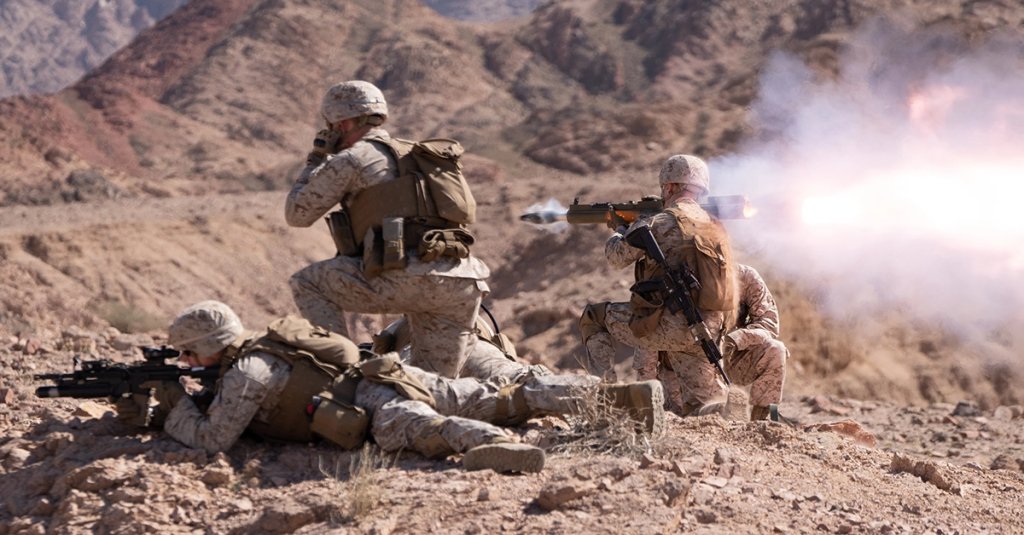
When you depressed the trigger bar, a rubber-covered strip on the top of the tube, there was no mechanical click; there was an instant of violence. The rocket motor would ignite and burn out before the projectile even left the tube, accelerating the 66mm warhead to 475 feet per second. No bang would be heard; It was more of a sharp, cracking “WHOOSH” that felt like it sucked the air out of the immediate area.
However, the real show was behind you. The “Backblast Area” wasn’t a suggestion; it was a legitimate kill zone. The LAW vented superheated gas out the back of the tube to counteract the recoil. In the open desert, this just kicked up a massive dust cloud that hollered your position to every enemy within a mile. But in the confined spaces of the jungle or an urban alleyway, that backblast was a serious hazard.
You had to check your six. If your buddy was standing behind you, he was going to get Kentucky fried. If you were backed up against a wall or a tree, that blast was coming right back at you. It forced you to expose yourself. To fire the LAW, you had to rise up out of the foxhole, stand tall, and create space. For those three seconds it took to aim and fire, you were the most sought-after target on the battlefield.
When It Worked (And When It Didn’t)
The relationship with the LAW wasn’t all roses. It was a “munition of opportunity,” which is a polite way of saying it was pretty cheap. For example, the Vietnam-era M72s had a nasty habit of failing to fire in the humidity. The electrical firing mechanism didn’t love the monsoon season either. There is no feeling in warfare quite as sickening as standing up, exposing yourself to enemy fire, pressing the trigger bar, and hearing absolutely nothing.
Then there was the issue of a 66mm warhead designed to penetrate armor, but against the thick, sloped steel of a Soviet-made tank, it would struggle. There are stories of LAW rounds bouncing harmlessly off the armor plate of a PT-76 or T-54 unless you hit it dead-on.
Put it against a bunker or even a spider hole? It was an eraser. When that round connected, it exploded; then it injected a shot of “liquid hot magma,” actually molten copper, through the target. It turned hiding places into tombs. For the grunt pinned down by a machine gun nest in a treeline, seeing that grey streak of smoke race toward the enemy position was better than seeing the cavalry. It was an instant, often violent, conclusion to the problem.
The Expendables
The M60 is gone, replaced by the M240B. The M16 evolved into the M4, now morphing into the XM7 (M7). But the M72 LAW? It’s actually still hanging around.
Technically, the military tried to replace it with the AT4, that massive, 84mm Swedish boomstick. And sure, the AT4 hits harder; it also weighs nearly 15 pounds. You can’t strap two AT4s to your rucksack and still carry a mortar baseplate without accelerating your VA visits. The LAW survives because it addressed the infantryman’s greatest concern: weight.
Today, specialized variants of the M72 are still being carried by Marines and Special Forces in places like Syria and Ukraine. They have better sights now, and the warheads are spicier, yet the soul of the weapon is the same.
While we are currently living through future tech our parents only saw in the movies, there is something deeply nostalgic about the LAW. It’s analog and simple. It’s a fiberglass tube filled with understood intentions. Nobody ever seemed to name it. You didn’t clean it. You didn’t love it the way you loved your rifle or even the way you respected the Pig.
But when the world was ending, and the enemy was behind armor and concrete, the M72 LAW was a good friend indeed. It was like calling your shot when playing baseball as a kid; you just ripped it, dropped the empty tube in the dirt, and you walked off into the sunset.
A perfect relationship.