If you grew up watching 1980s action movies, you were sold a lie about the M60 machine gun. Rambo convinced an entire generation of future infantrymen that the M60 was the closest we’d get to a magic wand of destruction, and we couldn’t wait to get our grubby little hands on one.
They made it look like it could be fired one-handed, shirtless, while screaming and throwing your emotional baggage at the enemy; don’t forget the belt of ammo draped casually over an oiled-up bicep. You didn’t even need cover or concealment, just grip it and rip it, son.
Related: How the M240B earned cult status with GWOT veterans
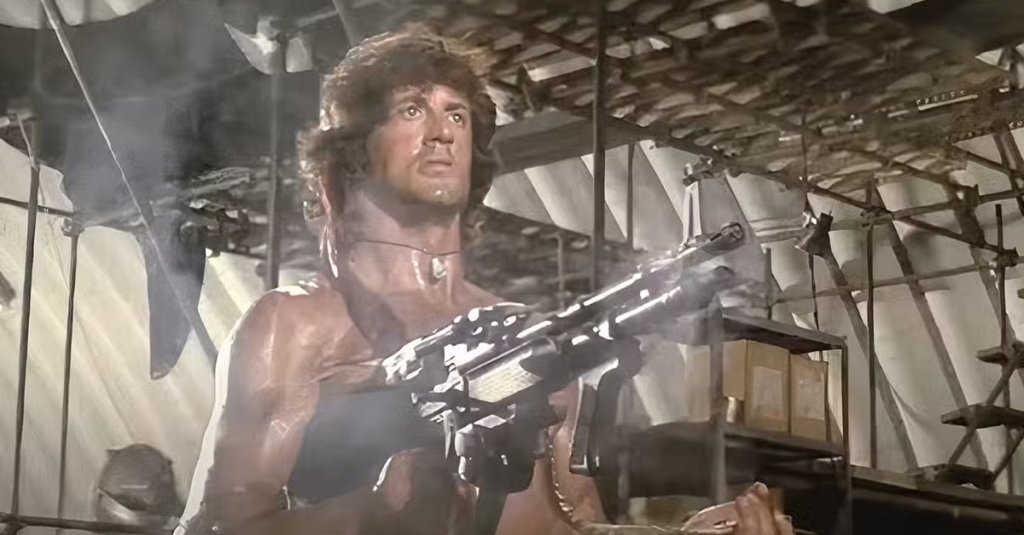
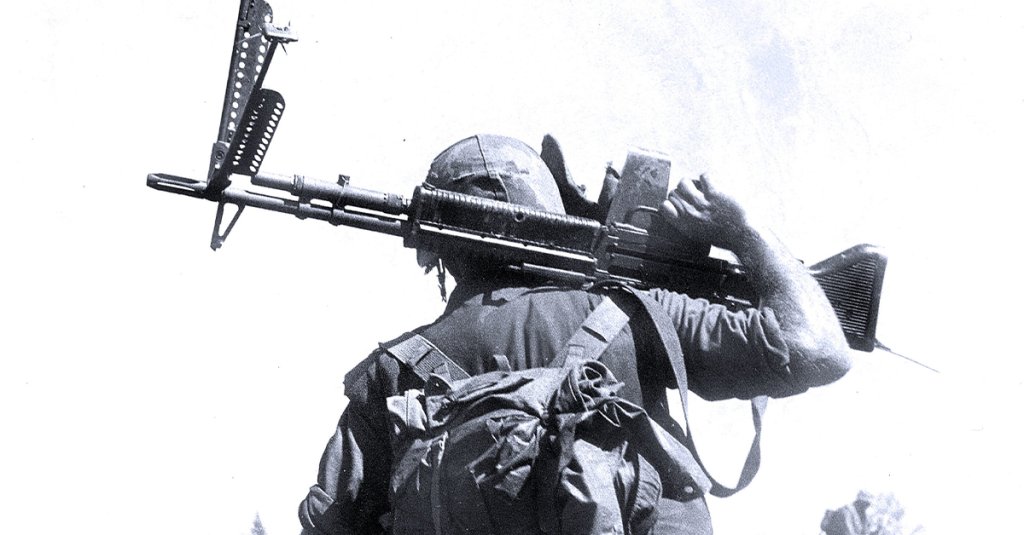
The reality of the M60 was not such tanned cinematic glory. It was safety wire, asbestos mittens, and a receiver that seemed to catch on every single piece of vegetation from Nam to Fort Benning. It was not a prop for a juiced-up movie star; it was 23 pounds of hope that you carried because you cared… or had no choice.
For those veterans who actually humped “The Pig,” the memories are a mix of shoulder pain and reverence. It basically defined the American infantry experience from Vietnam throughout the Cold War, and even into the very early days of the Global War on Terror. It was the bridge between the heavy, static machine guns of World War II and the beautiful perfection of the modern M240B/G/L. It was flawed, it was heavy, and it was certainly temperamental, but when the M60 gunner let loose, it was the only thing that mattered to their mates.
The Weight of the World
It wasn’t called a pig just because it ate ammunition. They called it that because it was an absolute beast to handle. Before you even loaded a single round, the weapon weighed roughly 23 pounds. That might not sound like much to a civilian lifting a dumbbell in an overly air-conditioned Planet Fitness. To an infantryman navigating a rice paddy or a desert wadi, it was their cross to bear.
While the riflemen in the squad complained about their M16s or M4s, the M60 gunner was living in a bit of a different reality. The shape of it was a disaster by modern standards, but somehow sexy. It was a spiteful lump of steel with a balance point that dug into your shoulder, it banged against your thigh, and the sling seemed solely designed to cut off circulation to your trap muscles.
Carrying the Pig was the physical payment for the privilege of being the most dangerous person in your patrol. Yet, you cursed the weapon with every step (not much changes in warfare of any era).
You hated the way the bipod legs would snag anything they could, whenever they could. You hated the way the spare barrel bag would swing like a sack of potatoes. Yet, despite the misery, you never actually wanted to swap it out. You carried the weight because you knew that when you took contact, the riflemen were just setting up the enemy; you were the one knocking them down.
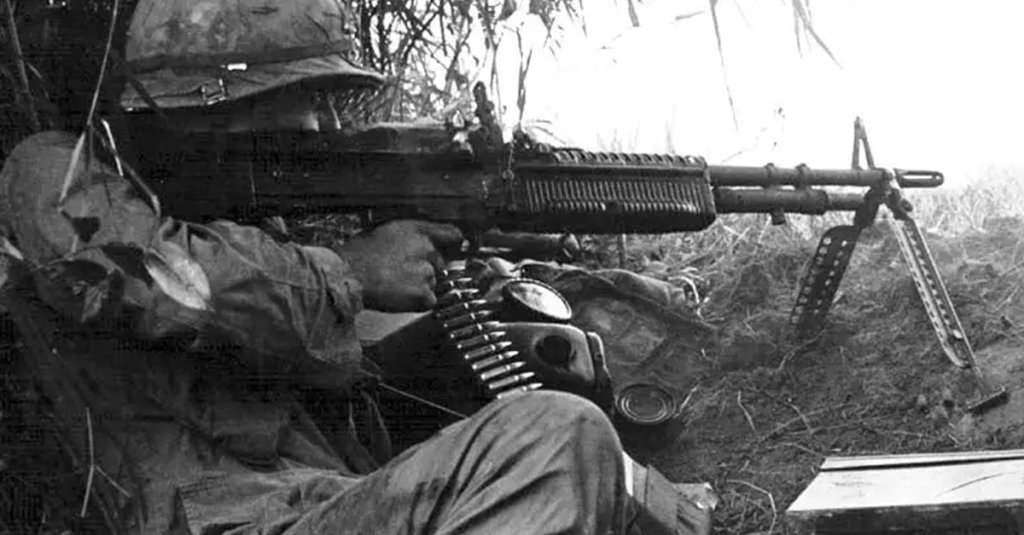
A Mechanical Nightmare
If the M240B is a Toyota, reliable, boring, and will outlive cockroaches, the M60 was a vintage Ford Mustang that needed a full-time mechanic to keep it on the road. You didn’t clean the M60; you had to perform minor surgery on it.
It was the gas system that was the primary source of anxiety. Unlike today’s, for the most part, self-contained weapons, the M60 required you to be an artist with safety wire. If you didn’t wire the gas cylinder nut correctly, the vibration of the gun firing would literally unscrew it. You would be in the middle of a firefight, laying down the scunion, and suddenly your gas piston would launch itself into the tall grass, never to be seen again, turning your belt-fed death machine into one and done.
Then there was the issue of barrel changes. The M60 didn’t have a handle on the barrel itself like the M240B. To change a hot barrel during a firefight, you needed freaking asbestos mittens. These mittens weren’t only made of dubious materials, they were the first thing that got lost in the field. Without the mitt, you were forced to improvise, often using your uniform or a silent prayer that your skin wouldn’t boil off with the steel. It was a design flaw that added a layer of “oh, crap” to an already high-stress environment.
Respect the Authority
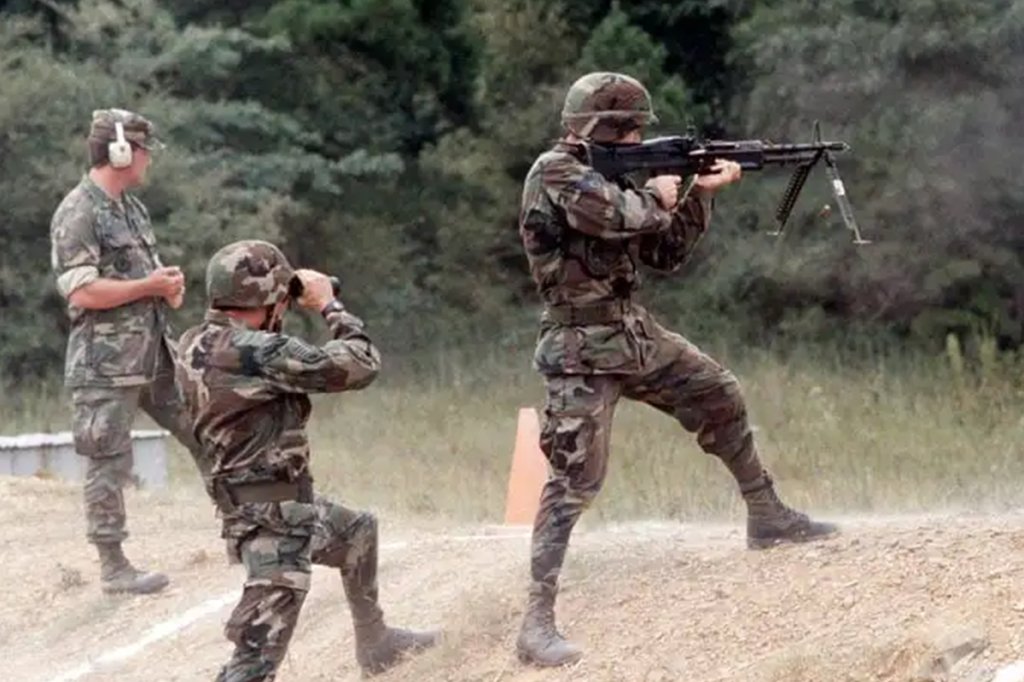
However, all the complaints about weight and maintenance evaporated the second you pulled the trigger. The M60 had a voice that was a little bit country, a little bit rock and roll. Modern machine guns like the 240B and the SAW have a faster, sometimes frantic buzzing sound. They tear through ammo at a cyclic rate that sounds like a zipper ripping open.
The Pig sounded different. It fired at a much slower, “chugging” cyclic rate of about 550 to 650 rounds per minute. It didn’t buzz. It thumped. The sound was a rhythmic, heavy chug-chug-chug-chug that you could feel in your heart.
That slow cadence had a distinct effect on the battlefield. In Vietnam, Grenada, and Desert Storm, that sound told everyone in the squad that daddy had arrived home, and you were all in big, big trouble. It allowed the gunner to stay on target more easily, walking the rounds into the enemy with terrifying precision.
It wasn’t the poetic “spray and pray” suppression of a light machine gun; it was a slow, hammering that punched through cover and courage judiciously. The Pig didn’t just keep heads down; it disassembled whatever those heads were hiding behind or attached to.
The Godfather of the M240B
It is easy to look back at the M60 with nostalgia, but we have to be honest about its legacy. The M240B, which eventually replaced it, is a better weapon. The 240 is more reliable, easier to maintain, and built with tighter tolerances. But the M240B stands on the shoulders of the M60.
The M60 did the dirty work for decades. It bridged the gap between the heavy Brownings of World War II and the modular systems of today. It fought in the suffocating humidity of the jungle, the freezing cold of the, well, Cold Wars, and the moon dust of the early Middle East conflicts. It taught us that if you take care of the weapon, it might just save your life and the lives of your friends…even if it likes to fight you the whole damn time.
The M240B earned cult status by being absolutely amazing, but the M60 earned its legend status by merely being there when it was needed most. It was there when the Hueys were landing in hot LZs. It was there in the bunkers of the Cold War. It was the background noise to a changing world, delivered one 7.62mm round at a time.
Long Live the Pig
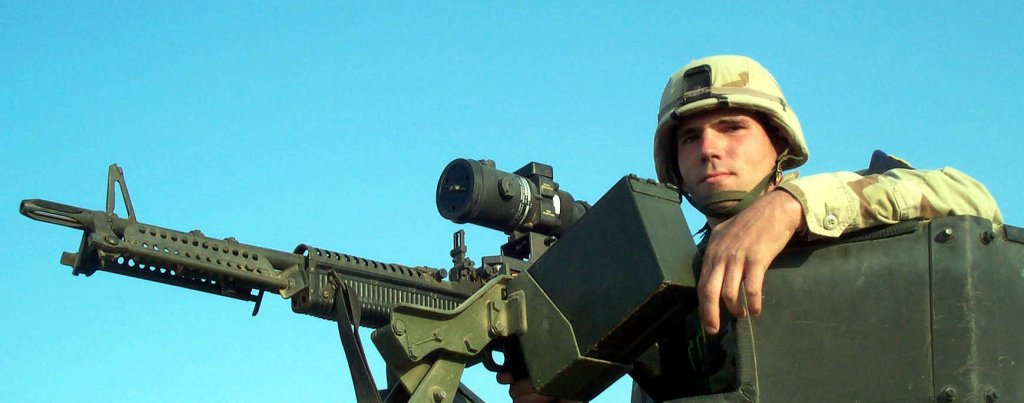
There is a reason why, despite all the jams and headaches, veterans still speak of this weapon with respect. It represents a different era of warfare. It comes from a time before optics and rails, a time when volume of fire, grit, and faith were the primary tactics.
The relationship between a gunner and the M60 was toxic, abusive, and exhausting. It demanded physical and mental toughness. It hurt so much to carry it. It was frustrating to fix. But in the darkest moments of a deployment, the Pig was the bundle of light you wanted in your arms. It was cool, it was mean, and it was yours. The M240B might have been the machine gun the military needed, but the M60 is the machine gun the infantry reflects on while looking up at the stars… and might have in their arms once again?