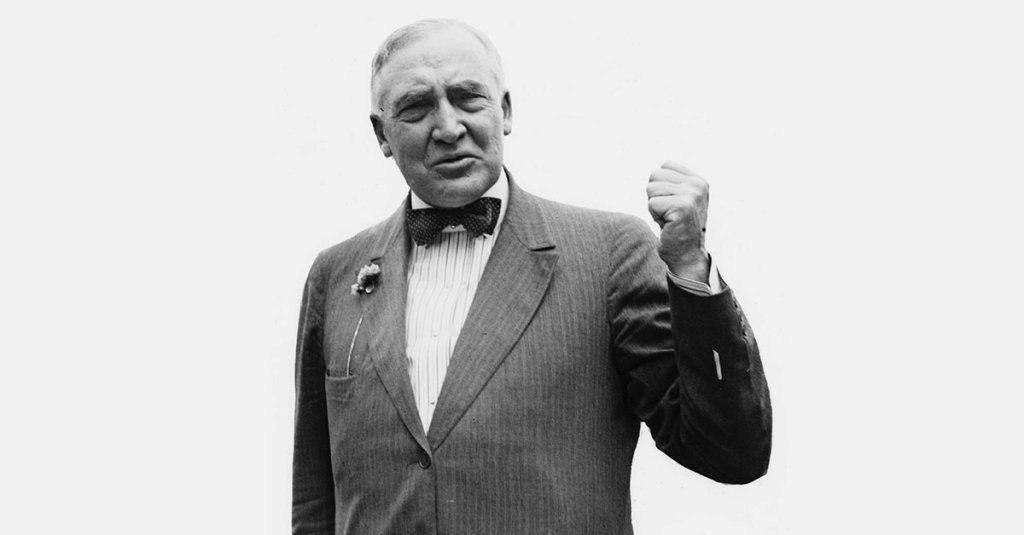
Charles R. Forbes exemplified the administration of President Warren G. Harding, which isn’t really a good thing. Forbes served as the first-ever director of the Veterans’ Bureau, the forerunner of today’s Veterans Administration (VA), and, like many members of Harding’s staff, found himself under fire for a series of scandals and corruption.
Unlike many other members of President Harding’s staff, however, Forbes would actually serve jail time for his corruption and—find himself being choked out by a six-foot-tall, 200-pound President of the United States.
Related: An award-winning book about President Garfield is now a four-part Netflix series
The Harding Administration had more than its share of scandals, including the president’s extramarital affairs (which included a love child), the Teapot Dome scandal, and the fact that his Justice Department was taking bribes from bootleggers during Prohibition, was just the start. They all paled in comparison to Charles Forbes.
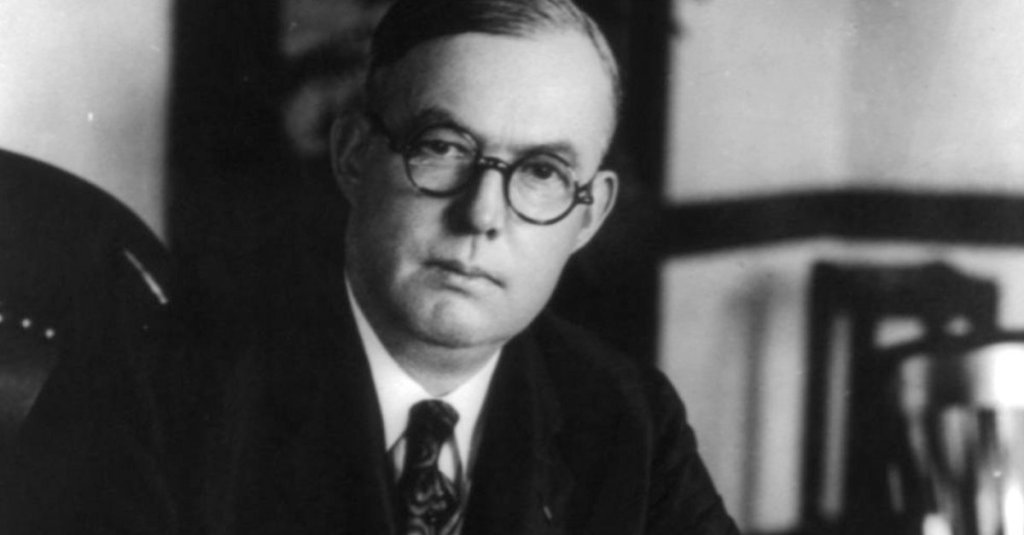
Forbes was an immigrant from Scotland but joined the U.S. Marine Corps at age 16 to become a musician, serving at the Washington Navy Yard. He had probably the best education an American could get at the time, first learning at a private school and then attending Columbia University and MIT, training to be an engineer.
In 1900, he enlisted in the U.S. Army but was charged with desertion two months later. After being brought back into the Army, and was sent to fight in the Philippines, which was then occupied by the United States. Despite his early mistake, he would serve for eight years, leaving the Army as a Sgt. First Class. It would not be his last stint with the Army.
He enlisted again when the United States entered World War I and spent the rest of the war in France, where he earned the Croix De Guerre and the Distinguished Service Medal. While his service in the two wars helped make his career, it was a chance meeting in Hawaii between the two wars that positioned him for his presidential appointment.
Forbes moved to Hawaii in 1912 to work as an engineer for the Navy. While there, he was appointed to a few federal positions by President Woodrow Wilson. By chance, he happened to run into an Ohio Senator, Warren G. Harding, who was on vacation. The two hit it off as poker buddies, and their families became close friends.
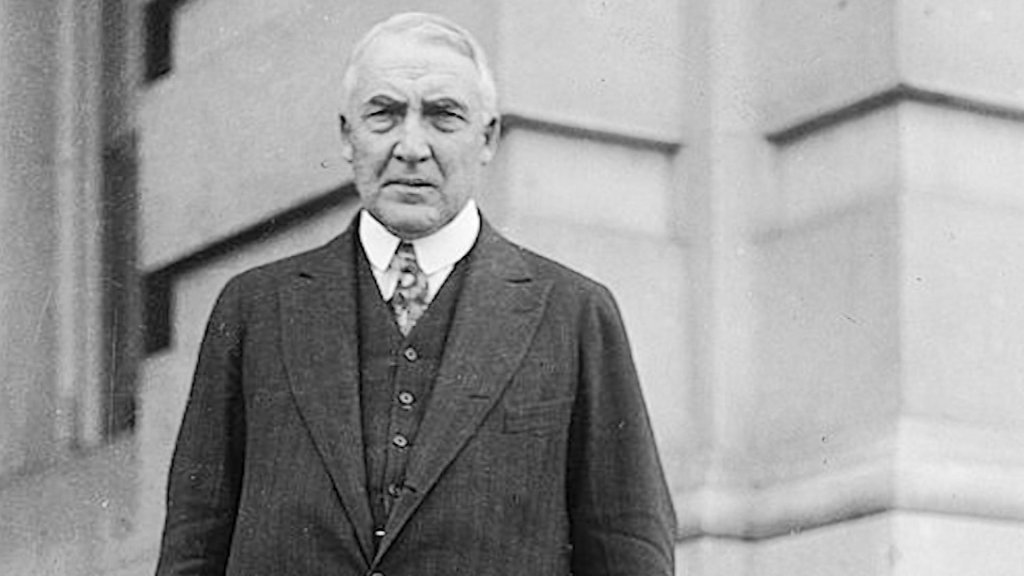
When Harding ran for President against Wilson in 1920, Forbes, who was living in Washington State at the time, traveled to Chicago for the Republican National Convention. Forbes swung the Washington delegation to Harding, who would go on to win the Republican nomination for President, an election he would also win.
In exchange for his support, Harding appointed Forbes to the Bureau of War Risk Insurance. It wasn’t long before Congress created the Veterans’ Bureau and appropriated $500 million (more than $6 billion today) to handle the needs of veterans wounded and disabled from World War I. In 1921, Harding appointed Forbes to lead it.
It was a mistake. For two years, Forbes not only ignored the needs of his fellow veterans but also embezzled $2 million in the worst possible ways. He siphoned money from the construction of veterans hospitals, sold medical supplies, and took bribes and kickbacks from building contractors. He also rejected thousands of claims from disabled veterans. Of the 300,000 wounded from World War I, Forbes only approved 47,000 disability claims.
When Harding discovered that Forbes was selling medical supplies, he was furious, but the two remained friends. The President ordered Forbes to stop, which Forbes promised he would. When Harding discovered that Forbes lied about stopping in January 1923, he ordered his “friend” to the White House. At the time, Harding was facing scandals from many sides, from the Teapot Dome scandal to his own Justice Department. He was at his wits’ end.
Harding allowed Forbes to flee to Europe to “settle family matters” on the condition that he resign his position. He resigned and went to Europe with a woman who was not his wife. That woman was actually the wife of a fellow conspirator, who later testified to Congress about Forbes’ illicit activities.
When Forbes came back from Europe, he went to the White House, where Harding grabbed him by the neck and shook him like a dog with a rat in his mouth, calling him a “double-crossing bastard.” Forbes was only saved by the President’s next appointment, who probably had no idea what to say in that moment. Forbes’ wife would later divorce him before he was tried and convicted of conspiracy to defraud the government. He was sentenced to two years at Fort Leavenworth. Charles R. Forbes died in 1949.