
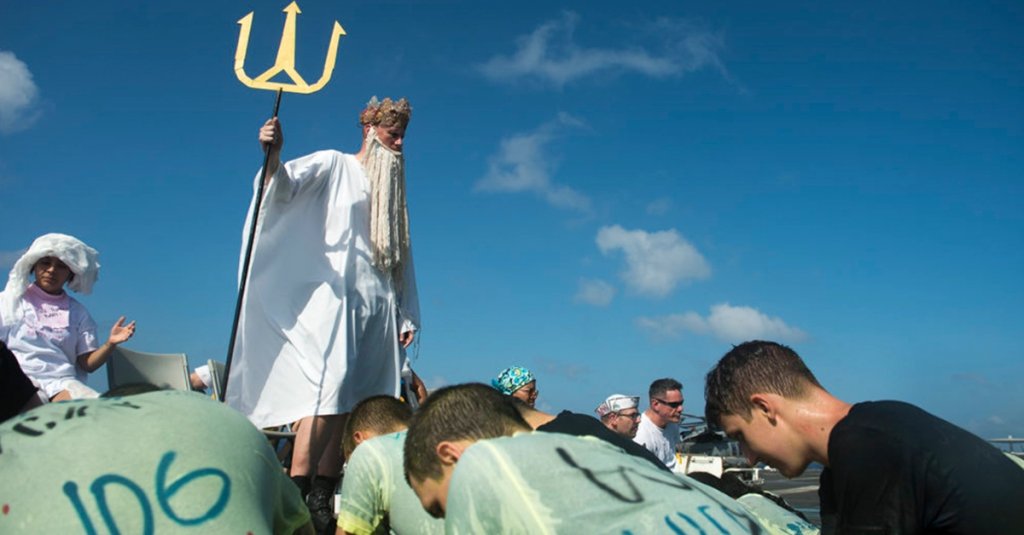
The U.S. Navy knows that holding a crew together during long deployments, dangerous work, and endless stretches of ocean requires more than regulations and watch bills. Traditions are a huge part of life at sea, and the U.S. Navy practically runs on traditions.
Also Read: These are the Navy’s rules for being buried at sea
Navy tradition has a funny way of turning navigation, survival, and bad luck into a certificate you can frame and a nickname you’ll never live down. A lot of the sea service’s most enduring rites exist to mark one thing: you went somewhere difficult, or you survived something worse, and the ship decided you earned a little lore for it.
No matter how ridiculous it seems.
1. Order of the Shellback
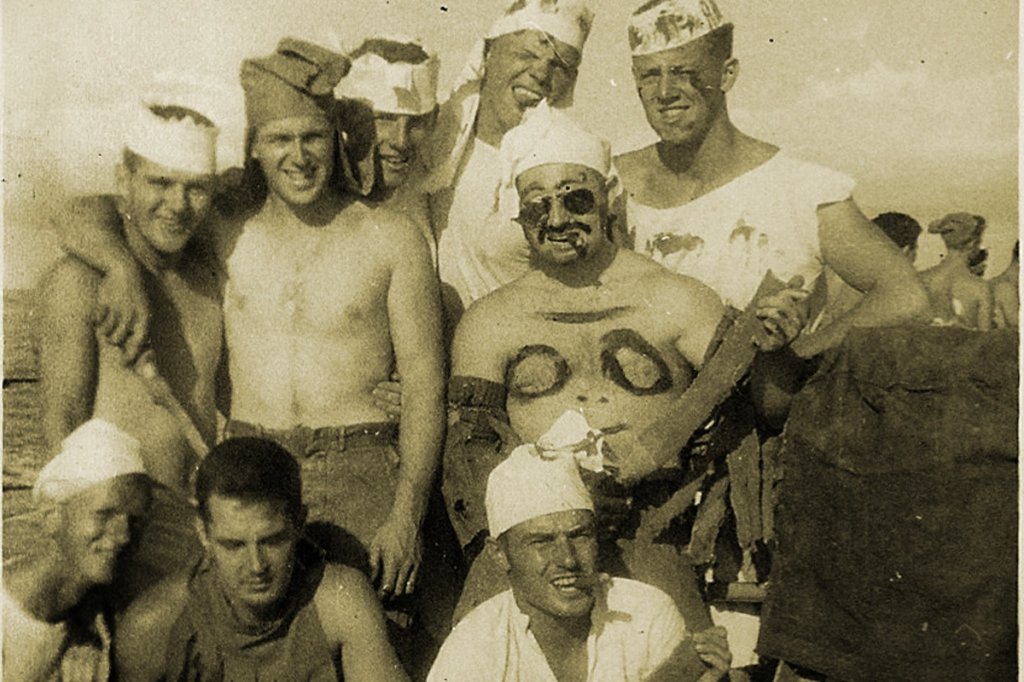
The most famous Navy rite of passage is the Crossing the Line ceremony, held when a ship crosses the equator. Sailors who have never crossed before are known as “pollywogs,” and are initiated into King Neptune’s court. We’re not making this up.
It’s a centuries-old rite of passage dating back to the age of sail, meant to mark the shift from novice to seasoned mariner. And the Navy wants you to know it emphasizes safety and respect over the old hazing stereotypes. But you should still ask your grandpa about having to eat jelly out of King Neptune’s belly button.
2. Golden and Emerald Shellbacks

Not all shellbacks are created equal. Sailors who cross the equator at the International Date Line (about 900 miles east of Nauru) earn the title of Golden Shellback, a nod to one of the most abstract but important seams on the globe. Crossing the equator near the Prime Meridian (about 460 miles to the west of Sao Tome and Principe) earns Emerald Shellback status.
The deeper tradition here is old seafaring superstition and pride in seamanship. Sailors have always marked major “lines” and thresholds, because on the ocean, there’s nothing to see. At sea, crossing the equator (anywhere) is a moment the whole ship can feel and ritualize.
3. Order of the Blue Nose
The Blue Nose tradition marks a ship’s entry into the Arctic Circle. It is the cold-weather cousin of the Shellback ceremony and carries a similar meaning. Welcome to an environment that can kill the unprepared.
During World War II and the Cold War, Arctic operations were rare and dangerous, making Blue Nose certificates especially prized. Many early versions were ship-specific, hand-designed, and unofficial, reflecting the Navy’s long habit of letting sailors formalize experiences the bureaucracy never bothered to standardize.
4. The Red Nose
The southern equivalent of the Blue Nose comes from crossing the Antarctic Circle. Depending on the era and the ship, sailors earned “Red Nose” certificates or other locally named honors. Antarctic operations were historically limited to a small number of icebreakers, research vessels, and support ships, which made the tradition even more exclusive.
These certificates are like sea stories with receipts. They’re a way to mark operational geography, especially for sailors who might do multiple deployments and never hit the same corner of the map twice.
5. Order of the Ditch
Not every order requires Neptune, a crown, or someone barking at full volume. Some are tied to chokepoints and engineering marvels. Sailors transiting the Panama Canal are welcomed into the Order of the Ditch.
For decades, the canal was one of the most strategically important chokepoints in the world. Transiting it meant precise ship handling, coordination with civilian authorities, and a front-row seat to one of the greatest construction projects of the modern age. Sailors didn’t need sea gods to mark a moment like that.
Beyond Panama, sailors have long commemorated transits through major chokepoints like the Suez Canal, the Strait of Gibraltar, and the Bosphorus. These passages were historically dangerous, politically sensitive, or both. Some still are.
6. The Goldfish Club
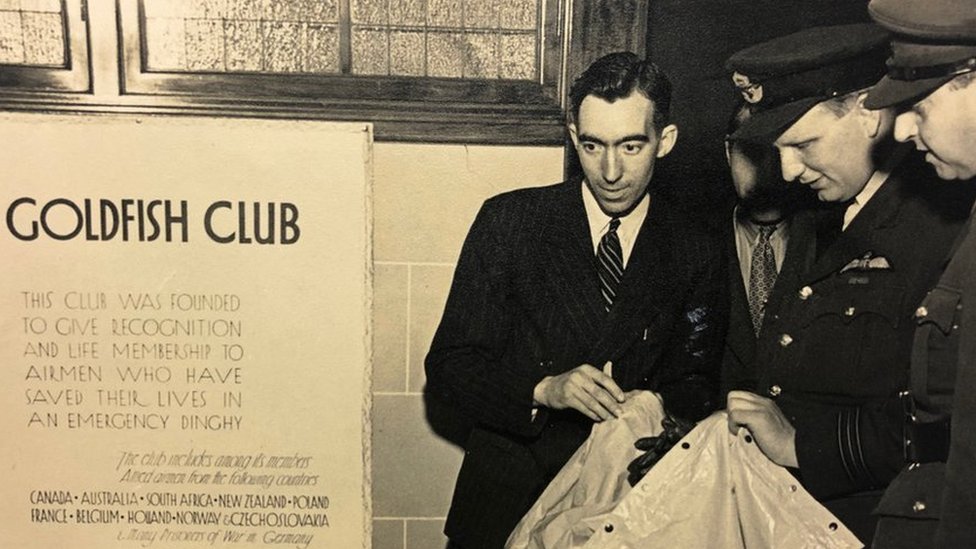
Some “orders” don’t celebrate where you sailed. They celebrate that you didn’t die. The Goldfish Club is built around aircrew who ditched at sea and survived. Its history dates back to World War II, when members traditionally received a goldfish pin or patch, often worn on a “Mae West” life vest.
The humor is deliberate. Calling survival a “club” doesn’t minimize the danger. It acknowledges it without letting it dominate the story—just ask the members of the Martin-Baker Tie Club.
7. Sea Squatters
The Sea Squatters Club is also for survivors, but is a lot less funny. The requirement includes spending more than 24 hours in a life raft. The chief requirement, however, is surviving that time in the life raft. The reality is that surviving at sea isn’t one moment; it’s hours of exposure, dehydration, and keeping it together long enough to get picked up.
Survival at sea is psychologically brutal. So the Sea Squatters is really about giving a name and symbol to a shared experience that would otherwise just be trauma and paperwork.
8. Order of the Caterpillar
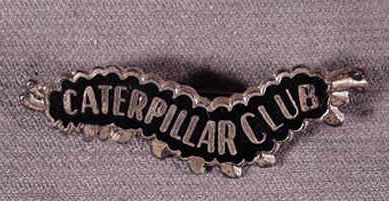
The Order of the Caterpillar is for aviators who bailed out of an aircraft using a parachute. The tradition dates back to early aviators, when parachutes were still novel and surviving a jump wasn’t as common as it is today. The caterpillar symbolizes the silk thread that saved the wearer’s life, and the order’s members are issued an engraved golden caterpillar pin, membership card, and certificate.
Like most Navy and Navy-adjacent traditions, the Order of the Caterpillar turns a moment of terror into a story you can carry instead of bury.
Don’t Miss the Best of We Are The Mighty
• 8 weird ‘off-the-books’ traditions in the US military
• How cribbage became the card game that rules the Navy
• Our ranking of 14 call signs from ‘Top Gun’





Loading comments…
Comments couldn’t be loaded. Please refresh the page.