
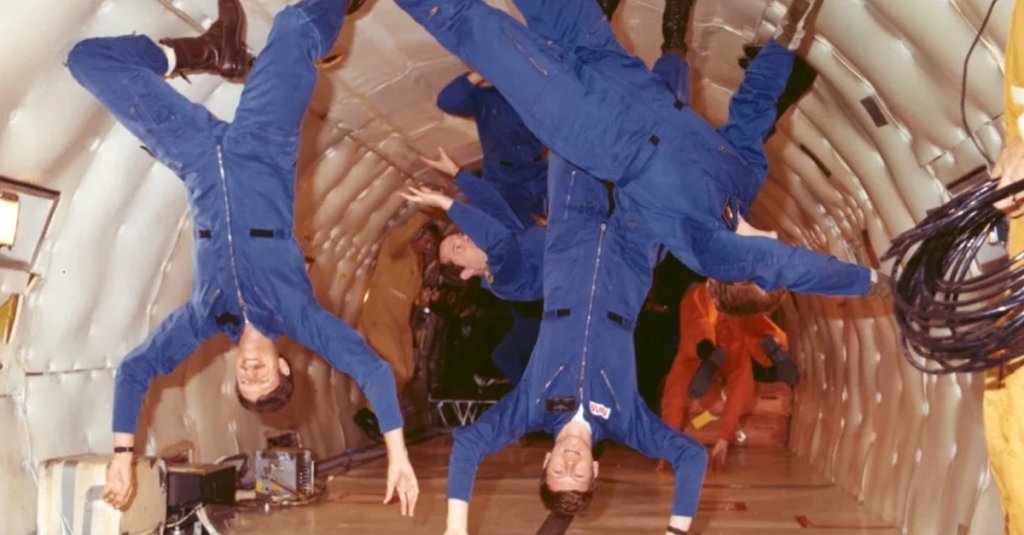
The military has an unending number of difficult training programs, but only the most select military members will go through astronaut training: an intense, multi-year series of tests that push mind and body to their absolute limits. Space vehicle mock-ups, supersonic tests, and virtual reality simulations are just a few ways NASA can recreate the rigors of space travel
Also Read: The Artemis II crew made an 80s sitcom video as they flew to the moon
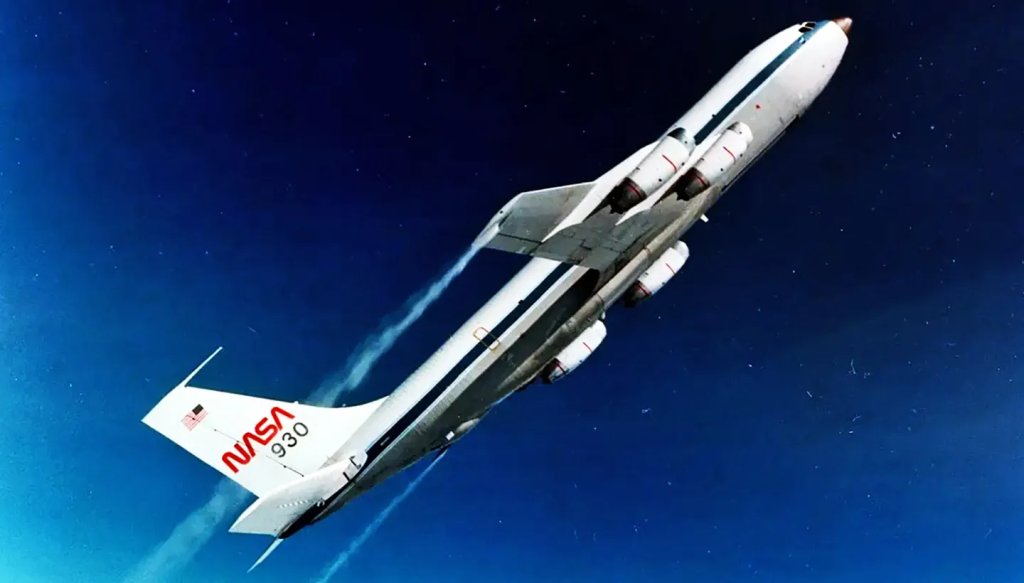
But how can NASA train its astronauts to live and work in a zero-gravity environment without actually sending them into space first? the answer is what they affectionately call the “Vomit Comet,” historically a KC-135 Stratotanker made to fly in parabolic arcs to create short periods of weightlessness.
It earned the nickname for the aggressive up-and-down motion used to defy gravity, a motion that can cause even the most experienced pilots to revisit their lunch.
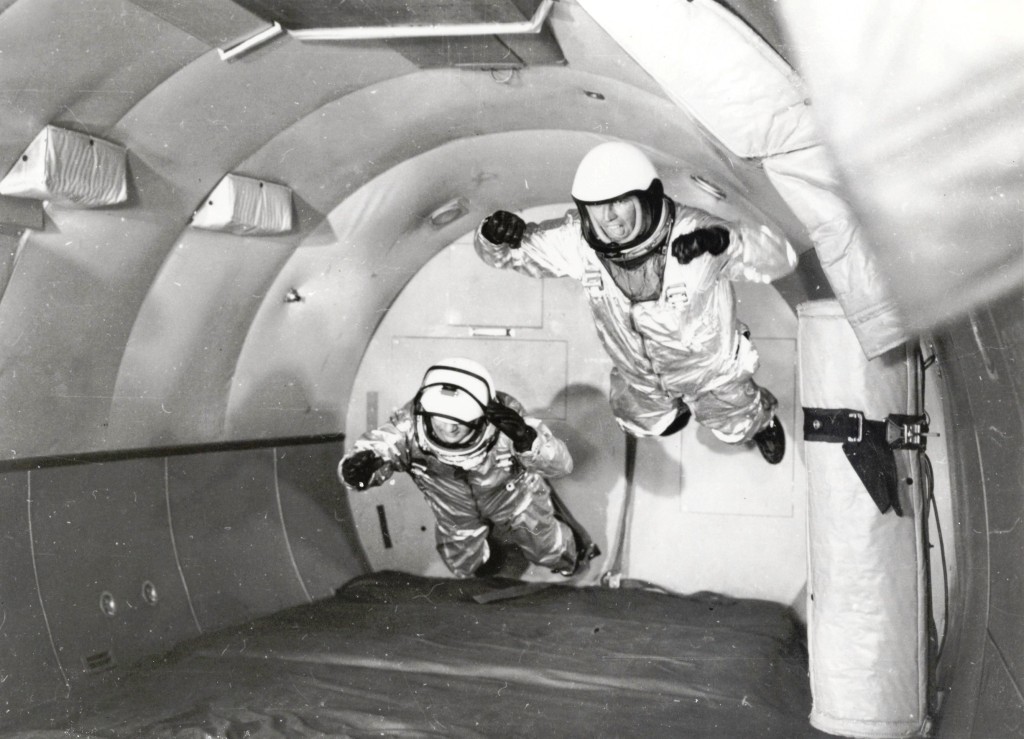
To achieve these brief periods of microgravity, the plane climbs steeply upward, then pushes over the top of an arc and dives downward in a smooth parabola. During the “free-fall” portion of each parabola, passengers and experiments experience near-zero gravity.
Once airborne, the pilot will announce that they’re “starting the pull,” which means commencing a 1.8 G pull until the aircraft’s nose is pointed 45 degrees up. At that point the nose pushes forward until the aircraft is right at zero G and holds it there until the aircraft is pointed 45 degrees nose down, which results in about 30 seconds of weightlessness.
At that point he’s start another 1.8 G pull back to 45 degrees nose up into another zero G pushover, over and over again. Each cycle is called a parabola, and a mission consisted of 40 of them—20 after taking off and 20 headed back to base.

The main way to avoid injury is to make sure you have a hand on the padded floor during the transition from zero-G back to 1-G. Along with the usual technicolor yawn, passengers sprain ankles and wrists or twist neck muscles by getting disoriented during weightless periods, hitting the deck in an awkward fashion once gravity returns to the airplane.
Even the most seasoned pilots and astronauts, including those who’ve flown the Vomit Comet missions many times in the past, still blow chunks during this microgravity training.
Navy Capt. Bill Shepherd, a SEAL by warfare specialty who later broke the record for days on the International Space Station, has done the Vomit Comet missions many times. Even he admitted before a mission that he gets airsick every time—and predicted he’d do so again
“Everybody will do the first 10 parabolas very giddy,” he said. “They’ll flip around and laugh and high five each other.”
The next ten parabolas will have fewer spins and less laughter, he said. The 10 after that would consist of people fighting the urge to throw up. And the last 10 would be a bunch of miserable people wishing the flight would end as they floated for 30 seconds at a time after getting sick.
That’s pretty much what happens. Joy wears off as your inner ears say “WTF?” amid all the gyrating and weird sensations. According to former Reduced Gravity Research Program director John Yaniec, anxiety contributes most to passengers’ airsickness. The stress on their bodies creates a sense of panic and therefor causes the passenger to toss their cookies.
NASA doesn’t do its own Vomit Comet flights anymore. They have been contracted out to private companies since the early 2000s, but civilians interested in experiencing weightlessness on Earth can take one of their own (with fewer parabolas) through Florida-based Zero-G corporation. For around $9,000, you too can have the opportunity to ralph like an astronaut.
Don’t Miss the Best of We Are The Mighty
• NASA’s ‘Flying Bathtub’ taught the Space Shuttle how to land
• 6 military technologies that helped NASA ‘sniff’ for martians
• Why Cold War NASA had 4 armored personnel carriers
Loading comments…
Comments couldn’t be loaded. Please refresh the page.