
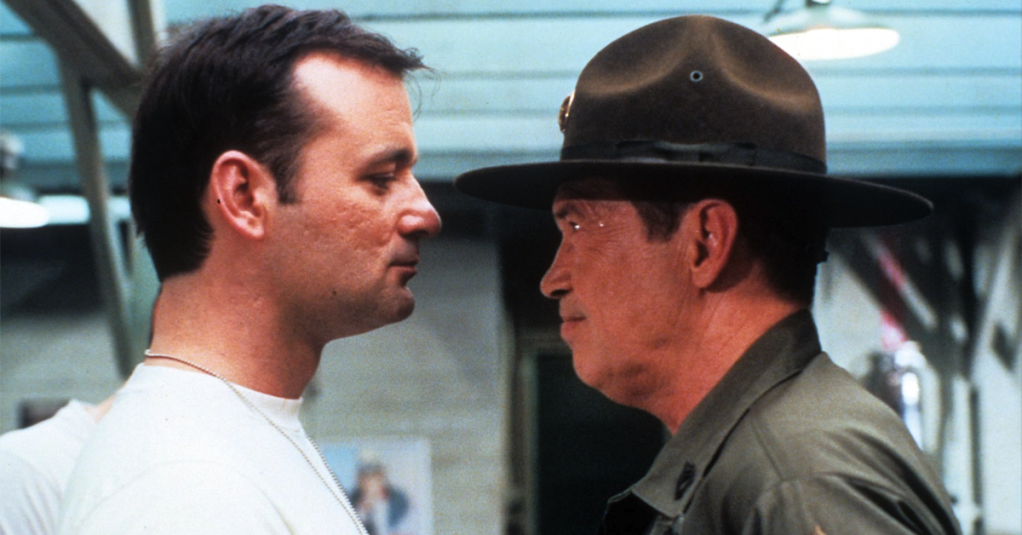
The hierarchy of the United States Army is not known for its collective sense of humor.
Ivan Reitman, then an up-and-coming movie producer, knew this when he and his partner, Dan Goldberg, approached military brass in the early 1980s. They wanted to make a comedy about two besties who seek to escape the monotony of their daily lives by enlisting in the Army.
Also Read: It’s official: ‘Top Gun 3’ is in development
They wanted to shoot much of the film on a military base, which required the Army’s approval. To Reitman and Goldberg’s surprise, they got an answer they weren’t necessarily anticipating.
The Army liked their pitch and was willing to do anything to help.
“I felt like it was time for another service comedy,” Reitman (“National Lampoon’s Animal House,” “Ghostbusters”) recalled in a 2021 article on the Army’s official website. “We were in peaceful times, it was post-Vietnam, and I thought it would be great to have some comedic look at the Army that would not be another protest movie.”
The Army suggested a few bases on which Reitman and his team could shoot. The service mentioned Fort Benning and Fort Gordon in Georgia, along with Fort Hood in Texas, as possibilities. The movie men weren’t sold. Instead, the moviemakers accepted the Army’s offer to shoot their film at Fort Knox in Kentucky.
With that decision, “Stripes” was on its way.
The Fictional Fort Arnold
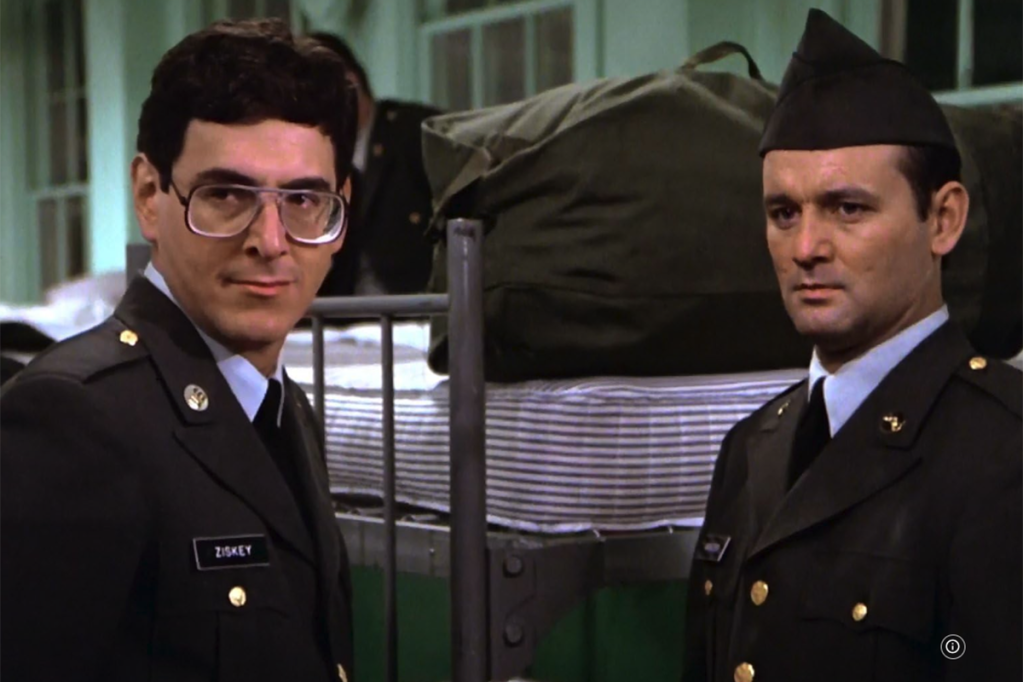
Mention Fort Knox, and most people think of its gold deposits and airtight security. Hosting a movie crew isn’t likely to be on anyone’s bingo card for something one expects to see at the base in Kentucky.
Reitman’s team wasn’t most people. The availability of soldiers (translation: movie extras), tanks, barracks, and the surrounding area intrigued them. They considered Fort Knox the perfect setting for duck-out-of-water recruits Bill Murray (“Caddyshack”), Harold Ramis (“Ghostbusters”), John Candy (“Uncle Buck”), and the rest of their platoon to endure basic training.
While other movies have involved Fort Knox, most notably the 1964 James Bond film “Goldfinger,” this was different. The “Stripes” cast and crew were constant presences around the base during their 38-day shooting schedule.
Armed with a script that Ramis co-wrote, shooting began in November 1980 at the fictional Fort Arnold. The movie that gave the world oft-repeated lines as “Lighten up, Francis” and “That’s the fact, Jack,” along with the highly memorable “razzle dazzle” number, took its first steps toward becoming a military comedy classic.
“People Would Follow Orders”
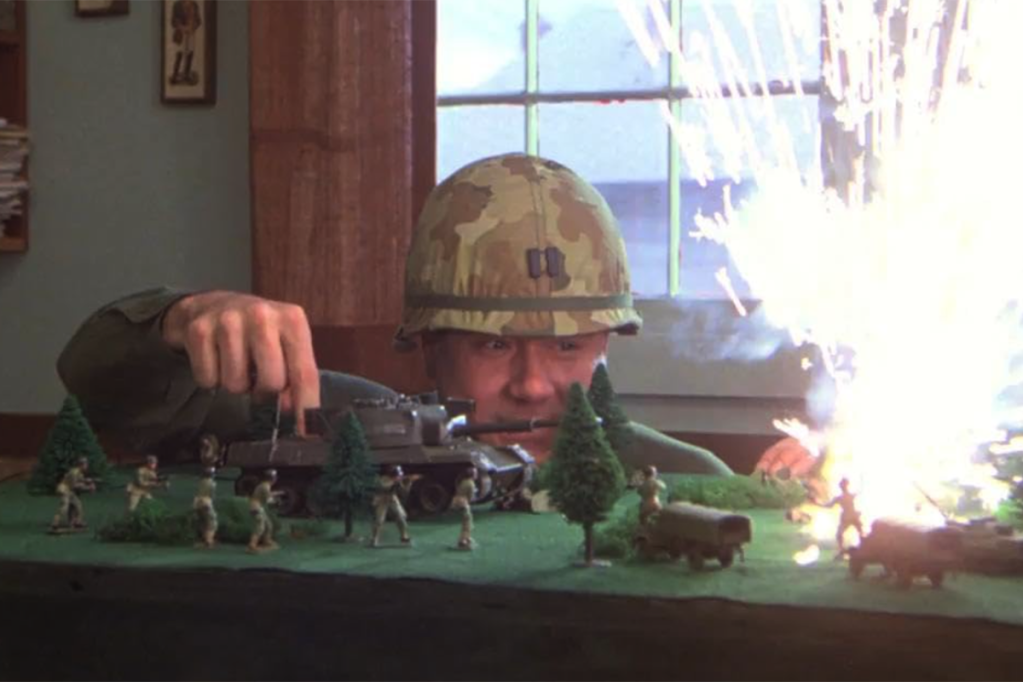
Whatever the “Stripes” crew wanted, the Army usually accommodated.
“We were very spoiled,” Goldberg told the Army’s website. “If we needed a top of soldiers for a scene, we would say, ‘We need this group of people here and this group of people there,’ and the Army would take care of organizing that.”
Goldberg liked something else, too, that isn’t exactly commonplace in their world.
“People would follow orders,” he said.
Kevin Emdee was one of those people. A soldier at Fort Knox in the early 1980s, Emdee served as an extra charged with one task: Walk while holding a briefcase. No going off script. Don’t look around at your surroundings. Absolutely no weird facial expressions.
Emdee did his job, a small claim to fame that allowed the then-service member an insider’s view of how the Hollywood sausage is made.
“It was fun to watch some of the stuff happen,” Emdee told the Army.
A Box Office Success

Razzle Dazzle Scene | Stripes (1981) | Now Playing
A movie poster referred to “Stripes” as “the story of a man who wanted to keep the world safe for democracy… and meet girls.”
As John Winger, Murray achieved his not-too-lofty objectives. “Stripes” also proved a wise decision in regard to the bottom line. Made on a $10 million budget, the military comedy debuted in theaters in June 1981 and generated $85.3 million in box-office receipts. That’s a pretty sweet return on investment.
“Stripes” didn’t receive any major award nominations, but that was not its mission. From an idea originally conceived when Reitman was in the bathroom, it was there to provide a few laughs and teach us not to take ourselves so seriously.
“The film feels effective because we clearly shot a base that was active with soldiers and all the hardware that is around right there,” Reitman told the Army. “We made full use of it.”
Going on a half-century later, the humor in “Stripes” still holds up. If you ever need a few laughs, we suggest trying to find it on your favorite streaming service. And if “Stripes” doesn’t make you smile, allow us to make a simple suggestion:
“Lighten up, Francis.”
Don’t Miss the Best of We Are The Mighty
• How friendly fire could have killed Scotty from ‘Star Trek’ on D-Day
• The bizarre James Bond hoax that has Hollywood scratching its head
• You could be the next owner of Darth Vader’s revolver
Featured

Sponsored Content
Military Connect wants to help your family find great deals


Sponsored Content
Military Tee Times has discounted rates on top-tier greens

Loading comments…
Comments couldn’t be loaded. Please refresh the page.