Since hitting newsprint in 1950, Snoopy has become one of the most popular comic characters of all time.
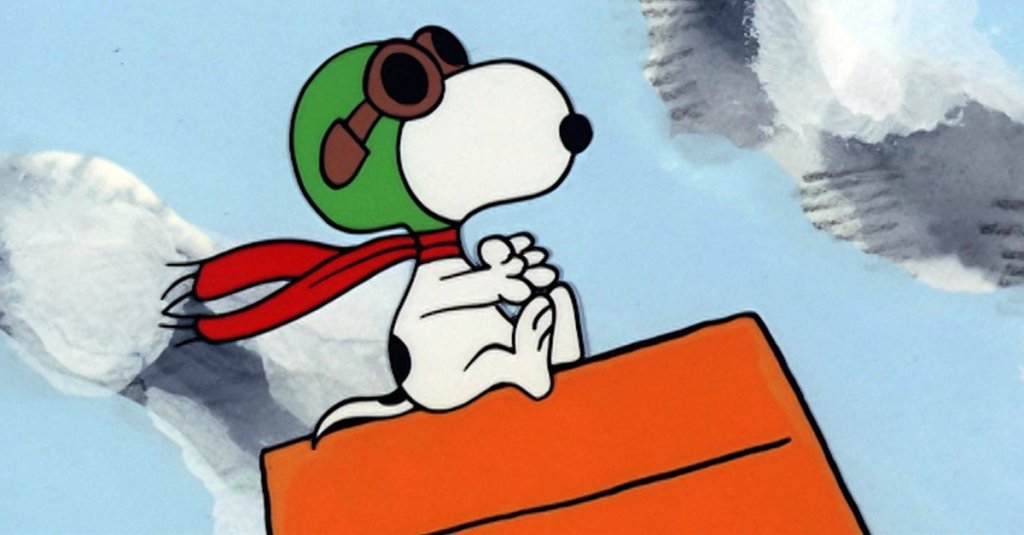
Without speaking a word, America’s most recognizable beagle taught the public about physics, somehow sleeping and living on top of an A-frame doghouse. Snoopy also taught us about life as a flying ace from World War I. After his training as a pilot, however, Snoopy lived beyond the comic strip to inform the public about aerospace, including multiple stints with NASA.
Related: This WWII vet inspired almost every comic strip in your Sunday funnies
Here’s a look at how Snoopy has served his country, spanning more than 70 years.
Thank You for Your Service, Snoopy
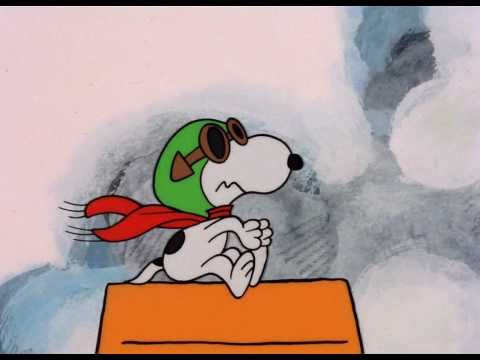
Snoopy vs. the Red Baron Classic Dogfight HD Clip
First and foremost, Snoopy is a World War I veteran who flew a Sopwith Camel to fight the Red Baron. The iconic flying ace was tragically shot down each time he took to the skies. Curses, foiled again!
This became a main theme of creator Charles Schulz’s comic, and with the audience wanting more, Snoopy began appearing regularly as part of the “Peanuts” storylines.
As a flying ace, Snoopy was commemorated with the Air Force’s B-58 Hustler Bomber, which was adjusted to test radar capabilities. The model was the first plane to hit Mach 2, making it the first operational supersonic bomber.
A Symbol of Solidarity During the Vietnam War
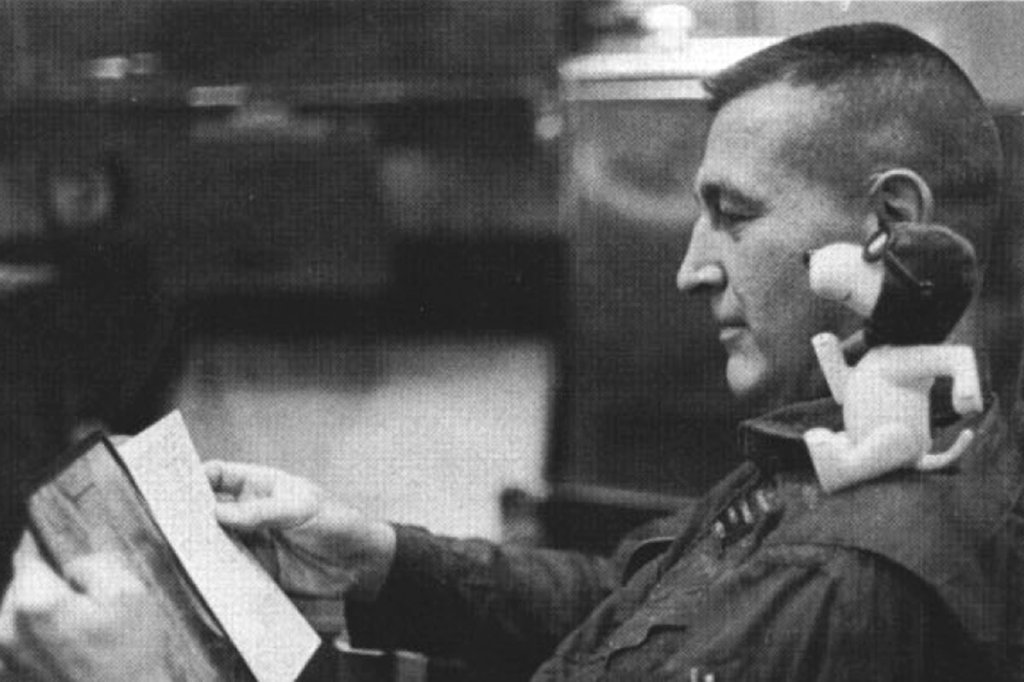
Snoopy became a multi-conflict veteran when he also served in Vietnam. Throughout the entire war, he was used as a symbol for soldiers, often signifying solidarity.
Schulz’s experience as a veteran may have sparked his interest, especially at a time when Vietnam was unpopular. Schulz was drafted into the U.S. Army during World War II and served as a machine gunner. He once told a story about forgetting to load his gun, but the one German he could have used it on surrendered. He received a Combat Infantry Badge, or CIB, for his unit’s stint under fire.
Schulz saw action throughout France during the war and helped liberate the Dachau concentration camp.
“The three years I spent in the Army taught me all I needed to know about loneliness,” Schulz once said. “I channeled some of the immense loneliness that I felt during the war into these characters, and it resonated deeply with people.”
Space Became Snoopy’s Jam
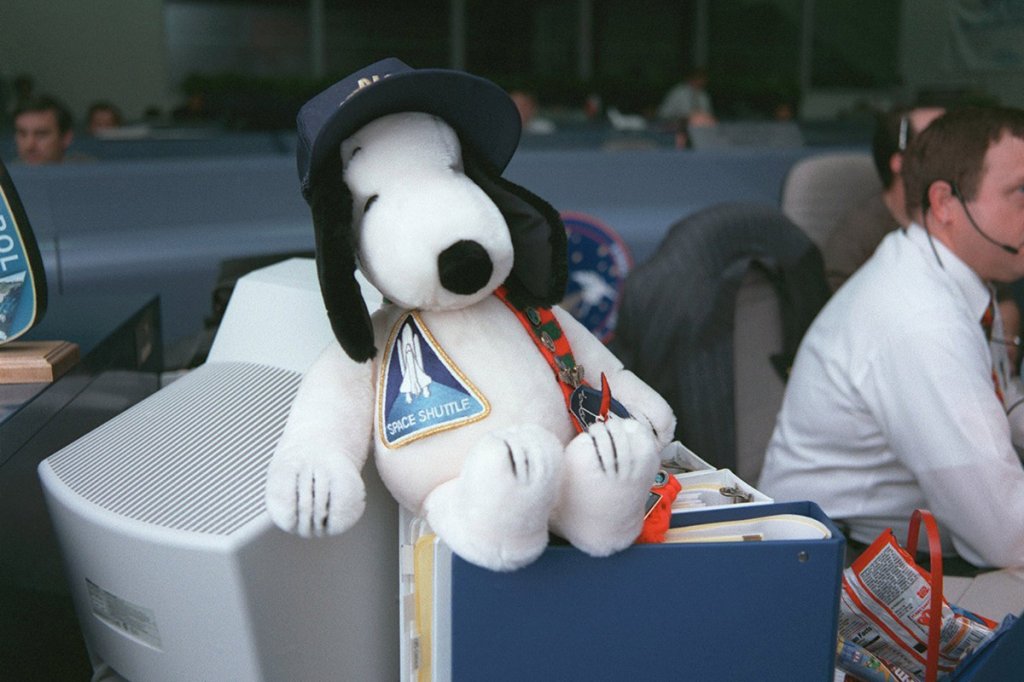
Later, Snoopy gained popularity with NASA as he was named the official mascot of aerospace safety and testing through the Apollo Program. After the preflight test fire that claimed the lives of three Apollo 1 astronauts in 1967, Snoopy joined NASA as a safety mascot. It was a perfect choice as employees embraced the lovable comic pooch. Silver Snoopy pins were awarded for those following proper safety protocols and remain a sought-after item to this day.
Schulz was asked for the use of Snoopy’s likeness and image in 1968 during the space race. To commemorate the partnership, Apollo 10 included capsules named after Snoopy and the dog’s owner, Charlie Brown.
Schulz included themes in the Peanuts comic strip with Snoopy heading to space with his doghouse space shuttle. (His helmet was, what else, a fishbowl.)
NASA Loves It Some Snoopy
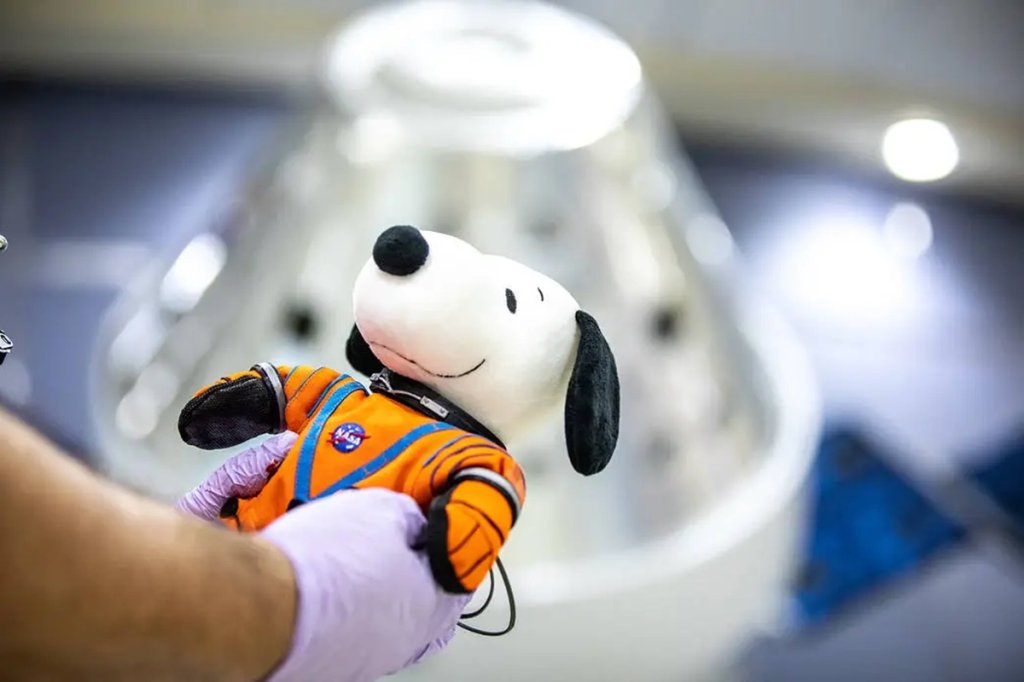
Snoopy was given a further nod as NASA astronauts named one of their hats after him. Meanwhile, a Snoopy patch was worn during the Skylab Medical Experiment Altitude Test (SMEAT), a 56-day project.
In 2019, Snoopy returned to NASA in two ways: in an Apple TV series, “Snoopy in Space: The Search for Life,” and also with an announcement that he would return to space aboard Orion. Snoopy did just that aboard the Artemis I mission in late 2022.
One month after Schulz’s death on February 12, 2000, the airport in Sonoma County, California, was renamed after the iconic cartoonist. Its logo is Snoopy flying his doghouse bomber, scarf flying in the air. The latter was also used as the mascot for the 26th squadron of the U.S. Air Force Academy in Colorado Springs, Colorado.
His only tie to more recent wars includes a reservist’s dog named Snoopy, who served overseas.
Long after he became a fixture in American popular culture, Snoopy remains a symbol for soldiers with his willingness to repeatedly try to cut down the enemy in their tracks.