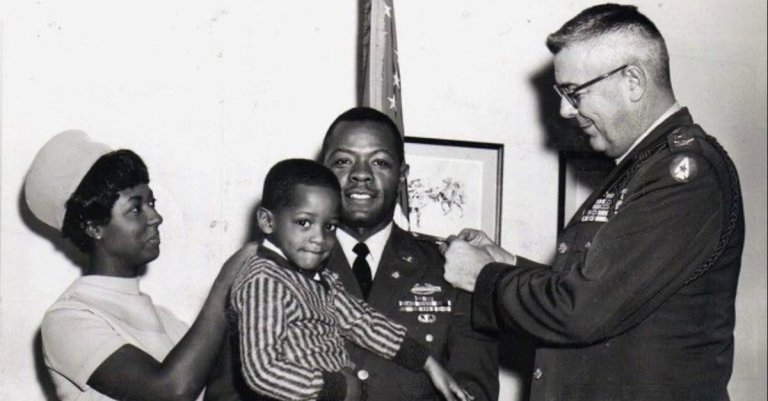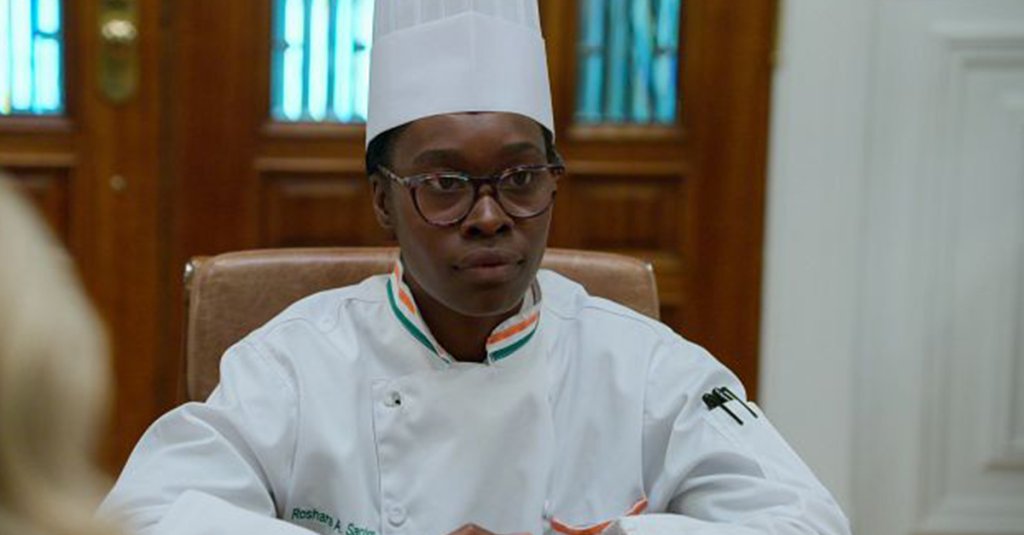
Before Chef Roshara Sanders ever stepped into a Michelin-level kitchen, she wore combat boots and an Army uniform. Known affectionately as Chef Ro, Sanders is an assistant professor of Culinary Arts at the Culinary Institute of America (CIA) and one of the team leaders on Netflix’s “Next Gen Chef.” Her story is about grit, transformation, and how military service can forge the discipline and purpose that thrive far beyond the battlefield.
Related: Foods you never knew were invented by the military
Sanders enlisted in the U.S. Army in 2008 to help fund her dream of attending CIA. She served in Iraq and Afghanistan with the 4th Engineer Battalion from 2009 to 2010 as an automated logistical specialist, managing warehouse operations and equipment records to keep missions running smoothly. When she returned home, she joined the 395th Combat Sustainment Support Battalion and cross-trained as a food supply specialist, gaining hands-on experience with the teamwork and precision that later shaped her leadership style in the kitchen.
“The Army taught me that leadership isn’t about rank, it’s about responsibility,” she said. “In the kitchen, just like in the military, your team needs to trust that you’ll lead from the front and have their back when the pressure hits. I run my kitchen with discipline, structure, and heart. Every station matters, every person matters, and excellence comes from how well we move together, not individually.”
After separating from the Army, Sanders felt the same void many veterans experience: the loss of mission and camaraderie. “Cooking gave me purpose when I needed it most,” she said. “After the military, I missed the sense of mission—that feeling that what you’re doing matters. Food became my way of serving again, but this time through nourishment and storytelling. Every plate is a chance to connect, to comfort, and to honor where I’ve come from.”
Sanders earned her associate degree in Culinary Arts from CIA in 2012 and a bachelor’s in Food Business Management in 2014 using the GI Bill. She quickly rose through New York’s fine-dining scene, working at acclaimed restaurants such as Oceana in Manhattan. In 2015, she won the Military Veterans edition of “Chopped,” and five years later, she returned to CIA—this time as the school’s first Black female culinary instructor.
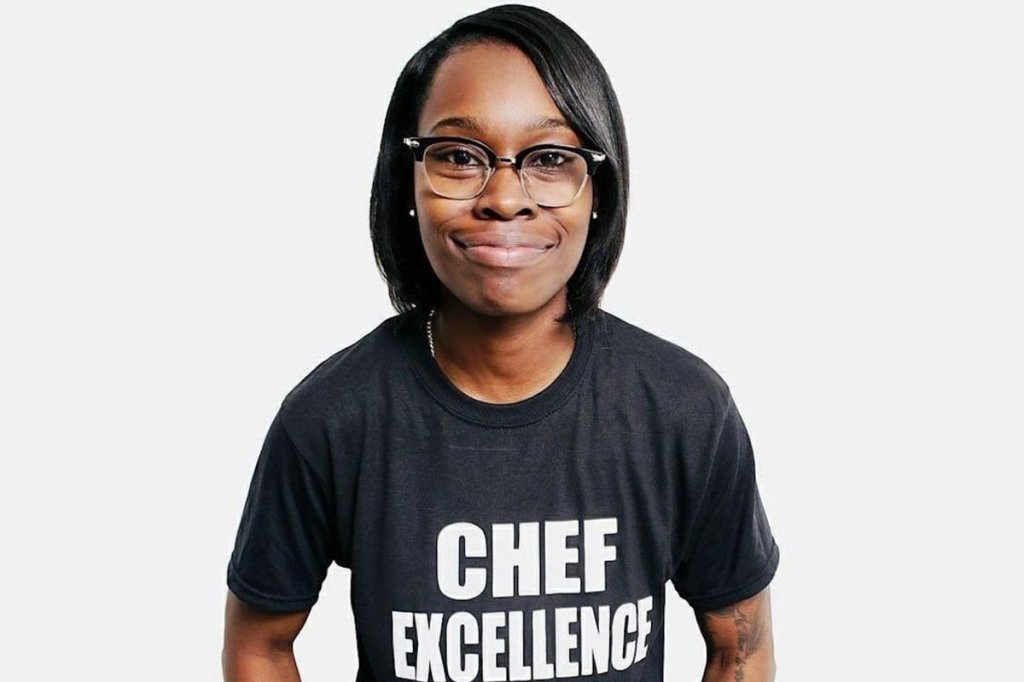
Her classroom lessons reflect both her service and her artistry. “They meet in precision and pressure,” she explained. “In both worlds, timing is everything. You have to stay calm, read the room, and adapt instantly. The kitchen can feel chaotic to outsiders, but to me, it’s organized chaos—there’s rhythm, respect, and an unspoken chain of command that keeps everything flowing.”
Cooking also became a form of therapy. “Cooking gave me peace. It turned pain into purpose,” she said. “There’s something about chopping vegetables or building a dish from scratch that centers me; it’s grounding. Food became a language for the emotions I didn’t have words for after service. It’s also how I connect with other veterans. Over a shared meal, walls come down.”
Her philosophy carried over to “Next Gen Chef,” where she mentored rising culinary talents on camera. “I lead with empathy first,” she said. “I know what it’s like to question your path or carry invisible weight. My goal on “Next Gen Chef” was to create a space where young chefs felt seen and supported—to remind them that their story is their strength. I didn’t want them to just cook better; I wanted them to believe in themselves more deeply.”
Sanders credits her military training for her approach to leadership and composure under pressure. “In the Army, no mission succeeds without teamwork. That mindset never leaves you,” she said. “On set, when a challenge came up, my instinct was to assess quickly, delegate, and adapt. I’ve learned to turn stress into strategy and to never let ego block communication. Collaboration isn’t weakness; it’s how you win.”
The show’s emotional side surprised her. “The cameras!” she said with a laugh. “In a kitchen, it’s all about the plate; on set, it’s about storytelling, too. The biggest surprise was how emotionally raw it can get. You’re cooking under pressure, but also sharing parts of your journey that aren’t easy. It reminded me that food television can be a powerful tool for representation and healing.”
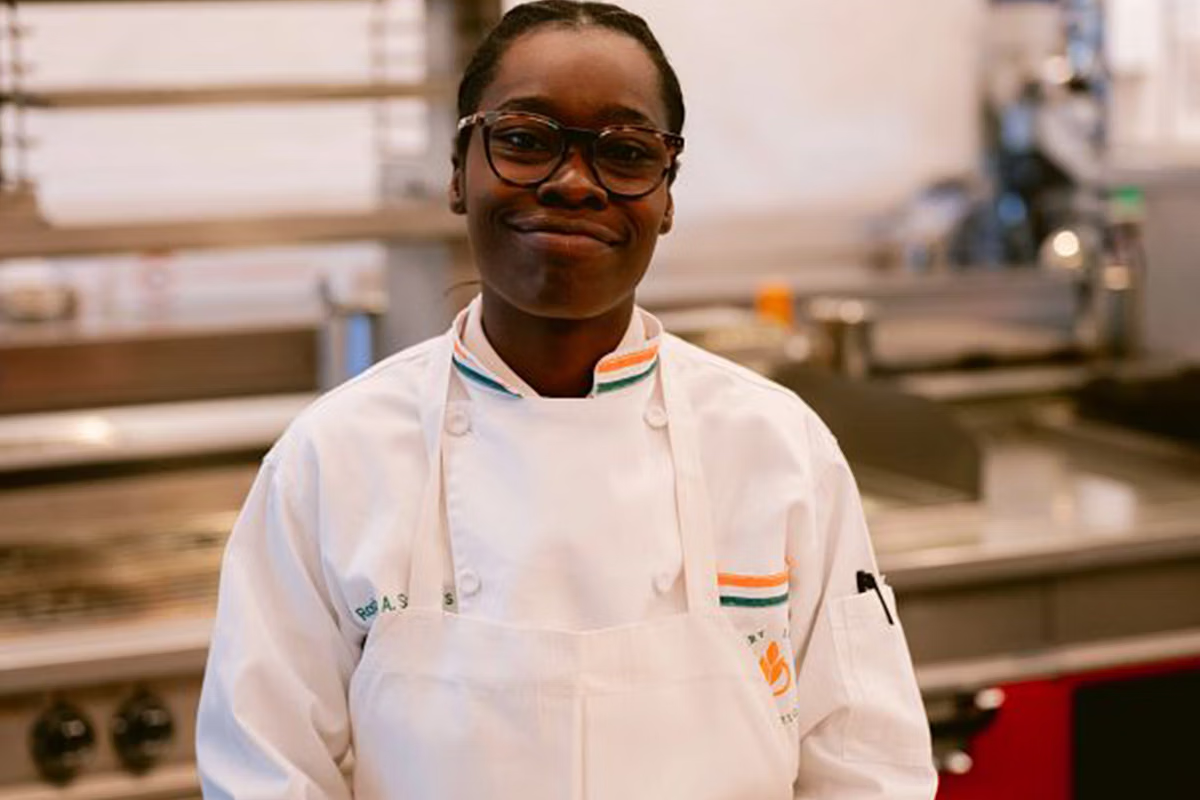
Sanders said the Culinary Institute gave her both technical mastery and self-belief. “The CIA gave me structure and exposure. It challenged me to refine my technique while embracing my background,” she said. “I didn’t see many people who looked like me—a Black woman and a veteran—so I made it my mission to change that narrative. That experience built my confidence and gave me the tools to turn grit into artistry.”
Her time on “Next Gen Chef” often brought back memories of deployment. “Definitely,” she said. “The long hours, high stakes, and sense of unity felt familiar. There were moments where I saw my younger self in the contestants—hungry, nervous, determined. It reminded me of the field: everyone has a role, and your job as a leader is to make sure no one’s left behind.”
Sanders’ cooking philosophy now centers on impact and awareness. “It means cooking with consciousness,” she said. “The next generation isn’t just about flavor; it’s about impact. It’s knowing where your food comes from, honoring cultural roots, and innovating with integrity. For me, it’s about building a culinary future that’s equitable, diverse, and sustainable.”
She also carries a message for others who do not always see themselves represented in fine dining. “That they belong,” she said. “You don’t have to fit the mold to change the game. My path wasn’t traditional—I came from Connecticut, I served in Iraq, and I found my way through resilience and faith. I want young women, especially women of color and veterans, to know that their experiences are assets, not obstacles.”
Her military service also shaped her worldview as a chef. “Absolutely,” she said. “Serving overseas opened my eyes to how food tells the story of a people—their struggles, their joy, their survival. It made me curious and humble in the kitchen. Now, when I create, I think about how flavor can build bridges and remind us of our shared humanity.”
Asked when she knew cooking was her true calling, Sanders recalled a moment that linked both worlds. “It was the first time I cooked for a group of veterans,” she said. “Seeing their faces light up, hearing laughter at the table—that was it. I realized food could heal and unite in ways words couldn’t. From that moment on, I knew I’d found my new mission.”

Chef Roshara Teaches Drew to Jerk-Flavor Crab Cakes | Wildflower
Today, she continues to mentor through teaching and consulting, crediting the guidance she received from chefs Marcus Samuelsson and Prasad Chirnomula. “Mentorship isn’t about cloning yourself; it’s about lifting others up to find their own voice,” she said.
Her advice for fellow veterans transitioning to civilian life is rooted in the same values that defined her service. “Start with purpose, not position,” she said. “Your military skills are transferable—discipline, teamwork, resilience. Don’t let fear of the unknown stop you. Take that leap, stay curious, and give yourself grace to be a beginner again. The mission might look different, but the sense of service never goes away.”
And after years of service and success, Sanders still defines “home” through food. “Home tastes like comfort and courage—like a pot of rice and peas simmering next to a cast-iron skillet of cornbread.”
From the battlefield to the kitchen, Chef Roshara Sanders has proven that leadership, at its core, is about service and that a meal made with heart can be as powerful as any medal earned in combat.