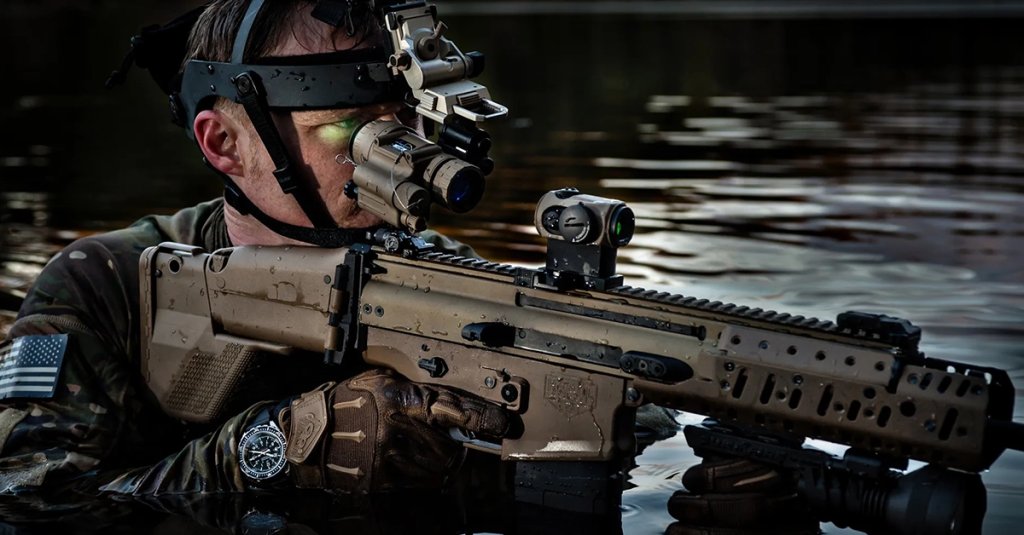
A nuclear weapon detonates. The resulting EMP knocks out electronics for miles. Laser designators no longer work, and neither do the precision munitions they would direct. Commanders are forced to use runners since radios are out as the troops they’re leading ditch their red dots for iron sights and their GPSs for compasses.
After coordinating an attack with the rest of the battalion by word of mouth, the company commander realizes his digital tool watch is dead, and so is the XO’s quartz watch. Luckily, the carefully-timed action can kick off with the other companies as planned because the first sergeant’s issued mechanical watch is still ticking.
Also Read: The shockingly affordable military watches worn by today’s operators and generals
Admittedly, this is an extreme scenario, partially (ok, mostly) taken from “Call of Duty: Modern Warfare 2.” However, military planners do need to account for the most extreme combat situations, and gear is factored into their planning. Precision timing is key to military action, and a no-nonsense mechanical watch is the best failsafe to ensure that timing is maintained across a formation.
That’s where Marathon comes in for the U.S. military.
Yes, SEALs were issued Tudor dive watches during the Vietnam War and started receiving Casio G-Shocks ahead of the Global War on Terror. The Army used to issue mechanical field watches from brands like Bulova and Hamilton, but neither brand still provides timepieces to troops.
In contrast, the Marathon Watch Company has consistently supplied watches for military issue since World War II.
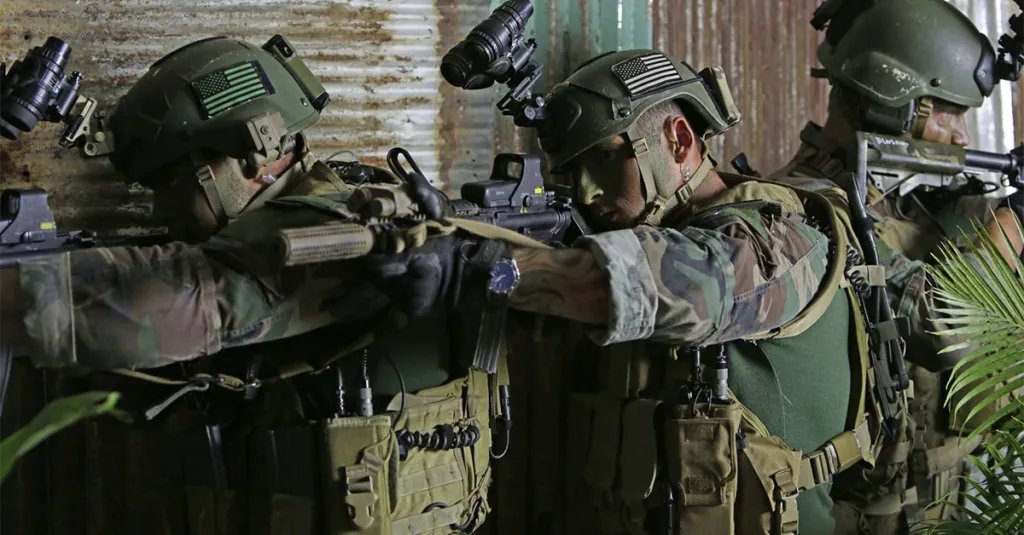
Founded in 1939 as a spinoff of the Weinstrum (Wein Brothers) family watch company, the Morris Wein Watch Company began producing watches with the Marathon trademark in Montreal.
“In 1941, by default, we ended up supplying the military because my grandfather was in the same building as the War Department,” Marathon President Mitchell Wein told We Are The Mighty. “They asked my grandfather what watches he had… so we could supply right away.”
Pairing American cases, dials, and hands with Swiss movements from La Chaux-de-Fonds, Marathon assembled watches in Montreal to go to war. When they landed in Italy in 1943, Canadian troops were wearing issued Marathon watches. Beyond wristwatches, Marathon supplied other timing instruments critical to the war effort, including stopwatches.
After the war, Marathon continued to sell dependable yet affordable watches and clocks in jewelry and department stores across Canada. Although military orders shrank, Marathon sold basic wall clocks to the Canadian government, which were used in schools and hospitals.
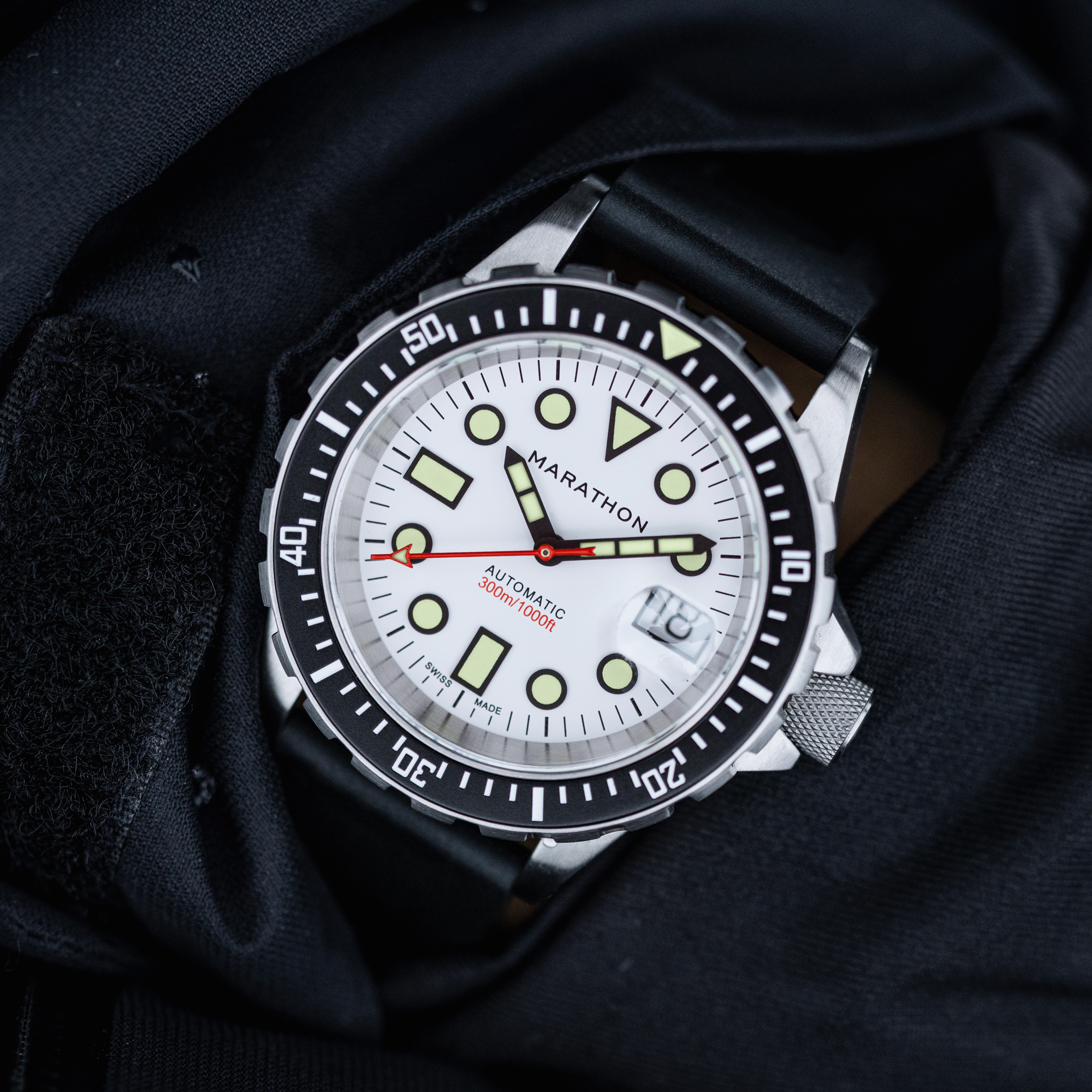
After Seiko brought its revolutionary electronic movement to the mainstream and ushered in the Quartz Crisis of the 1970s, many mechanical watch companies across North America and Europe went out of business or were acquired by larger conglomerates. As a small company with a smaller overhead and a direct-to-government sales model, Marathon managed to stay in business, remain independent, and even set itself up for future success.
With Swiss watch companies fearing the extinction of their mechanical movements, they practically gave their products away for 3-5 Swiss Francs. Marathon happily bought them up and carefully put them in long-term storage. We’ll get back to those mechanical movements later.
In the 1980s, when the Defense Logistics Agency at Kelly Air Force Base came looking for a new quartz watch, the Canadians referred them to Marathon. Developing a new model for the U.S. Air Force, Marathon produced the Navigator. To provide luminescence in the dark with self-contained tritium gas tubes, Marathon selected a high-torque Swiss quartz movement.
To save battery, they introduced a shim system to cut off power when the watch is not in use. Improving on the U.S. government’s specified case design, Marathon developed a fibershell case to save both weight and taxpayer dollars.
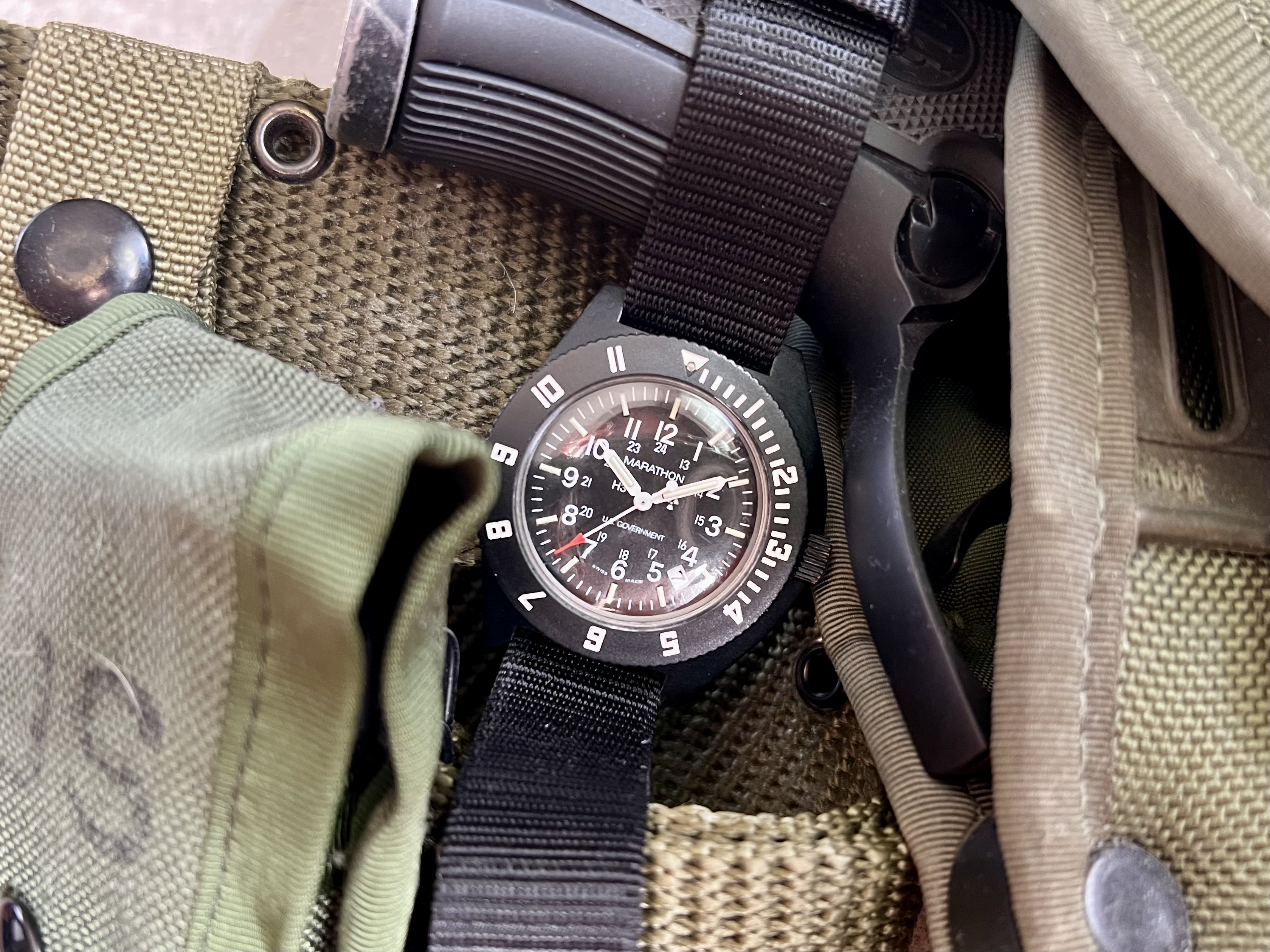
While iconic and generally antimagnetic, the quartz Navigator (now available in a stainless steel case) is still susceptible to EMP.
“We’re always concerned about magnetism or EMP… and we have to make sure that nothing is magnetic, including the buckles,” Wein said, highlighting the dangers of magnetism to precision timing.
During the First Gulf War, the U.S. military needed thousands of mechanical general-purpose field watches. Remember those Swiss mechanical movements that nobody wanted? Marathon cased them up and delivered 125,000 GP watches to the U.S. military and another 20,000 to the Canadian military. Marathon was also contracted to provide precision chronometers to the U.S. Navy during this time.
Perhaps the most famous watch in Marathon’s current lineup is the Search and Rescue Model. Designed in the early 2000s to meet the requirements of Canadian Search and Rescue units, it was adopted by the U.S. government in 2006 with the company’s iconic tritium tubes.
With a shock-resistant Swiss automatic movement, anti-magnetic protection, temperature tolerance across extreme heat and cold, and 300 meters of water resistance, the GSAR has also become popular with the firearms community; it has been seen on the wrists of guntubers from Mike Jones of GarandThumb to Ian McCollum of Forgotten Weapons.
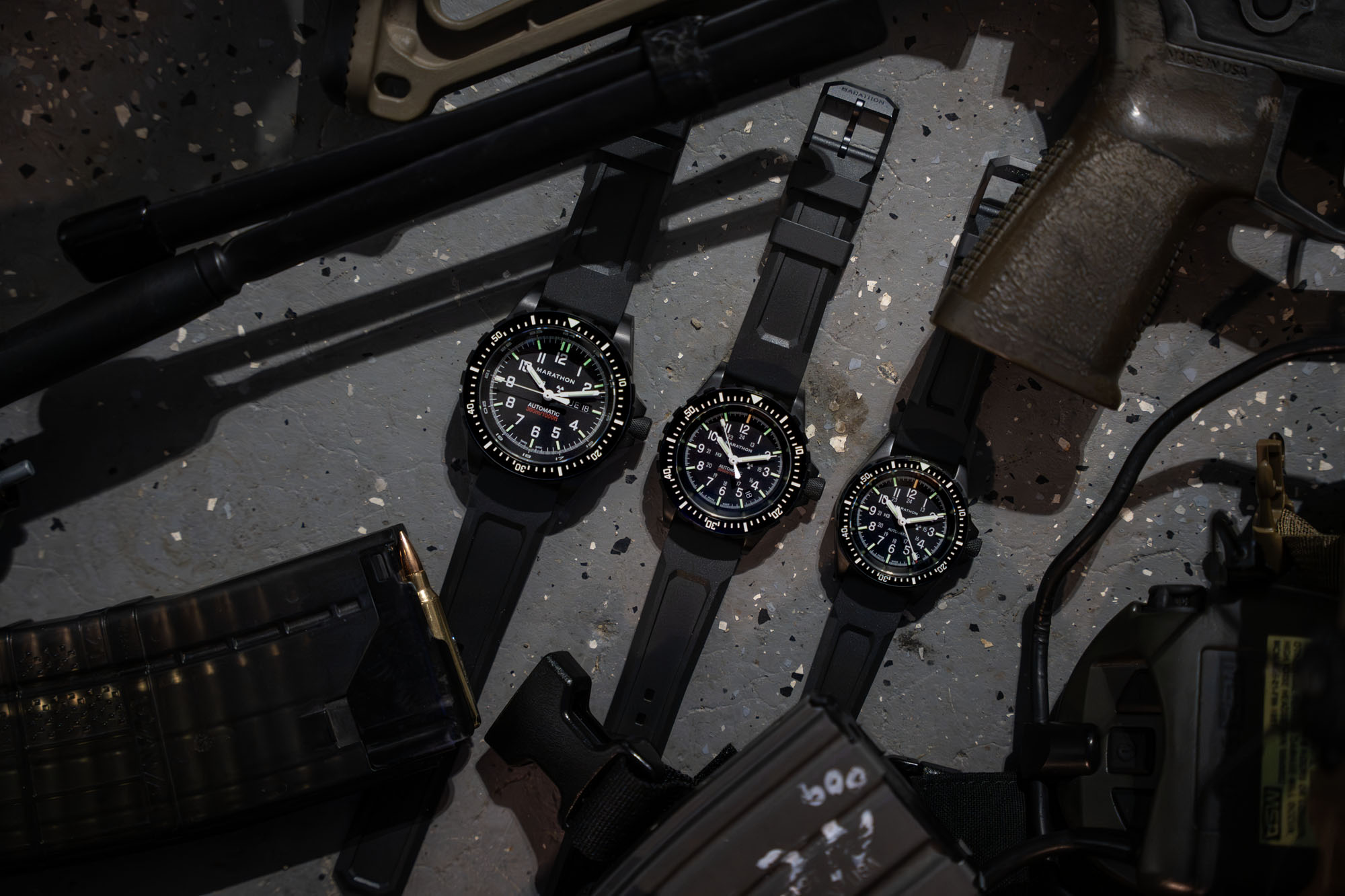
The dependability of Marathon watches that makes them popular outside of government issue is not just meeting a military specification, but exceeding it.
“It’s the thing that we do because we know the warfighter,” Wein said, noting family members who have served as recently as the War in Afghanistan. “It’s our freedom and democracy that depend on having weapons that don’t fail, and I consider our product as a weapon.”
Just like rifles and missiles, the materials that make up a Marathon watch are closely monitored by the Canadian government. While the cases, dials, hands, movements, and even the rubber straps are all made in Switzerland, the tritium actually comes from Ontario; allied nations only.
“By keeping a product local… and employing local people, we build a better environment and a better country,” Wein proudly said. “I want my family and my friends and everybody to have jobs here.”
Whether you’re issued one or pick one up on the commercial market, you can wear a Marathon watch with confidence in its durability, reliability, and origin. A Rolex or Omega will certainly receive compliments from watch casuals, but someone who compliments you on your Marathon undoubtedly knows ball.
Don’t Miss the Best of We Are The Mighty
• Praesidus is reviving vintage military watches from wars past
• This is why General Schwarzkopf wore two watches
• A veteran-inspired watchmaker brought back the watch that won World War II