This article originally appeared on Radio Free Europe/Radio Liberty.
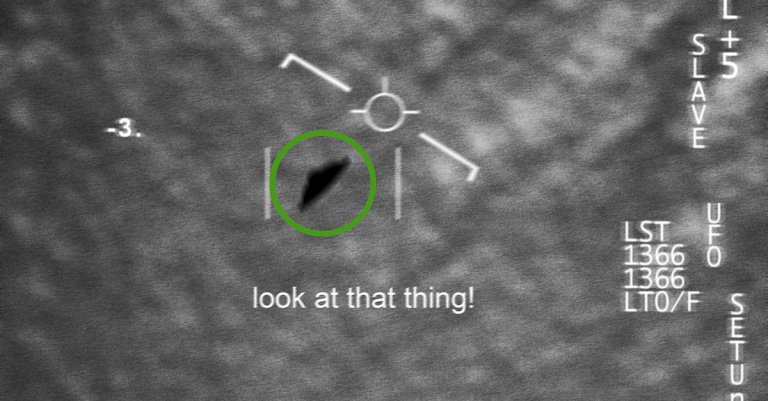
Recent reporting has suggested that a mysterious spate of illnesses suffered by U.S. diplomatic staff is the result of “sonic weaponry” being used by a shadowy Russian intelligence unit. If such claims are accurate, it would be the latest in a long line of improbable devices designed by Moscow and the CIA to kill, wound, or monitor adversaries.
Andrew Hammond, a historian and curator at the International Spy Museum in Washington, D.C., told RFE/RL that the suspected use of directed energy weapons on Americans stationed abroad first emerged during the Cold War.
“We have historical evidence that this issue has been discussed in the past at the highest level,” he said.
Related: Aldrich Ames, the Cold War’s deadliest CIA mole, completes life sentence
In 1967, U.S. Secretary of State Dean Rusk raised suspicions that the U.S. Embassy in Moscow was being targeted with an “electromagnetic signal.” The energy beam later became known as the “Moscow signal,” and anti-radiation coatings were eventually placed on the embassy’s windows.
The U.S. Defense Department later replicated the energy beam and tested it on monkeys. Plans were drawn up to test the directed energy device on unwitting human subjects before the project was scrapped.
Hammond says it is impossible to know what a modern device more powerful than the Cold War-era instrument would look like.
“Essentially, we don’t know what we don’t know,” he said. “If we knew what they were, we’d be able to understand the effect they may or may not be having, how powerful they are, how much they’d cost to manufacture, etc. At the moment, we are in the dark.”
The following devices are known to have been used or developed for use by spies during the Cold War.
1. The Lipstick Pistol
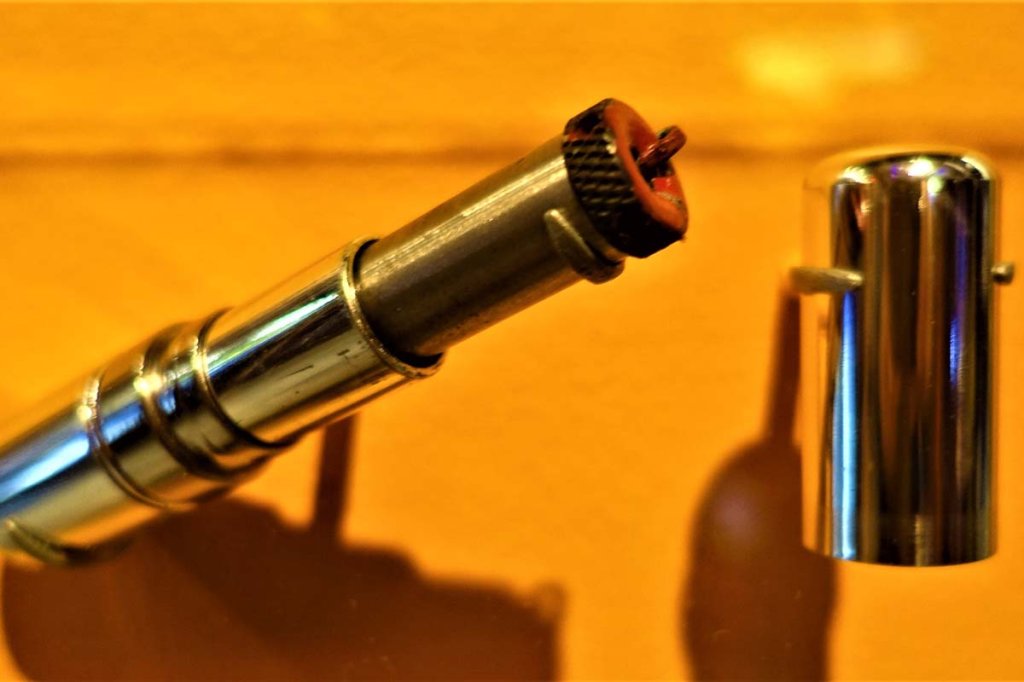
An example of the KGB-issued, single-shot device was discovered at a U.S. checkpoint in West Berlin in 1965. The opening of the barrel could presumably be concealed with a wedge of real lipstick. The weapon was dubbed the “kiss of death.”
2. Eyeglasses with Concealed Cyanide Pill
The CIA issued some spies with these glasses featuring a small cyanide pill. Captured U.S. agents could potentially die by suicide in full view of their captors by casually chewing on the end of their glasses.
3. Arsenal of Nikolai Khokhlov

Weapons, including “poison bullet projectors” disguised to look like cigarette cases, were part of a cache of assassination devices that KGB agent Nikolai Khokhlov handed to West German authorities. The Soviet spy defected in 1954 after being tasked with overseeing the assassination of an anti-communist activist in Frankfurt. As well as the intricate cigarette case weapons, the arsenal also featured two triple-barreled electric pistols that fired cyanide-tipped bullets as quietly as “the snap of fingers.”
4. The “Heart-Attack Gun”
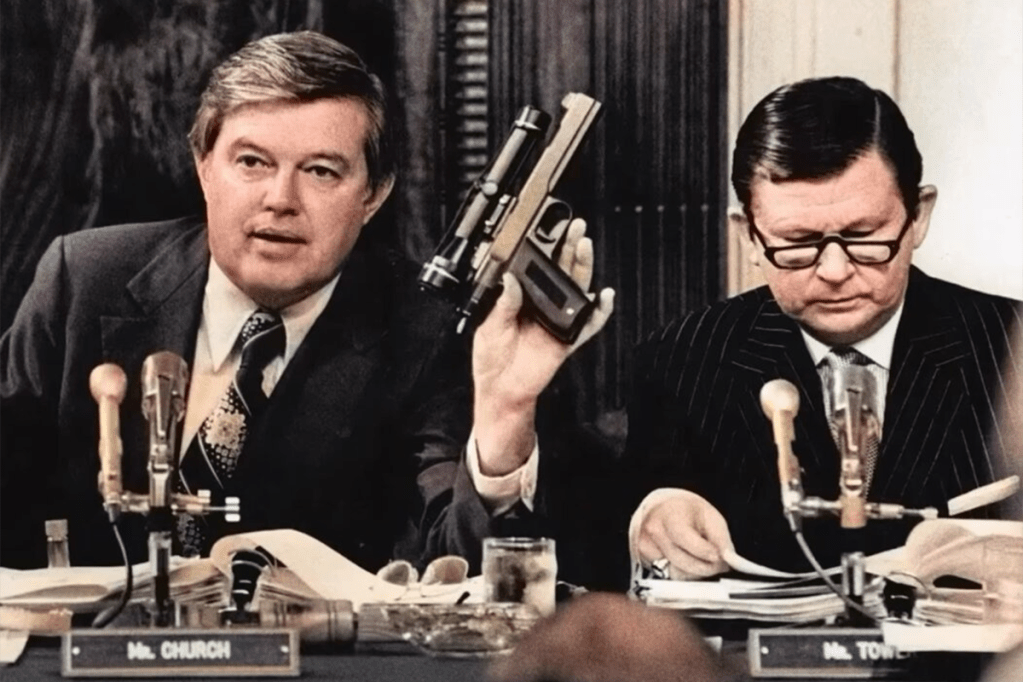
This CIA weapon fired a dart of frozen shellfish toxin that dissipated almost without a trace within the targeted person’s body, leading to death symptomatic of a heart attack. The gun, seen in the photo above during a 1975 Senate hearing into American intelligence service abuses, fired nearly silently and was effective up to 100 meters.
5. T-1151 “Dog Doo” Transmitter
The poo-shaped exterior of the T-1151, developed in the late 1960s, concealed a homing device that could be dropped onto the ground and activated by Americans in need of rescue or extraction. The devices were designed to mimic “the excrement of a medium-sized dog or other animal” but were quickly dubbed “monkey turds.”
6. Insectothopter
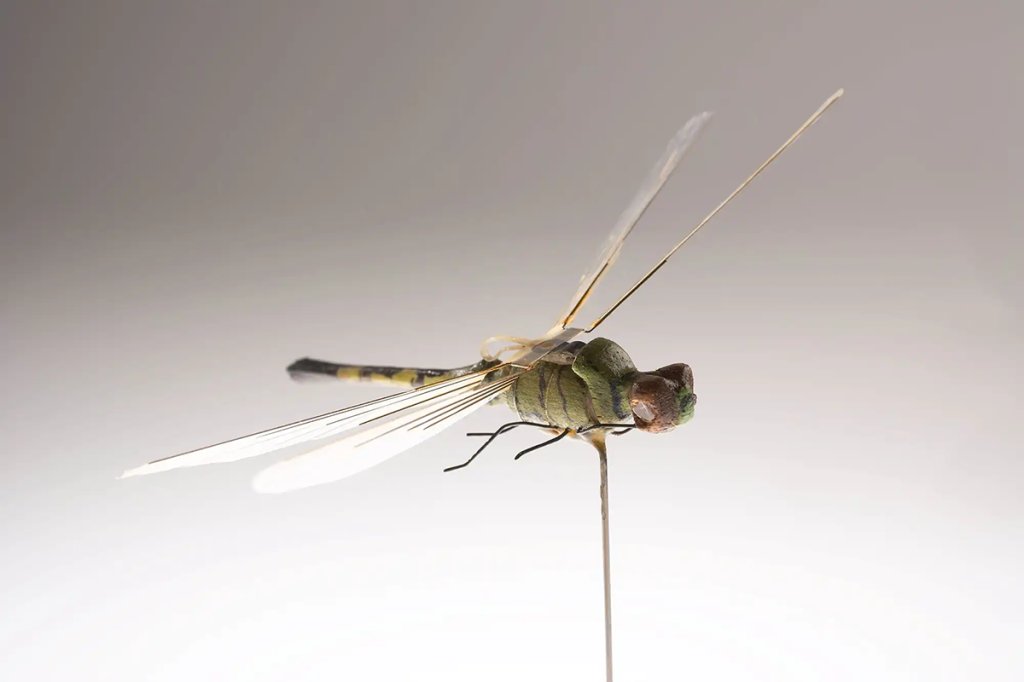
The “bug-carrying bug” was developed by the CIA in the 1970s to deliver miniature listening devices to locations where they could transmit conversations. The CIA claims flight tests for the hand-painted insectothopter were “impressive,” but the tiny unmanned aerial vehicle (UAV) was hard to control in the wind and the intricate device was never deployed in the field.
7. The “Bulgarian Umbrella”
In 1978, Bulgarian dissident Georgi Markov died in London shortly after being pricked in the leg by an umbrella-wielding man believed to have been a communist Bulgarian spy. Markov criticized the Bulgarian communist government in a series of reports for the BBC and Radio Free Europe between 1975 and 1978 that many Bulgarians listened to in secret. The umbrella the man carried is thought to have been a KGB-designed device designed to deliver a small pellet of poison to unsuspecting targets on the street.
Copyright (c) 2025. RFE/RL, Inc. Reprinted with the permission of Radio Free Europe/Radio Liberty, 1201 Connecticut Ave NW, Ste 400, Washington, DC 20036.