
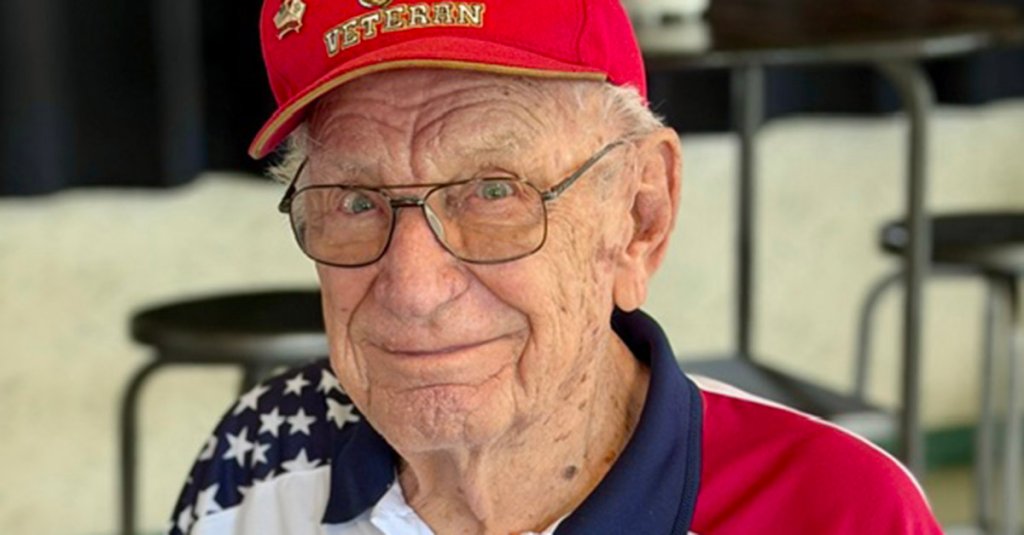
A native of Wisconsin, Bob Schultz joined the Marine Corps and served aboard the USS California during World War II. Schultz plans to attend the 85th anniversary of the bombing of Pearl Harbor in December. In the lead-up to Veterans Day on November 11, 2026, the 104-year-old Schultz spoke with We Are The Mighty about his military service. (Edits were made for clarity.)
“The parts of my childhood that I remember were mostly unhappy, because it was the Great Depression. We didn’t have any money. My dad lost his job. We lost the house, and so I worked as a kid at a farm for 10 cents an hour. It wasn’t really happy times, but I lived through it.
“I joined the Civilian Conservation Corps. That was a Depression-type thing that the government started to employ young men and help out the families. We worked in the woods. We lived in a camp in northern Wisconsin. It was basically an Army camp, and we lived in barracks. And some part of our clothing was Army uniforms; khaki and olive drab, they call it. It was an introduction to military life. We didn’t march or anything like that, and we made $30 a month. Most of it went home [to help my family]. It left me with $5 to blow and see the world.
Also Read: The fight to recognize Doris Miller’s valor at Pearl Harbor
“The military didn’t interest me at that point. I never got interested in the military until the war, and then I happened to see a movie with Randolph Scott and Maureen O’Hara, ‘To the Shores of Tripoli.’ The movie was primarily about the Marine Corps and seagoing Marines. It was just a good thing to watch, and it made war sound like it was really fun, especially since [actor John Payne’s character, Chris Winters] had a girlfriend like Maureen O’Hara.
“I don’t remember the bombing [of Pearl Harbor on December 7, 1941]. I have no recollection of, ‘Oh, boy, we’re at war,’ and I don’t know why. When I went into the Marine Corps after the attack, I had a vague expectation of, ‘I’m going to war, and there’s going to be shooting.’ Basically I was right. I don’t ever remember being scared. Even under fire, I was not scared. I was apprehensive, of course, because we were involved in it and people were getting killed around me.
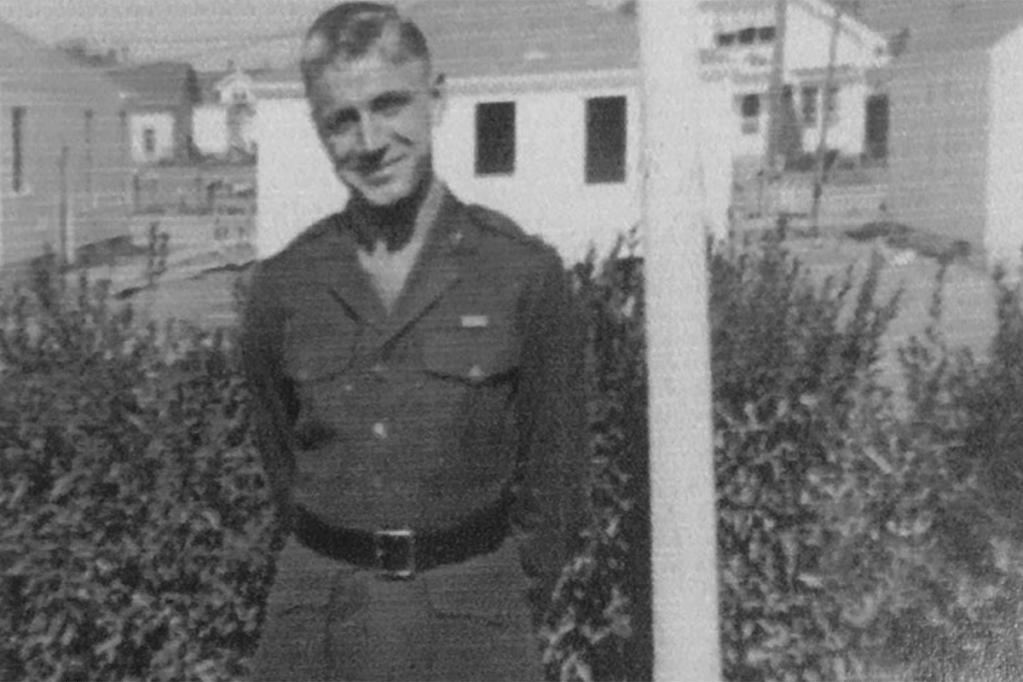
“We all had a duty, and I was a loader on a 40-millimeter aircraft gun on the USS California and fired it too, so I was occupied even when we got hit by a suicide plane. It landed not too far from me. I glanced over to see what was happening and then get back to my job. I never really had any real fear of being killed or shot, because I was just there doing my thing.
“Serving on the USS California was nice. A lot of the guys that I went to boot camp with were already dead, because they had to land on an island and I was on a ship. I had a clean bunk at night and hot food during the day. We were under fire quite a bit, and the suicide planes were our main adversary.
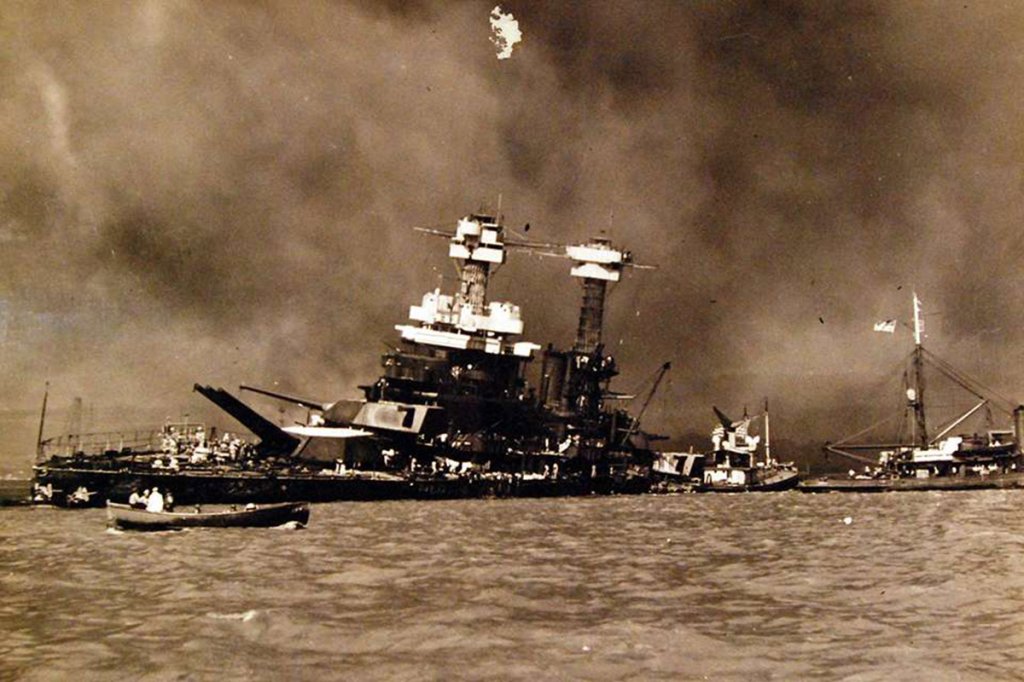
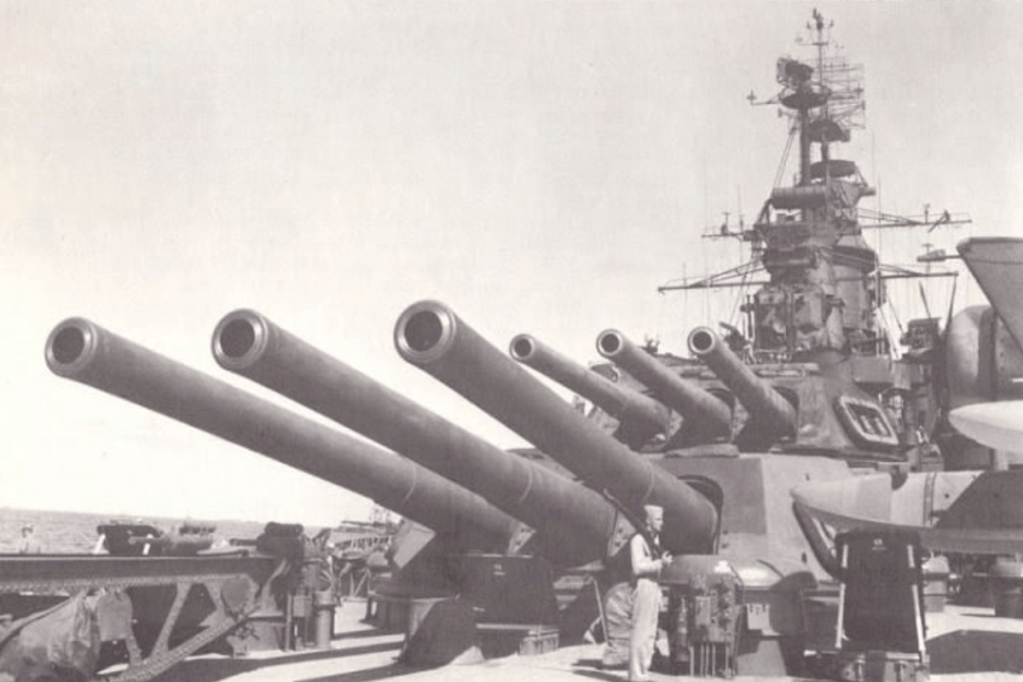
“The ship had been sunk at Pearl Harbor. It was refloated and taken to a big Navy yard in Bremerton, Washington. It was put in dry dock and just about rebuilt. I was on it for about a month until we went to sea. Pearl Harbor was our first stop. The first engagement was at Saipan, a part of the Mariana Islands. That was our first taste of the real war, and we were pretty bored, because at that time, there were no suicide planes, and our duty was to bombard the beach ahead of the Marines with our 14-inch guns. The rest of the crew just had to sit around and watch. We all had our battle stations, of course, but we just pretty much sat idle.
“I remember one day that we were sitting around, yakking, and we saw some flashes off to the starboard side of the ship. We heard sounds over our heads, which, if you knew what it was, it was a shell. They had us bracketed. One shot us too close, one shot us too far, and then they shot us right in the middle. It hit up in the superstructure of the ship. The superstructure was manned mainly by officers, because we were at our duties and our guns.
“The shooter was on the island. He was using one barrel, and it was about a four-inch gun, which was a pretty good size but it didn’t do any damage. He fired, except our spotters could see where he was. They opened up with everything we had, and we plowed about a field of dirt. He was sorry as hell, because I’m sure he got hit. Anyway, that was the first time we said, ‘Oh my God, they’re shooting back at us.’ We had been doing all the firing. It happened once or twice later on in the war [that they fired on us], but with smaller guns. Nobody was hurt.
“I never got close to dying. I got close to getting hurt, maybe. We never thought about dying, but we were in danger because the kamikazes—the Japanese suicide planes—were especially trained to killed themselves by flying their airplanes into whatever they wanted. It seemed that when they had you in their sights, you couldn’t stop them. We had 300 guns and they were all firing at one time, and the plane would keep right on coming.
“One time, we were under attack by suicide planes. One of them had us in their sights from the rear of the ship. He was bearing down on us, and if he had hit where he was aiming, he would have caused a lot of damage. But for some reason, his plane got hit, and he veered off to the right. It missed the ship but was still flying. It was flying parallel to us, because we were underway at the time. I was on that side of the ship. It was a good view. You couldn’t see the pilot, because I am sure he was dead. He was going faster than us and got ahead of us and hit the water. He had a bomb on board his plane. If the bomb would have exploded, we would have gone straight up in the air about 30-40 feet.
“Amazingly enough, his parachute opens. It’s like in a movie. The guy is going by us or we are going by him as he is gently floating down. Some sailor opened up on him and hit him, but he was dead, of course. I actually had the thought that I hoped some of the slugs that went in him stayed there, because then he would sink. If you’re dead and you’re floating around in the South Pacific, you would rot, and you never forget the smell. I never will. Several years ago, we were driving and there was something, a dead skunk or deer around us, a dead animal, and I knew exactly what it was.
“I was about 15 or 20 feet away when a kamikaze came in, which is very close because an explosion like that—the guy had a bomb on his plane, and in the explosion, some guys [on the USS California] were killed. We were in action at the time, so they had no way to bury the dead so they stored them aboard the ship, wherever they could find. One room was in our quarters. We called it ‘the barber shop,’ because that’s where they cut hair. They laid and smelled really, really bad. You could not get away from it.
“After about a week, we got into a peace mode or whatever. We were away from the island at sea, where they could have a ceremony. When you’re at sea, you can’t dig a hole. You go over the side, so I happened to see part of it. One of the weirdest dreams I had about the war was, they put the guy in a white canvas bag and they put a projectile that weighed about a hundred pounds at his feet so that he would sink when he hit the water. I had a nightmare about all these guys standing at the bottom of the ocean, kind of going back and forth with the tide.
“We were in Okinawa when I found out the war was over. Yippee. We were cheering because everybody was going to go home. A week or so later, we were in Tokyo. We had already found out the war was over, and it was amazing. We got to go home, which was San Diego. The Navy had different ideas. We had always been based on the West Coast. Now somebody decided they wanted us on the East Coast, so we had to go all the way around Cape Town, South Africa.
“There were two short cuts in the Atlantic to Philadelphia. One was the Panama Canal; the other was the Suez Canal. We were too wide for one of them and too deep for the other, so we had to go all the way around all the islands to get to the Atlantic. That took us about two months, maybe three months. In retrospect, it was really good because it was a vacation.
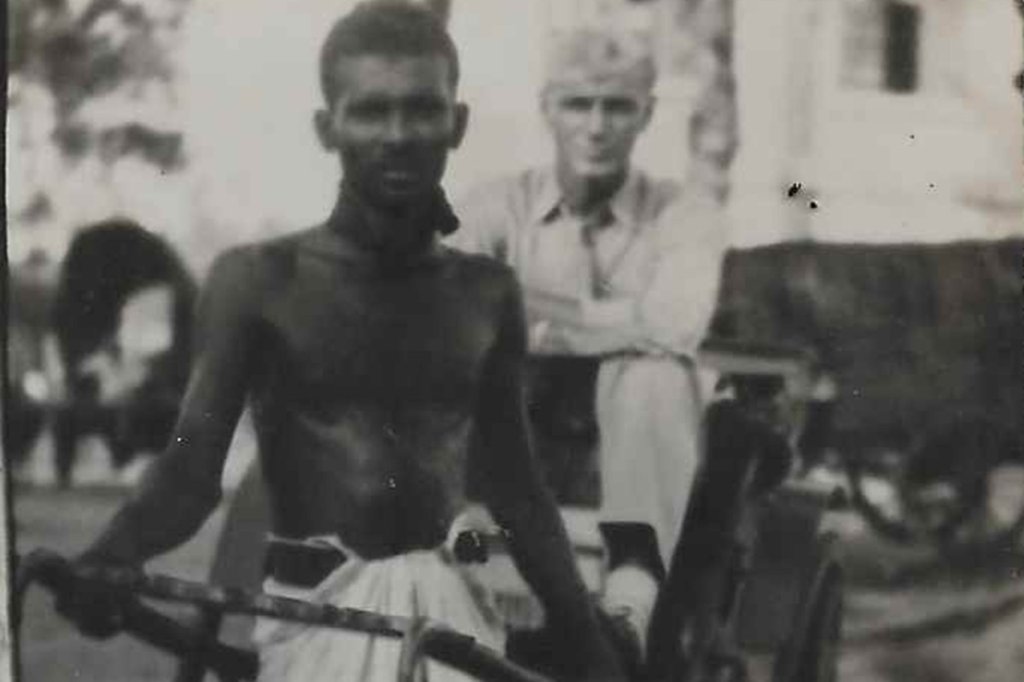
“Our first stop was in Singapore. Everybody got to stay there about a week, and the next stop was Colombo, Ceylon [now Sri Lanka], with rickshaws and all that type of stuff. I was just standing around when I heard a voice that said, ‘Sir, would you desire a trip around the city?’ So I said, ‘What the hell?’ This little guy was pulling a rickshaw, and he offered to take me around the city. I could still remember his feet. Pat, pat, pat, pat, pat. He never stopped. Then we went to Cape Town. We all had liberty.
“We got to Philadelphia at night on December 7, 1945—exactly four years to the day of the bombing. The war had been over for a few months. We pulled up to a dock with nobody there—no searchlights, not even a guy with a flashlight. That was our greeting: pitch black, nobody. But we were happy to be there anyhow. From there, we went to a barracks in Philadelphia, and I went to Great Lakes [in Illinois] where I was discharged.
“I’m proud of what we did and what I did. I didn’t chicken out. One of my best friends at the time—and he’d brag about this—when we got hit by a suicide plane, we had enough damage that we had to come back to the states, get it repaired, and then go back out again to Okinawa. But this guy was bragging that he wasn’t going out again.
“A couple of days before we left, we had practice at our gun mounts. So before breakfast that morning, he ate cigarettes and liquid soap, which is guaranteed to make you puke. He got to his position and started puking. They put him in sick bay, and the Navy doctors, with all their expertise, said he was battle fatigued. They kept him in sick bay, and a couple of weeks later, they promoted him to corporal. I was a PFC. A couple of weeks after that, they promoted him to sergeant. A couple of weeks after that, he was transferred back to Pearl Harbor where he spent the rest of the war.
“I wouldn’t have been able to live if I had done something like that. If I was proud of anything, it was that I did my duty. Yes, I can say I went to war, I did the war, and I was in danger. I earned my one stripe.”
Don’t Miss the Best of We Are The Mighty
• Mike Vining on Vietnam, Delta Force, and the sardines he never ate
• The third Delta Force sniper you didn’t see in ‘Black Hawk Down’
• This airman saved 23 wounded troops during an insider attack

Loading comments…
Comments couldn’t be loaded. Please refresh the page.