

Edwin “Ned” Nye didn’t want to become a lawyer.
Seeing that he was already enrolled in law school, Nye—whose famous son simplified complex topics for millions of television viewers as Bill Nye the Science Guy—did the only thing he could. He dropped out.
Also Read: This plane survived Pearl Harbor and struck back at Midway
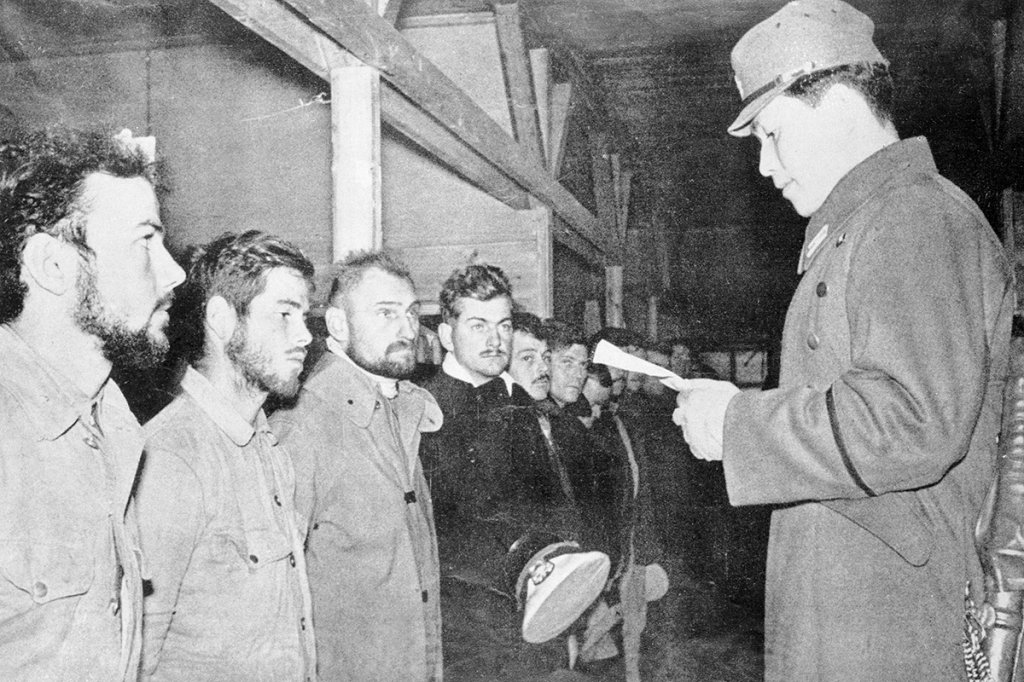
Not one to sit around, Nye went job-hunting. He found work as a contractor for the United States Navy, building an airstrip on Wake Island. Nye was likely performing his duties on December 8, 1941, when the Japanese bombed the island hours after attacking Pearl Harbor.
Nye again did the only thing he could. He joined approximately 400 other contractors in helping American service members in uniform, mostly Marines, defend Wake Island—an atoll 2,300 miles west of Honolulu.
For more than two weeks, Nye and others fought valiantly despite severe disadvantages in manpower and firepower. Eventually, they could not hold out any longer. The Japanese captured the island’s weary defenders and shuttled them to a prison camp in China.
Nye remained there for more than 3½ years.
Using a Shovel to Tell Time
Bill Nye’s appreciation of sundials comes from his father.
Ned Nye became fascinated with them during his confinement, because his captors ordered the prisoners to hand over their jewelry, including watches. Not only that, as his younger son explained in a TED-Ed lesson in 2012, the POW camp had no electricity. That made it even more difficult for the prisoners to know what day or time it was.
Being a resourceful sort, Nye found a solution. He began to tell time by relying on the shadow of a shovel’s handle. The captives also figured out the camp’s latitude, another key piece of information.
That knowledge still did not solve the prisoners’ biggest problem, though: how to alert someone, anyone where they were. Nye and his fellow captives might have remained in detention indefinitely. However, a slightly built POW managed to squeeze himself through a vent in a train car, escape, and tell authorities in the U.S. about the camp.
The liberators were on the way. After a stretch of 44 months that seemed so much longer, Nye was a free man.
The Birth of ‘Bill Nye the Science Guy’
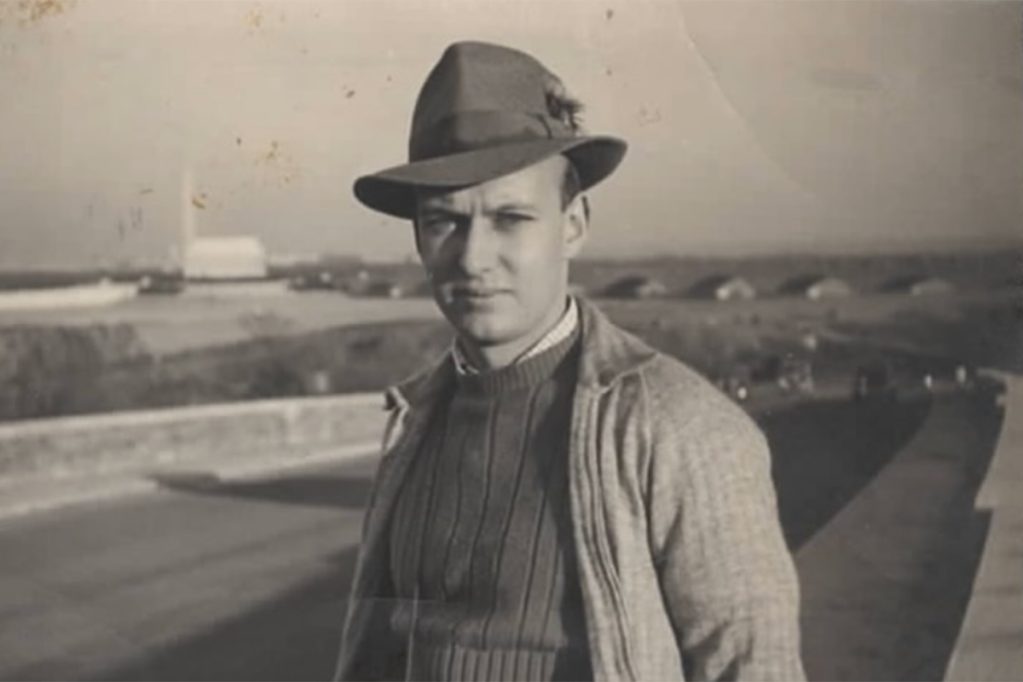
Back on home soil, Nye married his longtime love—herself a Navy codebreaker during World War II—and started a family. They had three children, with Bill coming along on November 27, 1955.
Just like his father, Bill became an engineer. From an early age, he displayed a knack for tinkering. The young Nye didn’t just ride his bicycle; he was prone to disassembling it simply to “see how it worked.”
After graduating from Cornell University in 1977, Nye moved cross country to Seattle to work for Boeing. While Nye worked at the aerospace behemoth, he fostered bigger career objectives. He applied four times to NASA’s astronaut training program and was rejected each time, according to the website Seriously Scientific.
Nye spent nearly a decade at Boeing, then tried his hand at comedy full time. He joined a sketch comedy show, and when he, unscripted, innocently corrected the host’s pronunciation of the word “gigawatt,” the reply was inspirational.
“Who do you think you are, Bill Nye the Science Guy?”
A Popular and Critical Success
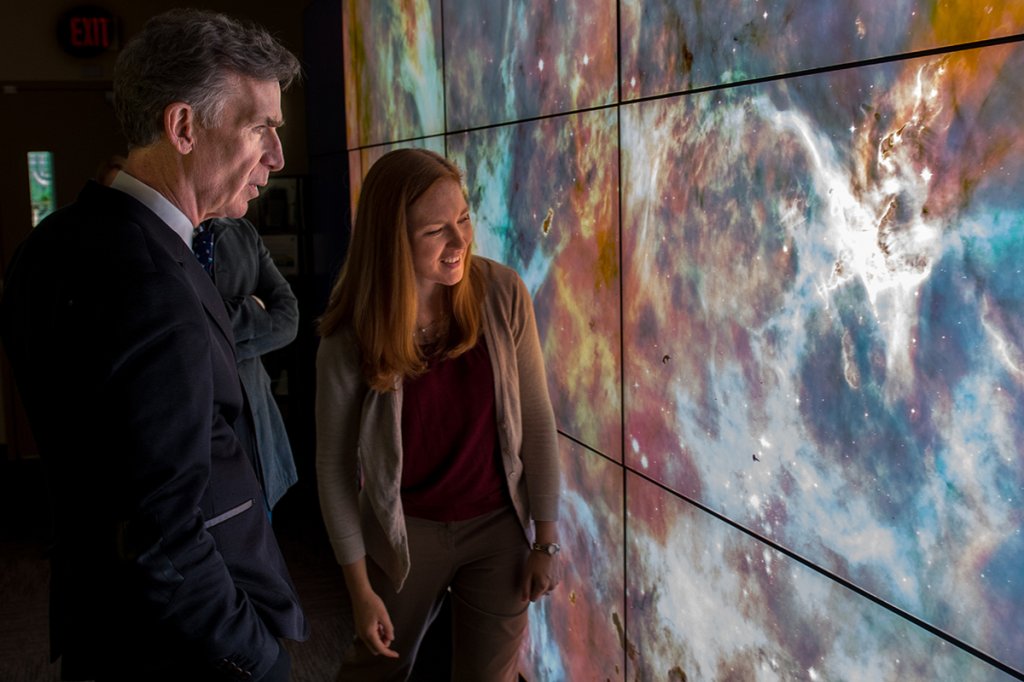
The retort stirred something inside Nye, a fan of the longtime children’s science show “Watch Mr. Wizard” in the 1950s and 1960s. Nye envisioned an updated version inspired with pop culture references.
As excited as Nye and his collaborators were about the idea, television and media outlets were less than enthusiastic, at least initially. They rejected the idea for several years until the public television station in Seattle greenlit the project. According to Seriously Scientific, “Bill Nye the Science Guy” aired nationally for the first time in 1993.
For the next five-plus years, “Bill Nye the Science Guy” broadcast a hundred original episodes in which the personable host helped simplify myriad subjects. Depending on the week, viewers might be treated to a lesson about biodiversity, volcanoes, momentum, or the brain.
The show was not only popular; industry insiders respected it as well, showering “Bill Nye the Science Guy” with 19 Daytime Emmy Awards.
Ned Nye cheered on his son’s success for most of the program’s run until he died on August 23, 1997. Without his father surviving harsh treatment from the Japanese, there would be no Bill Nye. He owes his love of science to his parents, a fact of which he is keenly aware.
Nye honored his father and their shared love of sundials when he developed identical ones for the NASA Mars rovers, Spirit and Opportunity. Both sundials carried the same message:
“People launched this spacecraft from Earth in our year 2003. It arrived on Mars in 2004. … We sent this craft in peace to learn about Mars’ past and about our future. To those who visit here, we wish a safe journey and the joy of discovery.”
Father and son shared that joy.
Don’t Miss the Best of We Are The Mighty
• Tom Hanks’ new 20-part docuseries takes a new look at World War II
• ‘Pressure’ is a D-Day film unlike any other before it
• ‘Jimmy’ trailer: The Oscars, World War II, and a wonderful life
Featured


Loading comments…
Comments couldn’t be loaded. Please refresh the page.