
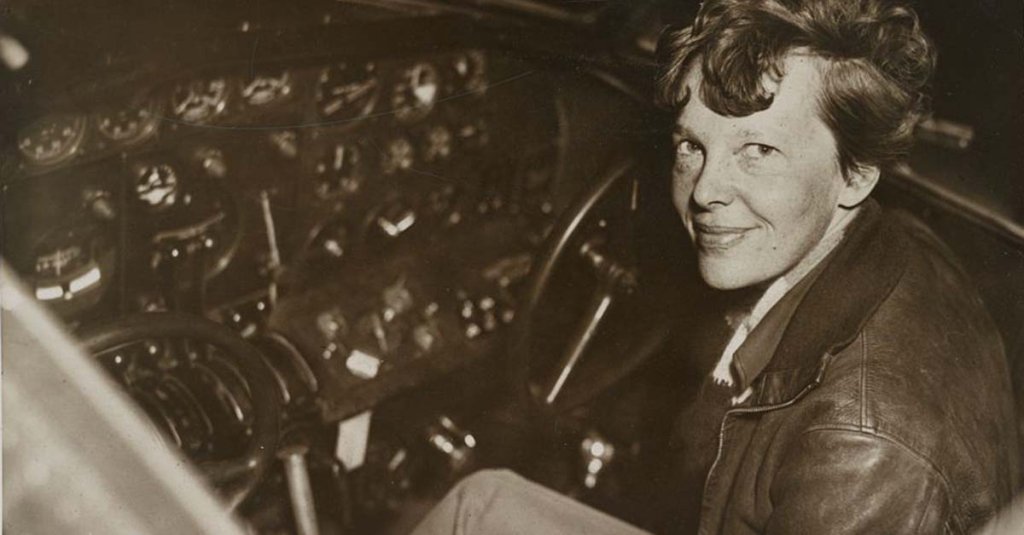
Barely into her 20s, Amelia Earhart was working as a nurse’s aide in Canada when she attended a flying show in 1918.
That display of flight energized Earhart in a way that few other things could. Two years later, a veteran aviator took Earhart up for her first time in an airplane, cementing what the young woman saw for her future.
Also Read: The biggest challenge Charles Lindbergh faced in flying across the Atlantic
“As soon as I left the ground, I knew I myself had to fly,” Earhart said, according to the Smithsonian Institution’s National Air and Space Museum.
Earhart didn’t just fly. She became a record-setting aviator, trailblazer, and a heroine for young girls (and boys) everywhere. Earhart was never afraid to push the limits, creating larger goals along the way.
Her most ambitious challenge was to fly around the world. In March 1937, Earhart’s first bid to circumnavigate the globe ended prematurely when she crashed her Lockheed Electra plane in Hawaii.
That disappointment was temporary as, a few months later, Earhart was back at it again. Along with navigator Fred Noonan, Earhart tried to circle the world again. This time, she disappeared over the Pacific Ocean, necessitating the Navy and Coast Guard to begin one of the United States military’s most extensive searches ever.
Not Reaching Howland Island
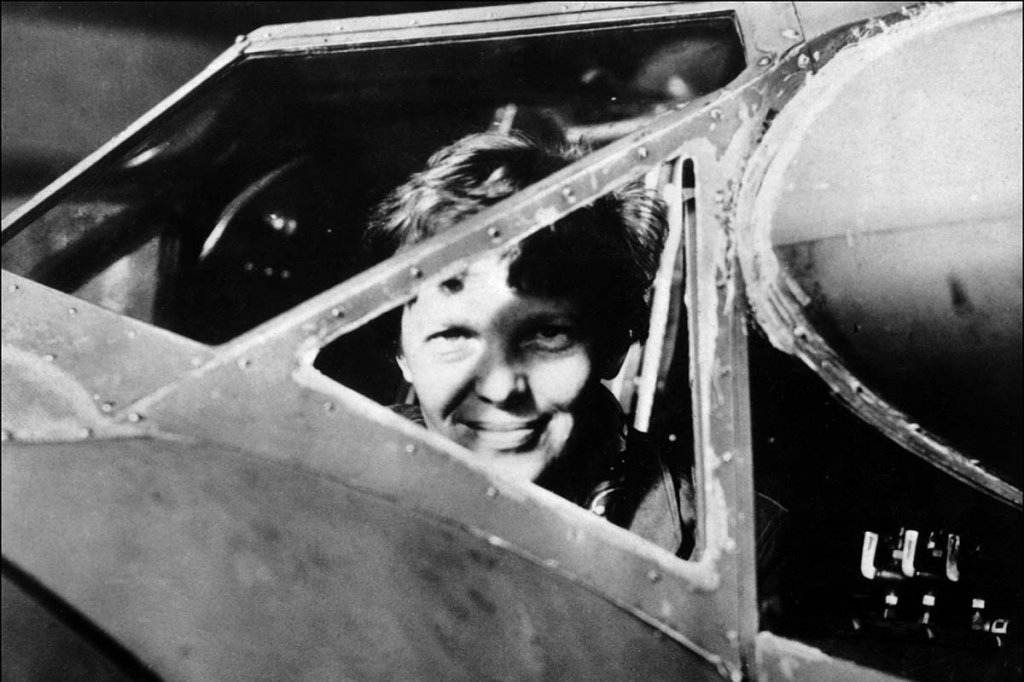
Earhart and Noonan, who departed Oakland, California, on May 21, 1937, were slightly more than three-quarters of the way toward flying around the world when they went missing.
They departed New Guinea midmorning on July 2, 1937, and intended to land on Howland Island in the southwestern Pacific to refuel. At only two miles long and one mile wide, the uninhabited island was a veritable speck surrounded by water. The Coast Guard cutter Itasca awaited Earhart’s arrival with enough fuel to replenish the repaired Lockheed Electra’s tanks.
Earhart’s plane never touched down on Howland Island, thus failing to complete her scheduled journey of more than 2,500 miles that day.
The Itasca received its last transmission with Earhart at 8:43 a.m. on July 2. (Because her plane crossed the International Date Line, Earhart was due to arrive at her destination on the same day on which she took off from New Guinea.) When the Coast Guard couldn’t reach Earhart over the next couple of hours, it began its search.
The Navy soon joined in.
What the Navy Did
According to the U.S. Naval History and Heritage Command, the Navy spared few resources in trying to locate Earhart.
It dispatched the amphibious aircraft PBY Catalina and the USS Swan, a small seaplane tender, to the search area. The PBY Catalina, though, returned to Hawaii because of inclement weather.
The Navy also deployed the USS Colorado, a battleship with three Vought O3U Corsair observation biplanes onboard. They meticulously searched for any signs of Earhart’s plane from July 7 through July 12. During that period, the Colorado and its search planes scoured more than 25,000 square miles without any evidence of a crash.
“I don’t think they will ever be found[,] for we searched the most likely area,” a sailor on the Colorado wrote.
Next it was the USS Lexington’s turn.
A carrier carrying 63 aircraft, the Lexington searched north and west of Howland Island, per the U.S. Naval History and Heritage Command. At 240,000 square miles, its search area dwarfed the one that the USS Colorado covered. The Lexington’s search lasted an exhaustive three days, but the result remained the same.
With no signs of Earhart, Noonan, or any plane debris, the military’s nearly two-week-long search ended.
Fascination with Earhart Continues
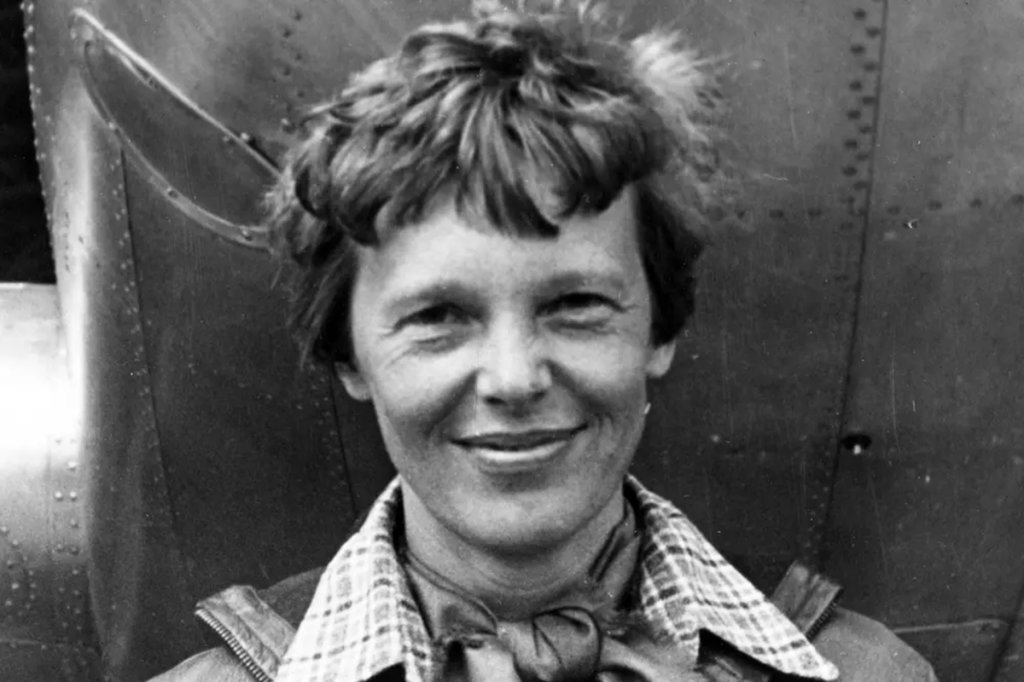
In the nearly century since Earhart disappeared, numerous theories emerged over what happened and her whereabouts. Several recovery missions—including one launched in 2025—also tried to locate Earhart’s plane. So far, nothing has come up. It is most likely, though, that Earhart simply ran out of fuel before reaching Howland Island.
Earhart is forever frozen in time, a 39-year-old aviator at the time of her disappearance. After she became the second person (after Charles Lindbergh) to complete a solo, nonstop flight across the Atlantic Ocean in 1932, President Herbert Hoover sent her a congratulatory telegram.
“I voice the pride of the Nation in congratulating you most heartily upon achieving the splendid pioneer solo flight by a woman across the Atlantic Ocean,” Hoover wrote. “You have demonstrated not only your own dauntless courage but also the capacity of women to match the skill of men in carrying through the most difficult feats of high adventure.”
Earhart was a high adventurer to the very end. She never tired of getting behind the controls of an airplane, longing for the sense of freedom it provided.
“Perhaps the greatest joy of flying is the magnificence of the view,” Earhart wrote in her 1932 book, “The Fun of It.” “If visibility is good, the passenger seems to see the whole world. Colors stand out and the shades of the earth, unseen from below, form an endless magic carpet.”
Don’t Miss the Best of We Are The Mighty
• A US submarine sunk an enemy ship with a torpedo for the first time since WWII
• How these Navy submariners worked to save themselves after their sub sank
• Why the Coast Guard is part of the Department of Homeland Security
Featured




Loading comments…
Comments couldn’t be loaded. Please refresh the page.