
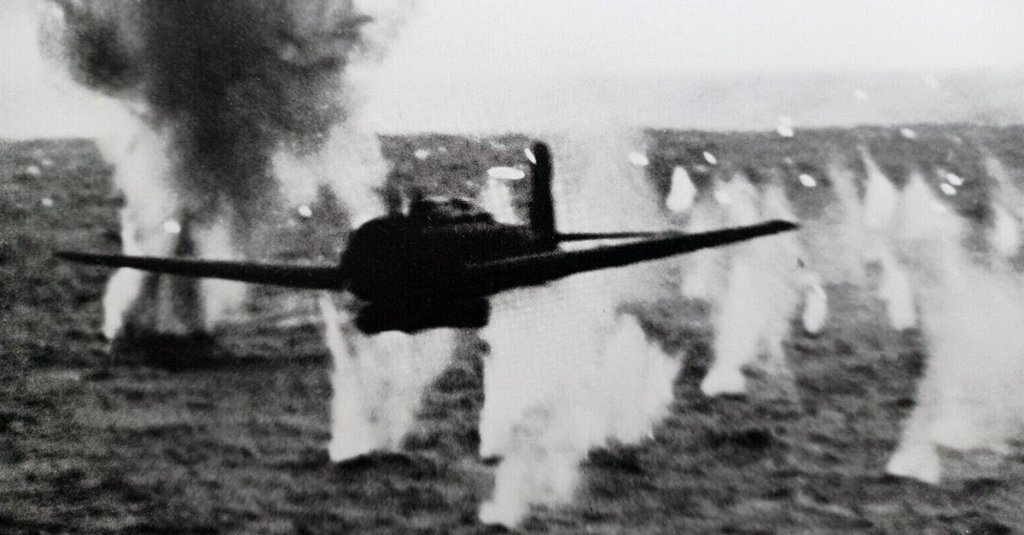
By October 1944, the Imperial Japanese Navy was on the defensive. Allied forces in the Pacific had pushed back the gains Japan made in the years following its surprise attack on Pearl Harbor. Most of the Marianas were captured as other island strongholds had been bypassed and isolated. American and Australian ships were headed for the Philippines.
Also Read: A US submarine sunk an enemy ship with a torpedo for the first time since WWII
Japan’s Navy, desperate to show the Americans it could still fight (and thus prevent an invasion of the Japanese home islands), went all-in at Leyte Gulf. It pulled every one of its remaining major ships to fight off the Allied invasion of the Philippines. The result was (by most accounts) the largest naval battle in human history, with more than 300 ships and 200,000 personnel.
It was also during the Battle of Leyte Gulf that Japan debuted its new tactic, the Kamikaze. Fanatical Japanese pilots flying suicide missions in explosives-laden aircraft crashing into enemy ships to inflict maximum damage. While the tactic may not have been successful in turning the tide of the war, it was much more effective than conventional bombing at sea—and came with a devastating psychological effect for those who watched.
Video of kamikaze attacks usually shows the pilots attacking aircraft carriers or destroyers, but those were by no means the only targets. From October 1944 until the end of the Pacific War, there were thousands of Japanese kamikaze pilots targeting Allied ships of any kind, from the large escort carriers to even small landing craft. But only one submarine was the target of a kamikaze: the USS Devilfish.
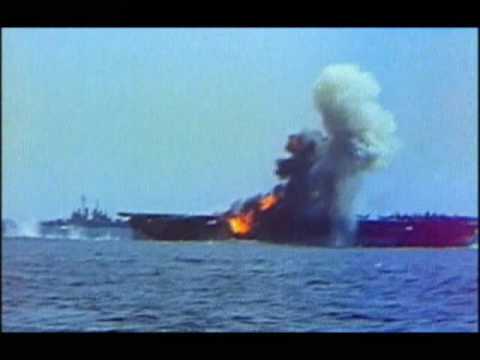
Japanese Kamikaze attack on the USS Essex
On Mar. 20, 1945, long after the Battle of Leyte Gulf, the Balao-class USS Devilfish left its base in Saipan to begin its second war patrol. The sub was cruising on the surface west of Iwo Jima, making way to its patrol area near the northern Nanpō islands. At around 1645, lookouts observed a lone Japanese aircraft headed its way.
Submarines are unique vessels. Anyone who’s served on one will tell you that it’s a long, smelly tube that will kill you if you give it a chance. They are built to withstand tons of pressure from the surrounding water—but not explosives or bombs. The primary way to destroy submarines are depth charges, which detonate at a preset depth, subjecting the sub to a hydraulic shock designed to breach the hull.
During World War II, the Mark IX depth charge contained 200 pounds of Torpex explosive, which would cause an enemy submarine to either sink and implode or cause enough damage to surface and surrender.
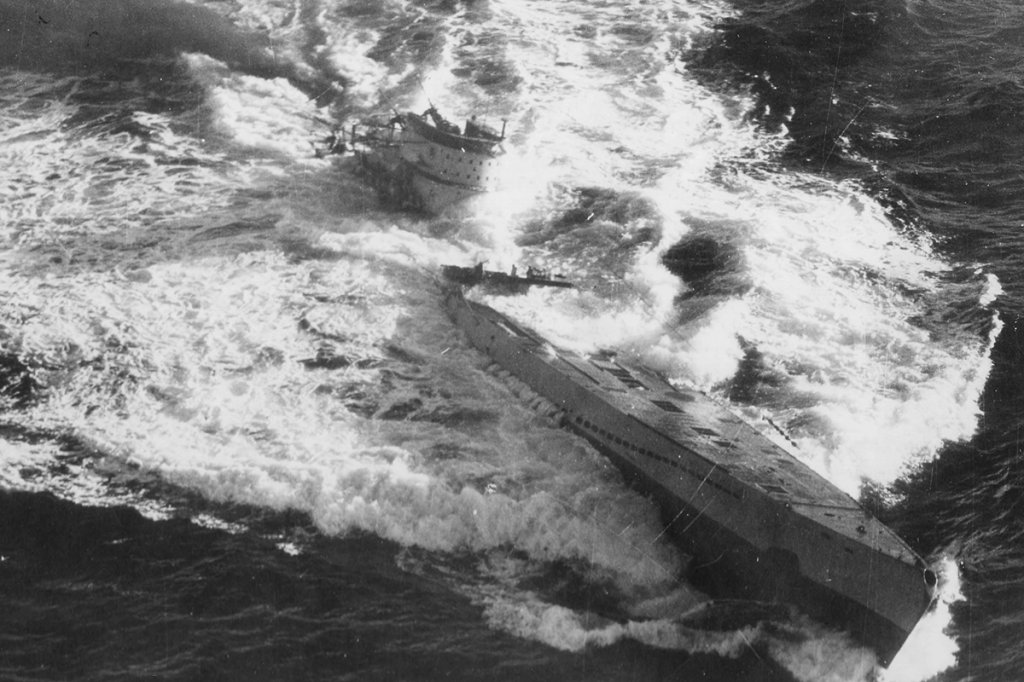
To avoid a hit from depth charges or a bomb, the captain of the Devilfish ordered the boat to crash dive. As it reached about 50 feet, the entire boat shook. The crew believed the aircraft hit them with a light bomb. Water began to rush into the conning tower from the bottom of the SJ radar mast and the APR lead-in. The crew leveled off at 80 feet, and damage control parties began addressing leaks from the conning tower into the control room. Circuit breakers were pulled to prevent a fire, and a trough was made to channel the seawater into the periscope well.
The captain wanted to surface to assess the damage better and raised the number one periscope, but could not see through it. The number two periscope could not be raised at all. The boat’s commander, Lt. Cmdr. Stephan Mann, waited until dark to surface and check the damage. The crew waited, uncertain if they would be able to surface at all.
When the Devilfish finally surfaced, the crew was surprised to find aircraft wreckage on top of the sub. They had apparently been struck by a lone kamikaze. The crew found several pieces of aluminum (likely from wing sections), a section of landing gear, and a Japanese nameplate.
The submarine itself suffered damage to its radar masts (which were sheared off), as well as the APR and VHF antennas, and found an eight-inch hole in the periscope shears. Seeing the damage, the commander returned to Saipan, then to Pearl Harbor for repairs.
There is still some debate about which aircraft struck the Devilfish and why it was alone. The crew believed the aircraft was a Yokosuka D4Y Judy or a Mitsubishi A6M Zero and was possibly part of the attack of the Halsey Powell near Iwo Jima that same day.
Was it alone because it got lost or separated from its formation, or did the pilot see a target of opportunity and decide a submarine was better than no target?
The Devilfish received three battle stars throughout its World War II service, but in this case it was credited with the destruction of an enemy aircraft, and was awarded the Submarine Combat Patrol Insignia.
“While the force commander does not recommend this method of destroying enemy planes, he does congratulate the Devilfish for the destruction of an enemy plane and the courageous actions of all hands in handling the battle damage,” the award citation read.
On May 20, 1945 the Devilfish departed Pearl Harbor after repairs to begin its third war patrol. It would conduct four war patrols in total and would act as a lifeguard during the Battle of Okinawa. Its last battle action came in August 1945, when it bombarded the island of Tori Shima before it headed off to San Francisco.
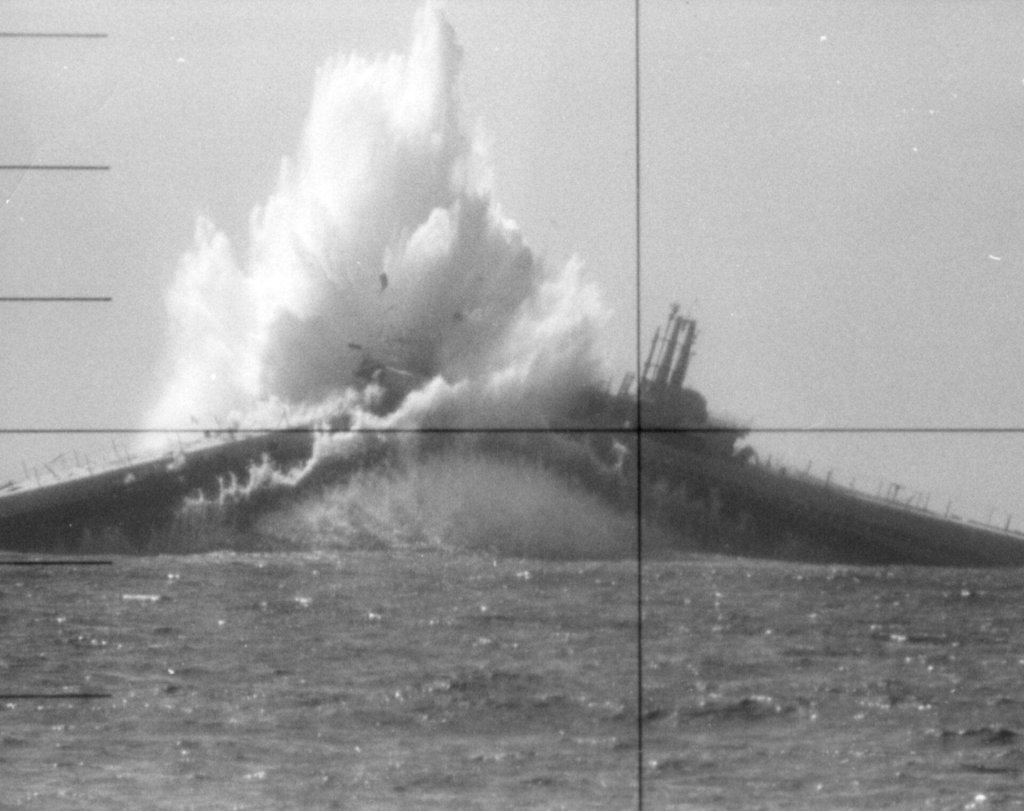
The Devilfish would sit in the reserve fleet for another 20 years until 1968, when she was used for target practice and sunk by the USS Wahoo during a MK 16 Torpedo test.
In all, around 4,000 Japanese kamikaze pilots died during World War II, sinking an estimated 47 Allied vessels. While their 19% success rate might not seem like a resounding victory, it was considerably more effective than the 1% to 2% success rate of conventional Japanese pilots. To this day, the Devilfish is the only American submarine to be attacked by a Kamikaze.
Don’t Miss the Best of We Are The Mighty
• The US Navy’s first submarine was a hand-cranked wooden egg
• How cribbage became the card game that rules the Navy’s Submarine Force
• How these Navy submariners worked to save themselves after their sub sank
Loading comments…
Comments couldn’t be loaded. Please refresh the page.