
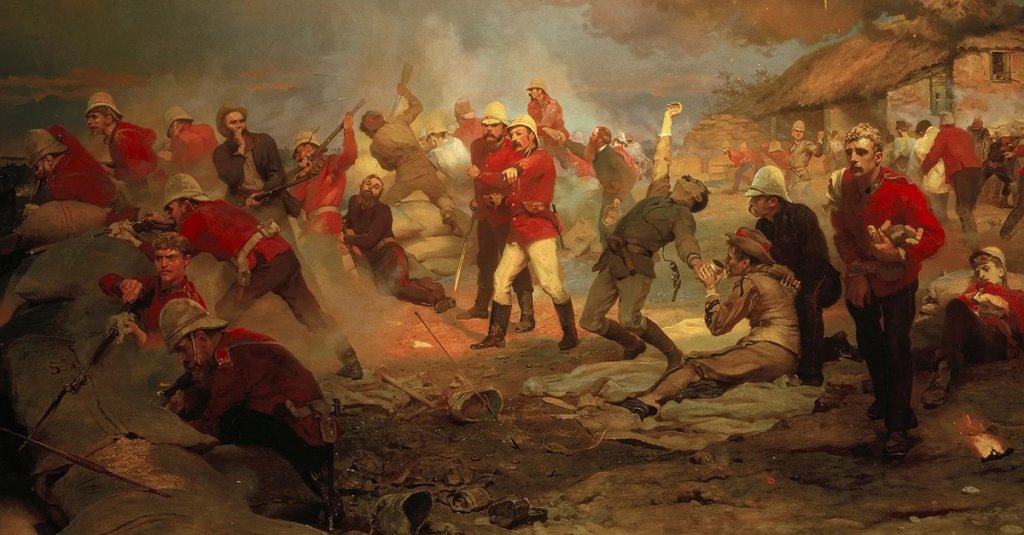
The Battle of Rorke’s Drift is controversial for a few reasons, but the men who fought in it were assaulted unexpectedly, outnumbered 20-to-1, and firing single-shot rifles by the light of a burning hospital while attacks came in waves for 10 hours. The final, most determined assault lasted for hours on its own, as the defenders fell back to an improvised barrier made of crates of biscuits.
Also Read: One of military history’s most lopsided beatdowns didn’t need to happen
Oh, and quite a few hospital patients had to join the defenders in the fight. The British were that badly outnumbered. Still, they won, and over 7% of them earned Victoria Crosses.
The Situation in January 1879
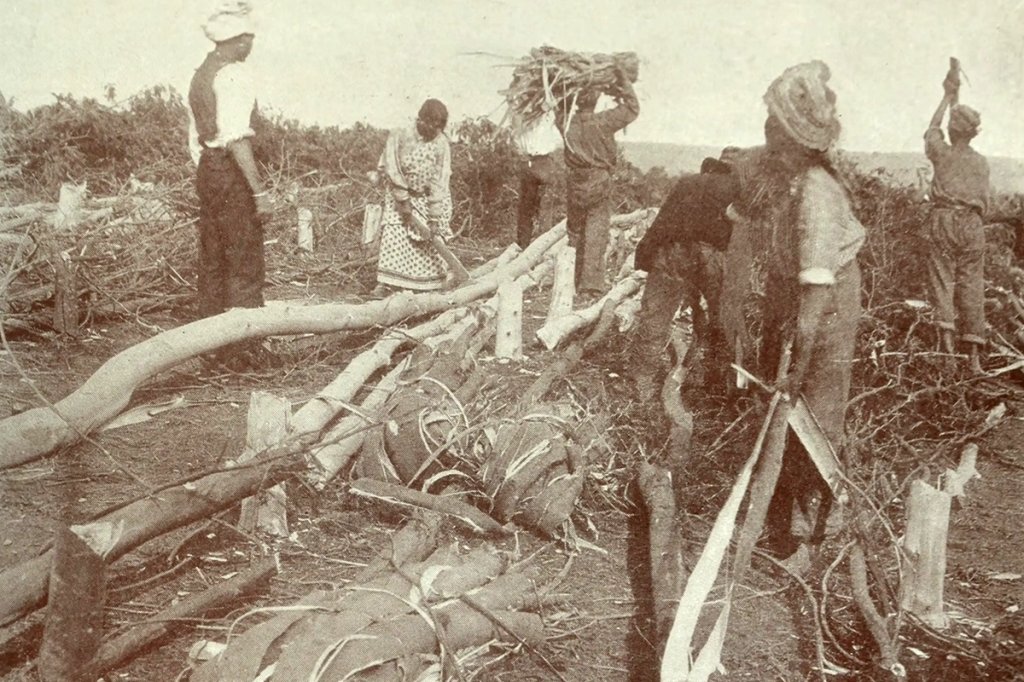
First, we don’t want to sugarcoat this: the Anglo-Zulu War of 1879 was illegal even by 1879 standards. The British colonists of Natal (now part of South Africa) wanted to bring more land under cultivation, search for more minerals, and consolidate themselves so they could form a confederacy similar to the newly formed one in Canada that they were jealous of. Since the Zulus and other African kingdoms insisted on defending their ancestral lands, the colonial leaders decided to force them out.
The British Empire probably would’ve been fine with that, but colonists had to, you know, get permission. A defeat could weaken the defenses for the sea route between the Great Britain and its prized colony in India.
The High Commissioner for Southern Africa, 1st Baronet Sir Henry Bartle Frere, did not seek permission. He even violated direct guidance from his superiors to avoid a war. He mustered about 6,700 British troops, 800 auxiliary soldiers from the colony, and 9,000 African troops and sent them on an invasion across the border of Natal into Zululand. After all, what could over 200,000 Africans do against a crack, redcoat invasion?
We won’t get into the British failures at the Battle of Isandlwana here. Suffice to say, the main force took a savage beating. A group of survivors, led by Lt. Gert Wilhelm Adendorff, rode hard to the border station of Rorke’s Drift to warn the men there.
The Zulus were coming.
The War Descends on Rorke’s Drift
This Zulu force was led by Prince Dabulamanzi kaMapande, brother to the king. While the British invaded Zululand without permission, the prince was also directly disobeying orders from his brother. King Cetshwayo led his forces in defense against the British invasion and specifically ordered his followers to not cross into Natal. A counter-invasion might nix any chance at a peaceful settlement to end the war before it harmed his tribes even further.
But the prince and the Zulu warriors felt slighted by missing out on the glory of attacking the British camp at Isandlwana. So they ran, with little water, across miles of South Africa to reach Rorke’s Drift.
The little border station properly belonged to a Swede, Reverend Otto Witte, who ran the church and hospital there. But the British forces were using the church as a storehouse, and it was British troops that filled the hospital.
The men at the station could hear the Battle of Isandlwana on Jan. 22, 1979, but they had no way of knowing what was happening there. In the early afternoon, two disheveled and sweaty British riders from Lord Chelmsford’s camp rode into view. They had 100 African allies who survived with them.
They quickly alerted the station to the danger it faced: Zulus were running at full speed at the station, the main force of the invasion had lost more than half its forces, and the station had only minutes to prepare a defense against the vastly larger Zulu force.
Preparing for the Zulu Assault
The British troops were in a tight spot, worse than anything George Clooney faced in “O Brother, Where Art Thou.”
The oncoming army seemed just as vast as they had been warned, but was still coming into view, so there was no way to know for sure exactly how large a force was coming against the station—and the odds against the Redcoats were stacking: All of the Brits carried single-shot rifles. A number of them were “walking wounded” from the hospital. And the station lacked defense works or the material to properly construct them.
Worse still, a large hill stood over the station that the British troops could not secure. It gave attackers the ability to fire into the base.
But there was a lot going for the British defenders, as well. There were limited ways into the station by foot. The terrain and scrub brush forced attackers to come through a few narrow channels. Their single-shot Martini-Henry rifles inflicted devastating wounds and used cartridges, so even a careful shooter could fire 10 rounds per minute. They also had a large stock of ammunition, 20,000 rounds. And they used a large supply of crated food as improvised defenses.
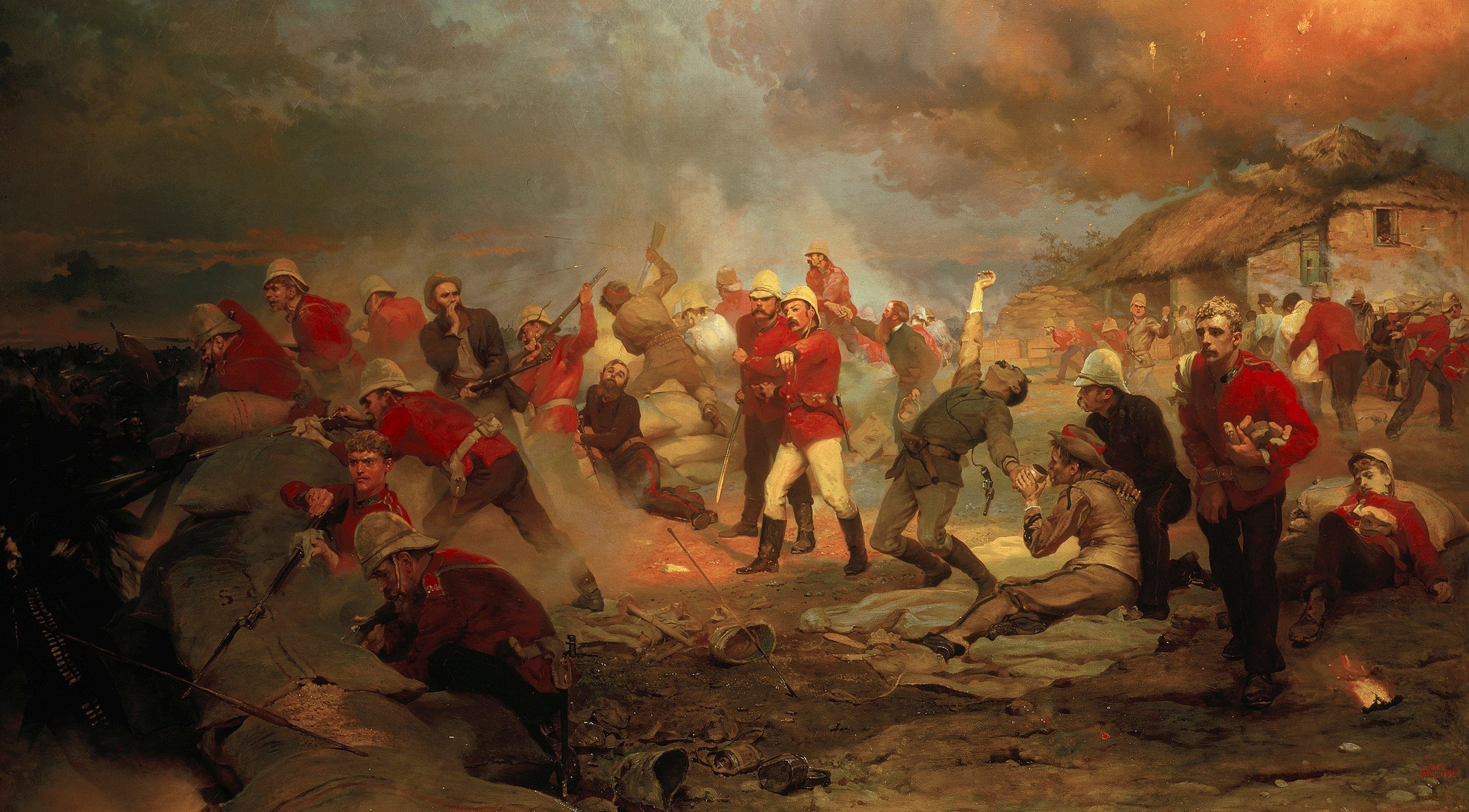
Best of all (for the defenders of Rorke’s Drift), while the Zulu force coming over the hill was obviously large, the defenders initially had about 400 men to defend the small camp. And about a third of the defenders had rifles with well-manufactured cartridges. Meanwhile, the attackers had few firearms and some of those had homemade ammunition.
British leaders, Lt. John Chard and Lt. Gonville Bromhead, decided it was better to prepare defenses than to attempt to evacuate the hospital. They ordered the food stores spread between the church and hospital to form a barrier. And they arranged the native and British forces to repel attacks.
Rorke’s Drift and the Fight for the Hospital
The opening minutes of the battle went terribly for the British, though. The first Zulu warriors to reach the base assaulted into a position held by exhausted Natal Native forces that had survived the battle at Isandlwana that morning. The Natal forces almost immediately fled, and multiple other groups of natives fled behind them.
Soon, the defenders were down to about 140 British troops, 11 colonial troops, and a few civilians. Luckily, the oncoming Zulu forces simply could not bring their forces to bear as a large group. The British only had to face a force a few dozen wide at a time. So they were outnumbered, but like the Spartans at Thermopylae, they could fight man-to-man, anyway. And they could do so with rifles against spears.
The British showed fantastic fire discipline. They focused on careful, aimed shots unless a Zulu warrior got into spear range of them. Then, they would turn to their bayonets or revolvers. Still, the waves were coming so fast that some troops suffered burns to their hands as their weapons overheated.
The British Fall Back
Chard, one of the lieutenants, knew they would be forced back. He ordered the men to construct a second defensive line in the middle of the base with more boxes of food.
The Zulus did make it into spear range many times. They eventually assaulted into the hospital, and troops knocked holes in the walls to retreat room by room. Joseph Williams guarded one of the windows, and British forces would later find 14 dead Zulus there after the battle. But it took time to chip holes in the walls and evacuate the remaining patients from hospital rooms. Multiple patients were killed in their beds.
The British fell back to the new wall and abandoned the front of the hospital.
Even at spear range, though, the Brits had a small advantage because their rifles with bayonets had a slightly longer reach than the African’s assegai, a short spear that they used with a cowhide shield. In the tight rooms and against the defensive barriers, the Africans’ greater training and experience with the spears mattered little.
The Battle Goes Into the Night
The British fought into the evening and then into the night. Multiple soldiers suffered burns from red-hot barrels as their rate of fire threatened to destroy their weapons. At least one reported a Zulu trying to take their rifle area by gripping the bayonet, and they nearly succeeded.
The Zulus did take the high ground outside the are and manage to fire into the base, but the poor lighting, long range, and their homemade ammunition made the rifle fire inaccurate. Still, five of the 17 British soldiers killed at Rorke’s Drift died by Zulu rifle fire at the north wall of the outpost, where the hill left them most exposed.
The hospital caught fire and became the main source of light in the darkness. As sections of roof collapsed, the light would wane, then return as new sections caught fire.
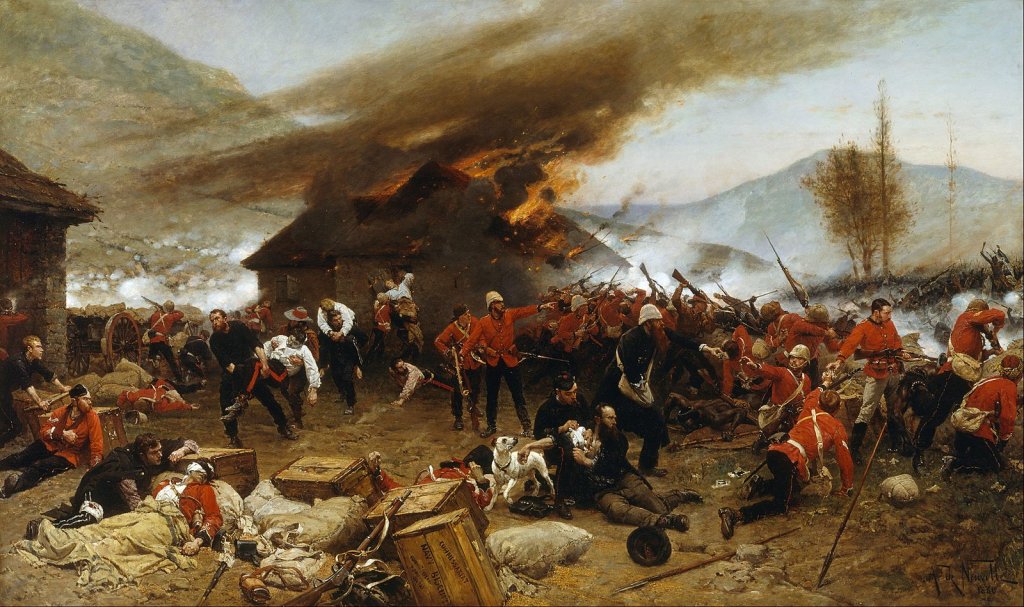
The final assault was a determined rush against the cattle kraal at the center of the complex, a circular enclosure for animals. That assault lasted until 2 a.m. The Zulus continued harassing fire until 4 a.m. before finally departing.
Of the 141-man garrison, 17 were dead or dying.
The Aftermath
The next day, the Zulus appeared again but departed without a new attack. Later in the morning, relief finally came in the form of troops from Lord Chelmsford’s column.
The British, bitter at their losses at both Isandlwana and Rorke’s Drift, admitted to killing or burying wounded Zulus. Zulu death estimates range from just over 300 to nearly 900, with most historians settling somewhere between 400 and 500.
As King Cetshwayo had worried, the British public showed outraged when it learned of the losses at Isandlwana and subsequent attack on Rorke’s Drift.
Lord Chelmsford launched a second invasion as quickly as he could and successfully broke apart Zululand after defeating the Zulus at the Battle of Ulundi. He was moving fast because he knew he’d been replaced for debacle at Isandlwana, and his replacement, Sir Wolseley, had nearly caught up with him.
Once broken apart, Zululand became a British protectorate. The British annexed it in 1887. Chelmsford received a knighthood for Ulundi but was removed from the field.
Awards and Controversy
There has been speculation that the large number of medals given to the defenders at Rorke’s Drift was, at least in part, to give heroes to the British public for the failures of the military and colonial leadership. Lord Chelmsford was soon replaced by Sir Garnet Wolseley, has an oft-cited quote that seems to attack the men at Rorke’s Drift:
“… it is monstrous making heroes of those who, shut up in buildings at Rorke’s Drift, could not bolt and fought like rats for their lives, which they could not otherwise save.”
The full quote is a little better for Wolseley:
“I am sorry that both of these officers were not killed with their men at iSandlwana [sic] instead of where they were. I don’t like the idea of officers escaping on horseback when their men on foot are killed. Heroes have been made of men like Melvill and Coghill, who, taking advantage of their having horses, bolted from the scene of the action to save their lives, it is monstrous making heroes of those who saved or attempted to save their lives by bolting or of those who, shut up in buildings at Rorke’s Drift, could not bolt, and fought like rats for their lives which they could not otherwise save.”
Wolseley was attacking officers for having fled Isandlwana and then received medals in the full quote and not, necessarily, every trooper who received the Victoria Cross. But the personal attack is still puzzling since the only officer to fight at both battles was Lt. Gert Wilhelm Adendorff, the only survivor of Isandlwana to actually stay at Rorke’s Drift. And he was:
1. Credited with a competent defense by multiple Victoria Cross recipients and the commander of the defense, and
2. Not awarded a medal for his part in either battle.
The two officers he mentions in the quote, lieutenants Teignmouth Melvill and Nevill Coghill, both died attempting to save the Queen’s Colours while crossing the Buffalo River near Rorke’s Drift. Neither reached Rorke’s Drift nor received the Victoria Cross until it became a posthumous award in 1907.
Still, 11 of the defenders were granted Victoria Crosses, another was said to have been worthy of it but could not receive it posthumously at the time, and four additional soldiers received Distinguished Conduct Medals.
Don’t Miss the Best of We Are The Mighty
• The American-made ‘trench broom’ terrified Germans in both World Wars
• World War I officers could ‘pay-to-win’ with Sears machine guns
• Delta Force finds its best counterterrorism operators with the ‘Long Walk’

Loading comments…
Comments couldn’t be loaded. Please refresh the page.