
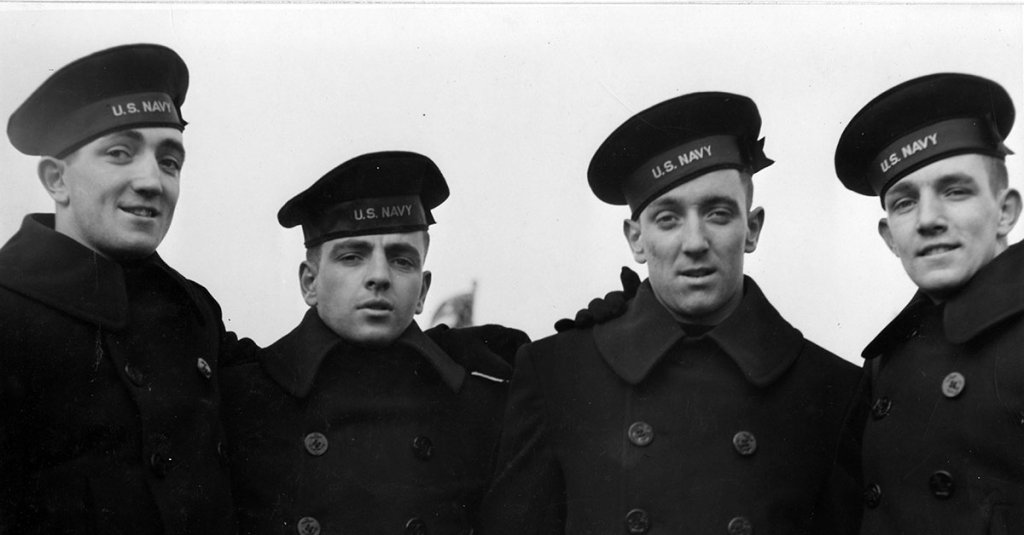
In less time than NBA teams receive for one possession, the USS Juneau was gone.
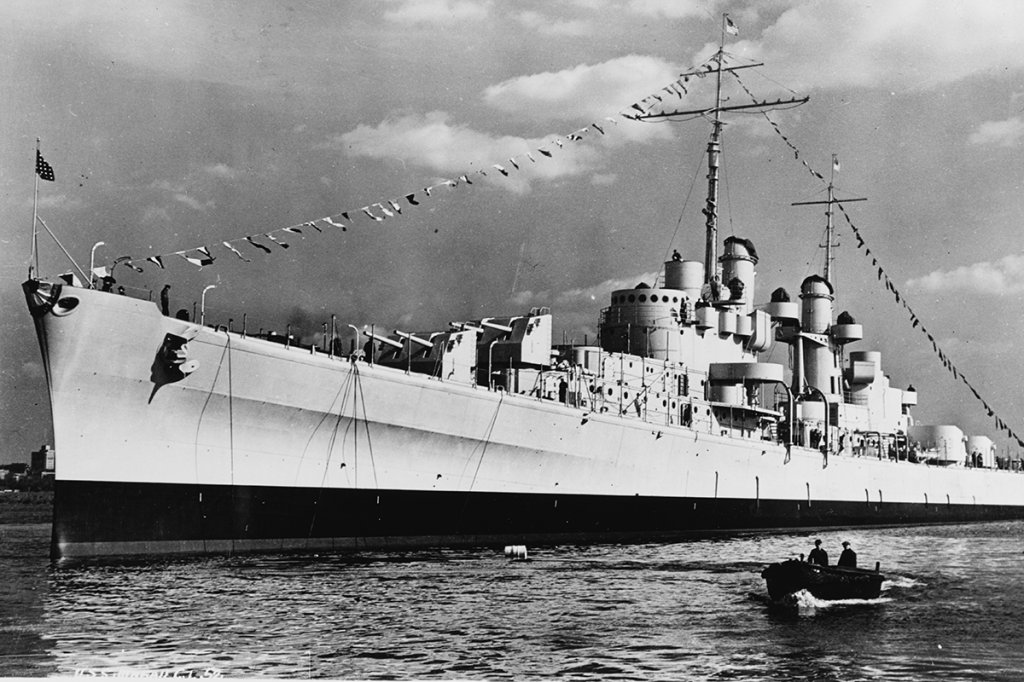
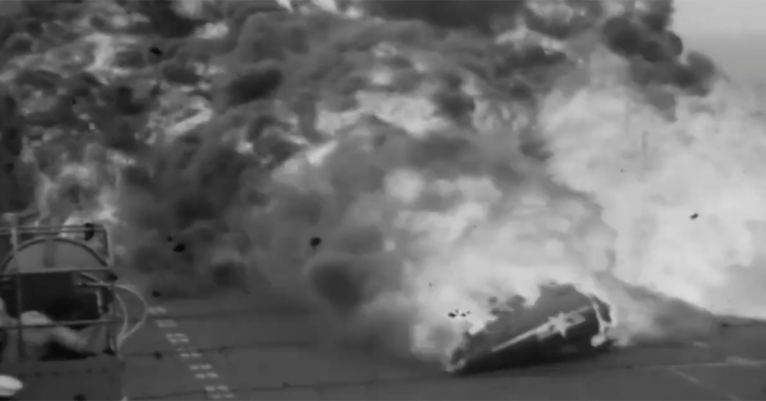
It took only 20 seconds for a Japanese torpedo to strike the USS Juneau, split the light cruiser in half, and cause it to disappear below the surface of the Pacific Ocean.
The tragic incident during the Battle of Guadalcanal killed 687 men.
Also Read: A Nazi was the only person convicted of spying in connection with Pearl Harbor
“The ship just blew up in my face,” U.S. Navy veteran Frank Holmgren recalled in a 2020 article from the National World War II Museum. “My hand landed on a life jacket. I sort of pulled it on me… the ship was going down… the fantail was at a 45-degree angle. I said, ‘’Oh, my God, I’m gonna die. Oh, my God, I’m gonna die.’”
Holmgren was one of 10 men who survived the catastrophic blast.
The USS Juneau is best-known as the ship on which the five Sullivan brothers—George, Frank, Joe, Matt, and Al—served and died. The Sullivan family’s unimaginable grief galvanized a nation. It also prompted the Navy to change its policy regarding family members serving on the same ship and later name two destroyers after the Sullivans. The brothers’ story even received the Hollywood treatment two years later with “The Fighting Sullivans.”
Four brothers from another family also served on the USS Juneau. If not for a spur-of-the-moment decision, all might have lost their lives during World War II, too.
Who Were the Rogers Brothers?
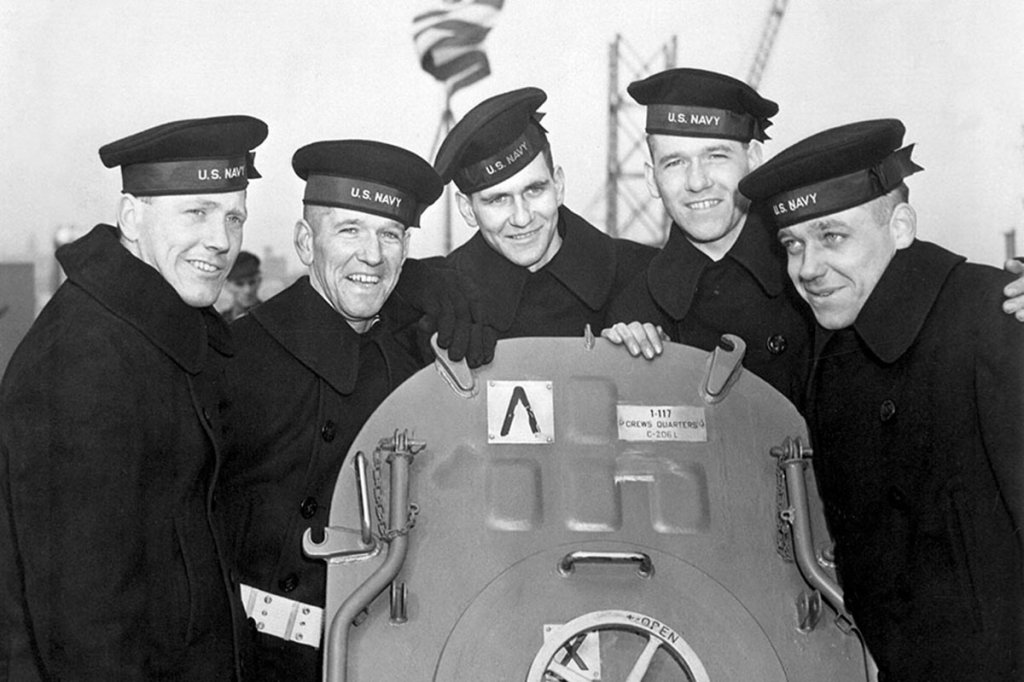
Joseph, Patrick, Lou, and Jimmy Rogers hailed from Connecticut.
While the Navy then discouraged more than one family member from serving together, the service didn’t strictly enforce the policy. In the Sullivans’ case, they specifically asked not to be separated.
“We will make a team together that can’t be beaten,” one brother implored to Navy Secretary Frank Knox at the time.
It is unknown whether the Rogers brothers made a similar plea, but they certainly were tight-knit siblings. They undoubtedly appreciated the assignnment to serve on the Juneau. Commissioned in February 1942, the Juneau served as an escort ship during Guadalcanal—the United States’ first major campaign against Japanese forces during the war.
Late on November 12, a torpedo hit the Juneau’s port side. The disabled cruiser headed toward Espiritu Santo for repairs, but never made it there. A few minutes after 11 a.m. the next day, the Japanese fired two torpedoes at another warship, the heavily damaged USS San Francisco. Both missed their target, and one pulverized the Juneau near the same spot that it was hobbled the previous day.
There was nothing the Juneau’s crew could do.
2 Brothers Get Off the Juneau
Patrick and Lou Rogers either died immediately after the explosion or did not survive days in the shark-infested waters near the Solomon Islands. Joseph, then 24 years old, and Jimmy, the youngest of the siblings at 18, barely avoided a similar fate.
The previous month, a Navy memo offered brothers an opportunity to be reassigned if they served on the same ship, according to the U.S. Naval History and Heritage Command. When a supply ship pulled near the Juneau about two weeks before its sinking, Patrick and Lou stayed. Joseph and Jimmy said their goodbyes and stepped off the Juneau.
Why did the two brothers go?
A logical assumption, per the U.S. Naval History and Heritage Command, is that Joseph and Jimmy loved boxing. Once they saw the boxing equipment on the supply ship, the enticement of that sweet setup was apparently enough.
Wracked with Survivor’s Guilt
Joseph and Jimmy both lived into their mid-70s, their remaining years tainted with survivor’s guilt. The Rogers family lost two brothers, and that is horrific. It could have been much worse, though.
Because of what happened to the Sullivans, the Rogers boys did not remain in the public consciousness. A studio did not make a movie about their lives, and the Navy never contemplated christening any ships in their name.
A day during the Guadalcanal campaign nearly 8½ decades is memorable for all the wrong reasons. Six hundred and eighty-seven men lost their lives, all paying the ultimate price for the United States. They all deserve to be remembered, as one of the Sullivan brothers’ granddaughter, Kelly Sullivan, noted in 2018.
Speaking after the research vessel Petrel discovered the wreckage of the Juneau on March 17, 2018, Sullivan noted her family was not the only one that suffered.
“Maybe the sadness is really about feeling the sacrifices,” she said. “When you see the wreckage, you can feel the sacrifice that so many families made on that day.”
Don’t Miss the Best of We Are The Mighty
• Eight brothers fought in World War II
• The ship that delivered the atomic bomb was sunk, and nobody came to look for it
• The ‘Gray Ghosts’ of the Cuban Missile Crisis
Featured

Sponsored Content
Automated vs. self-directed investing: A guide for military families
Loading comments…
Comments couldn’t be loaded. Please refresh the page.