
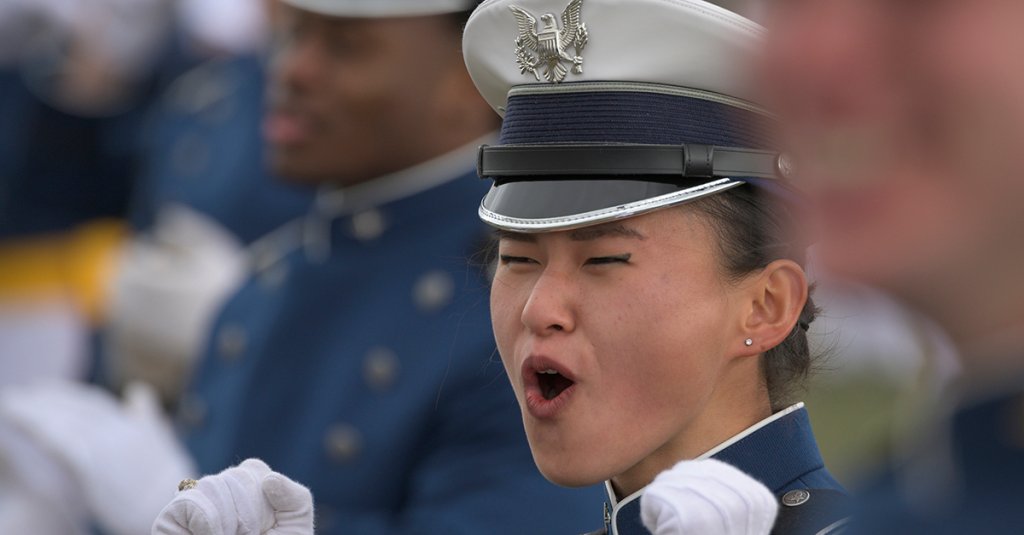
This Space Force ranks article has been corrected to reflect the actual spelling of Gen. B. Chance Saltzman’s last name, which is, in our defense, really hard. The Space Force also asked us to correct some commonly held misconceptions about the Space Force, of which there are many. So, everything except this disclaimer has been vetted by the real Space Force. Also, it turns out that the Netflix series “Space Force” is not a good source of information about the actual Space Force and isn’t really even that good of a TV show. Two stars.
All it takes is one look at your smartphone to realize why the Space Force exists.
Created on December 20, 2019, the United States military’s youngest service branch has myriad responsibilities. They include several that impact the lives of everyday Americans, especially in regard to Global Positioning Systems (GPS) and satellites. You know, the technology that makes your iPhone or Android so invaluable.
Also Read: The complete guide to Air Force ranks
The Space Force does so much more than that. Guardians also work diligently to make sure the United States is at the forefront in the race for space (its official mission is to secure our Nation’s interests in, from, and to space). Despite only recently celebrating its sixth birthday, the Space Force—with more than 15,000 Guardians as of April 2026—is growing up fast.
“Space is the world’s new war-fighting domain,” President Donald Trump said as he signed the 2020 National Defense Authorization Act, which formalized America’s sixth military service branch. “Among grave threats to our national security, American superiority in space is absolutely vital. And we’re leading, but we’re not leading by enough, and very shortly, we’ll be leading by a lot.”
The Space Force and the U.S. Air Force both fall under the Department of the Air Force, but the USSF is its own, distinct branch of the military and no longer formally connected to the USAF.
As in other military branches, time in service, time in grade, and career and leadership development courses determine Space Force rank. Interested in becoming part of its ambitious mission? Here’s what you need to know about the Air Force’s wunderkind offspring.
Space Force Enlisted Ranks
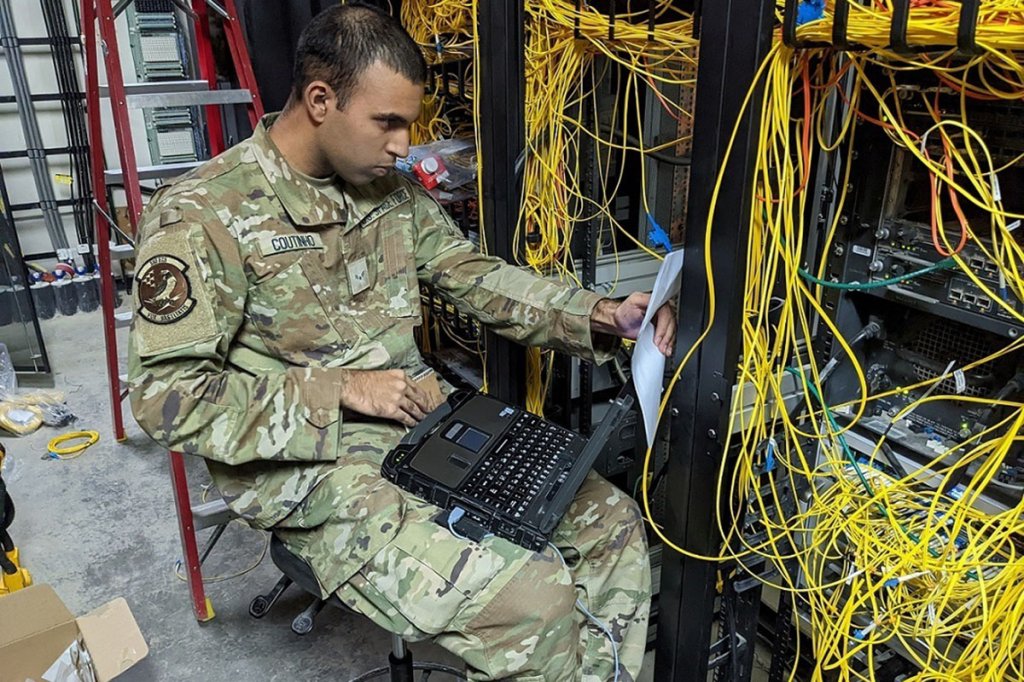
The Space Force adopted a new rank structure for enlisted troops, beginning in February 2021. Guardians are divided into three enlisted tiers: specialists (E-1 to E-4), noncommissioned officers (E-5 to E-6), and senior NCOs (E-7 to E-9).
Specialists
E-1 Specialist 1 (Spc1): Similar to an airman basic in the Air Force, it’s an entry level designation for Guardians who recently graduated from Basic Military Training. They learn military customs and begin to understand the dynamics involved in space.
E-2 Specialist 2 (Spc2): Similar to an airman in the Air Force, they focus on becoming technically proficient in a specific area.
E-3 Specialist 3 (Spc3): Spc3s further their knowledge of space system operations and usually assist higher-ranking Guardians. At least 10 months in service is required for promotion from Specialist 2.
E-4 Specialist 4 (Spc4): Spc4s begin to handle more advanced responsibilities, serve as mentors, and prepare for noncommissioned officer roles.
Noncommissioned Officers
E-5 Sergeant (Sgt): It takes roughly four years, sometimes less, of active-duty service for Guardians to reach this rank. Sergeants are expected to begin the transition to leading other Guardians. Their duties revolve not only showing younger Guardians the right way to do things, but also becoming resources for mission readiness and properly executing space operations.
E-6 Technical Sergeant (TSgt): These subject-matter experts and manage teams and complex space and cyber operations. Mentoring is also part of their responsibilities.
Senior NCOs
E-7 Master Sergeant (MSgt): MSgts are expected to fulfill objectives and guarantee technical expertise in space operations. They also are technical experts and mentors. Per ExecutiveGov’s website, a 7-skill level is necessary, along with eight years of time in service and 24 months in time in grade.
E-8 Senior Master Sergeant (SMSgt): These senior leaders generally have at least 15 years of experience and usually more. They deal in high-level operations, manage personnel, and continue to mentor junior NCOs. Only 2% of enlisted Guardians receive promotions to this level.
E-9 Chief Master Sergeant (CMSgt): In January 2026, only 12 SMSgts were selected for promotion to Chiefs. They develop enlisted Guardians, influence policy, oversee large groups of Guardians, and are responsible for unit readiness.
Space Force Officer Ranks
Space Force officers fall into three categories—company grade, field grade, and general officers.
Company Grade
O-1 Second Lieutenant (2nd Lt): Recent graduates of the Air Force Academy, ROTC, or Officer Training School start at this beginning commissioned officer rank. They lead small groups of Guardians and acquire technical knowledge of space operations. Their duties also include executing missions and ensuring the preparedness and welfare of Guardians.
O-2 First Lieutenant (1st Lt): Typically after two years, a second lieutenant is promoted to this role between junior and senior leadership. First lieutenants act as deputy flight commanders and specialize in space operations, along with intelligence and cyber responsibilities.
O-3 Captain (Capt): One of a captain’s primary responsibilities is tactical leadership. They command flights, are well-versed in tactics, and lead small groups of Guardians. First lieutenants are usually promoted to captains after 24 months.
Field Grade
O-4 Major (Maj): Majors may command squadrons. They direct satellite operations and manage space launches. They also have significant input in establishing policy. Majors are encouraged to pursue at least a master’s degree.
O-5 Lieutenant Colonel (Lt Col): Good leadership skills are pivotal to this rank as well. Lieutenant colonels advise less senior commanders.
O-6 Colonel (Col): The highest field-grade rank in the Space Force, colonels have graduate-level degrees. They are in charge of improving base efficiency and may be responsible for as many as 4,000 service members.
General Officers
O-7 Brigadier General (Brig Gen): The president decides on promotions to this rank. Generals with 30 years or more in service or who were a brigadier general for five years, whichever comes later, are required to retire. Brigadier generals command field units and run major programs. They serve within the Space Systems Command or as deputy commanders elsewhere.
O-8 Major General (Maj Gen): This two-star oversees organizations of up to 10,000 troops. The advancement to major general mirrors that of the rank of brigadier general.
O-9 Lieutenant General (Lt Gen): Three stars lead major installations and outposts and are concerned with the service’s direction and the Guardians’ morale. The president appoints lieutenant generals.
O-10 General (Gen): The highest rank in the Space Force, four stars are tasked with formulating strategy and policy to ensure combat readiness.
The chief of space operations is a member of the Joint Chiefs of Staff. General B. Chance Saltzman, who took over from Gen. John “Jay” Raymond in November 2022, currently holds that position.
Frequently Asked Questions
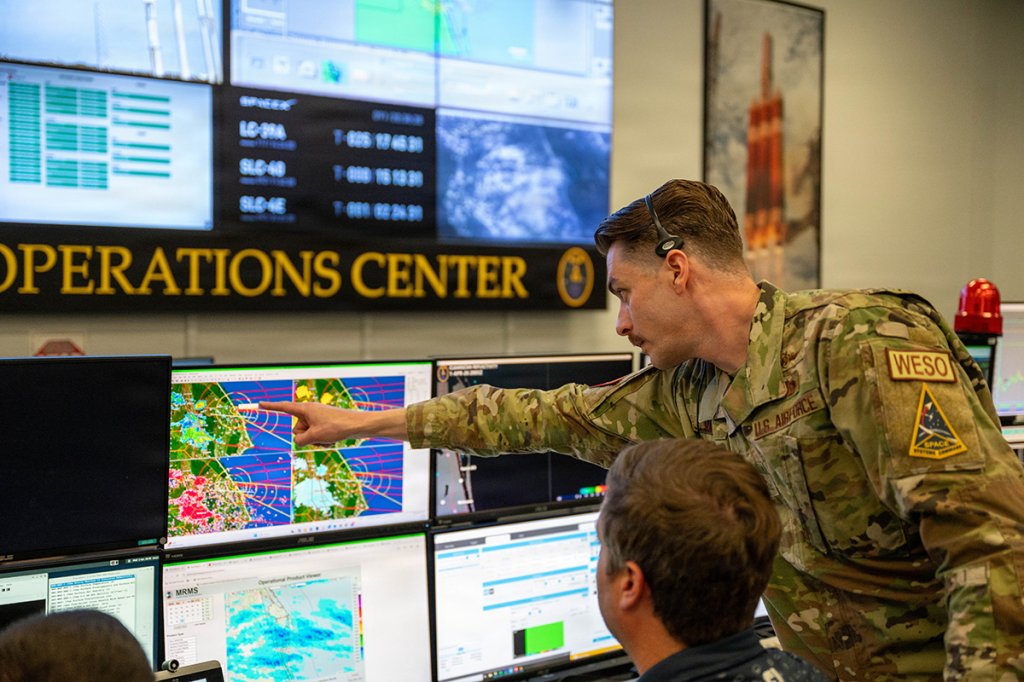
What are the highest ranks in the Space Force?
General is the highest officer rank in the Space Force. The highest enlisted rank is the chief master sergeant of the Space Force. The chief of space operations—currently Gen. B. Chance Saltzman—is a member of the Joint Chiefs of Staff. Saltzman advises the president, defense secretary, and the National Security Council.
What rank will I be in the Space Force with a bachelor’s degree?
Guardians with a Bachelor’s Degree may be selected to commission as a second lieutenant, but a large percentage of the enlisted force also holds a degree. More than 60% of the entire service has a Bachelor’s or greater, the highest of any military branch.
What is the lowest rank in the Space Force?
The most junior enlisted rank is Specialist 1.
Is it hard to rank up in the Space Force?
Just like with all military careers, the more time and effort you put into earning your next rank, the easier your path will be. If you want to find out more, you can speak with a recruiter today.
Where is U.S. Space Command currently located?
It is in the process of moving from Peterson Space Force Base in Colorado to the Redstone Arsenal in Huntsville, Alabama. That process is due for completion in 2031. The Space Force wants you to know that U.S. Space Command is a combatant command entirely separate from the Space Force and is staffed by members from every service. Just because the word “space” is in some unit’s name doesn’t automatically mean they’re in or part of the Space Force.
We’re pretty sure that’s something you’ll learn in basic training.
This article includes information from the United States Space Force’s website, the Council of State Governments, and ExecutiveGov.com.
Don’t Miss the Best of We Are The Mighty
• Before 3 tours in Vietnam, this fighter pilot dropped nearly 20 miles from high above
• An Air Force plane crashed in Death Valley during the Cold War (and is still there)
• How Kuwait’s air defenses downed three American F-15 Strike Eagles

Loading comments…
Comments couldn’t be loaded. Please refresh the page.