
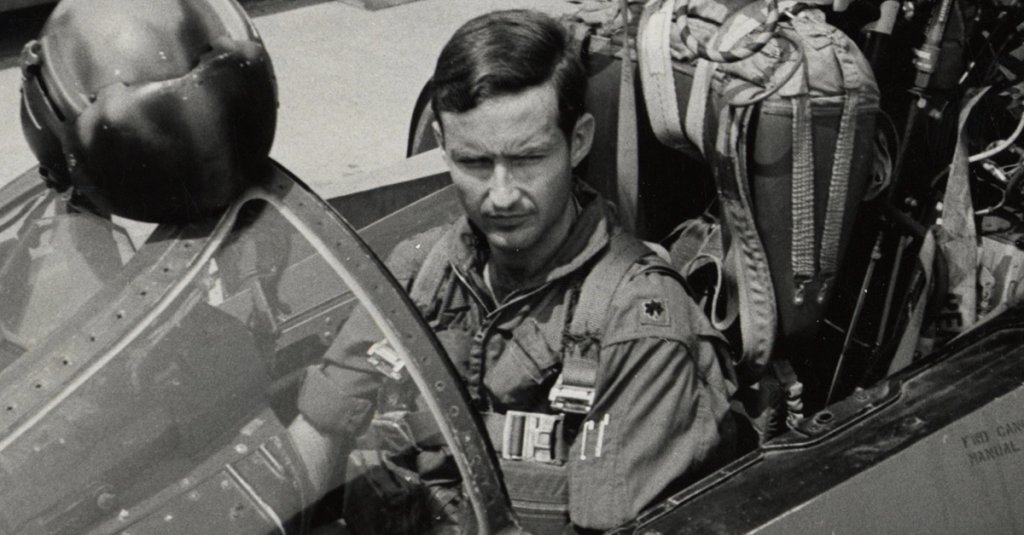
A Texas lawmaker has sparked hopes to award the Medal of Honor to an Air Force pilot killed while protecting classified information during the Vietnam War. Air Force Maj. Robert A. Lodge was shot down during Operation Linebacker I while flying with the most advanced radar system of the day. Rather than bail out of his burning plane and risk capture, he drove his F-4D Phantom II into the ground, keeping the technology and his knowledge of it out of enemy hands.
Rep. August Pfluger, also a former Air Force fighter pilot, introduced legislation that would authorize the president to award Lodge the Medal of Honor 54 years after Lodge sacrificed his life.
Also Read: Vietnam War Medal of Honor recipient Bruce ‘Snake’ Crandall dies at 93
In March 1972, North Vietnam launched a massive offensive over the Easter holiday weekend. Upwards of 300,000 communist troops poured across the demilitarized zone between North and South Vietnam, supported by hundreds of tanks and armored vehicles. The Easter Offensive, as it came to be known, was the largest ground offensive American forces had faced since the Korean War.
Back in Washington, President Richard Nixon was looking forward to ending the U.S. role in Vietnam. To resist the assault and pressure North Vietnamese back to the negotiating table in Paris, he ordered the first unrestricted bombing campaign against North Vietnam since 1968. Operation Linebacker I lifted restrictions on most communist military targets. Air Force and Navy aircraft wreaked havoc on enemy tanks and installations. for nearly six months.
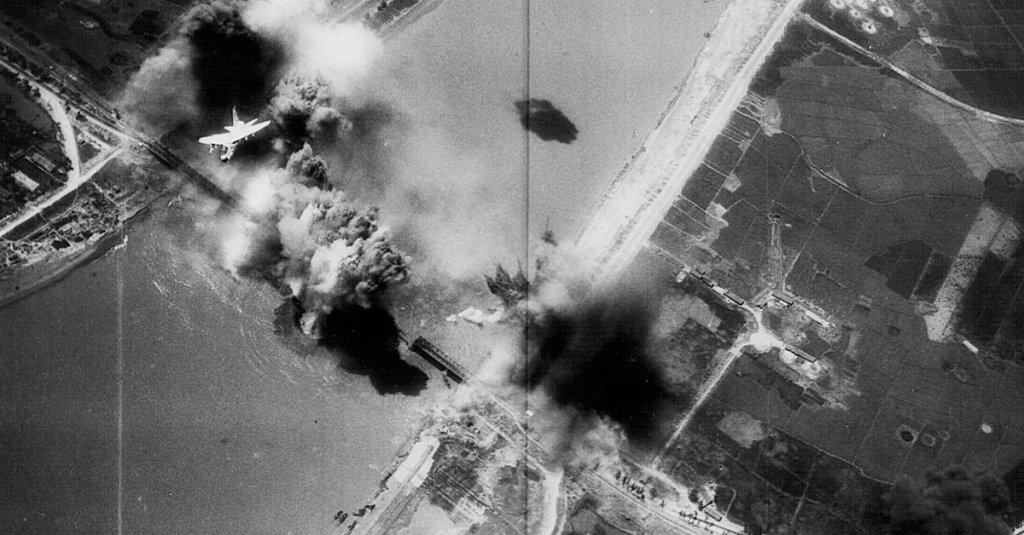
Just two days after Nixon gave the go-ahead, Maj. Robert Lodge and Weapon Systems Officer 1st Lt. Roger Locher, callsign Oyster One, were flying in a formation of F-4D Phantom II fighter-bombers, providing escort cover for strike missions over North Vietnam. As the formation approached the major North Vietnamese airfield at Yen Bai, they encountered a flight of enemy MiG-21 Fishbeds.
Lodge was no beginner. He was on his second tour in Vietnam and was already approaching “ace” status, meaning he was close to five aerial victories—a feat achieved by only five aviators during the Vietnam War. He was an Air Force Academy graduate and attended the USAF “Top Gun” school at Nellis Air Force Base. He’d achieved the rank of major in only three years.
His service in Vietnam was as unparalleled as the rest of his career. He’d received five Silver Stars, seven Distinguished Flying Crosses, a Purple Heart and 37 Air Medals. His aircraft was equipped with a highly classified Combat Tree identification “super radar,” which triggered the transponders on Soviet-made aircraft and sent the information to their own radar, allowing American pilots to identify enemy targets beyond visual range.
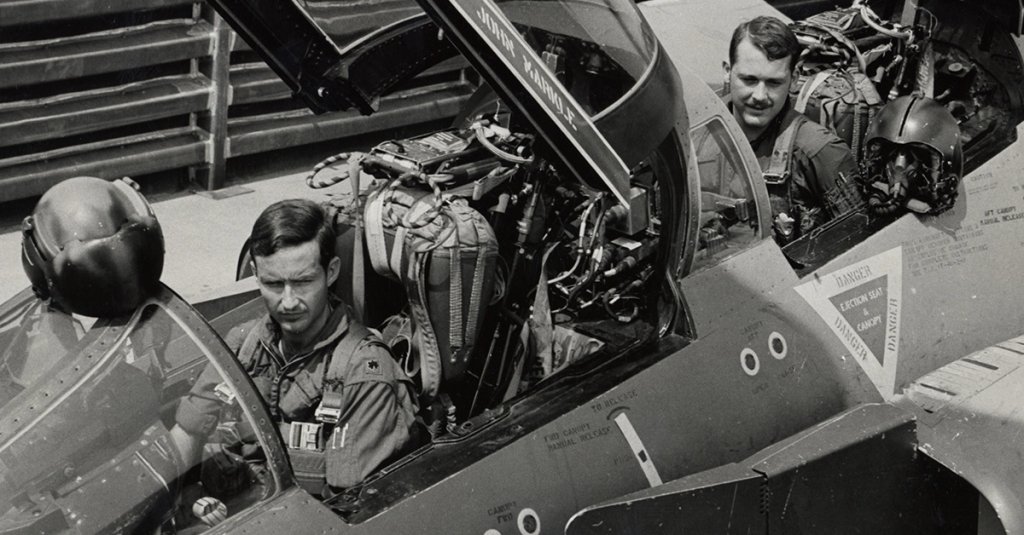
“The plan was to go in low level with Combat Tree birds, to intercept and defeat enemy fighters that would attempt to prevent our strike Phantoms from dropping their highly accurate laser guided bombs,” Lodge’s friend and former wingman Steve Ritchie said in an interview. Richie also happens to be one the war’s five aces. “Approaching our planned orbit some 25 to 30 miles west of Hanoi, we stayed below 300 feet as planned and continued radio silence until we electronically spotted a flight of four MiG-21s in orbit northwest of Hanoi.”
As Lodge and the rest of Oyster flight approached their targets, they immediately knocked out two of the MiGs with Sparrow missiles. Richie called it “a perfectly planned, perfectly executed mission, resulting in four American victories. But it was too good to be true.”
As Lodge moved into position to take down the fourth MiG, another flight of MiG-19s came out of nowhere, bearing down on Lodge’s Oyster One from above and behind. His wingmen shouted at him over the radio, but it was too late. Enemy cannon fire tore into his Phantom as it caught fire and began to roll. The rest of Oyster flight was chased away from the area.
The wingmen saw Locher eject from the cockpit, but there would only ever be one canopy.
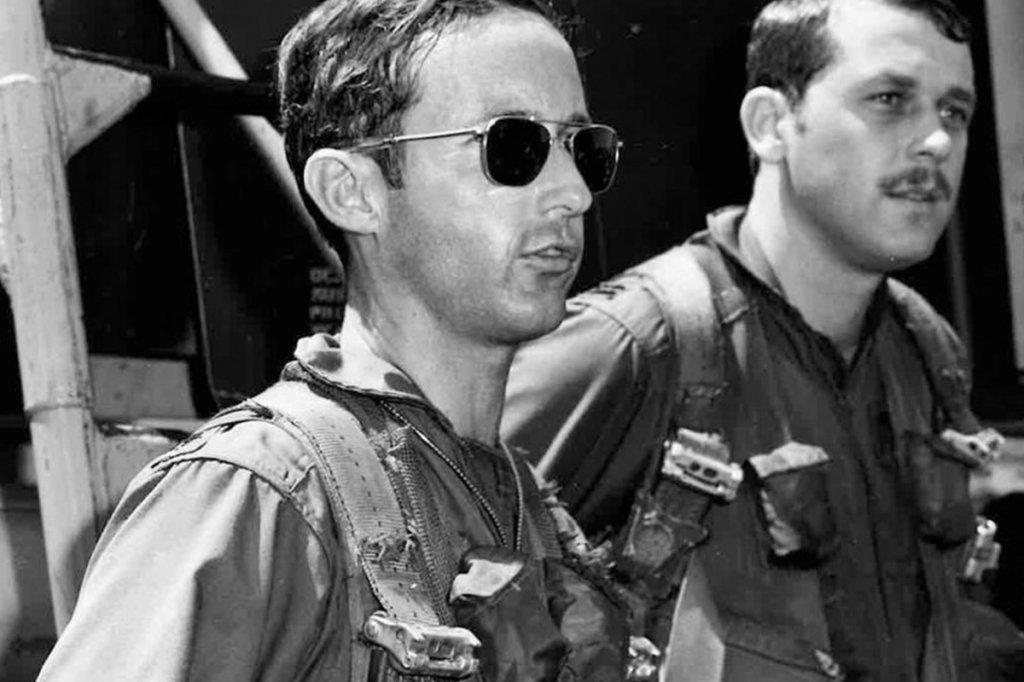
“What began as a triumph was ending in tragedy,” Ritchie said. He did not bail out. He was the wing’s weapons officer, and always told us that if he was ever shot down, ‘I will not be captured.’ None of us believed him.”
Until they watched his burning Phantom fall to earth, that is.
“Lodge’s Phantom was upside down,” Ritchie recalled, “on fire and out of control at 7,000 feet when he told Roger Locher, ‘You can bail out if you want to.’ Locher barely made it, but Lodge knew too much information and was concerned that the North Vietnamese might get it out of him, so he rode the plane down.”
Locher landed near the Yen Bai airbase, evading capture for 22 days before making contact with friendly aircraft on another strike run.
Don’t Miss the Best of We Are The Mighty
• Soldier killed protecting a Polish officer in Afghanistan will receive Medal of Honor
• ‘The Iron Major’: James Capers Jr.’s long road to the Medal of Honor
• AUSA graphic novel spotlights ex-NFL player who earned the Medal of Honor
Loading comments…
Comments couldn’t be loaded. Please refresh the page.