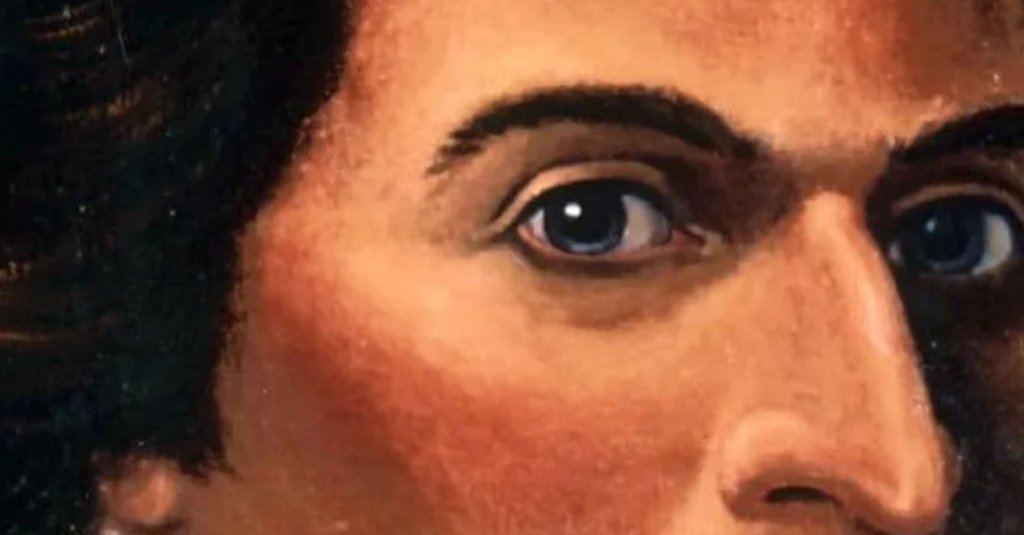
Like it or not, Benedict Arnold was one of the most capable American commanders during the Revolutionary War. The list of his amazing accomplishments is a long one. Without history’s most infamous turncoat, Ethan Allen and his Green Mountain Boys would probably have gotten drunk instead of moving Fort Ticonderoga’s guns to Boston. At Fort Stanwix, Valcour Island, and Ridgefield, Arnold won stunning victories against impossible odds.
Related: Today in military history: American victory at Saratoga
Arnold’s absence also would have left the patriots at Saratoga under the command of Horatio Gates, who famously collapsed under the weight of his own ego at Cowpens. Without Arnold, Saratoga would have been lost, the French would have never entered the war, and we’d still be eating beans on toast. John Adams once even compared Arnold to Julius Caesar.
All that changed. Especially after his raid on Richmond.

But the ambitious Arnold, shot twice in the same leg, needed money to keep his 18-year-old wife happy. So he tried to trade West Point to the British for cash. A lot of cash: 20,000 pounds (around $3.5 million in today’s dollars). The plan famously fell apart after his handler, Maj. John Andre was captured, interrogated, and executed. In September 1780, Arnold fled to the British in New York City and stunned the entire Continental Army. He would receive less than a third of the money he was promised.
By January 1781, the American Revolution was still anyone’s game. The morale of the Americans was at its lowest, and it would be another nine months before Generals George Washington and Nathanael Greene would force British General Cornwallis into Virginia’s Yorktown Peninsula and into a general surrender. Virginia, a major supplier of men, materials, and food for the patriot cause, was a tempting target for the British.
This is where Arnold returned to the battlefield. H was a newly-minted British brigadier and first offensive against his former country was to land a force of American Loyalists on the James River against Virginia’s new capital: Richmond. He caught the state’s militia defenses entirely by surprise. The city was virtually undefended, and Thomas Jefferson, the patriot governor of the colony, fled. Arnold easily captured the city, barely firing a shot.
The traitor then wrote to Jefferson that he would spare the city if all of Richmond’s stored goods—especially its tobacco—were transferred to British ships. Jefferson, unsurprisingly, refused to deliver “30 to 40 ships worth” of trade goods to the enemy.

Arnold ordered the city be looted and burned the next day. His troops plundered whatever they could find and exploded a rebel powder magazine. By colonial standards, Arnold’s assault was a blitzkrieg. His troops then went to the surrounding areas to wreak havoc. Mills and foundries were destroyed, and the colonists’ arms and goods were captured by the British loyalists. Arnold then took to destroying plantations and family homes, seizing crops and slaves.
The raid lasted a full 18 days.
Governor Jefferson and Col. Samson Mathews gathered the Virginia militia. The most the Virginia militia could muster was 200 men to harrass Arnold’s force, but Arnold was able to move back to Portsmouth almost untouched. Jefferson put a reward of 5,000 guineas for anyone to capture Arnold alive, with the full intention of hanging Arnold after capture. Virginia militiamen started target practice using a model of the traitor’s head.
Benedict Arnold didn’t have much success as a British general. His “American Legion” of loyalists never amounted to much. The Richmond raid, his open letter to Americans imploring them to rejoin the British Empire and his subsequent burning of New London, Connecticut, ensured Armold could never be redeemed in the minds of patriots.
When the war ended later that year, Arnold found himself retired on half pay, refusing to believe the war could be over and that he’d chosen the wrong side.
When word finally reached George Washington that the traitor was spilling patriot blood in the Commander-in-Chief’s home state, Washington sent the French Marquis de Lafayette to kick Arnold out of Virginia and capture him if possible. Lafayette arrived in time to prevent another attack on Richmond from the newly-reinforced British under General Cornwallis, but he was too late to capture Arnold, who was already sailing for New York.
Richmond wasn’t prized enough for Cornwallis. He instead moved south, toward Yorktown. And you know how that ended up.
Don’t Miss the Best of We Are The Mighty
• Daniel Morgan’s riflemen were America’s original scout snipers
• 4 Revolutionary War ghosts that refuse to die
• The British ‘southern strategy’ cost them the Revolutionary War