

The M249 SAW (Squad Automatic Weapon) is chonky. It’s a nightmare to clean. It’s a reasonably heavy, demanding, ammo jam waiting to happen, that will cycle the one speck of dust you missed at 3 a.m. in a firefight. Soldiers have cursed it, kicked it, and thrown it in the dirt. However, they may have also been saved by its song. Because when it works, that unmistakable 800 rounds of poetry per minute is the single most comforting noise on the battlefield. It’s a true light machine gun. Now, its era is over.
Related: The War on Terror’s iconic FN SCAR is dead
The Marines went with the mag-fed M27 rifle. The Army is adopting the belt-fed M250 in a new caliber. Both moves are ending the SAW’s time in the spotlight, and in both cases, we have to ask: what capability are we leaving behind?
M249 Can’t be Jelly When it Jams Like That
First off, let’s be honest, calling the SAW reliable is a fever-induced fantasy. The reality on the ground is a constant, almost spiritual sonata with carbon and CLP (Cleaner, Lubricant, and Protectant). It’s the stoppage drill practiced until your knuckles bleed. It’s the terror of a double feed when the bipod is kicking up moon dust.
This weapon demands love and attention. It craves a gunner who obsessively cleans the feed tray and knows its moods.
We put up with this high-maintenance relationship for one reason: firepower capable of wilting an enemy. We tolerated the diva attitude because we loved the capability it brings: the ability to make the enemy rethink all their prior life choices immediately.
Brought to You by The Letters: OIF and OEF
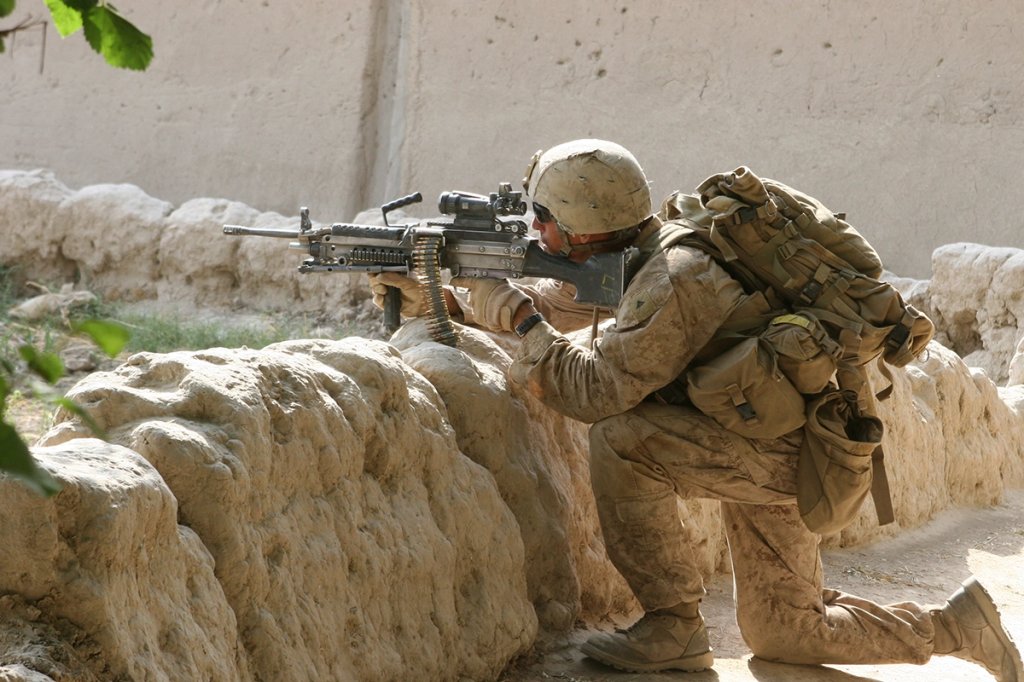
The M249 is to OIF/OEF grunts what the M60 was to Vietnam vets. It’s the soundtrack to our generation’s wars. It rang through the streets of Fallujah (there’s nothing quite like seeing rooftops light up with muzzle flashes of the “talking” 249s), echoed through the mountains of the Korengal (some say they still echo today), and hummed as it held the line in the Helmand.
That unmistakable pow-pow-pow was the sound of the squad’s spirit animal being let off the chain; the sound that kept heads down; the sound that cut the initiative out of the enemy’s chest, then showed it to them. Every. Single. Time.
M249 SAW vs. The Marines’ M27
Let’s be clear: the M27 IAR is a fantastic rifle. It’s accurate, light, and easier to maintain. But it’s a scalpel. The M249 was the medieval bonesaw. A squad needs both; you can’t expect a scalpel to do a bonesaw’s job.
This is the capability the Marines have lost. The M27 is mag-fed. The M249 was belt-fed. Anyone who thinks those are interchangeable has never been in a squad trying to break contact or fighting to keep their flanks trouble-free. An automatic rifleman dumping 30-round mags creates pauses, not to mention soldiers fumbling magazines even under the best conditions.
One SAW gunner laying down a 200-round belt creates an existential crisis. It’s not just about hitting targets; it’s about psychological dominance and pants-wetting performance. It’s suppression. Suppression of not only the enemy’s ability to even look at you, but of their will to simply continue on.
M249 SAW vs. The Army’s M250
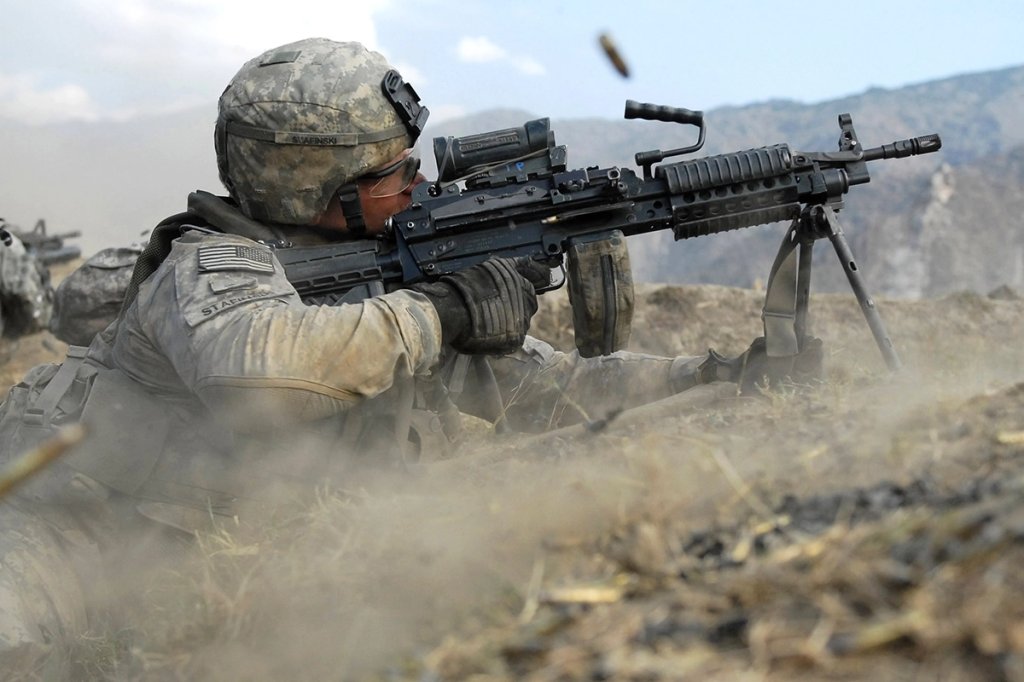
The Army’s move is different, so expect another trade-off. The new M250 is a belt-fed LMG chambered in the new 6.8mm round. This is a bet on velocity, or more precisely, the power to punch through modern body armor from distance.At what cost, though? Weight and compatibility. An infantryman’s combat load is already crushing. A 200-round drum of 5.56 is a heavy, awkward lump. A 100-round belt of 6.8mm is heavier and has half the rounds. The old SAW FM was built on the sheer volume of fire; the new doctrine bets on lethality per round.
Additionally, the ability to use 5.56 ammo, which is NATO standard, is no longer a viable option in a pinch; the ability to pick up random rounds and link them together into a belt on the fly is now gone.
The M249 is almost entirely phased out across all active duty units, just as the M60 was, and just like the soldiers who relied on them were. Time, as well as technology, moves on; what doesn’t is the need for a battle-tested, belt-fed light machine gun to serenade at the squad level.
There was no room for both. It had to be one or the other. Leadership let a spec sheet, a fancy new design, and a bureaucrat’s handshake deal convince them that trading a platform you never wished away was a wise tactical decision. Now gone, you might find it difficult to replace a symphony of steel with a ballad of promises.