

The armed forces of the United States are struggling with a military-grade weight problem. It’s a problem that is both widespread and isn’t getting any better. The Centers for Disease Control and Prevention found that members of the U.S. military overall are clinically obese, according to Pentagon data used in the research.
The military’s creeping weight problems are a significant issue for a country that faces a potential war against near-peer enemies. Army Chief of Staff Gen. Mark Milley predicts that if that war comes, then “if you stay in one place longer than two or three hours, you will be dead. That obviously places demands on human endurance.”
But the military branches have some obvious choices that could help troops maintain healthier weights, making it easier to fight on future battlefields. While this article focuses on potential fixes for the Army, all the branches have similar ways to win the battle of the bulge.
1. Seriously, it’s time to have a look at DFAC design
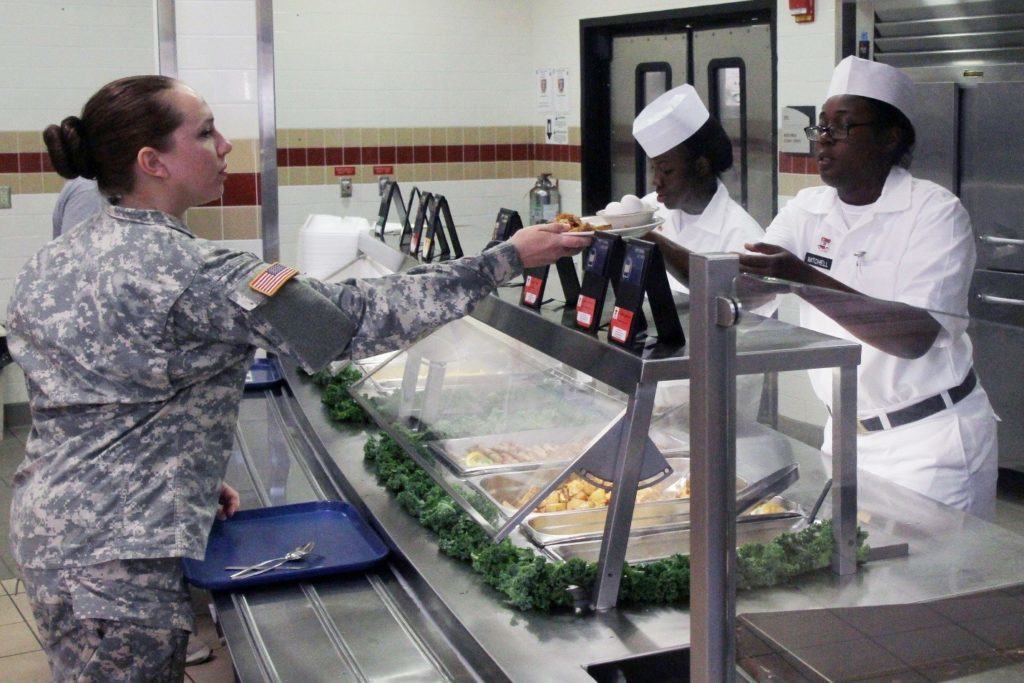
As anyone who has even been inside a chow hall knows, meats and other main course items are rationed out by military cooks and contractors who work at dining facilities, but desserts and soda are available for troops to grab for themselves.
Surely, a military fighting a weight problem would rather its soldiers choose more lean proteins and complex carbs than sugary desserts. So why not make the healthier option the easier one? Admittedly, the proteins cost more than the desserts, but replacing a soldier who becomes too fat to serve is pretty expensive too.
2. Increase the ratio of nutrition classes to information assurance classes
Classes on not sleeping with foreign spies (SAEDA) and not downloading viruses to government computers (IA) are annual training requirements. But most service members will never receive a comprehensive class on nutrition and fitness unless they are already flagged for being overweight.
Many posts have these classes, but they’re not required and are minimally advertised, if at all. Troops who want to enroll in nutrition or weight loss classes can usually find one by checking for the nutrition clinic at their base hospital.
3. Take a hard look at the nutrition cards in the DFAC
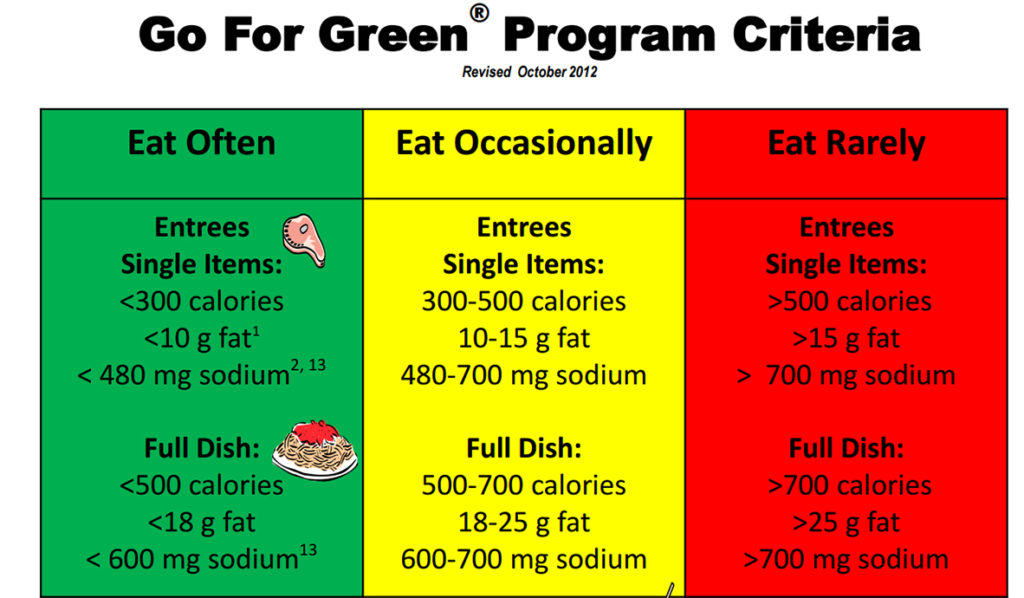
The Army has a reasonably comprehensive program for determining the nutritional quality of food. Dishes are categorized by color to quickly indicate whether a particular item is designated as a “High Performance Food,” “Moderate Performance Food,” or “Low Performance Food.”
These categories are well-defined and presented in easy-to-read charts as part of the “Go For Green” program. The service labels all foods in a dining facility with color-coded cards that denote each food’s category.
But the Army’s labels can be confusing. For instance, its hamburger yakisoba contains a whopping 813 mg of sodium, a level that would — according to the Army’s charts — qualify a dish for the “Low Performance Food” category. But it’s labeled green, just like oven-baked chicken, which contains fewer calories, fat, and sodium as well as more protein and calcium.
Meanwhile, tropical baked pork chops have fewer calories, about the same amount of fat, and more protein than yakisoba, while containing 79 percent less sodium. But they carry a red label. Nothing makes sense, so why bother heeding the charts?
4. Encourage self-referrals to supplemental PT sessions and nutrition classes
A soldier who voluntarily enters a substance abuse program cannot — according to Army Regulation 623-3, paragraph 3-24 — be penalized on his evaluation report for drug addiction.
But no such protection exists for soldiers who refer themselves to a physical fitness program. So soldiers who tell their command that they have a weight problem can be penalized for the weight problem that they self-identified and asked for help.
5. All PT sessions should help you prepare for combat (not just build esprit de corps)
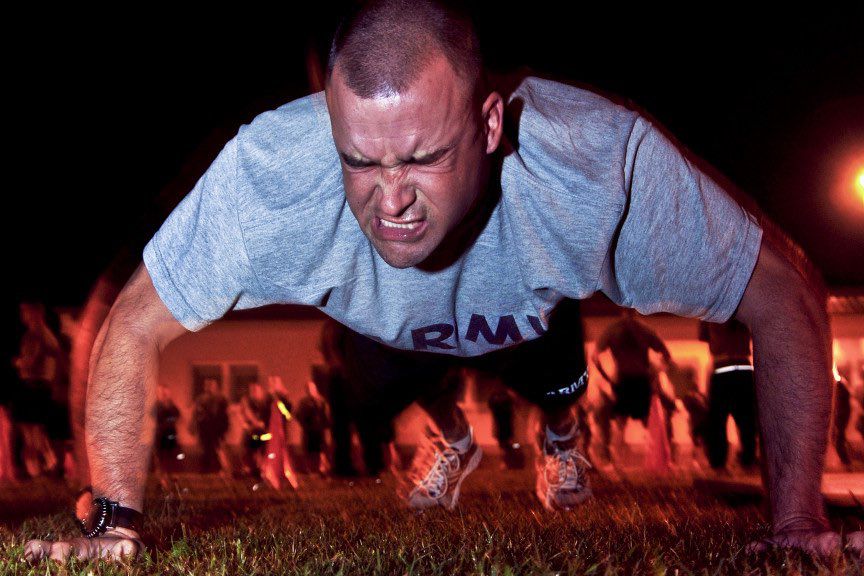
It was basically a mantra in most physical training sessions this writer attended that “Unit PT builds esprit de corps and unit cohesion. It’s not designed to help you pass the PT test.”
Now, most of the PT sessions did build towards military performance and test success. However, shouldn’t all, or at least nearly all, physical training sessions focus on training the soldier’s physical body? And leaders do have top cover for this approach.
Army Field Manual 7-22 only recommends a single PT event, specifically the unit formation run, as being solely for esprit de corps, rather than physical training. In paragraphs 10-34, the guide states that these runs, “should be performed no more than once per quarter due to the limited training effect offered for the entire unit.” Yeah. This former active duty soldier had to run those things weekly.
Don’t Miss the Best of Mighty News
We Are The Mighty is a celebration of military service, with a mission to entertain, inform, and inspire those who serve and those who support them. We are made by and for current service members, veterans, spouses, family members, and civilians who want to be part of this community. Keep up with the best in military culture and entertainment: subscribe to the We Are The Mighty newsletter.