
Starting as early as 1939, German U-boat “Wolf Packs” transformed the Atlantic Ocean into a shipping graveyard.
In response, the United States Navy upped its game, and by May 1943, aka “Black May,” the tide began to turn. Part of that turn involved technological advances such as the “Hedgehog” anti-submarine mortar, high-frequency direction finding, and torpedo decoys.
Also Read: The USS Devilfish suffered the only kamikaze attack on a US submarine
Another tactic was the creation of submarine hunter-killer groups, which were given free rein to break off from the convoy and kill U-boats.
What Happened?
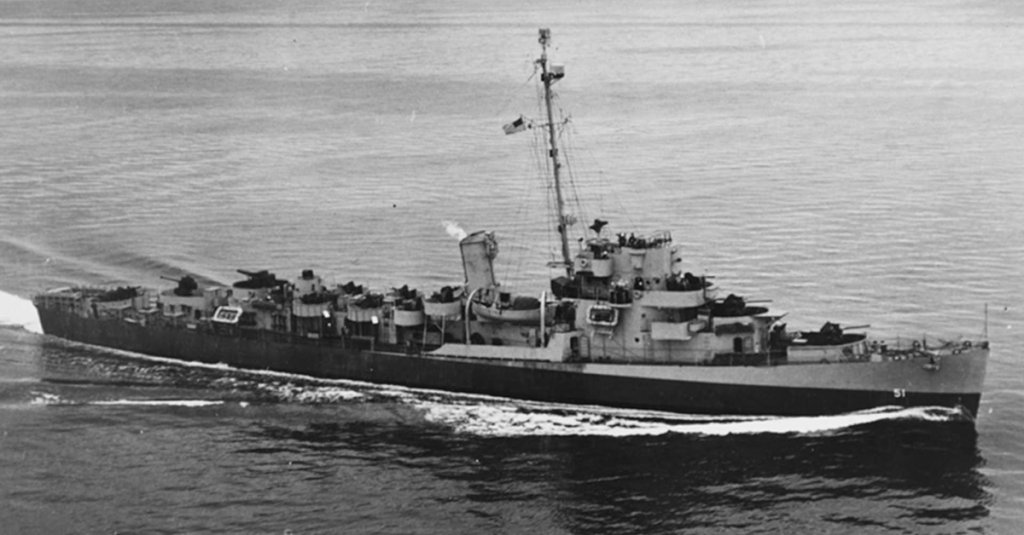
On May 5, 1944, the destroyer escort USS Buckley—part of Task Force 21.11—formed around the USS Block Island, patrolling off the Cape Verde Islands. It was dispatched to a radar contact from a TBM “Night Owl” Avenger.
The target was approximately 20 miles ahead, and the Buckley closed on the target in 45 minutes at full speed with the assistance of the Avenger. As the Buckley approached, the captain saw U-66 running on the surface, charging her batteries. The captain called general quarters and dropped a “Foxer” acoustic decoy to confuse the submarine’s torpedoes if fired upon.
The Buckley slowed, attempting to mimic the German supply ship for which U-66 was waiting. The gambit worked, and the U-boat set off red signal
flares. The Buckley continued to close, and at 4,000 yards, the U-boat realized this wasn’t their supply ship. U-66 fired a torpedo from the aft tubes, and the Buckley turned into the sub as the torpedo passed on its starboard side.
On Top of the Submarine
Both crews were manning guns now.
The Germans opened fire first, but the Buckley had the U-boat outgunned and opened up with 20mm Oerlikons, 40mm Bofors, and its 3-inch/50-caliber guns. The rain of steel struck the sub’s forecastle and conning tower. U-66 turned away and maneuvered for range and fired another torpedo. The Buckley turned again, and the Foxer decoy worked to jam the torpedo, resulting in another miss.
The Buckley ceased fire momentarily to maneuver, then resumed it at 1,500 yards. Gunners on the Buckley concentrated their attack on the conning tower, causing flames to erupt.
U-66 continued trying to escape, but the Buckley closed in. At one point, the two combatants ran parallel, a mere 20 yards apart, as the Buckley raked the sub with fire. At approximately 3:30 a.m. on May 6, Lt. Cmdr. Brent Abel ordered hard right rudder, and the Buckley came to a stop on top of the forward section of U-66.
Since the Buckley was now on top of the sub, none of the gunners continued firing. With both vessels dead in the water, U-66 crew members under 1st Officer Klaus Herbig’s command began to swarm out of the sub and boarded the Buckley to create a diversion. At the same time, U-66 Kapitan Oberleutnant Gerhard Seehausen attempted to free the sub from the Buckley and get it underway.
By Whatever Means Necessary
When the raiding party made it onto the ship, the Buckley’s crew members met them. They were ready to brawl.
While a boatswain’s mate shot and killed one German with a .45, the rest of the crew armed themselves with whatever they found. Two sailors threw coffee cups at the enemy, which were located at the ready gun station. One of the 3-inch gun crews started throwing shell casings, and one of the Germans who made it to the ship’s wardroom took a coffee pot to his head.
The only Buckley crewman injured sustained a bruised fist when he punched an invader off the ship. The fight only lasted a couple of minutes as the Buckley reversed engines and backed off the U-boat, leaving five German crew members behind. A crewman armed with a hammer led the five below deck.
Now that they were separated, the chief fire controlman pulled out a Tommy gun and shot up the U-boat deck, killing a few more crew members.
What the After-Action Report Said
According to the after-action report, U-66 traveled at 18 knots and veered hard to port; it was unknown whether it was out of control.
The Buckley attempted to stop and evade, but the sub struck the starboard side near the aft engineering room. U-66 rolled about 60 degrees, and the inside of the conning tower was on fire, so a seaman dropped a grenade in for good measure. A crew member attempted to get the sub’s deck gun into action and “disintegrate[d] when hit by 40-millimeter shells.”
The sub pulled away from the Buckley, leaving a hole near the engine room. As the sub moved away, the 3-inch gun crews repeatedly hit the conning tower, and U-66 slowly slipped underwater with the forward hatch open and the conning tower on fire. After the sub sank, the Buckley’s crew members heard both heavy and light underwater explosions.
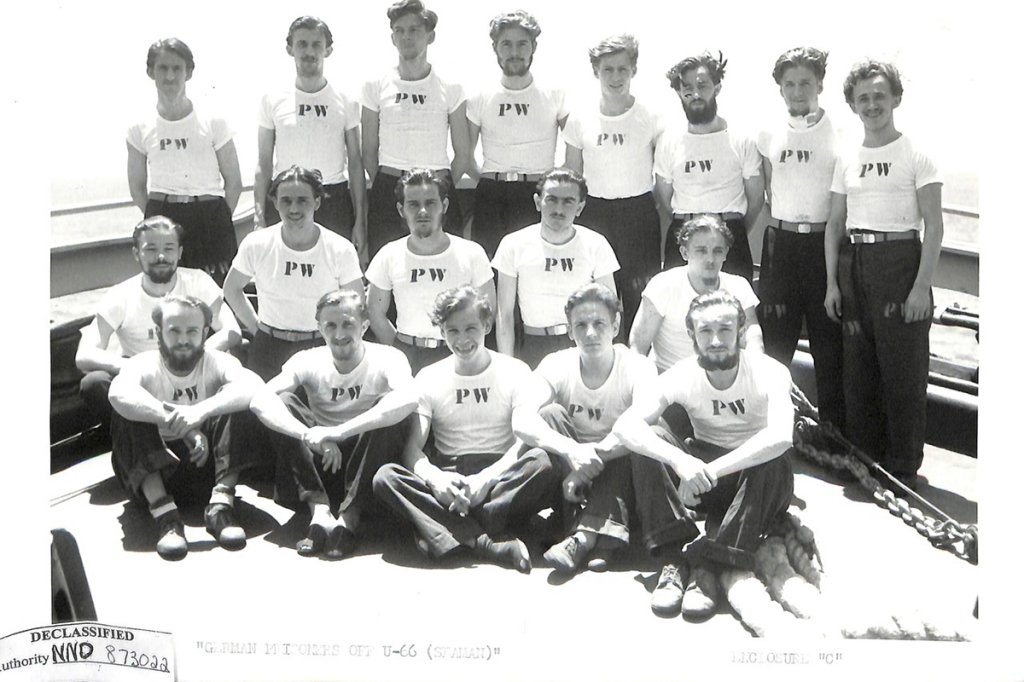
The Buckley spent about three hours searching for survivors and making emergency repairs. Twenty-four Germans, including Oberleutnant Seehausen, died in the engagement; 36 others were taken prisoner. The POWs were later transferred to the USS Block Island.
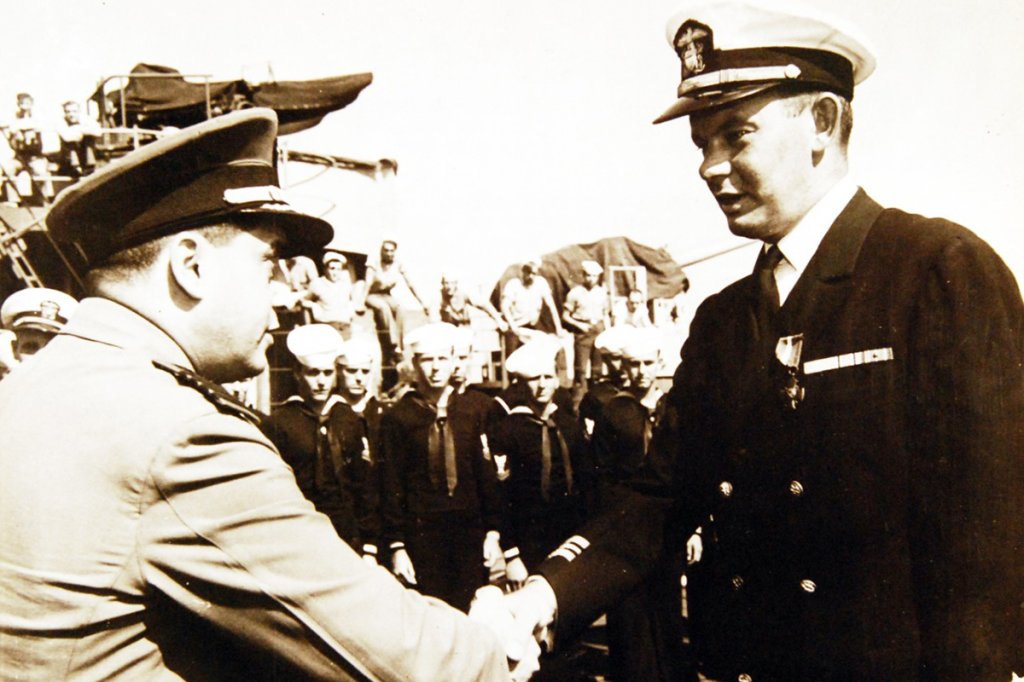
Abel received the Navy Cross, and all Buckley personnel were awarded a combat star for their European-African theater ribbon.
Several high-ranking naval officers called the Buckley’s story the most exciting anti-submarine kill in the Battle of the Atlantic.
Don’t Miss the Best of We Are The Mighty
• How the daring rescue of 3 Army soldiers after a WWII plane crash in ‘Shangri-La’ unfolded
• Operation Tapeworm: How the US Army’s most elite hunted down Saddam’s sons
• Tom Hanks’ new 20-part docuseries takes a new look at World War II
Featured
Loading comments…
Comments couldn’t be loaded. Please refresh the page.