College football used to be about the game. There, I said it. Young men lined up to play for Army or Navy (see Pete Dawkins or Roger Staubach) before NIL deals or the transfer portal. Bowl games/postseason games used to mean more, too.
Related: The worst and best college football traditions in America
In 1941, Willamette College of Oregon and San Jose State embarked aboard the S.S. Lurline to play a pair of charity games in Hawaii. Scheduled for Dec. 13 and 16, the games were going to benefit the Honolulu Police Department. While the games were never played, the players supported the local police in a different way.
On Dec. 3, 1941, the players arrived in Hawaii; they had plenty of time to play tourist on the island between practices. However, their post-season trip was interrupted when Japan attacked four days later. While walking along the beach, two San Jose State players were directed to leave by the shore patrol, who informed them of the attack.

“…Then we saw these geysers of water spouting up from the Honolulu ship channel to the west. At first, we thought they were waterspouts. Then, we realized they were bombs because we began to see the planes,” left tackle Wellington “Gray” McConnell told San Jose Mercury News in 1981. “We didn’t know Pearl Harbor was being attacked because you can’t see Pearl (Harbor) from Waikiki.”
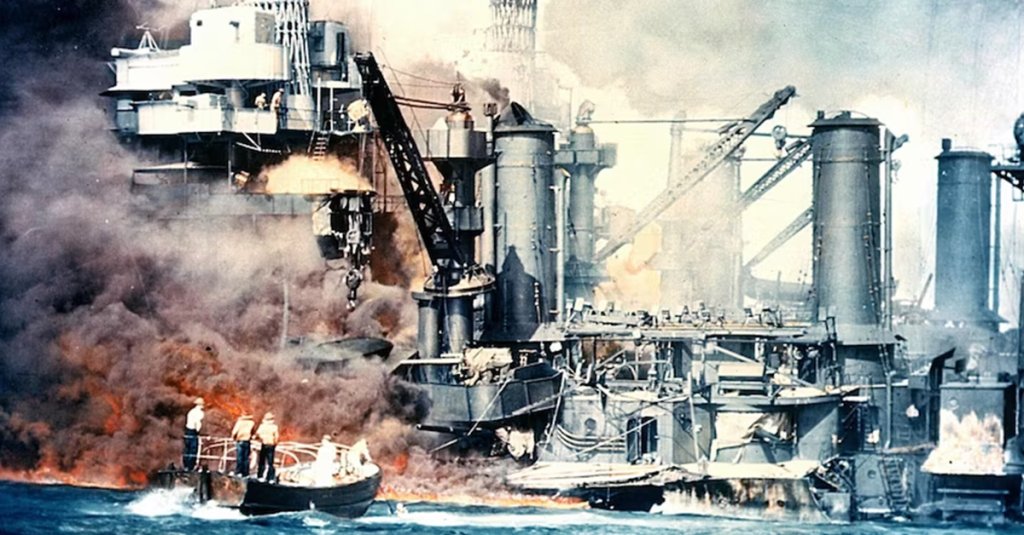
McConnell and other players eventually made their way over to Pearl Harbor and witnessed the attack firsthand.
“We saw the planes diving and the battleship Oklahoma capsizing and slowly sinking into the mud. The flames and the smoke from the Arizona cast a dirty brown pall over the whole scene. It was horrible, but it was fascinating, too.”
Other players remained at the team hotel for the duration of the attack, but soon witnessed the implementation of martial law in the then-territory of Hawaii.
“We went outside to see what was going on. Just then, a couple of American soldiers came out and set up a machine gun right next to the porch of the Moana Hotel facing outward, facing toward the sea. So, we knew something was going on,” tight end Jack Galvin recalled in a 2011 interview with Comcast SportsNet Bay Area.
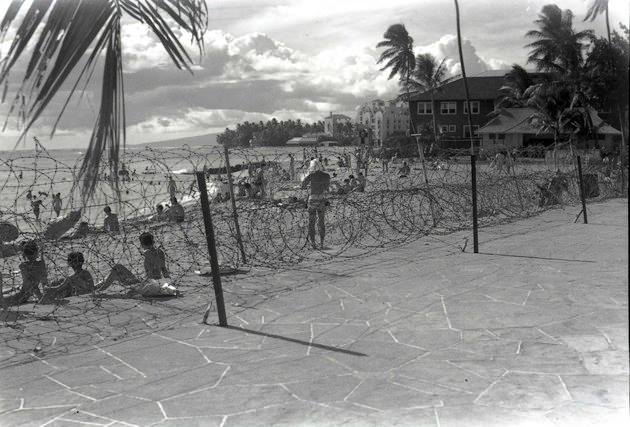
On the night of Dec. 7, the players from both teams joined officers of the Honolulu Police Department, riding in police cars as backup to the undermanned cops. At the time, no one knew what would follow the surprise attack. Maybe a full-scale invasion of the islands, perhaps the activation of sleeper cells hiding the civilian populace, maybe both, and more.
That first night, lineman Ken Stanger even responded to a call where he helped deliver a baby.
“It was well past curfew, and a full blackout was in effect. The regular HPD officer and I did the only thing we could do. We went out and helped her deliver. It was a baby girl, but I don’t think they named her Pearl.”
For nearly two weeks, all the players volunteered to serve as extra manpower to provide security on the island. However, guard Don Allen, fullback Chet Carsten, fullback Fred Lindsey, quarterback Jack Lercari, end Bill Donnelly, guard Ken Stanger, and quarterback Paul Tognetti chose not to return to the mainland on the first available ship.
Instead, they remained in Hawaii and joined HPD as full-time officers. Some of these players, as well as their teammates who returned stateside, eventually joined the military and continued their service.
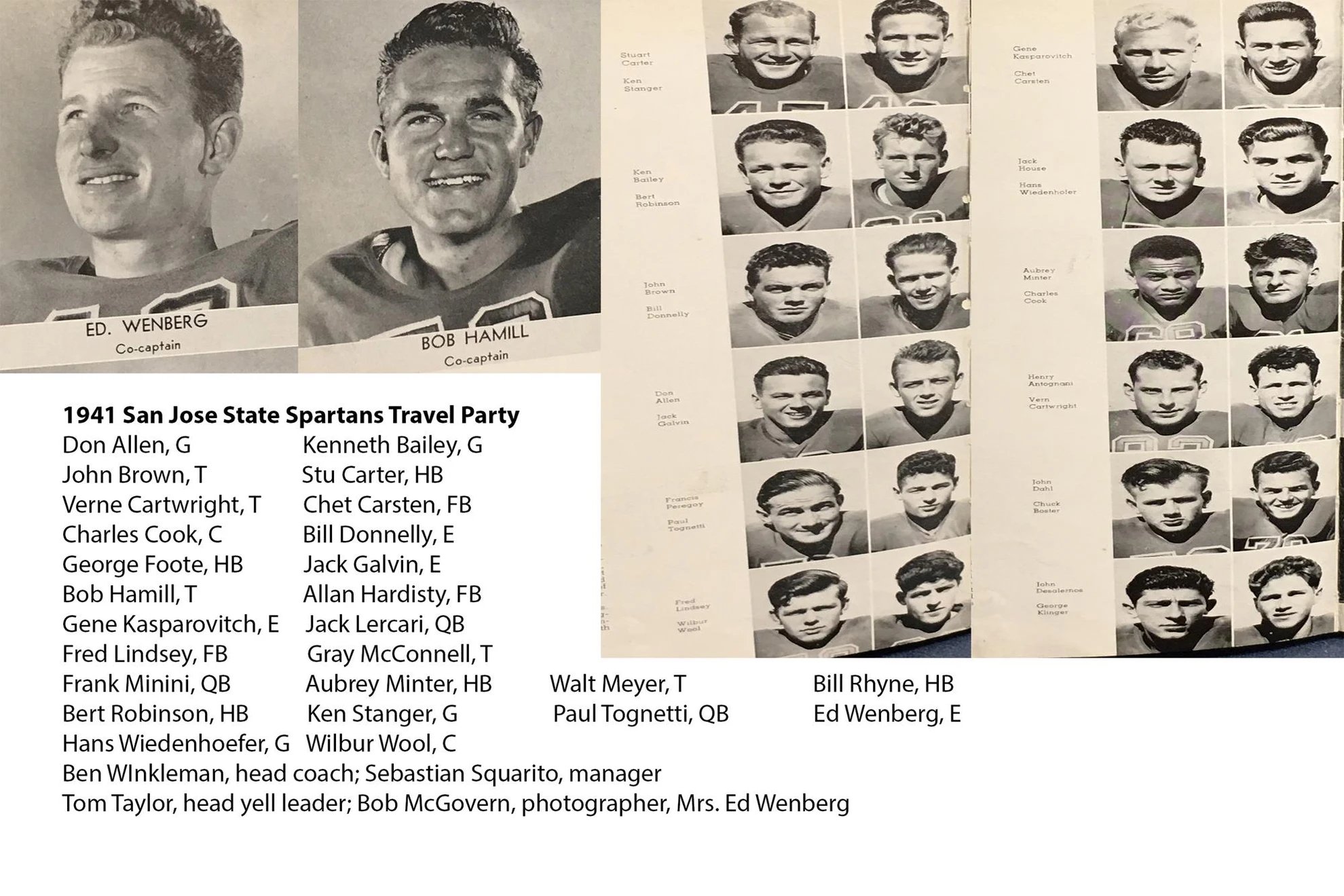
Allen served in the Army with the 395th Infantry Regiment and was at the Battle of the Bulge. Lindsey served in the Navy, Stanger served in the Army, and Tognetti was drafted into the Army in 1944.
Guard Kenneth Bailey was declared missing in action over Bari, Italy, in December 1943. He was posthumously awarded a Purple Heart. Tackle John Brown and Halfback Aubrey Minter served in the Army Air Forces. Halfback Stu Carter joined the Navy and skippered a PT boat. Galvin served in the Marine Corps. Team co-captain Bob Hamill joined the Army Air Forces, flying missions in Africa, Italy, Yugoslavia, and Greece; he later served in the Korean and Vietnam Wars. Halfback Bert Robinson flew B-17 Flying Fortress bombers with the 301st Bomb Group; he completed an incredible 50 missions and earned the Distinguished Flying Cross. Guard Hans Widenhoefer enlisted in the Marine Corps and fought at Iwo Jima.
The service of the football players in the immediate aftermath of the Pearl Harbor attack was even recognized by Secretary of the Navy Frank Knox.
“Both on behalf of the Navy and myself, however, I wish to express appreciation for the spirit these fine young athletes exhibited in the face of grave danger,” he wrote to San Jose State College President Dr. T.W. MacQuarrie. “I believe that such is the true American spirit, and I have no fear that such a spirit will ever be conquered.”
Don’t Miss the Best of We Are The Mighty
• Why the lessons from the Attack on Pearl Harbor still matter today
• Pearl Harbor forced this civilian plane to fly around the world in five weeks
• Today in Military History: Japan attacks Pearl Harbor
Sponsored Content