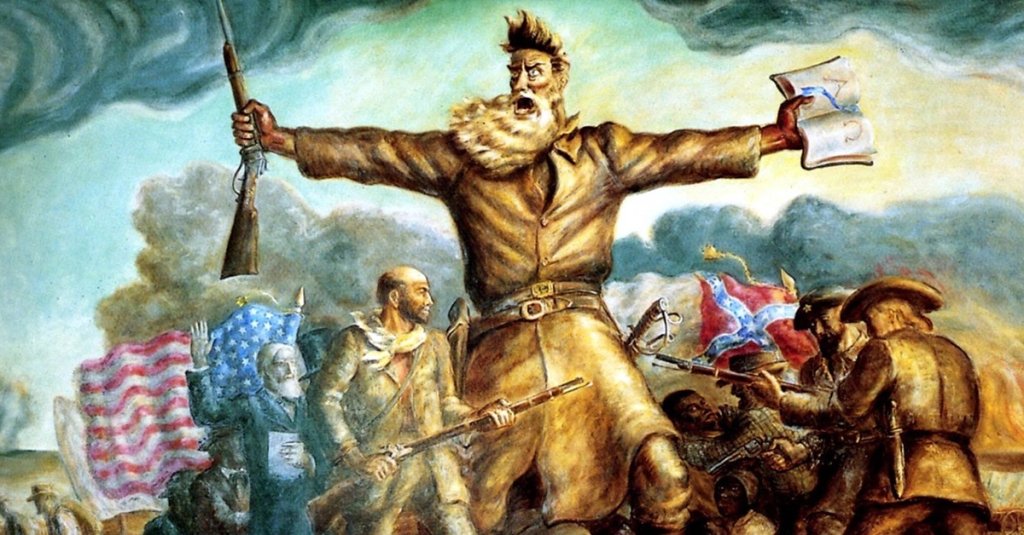
In October 1859, a small town at the junction of two rivers became the focal point of one of the most dramatic and consequential events in American history.
John Brown’s raid on Harpers Ferry, Virginia, was brief, violent, and ultimately unsuccessful. Yet its impact was enormous. The raid deepened sectional divisions between North and South, heightened fears of slave rebellion, and accelerated the nation’s slide toward civil war.
Related: President Lincoln personally led a recon mission during the Civil War
It also left a powerful legacy in Black history, symbolizing the desperation and determination of those who sought to end slavery. Brown’s actions and the reactions they provoked transformed Harpers Ferry into a place of memory, conflict, and meaning long after the guns fell silent.
A Nation Divided Before 1859
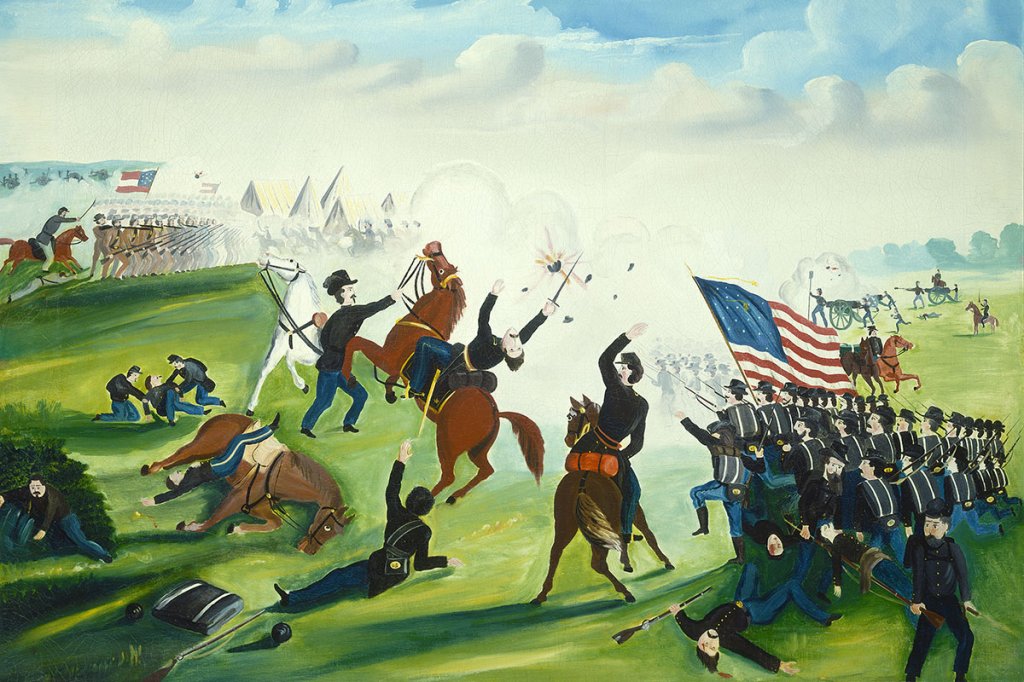
By the late 1850s, the United States stood at a breaking point.
Slavery had shaped the nation’s political, economic, and social structures since its founding, but the expansion of slavery into new territories had created a crisis. The Missouri Compromise of 1820 and Compromise of 1850 attempted to maintain a fragile balance between free and slave states. However, the Kansas–Nebraska Act of 1854 shattered that balance by allowing settlers in new territories to decide the issue of slavery through popular sovereignty. Violence erupted in Kansas as pro-slavery and anti-slavery settlers clashed in what became known as “Bleeding Kansas.”
The Supreme Court’s 1857 decision in Dred Scott v. Sandford intensified the conflict. The ruling declared that Black Americans, whether enslaved or free, could not be citizens and that Congress had no authority to prohibit slavery in federal territories. For many Northerners, the decision revealed how deeply the federal government was entangled with the institution of slavery. For enslaved people and free Black communities, it was a devastating reminder that the legal system offered little protection.
Abolitionists responded in different ways.
Some continued to advocate for peaceful change through political action, moral persuasion, and literature. Others, like John Brown, concluded that slavery would never end without violence. Brown believed that slavery was not only a political problem but a profound moral evil that demanded immediate action. His experiences in Kansas, where he and his followers killed several pro-slavery settlers in retaliation for attacks on anti-slavery communities, convinced him that armed resistance was both justified and necessary.
John Brown’s Vision and Preparations
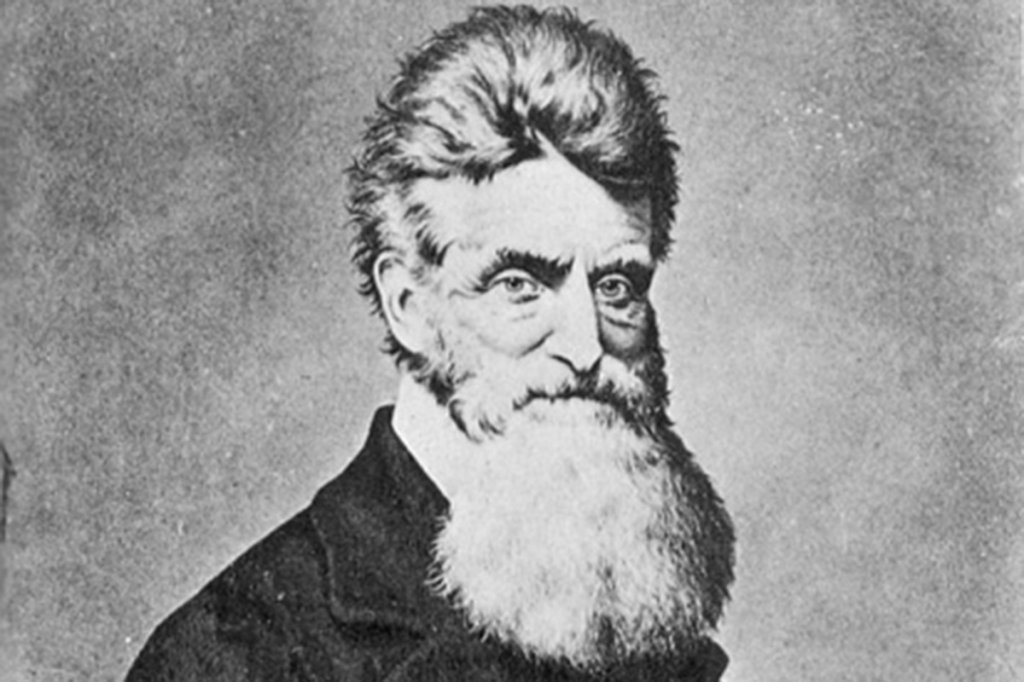
John Brown’s plan for Harpers Ferry was rooted in his belief that enslaved people would rise up if given weapons and leadership.
He envisioned a sustained guerrilla campaign in the Appalachian Mountains. By seizing the federal armory at Harpers Ferry and distributing its weapons, Brown hoped to create a network of liberated communities that would strike at slavery throughout the South. He believed that the mountainous terrain would provide natural protection and that the movement would grow as more enslaved people joined.
To prepare, Brown gathered supporters, raised funds, and acquired weapons. His group included both white and Black abolitionists. Several Black men joined the raid, motivated by personal stakes and a desire for freedom. Among them was Dangerfield Newby, a formerly enslaved man whose wife remained in bondage. He hoped that success at Harpers Ferry might help secure her liberation.
Their participation underscored that resistance to slavery was not solely a white-led effort but involved Black agency and commitment.
Brown chose Harpers Ferry because of its strategic importance. Located where the Potomac and Shenandoah Rivers meet, the town was home to a federal armory and arsenal containing thousands of firearms. It also lay near the border of free and slave states, making it accessible to both Northern supporters and enslaved people in the South.
Brown believed that a swift seizure of the armory would allow his group to distribute weapons and retreat into the mountains before authorities could respond.
The Raid Begins
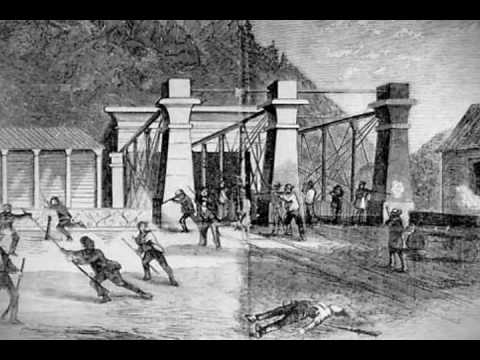
The Raid on Harpers Ferry
On the night of October 16, 1859, Brown and 21 followers crossed into Harpers Ferry. They moved quickly to capture key locations, including the armory and the town’s bridges. Telegraph lines were cut to delay communication with nearby towns. Brown’s men took hostages, including Col. Lewis Washington, a great-grandnephew of George Washington. Initially, the operation proceeded with surprising ease. The town’s small population and limited defenses allowed Brown’s group to secure the armory without immediate resistance.
However, Brown made a crucial decision that would shape the outcome. Instead of withdrawing quickly with weapons and hostages, he remained in the town, waiting for enslaved people to arrive and join the uprising. While some enslaved individuals came to the armory, the anticipated mass revolt did not materialize. As dawn broke, local residents became aware of the raid.
Word spread quickly, and militia units from surrounding areas began to converge on Harpers Ferry.
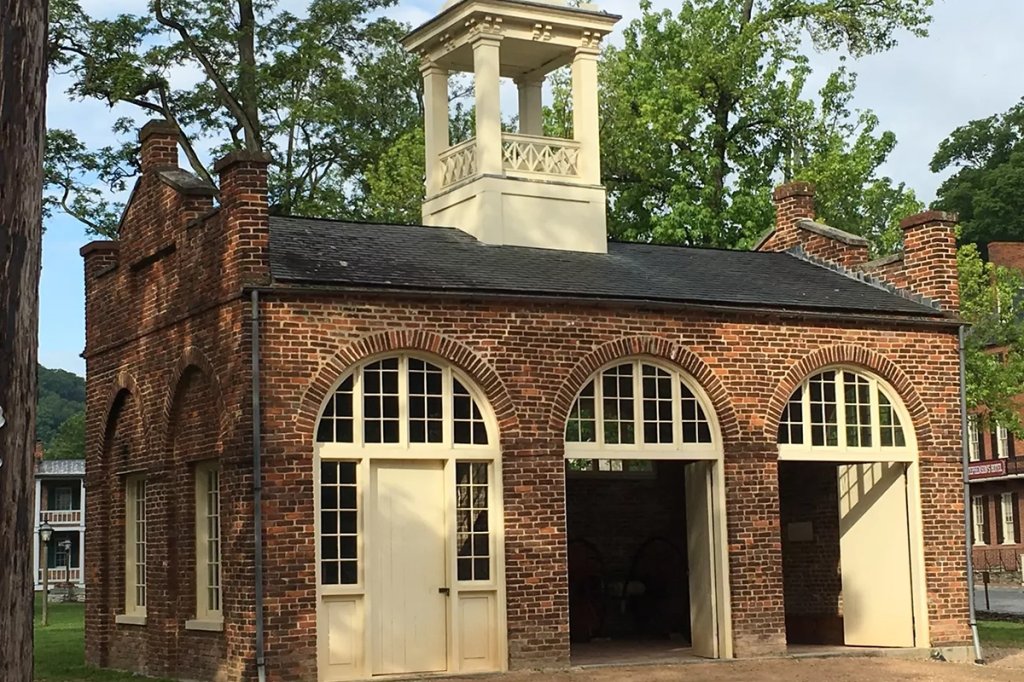
By October 17, Brown and his followers were surrounded. The militia and armed townspeople exchanged gunfire with the raiders. Several of Brown’s men were killed, including Newby. Brown and the remaining members of his group retreated into a small engine house within the armory complex. There they held their remaining hostages and prepared for the inevitable assault.
The Marines Arrive
On October 18, U.S. Marines arrived under the command of Col. Robert E. Lee, who was then an officer in the United States Army. Lee’s involvement added historical irony to the event. Within two years, he would resign his commission and become the commanding general of Confederate forces during the Civil War. Assisting him was Lt. J.E.B. Stuart, another future Confederate leader.
Lee and his forces quickly assessed the situation. Negotiations failed, and the decision was made to storm the engine house. Marines used a ladder as a battering ram to break down the door. The assault lasted only a few minutes. Brown was wounded and captured, and the surviving members of his group were subdued. Ten of Brown’s men had been killed during the raid and its suppression.
Trial and Execution
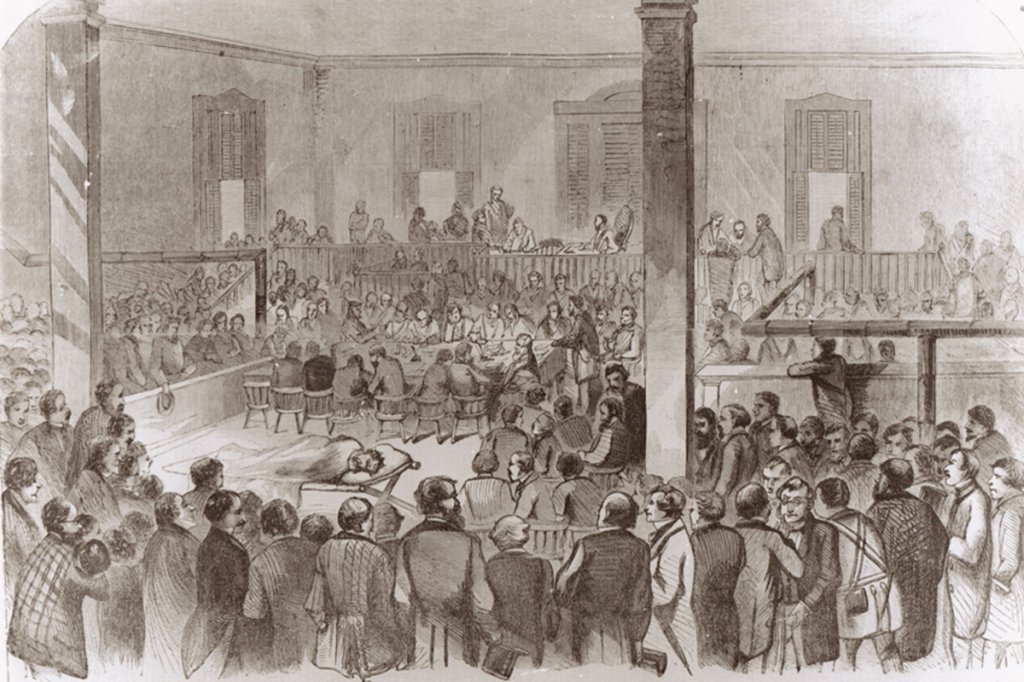
Brown was taken into custody and brought to trial in Virginia.
He faced charges of treason against the state, murder, and conspiracy to incite a slave insurrection. The trial began quickly, reflecting the urgency with which Virginia authorities sought to assert control and send a message. Brown’s injuries and the speed of the proceedings did not prevent him from speaking forcefully in his own defense.
Throughout the trial, Brown remained calm and resolute. He insisted that his actions were morally justified and that he had sought to free enslaved people, not to commit senseless violence. His words were widely reported in newspapers across the country. For many in the North, his dignity and conviction transformed him into a figure of admiration. For many in the South, his actions confirmed their worst fears about abolitionist intentions.
Brown was found guilty and sentenced to death. On December 2, 1859, he was hanged. Before his execution, he wrote that he believed the nation’s crimes would only be purged with blood. His prediction seemed prophetic as tensions between North and South continued to escalate.
A Catalyst for Civil War
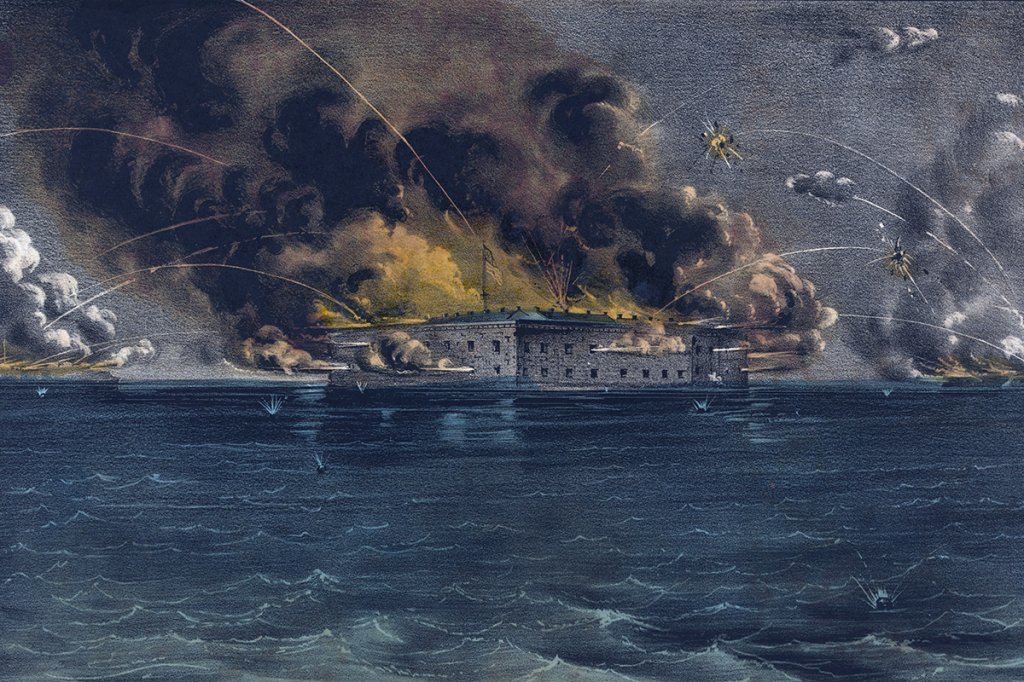
The immediate aftermath of the raid revealed how deeply it had shaken the nation.
In the South, the event was interpreted as evidence that abolitionists were willing to use violence to end slavery. Southern newspapers and political leaders warned of further plots and called for greater vigilance. Militias were strengthened, and calls for secession grew louder. Even though many Northern leaders condemned Brown’s actions, Southern suspicion and fear intensified.
In the North, reactions were more complex. Some condemned Brown as a dangerous radical whose violence threatened the rule of law. Others viewed him as a hero who had acted when political institutions failed. Writers and intellectuals praised his courage and willingness to sacrifice himself for the cause of freedom. Songs and poems commemorated his actions, and his name became associated with the moral struggle against slavery.
The raid also affected national politics. The Republican Party, which opposed the expansion of slavery but did not advocate immediate abolition in all states, found itself navigating a charged atmosphere. Southern leaders pointed to Brown’s actions as evidence that Northern opposition to slavery posed an existential threat. By the time Abraham Lincoln was elected president in 1860, the divisions had become nearly irreconcilable. Several Southern states seceded from the Union, and the Civil War began in April 1861.
Impact on Black History
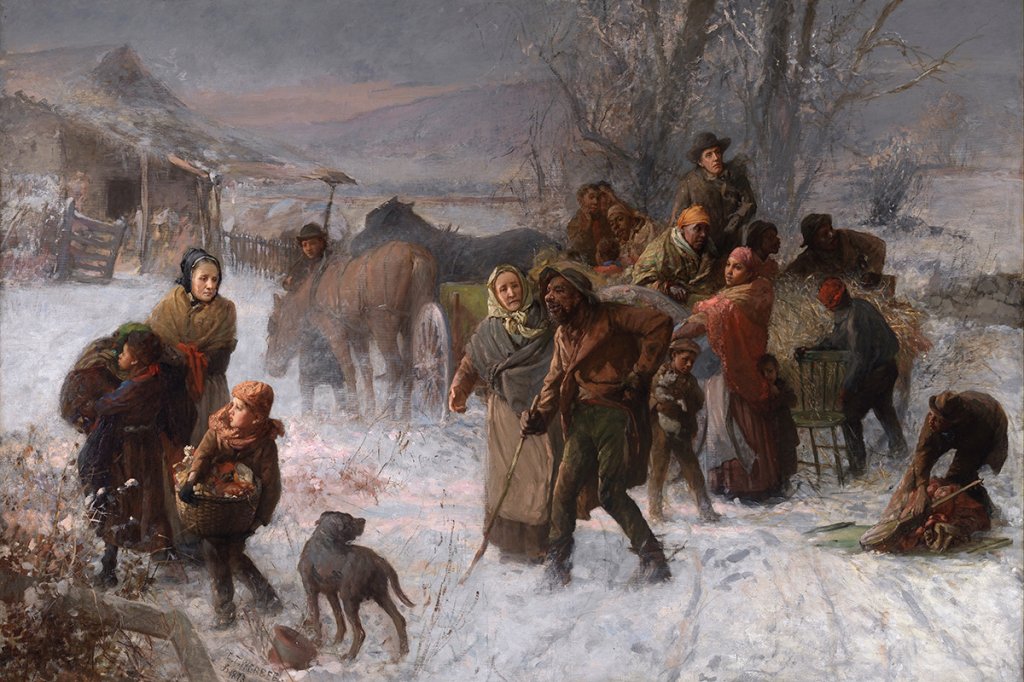
Brown’s raid holds a significant place in Black history. The participation of Black men in the raid demonstrated the depth of commitment among those who sought freedom. Their involvement reflected a long tradition of resistance, from slave revolts to the Underground Railroad. The raid became a symbol of the willingness to fight for liberation, even at great personal risk.
After the Civil War, Harpers Ferry continued to hold symbolic meaning. In 1906, the Niagara Movement, an early civil rights organization led by W.E.B. Du Bois, held its second conference at Storer College in Harpers Ferry. Participants gathered to honor Brown and to connect their struggle for civil rights with the earlier fight against slavery. The choice of location reflected the enduring significance of the raid as a symbol of resistance and sacrifice.
For Blacks, Harpers Ferry represented both the violence of the past and the ongoing struggle for equality. It served as a reminder that the fight for freedom did not end with emancipation. Instead, it continued through Reconstruction, the era of Jim Crow, and the modern civil rights movement.
Brown’s raid became part of a broader narrative about resistance, justice, and the pursuit of equality.
Harpers Ferry During the Civil War
The town of Harpers Ferry remained strategically important during the Civil War.
Its location near major transportation routes and its proximity to the border between North and South made it a contested site. The town changed hands multiple times as Union and Confederate forces fought for control. Its repeated occupation underscored its military value and its symbolic importance.
The very place where Brown had attempted to spark a slave uprising became a battlefield in the war that followed. Soldiers from both sides passed through the town, aware of its recent history. The memory of the raid lingered, shaping how people understood the conflict. For some Union soldiers, Brown’s actions represented the moral cause of the war. For Confederates, the raid remained a reminder of the fears that had driven them toward secession.
Legacy and Memory
Brown’s raid on Harpers Ferry remains one of the most significant events in the years leading to the Civil War.
Although it failed in its immediate objective, it succeeded in forcing Americans to confront the depth of their divisions. It heightened fears, inspired admiration, and made compromise increasingly unlikely. In doing so, it helped set the stage for the war that would determine the future of the nation.
In Black history, the raid stands as a symbol of resistance and sacrifice. It highlights the role of African Americans in the struggle against slavery and underscores the connections between abolitionism and later civil rights movements. The memory of Harpers Ferry continues to resonate as a reminder of the moral and political conflicts that shaped the United States.
Today, Harpers Ferry is preserved as a historic site where visitors can reflect on the events of October 1859 and their consequences. The story of Brown and his followers invites ongoing debate about the nature of resistance, the limits of political change, and the costs of confronting injustice. It remains a powerful reminder that the path to freedom and equality has often been marked by conflict, courage, and profound sacrifice.