
As an educator, I have the duty and privilege of teaching some of the most intense and consequential moments in American history. Few lessons capture students’ attention quite like the Cuban Missile Crisis.
For 13 tense days in October 1962, the United States and Soviet Union stood on the brink of nuclear war. In classrooms across the country, students learn how close the world came to catastrophe and how leadership, intelligence gathering, and diplomacy ultimately helped prevent a devastating conflict.
Also Read: An Air Force plane crashed in Death Valley during the Cold War (and is still there)
For me, however, teaching history is about more than simply covering the material in a textbook. One of the most powerful aspects of the subject is discovering that the past is still alive around us. Stories of major historical events often live quietly in our communities, carried by the men and women who experienced them firsthand.
Living in Jacksonville, Florida—a city with deep military roots—means those connections appear often. The region is intertwined with the story of naval aviation. Its bases and neighborhoods have hosted generations of sailors, aviators, and maintenance crews. Sometimes the stories they carry emerge when you least expect them.
Recently, I experienced one of those moments.
What began as a simple conversation with Navy veterans from my church turned into an extraordinary glimpse into one of the most daring and lesser-known aviation operations of the Cold War.
The discussion introduced me to the story of the “Gray Ghosts,” a Navy reconnaissance squadron whose low-level flights over Cuba provided critical intelligence during the Cuban Missile Crisis.
It also reminded me that history often reveals itself through personal connections—and that those moments transform the way we teach the past.
A Conversation that Opened a Door to the Past
The conversation started casually, as many do in a Navy town. After church one morning, I spoke with several veterans from our congregation. Jacksonville’s military presence means these kinds of conversations are common.
Stories of deployments, aircraft carriers, and aviation squadrons often surface naturally when veterans gather.
One of the men turned to me and asked a simple question.
“Do you still teach about the Crisis?” he asked. I immediately knew which crisis he meant.
“Yes,” I replied. “I still teach the Cuban Missile Crisis.”
For students today, the Cold War can feel distant. They know about nuclear weapons and global tensions, but they did not grow up with the daily fear of nuclear conflict that defined much of the 20th century.
When I teach the Cuban Missile Crisis, I emphasize that the world truly stood on the edge of nuclear war. The moment captures students’ attention, because the stakes were so extraordinarily high.
Before our conversation moved much further, another gentleman walked over. He was listening from across the room. He smiled and asked a question that instantly shifted the conversation.
“Do you teach about the Gray Ghosts?” he asked. The phrase immediately sparked my curiosity.
The Gray Ghosts of VFP-62
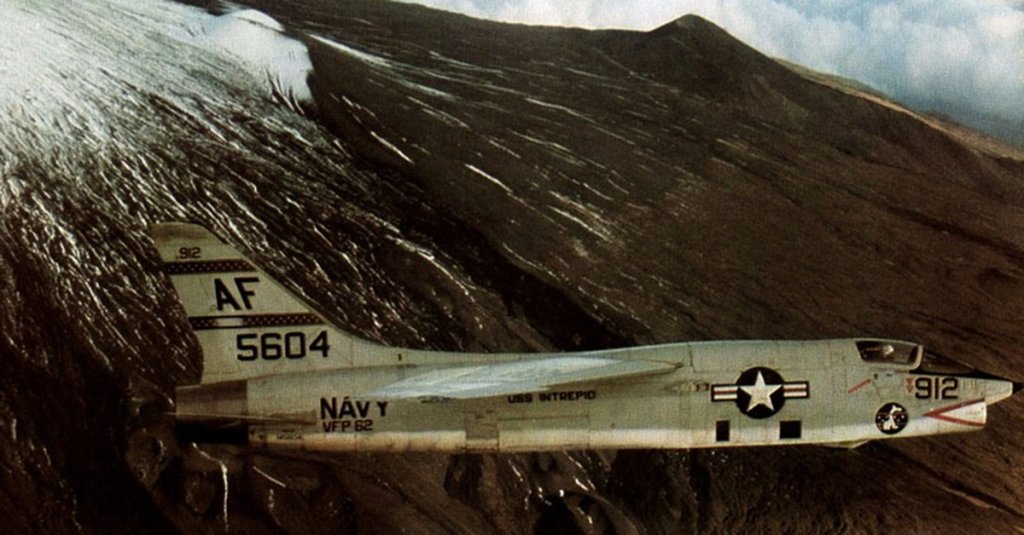
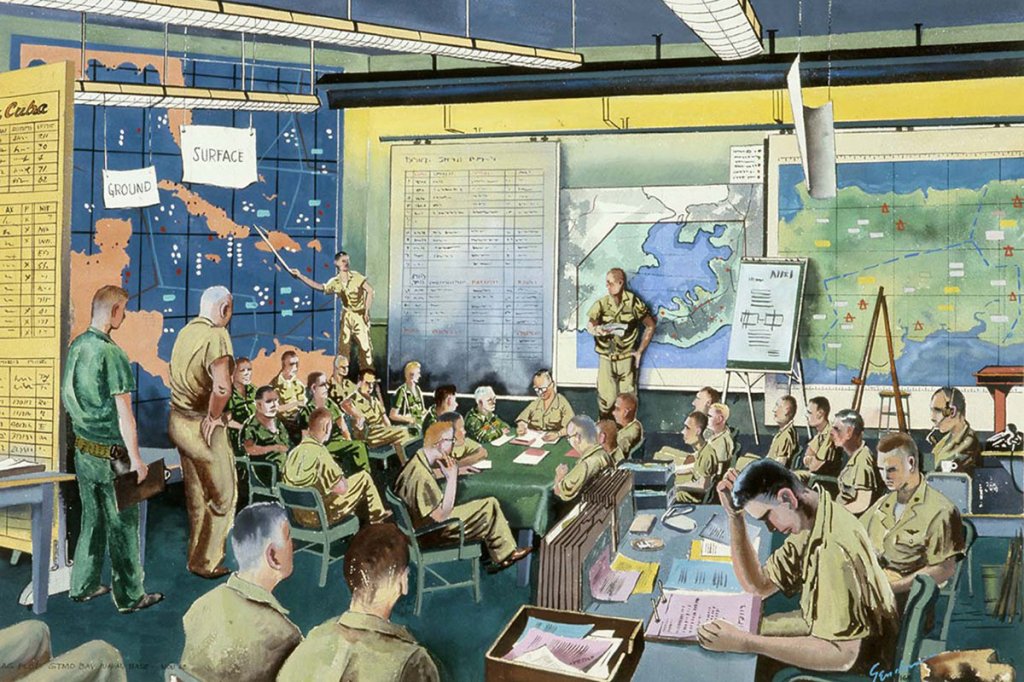
The man began explaining that the Gray Ghosts were members of Light Photographic Squadron 62, commonly known as VFP-62. During the Cuban Missile Crisis, this squadron operated specialized reconnaissance aircraft, the RF-8A Crusader.
These aircraft were a modified version of the famous F-8 Crusader fighter plane, but their mission was entirely different. Instead of holding guns or missiles, the RF-8A carried sophisticated camera equipment capable of capturing high-resolution aerial photographs.
The squadron’s nickname, “the Gray Ghosts,” reflected both the aircraft’s color and the elusive nature of their missions. Reconnaissance flights required speed, stealth, and precision. Pilots had to appear over a target, gather intelligence, and disappear before enemy defenses could react effectively.
The veteran speaking with us explained he was not one of the pilots flying those dangerous missions. Instead, he worked behind the scenes, maintaining the aircraft aboard the aircraft carrier USS Independence.
While pilots often receive recognition for their daring flights, the mechanics and maintenance crews play an equally vital role. Without their expertise, aircraft simply will not fly.
As he began describing the aircraft and the missions they performed during the crisis, it became clear that this was a story many people—including myself—did not fully appreciate.
The Importance of Aerial Reconnaissance
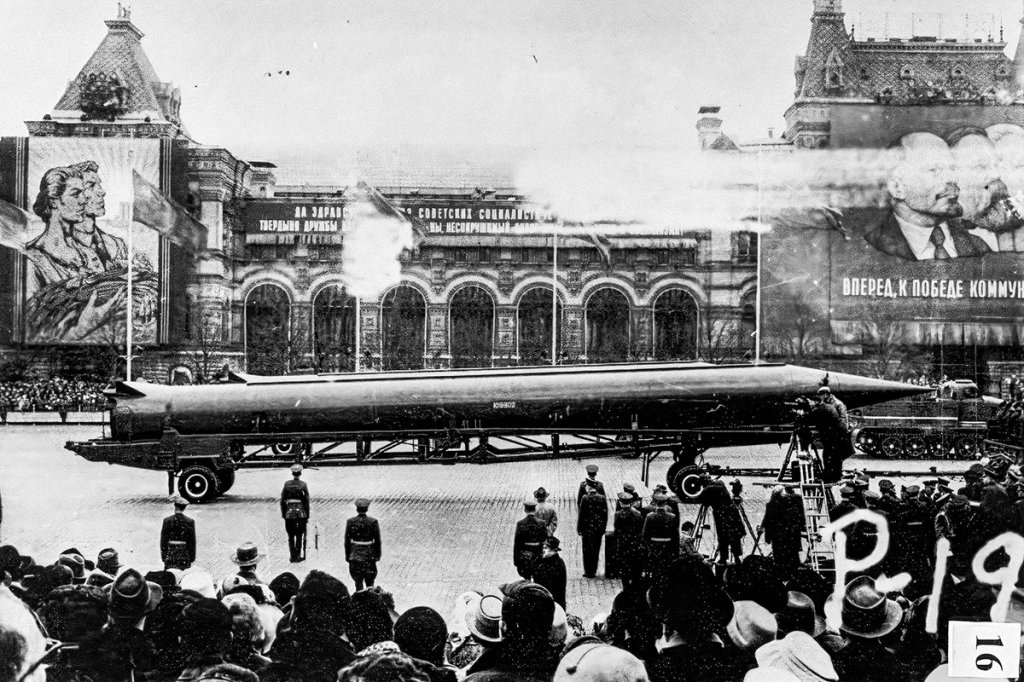
The Cuban Missile Crisis began when American intelligence discovered the USSR was secretly installing nuclear missile sites in Cuba. These medium-range ballistic missiles had the capability to strike major cities across much of North America.
Initial evidence came from high-altitude reconnaissance missions flown by the Strategic Air Command, using the Lockheed U-2 spy plane. On October 14, 1962, a U-2 flight photographed missile installations under construction in Cuba, confirming the Soviet Union had indeed deployed nuclear weapons within striking distance of the American mainland.
While the U-2 photographs provided the first clear evidence of the missile sites, they were only part of the intelligence picture. The images revealed that missiles were being installed, but analysts needed more detailed information to determine how close the weapons were to becoming operational.
High-altitude photography could show the general layout of the missile sites, but it could not capture the fine details necessary to assess their readiness. Military planners needed clearer images to detect missile launchers, fuel equipment, transport vehicles, and support infrastructure.
That need led to one of the most dangerous intelligence missions of the Cold War.
USS Independence
The aircraft carrier USS Independence played an important role in the naval forces assembled during the crisis. When President John F. Kennedy announced a naval blockade—officially described as a “quarantine”—around Cuba, the U.S. Navy mobilized a large fleet of ships and aircraft to enforce it.
Aircraft carriers enabled the United States to project air power across the Caribbean while remaining mobile and difficult for the enemy to target. From the decks of these carriers, reconnaissance aircraft launched missions that gathered intelligence essential to decision-making. Independence was one of the platforms supporting these operations.
Aircraft operating from the ship included reconnaissance aircraft as well as strike fighters prepared for potential combat operations if the crisis escalated. The RF-8A Photo-Crusaders, flown by VFP-62, were among these aircraft.
Low-Level Reconnaissance

USNM Interview of Jim O’Donnell Part Eighteen Cuban Missile Crisis & Assignment on USS Independence
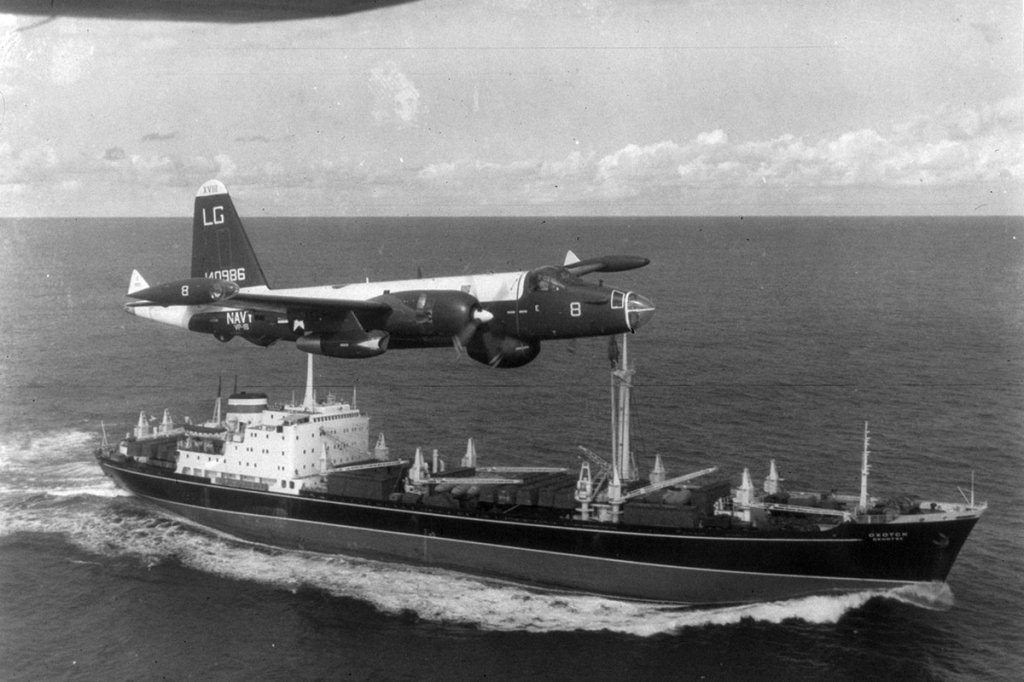
Beginning on October 23, 1962, the Gray Ghosts began flying a series of extremely dangerous reconnaissance missions over Cuba. Unlike the U-2 aircraft that operated at high altitude, the RF-8A Crusaders conducted low-level flights directly over Soviet missile installations.
These missions required pilots to fly at altitudes sometimes as low as a few hundred feet above the ground while traveling at speeds exceeding 400 mph.
Flying at such low altitude was necessary for a simple reason: clarity. The cameras mounted inside the aircraft needed to capture highly detailed photographs that allowed intelligence analysts to examine individual pieces of equipment at the missile sites.
From these images, analysts determined whether missile launch pads were complete, whether missiles had been erected on launchers, and whether the sites appeared ready for operational use.
It was vital to collect this information, but the pilots gathering that intelligence were flying directly into heavily defended airspace.
Callsigns Ghost 1 and Ghost 2
During the conversation at church, the veteran mentioned a detail that immediately caught my attention. He explained that the aircraft used in these missions were often referred to by callsigns such as “Ghost 1” and “Ghost 2.”
The callsigns reflected the squadron’s nickname—the Gray Ghosts—and were used to identify aircraft participating in reconnaissance runs over Cuba.
Pilots flying these missions had to execute their flights with extraordinary precision. Their routes were carefully planned to pass directly over specific targets while allowing the aircraft’s cameras to capture the most useful angles for analysis.
In many cases, pilots had only seconds to photograph a missile installation before racing away at high speed. The missions were carefully timed and coordinated to ensure each pass gathered the maximum intelligence.
They were the most daring reconnaissance missions conducted during the entire Cold War.
The Photo-Crusader
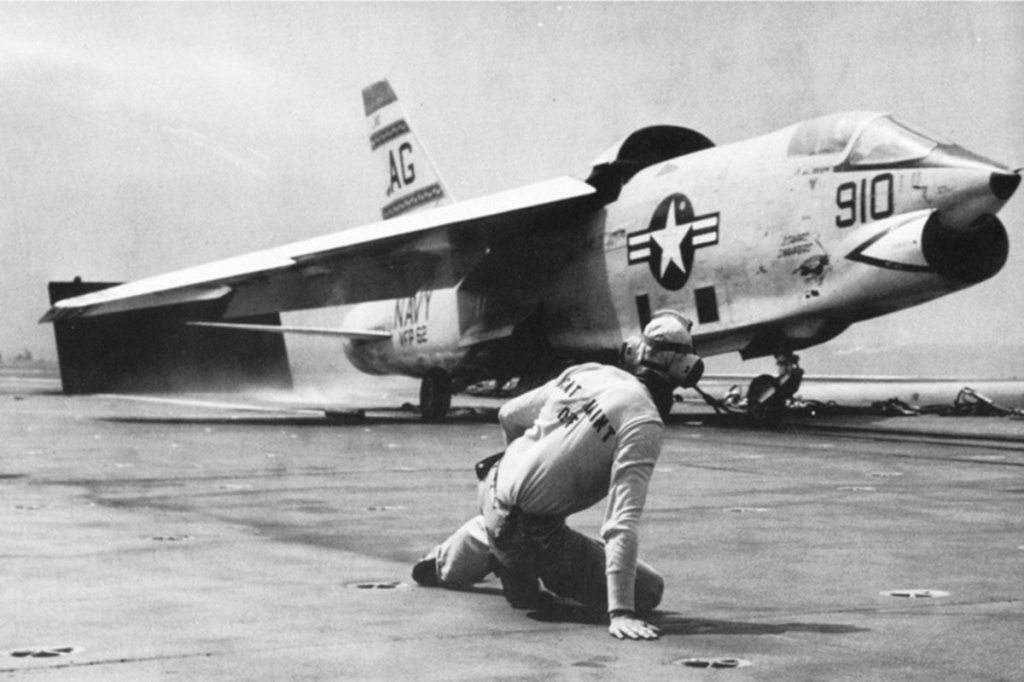
The RF-8A Crusader was specifically designed for missions like those flown during the Cuban Missile Crisis. The original F-8 Crusader was one of the Navy’s premier fighter aircraft. The RF-8A variant had a sophisticated camera system mounted in the lower fuselage (where its weapons were removed), with multiple high-resolution cameras capable of capturing images at different angles and focal lengths.
Some cameras pointed straight downward, while others were angled slightly to the side to capture broader views of the terrain. These cameras were triggered automatically as the aircraft flew over designated targets.
The result was a series of overlapping images that intelligence specialists later analyzed in great detail.
The aircraft’s speed and maneuverability made it ideal for reconnaissance missions in hostile airspace. However, the absence of weapons meant that the pilots relied entirely on speed and skill for survival.
The Maintenance Crews
As fascinating as the aircraft and pilots were, the veteran at church reminded me that another group of individuals played a crucial role in these operations: the maintenance crews.
Working aboard the USS Independence, mechanics and technicians prepared the reconnaissance aircraft for each mission. Their responsibilities included inspecting engines, servicing camera systems, checking hydraulic lines, and ensuring that landing gear and control systems functioned perfectly.
During the crisis, the tempo of operations was intense. Aircraft was prepared quickly and flawlessly so they could launch again when new intelligence was needed.
The veteran described how the crew had marked the wheels of certain aircraft, specifically Ghost 1 and Ghost 2. These markings helped maintenance teams quickly identify the aircraft and track their status during the rapid pace of flight operations.
It may sound like a small detail, but in aviation maintenance, small details can make all the difference. The safety of the pilot—and the success of the mission—depended on the precision and dedication of the crew.
The photographs that the RF-8A reconnaissance missions captured became some of the most valuable intelligence collected during the Cuban Missile Crisis. They confirmed the existence of the missile launch sites and revealed the rapid progress Soviet engineers were making in constructing them.
Analysts studying the photographs determined how close the missiles were to becoming operational. Inside the White House, President John F. Kennedy and his advisers debated possible responses to the Soviet deployment. Options ranged from airstrikes against the missile sites to a full-scale invasion of Cuba.
The intelligence gathered by the Gray Ghosts helped provide the evidence necessary to guide those decisions. Without those photographs, the U.S. might have made choices with far less certainty about the situation on the ground.
Bringing the Crisis Into a Classroom
As teachers, we constantly search for ways to make history meaningful for our students. One of the most effective ways to do that is by connecting historical events to real people and real experiences.
The next time I teach the Cuban Missile Crisis, the lesson will include the story of the Gray Ghosts. My students will learn about the pilots who flew dangerous reconnaissance missions over Cuba. They will hear about the specialized aircraft that carried cameras instead of weapons. And they will understand the critical role of the mechanics and maintenance crews, who ensured those aircraft completed their missions.
Most importantly, they will hear the story of a Navy veteran who once worked on those planes and who shared that memory decades later in a simple conversation.
When History Finds You
One of the most exciting parts of being both a historian and a teacher is that inspiration can appear in the most unexpected places.
Sometimes it comes from archival documents or historical research. Other times, it comes from conversations with the people who lived through the events we study.
That morning at church reminded me that history is never truly finished. New perspectives and new stories waiting to be told are out there. And sometimes, all it takes to uncover them is a single question.
“Do you teach about the Gray Ghosts?”
Because once you hear that story, you realize something remarkable: History is not just in books; it may be sitting right beside us.
Don’t Miss the Best of We Are The Mighty
• One of Cuba’s national heroes is an American Civil War veteran
• No Boots, No Problem: Ukraine captured a Russian position using only robots and drones
• The 10 most spectacular Russian military failures of all time
Featured

Loading comments…
Comments couldn’t be loaded. Please refresh the page.