The postwar decades crackled with technological ambition. As defense contractors sketched the future of aviation, the space race accelerated with new spacecraft designs. Amid this ferment, a quieter revolution was brewing. At NASA’s Ames Research Center, engineers posed a radical question: Could a spacecraft, using only its shape for lift, glide home through the atmosphere and land on a runway like an airplane? This pursuit of the “lifting body” would become a pivotal chapter in the quest for a reusable space shuttle rather than relying on a capsule-and-parachute recovery at sea, transforming a daring idea into concrete reality.
Related: A pilot survived a Mach 3 ejection from the edge of space by not ejecting at all
In 1962, NASA’s Flight Research Center in California approved the construction of a prototype lifting body aircraft, which became the M2-F1, also known as the “Flying Bathtub.” The designation is short for “Manned 2, Flight 1.” The prototype was constructed using a steel-tube frame and a mahogany plywood shell on a shoestring budget of about $30,000.
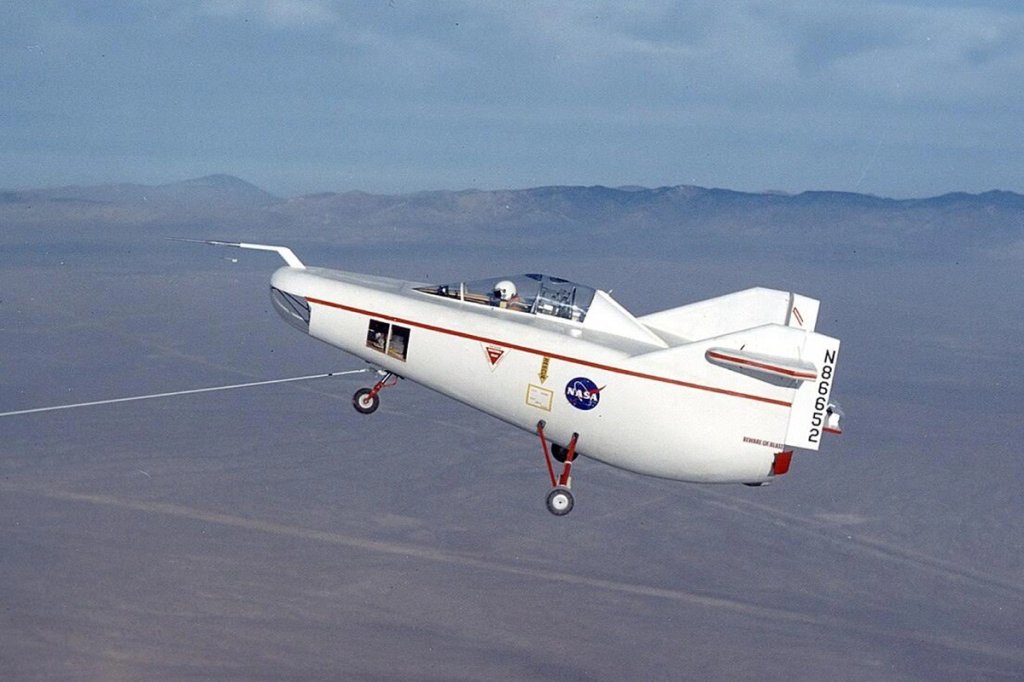
Construction began with NASA’s Flight Research Center teaming up with the Gus Briegleb Company, a local glider manufacturer. One of the NASA artisans was Ernie Lowder, who had previously helped manufacture the Spruce Goose for Howard Hughes. With a team assembled, work began in a hangar at El Mirage Airport. A canvas tarp was hung to section off a corner of the hangar, and a sign was posted reading “Wright Bicycle Shop.”
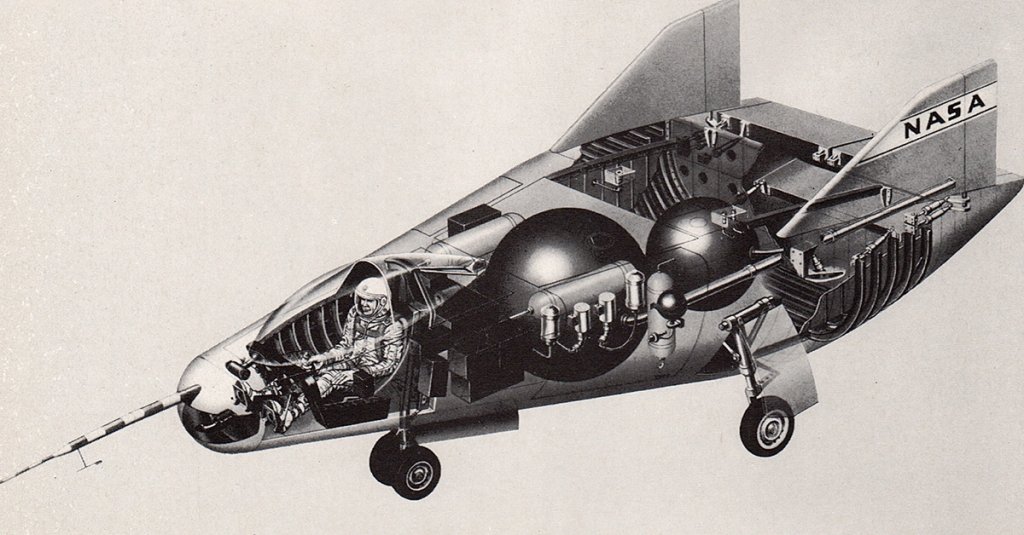
The end product was small and light, measuring about 20 feet in length, about 14 feet in width, and weighing about 1,000 pounds empty.
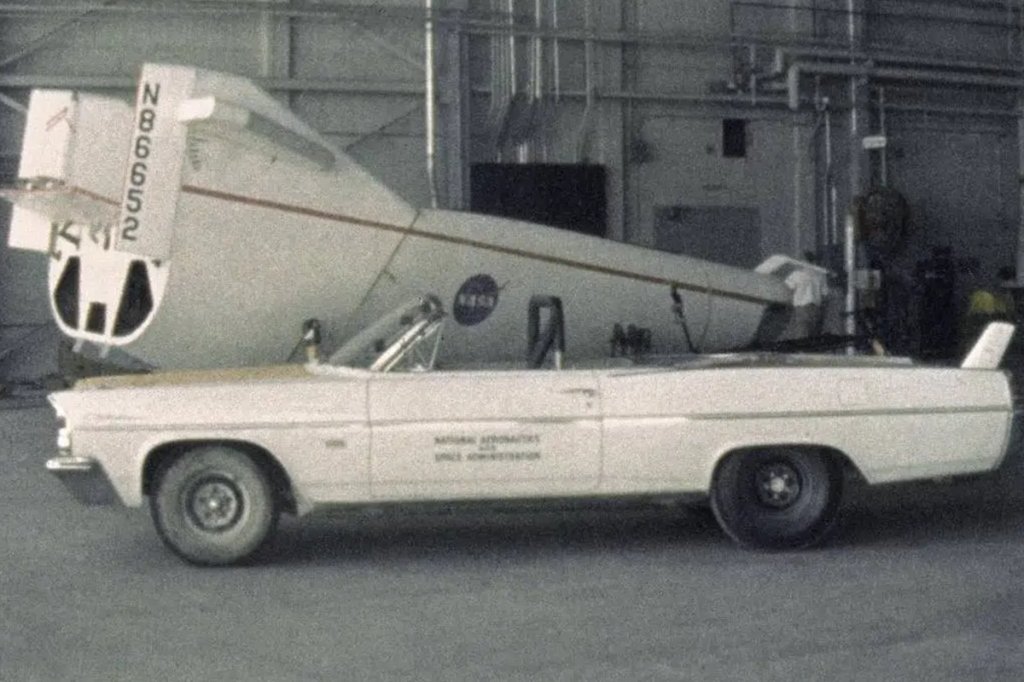
Testing began at Rogers Dry Lakebed using a 1963 Pontiac Catalina convertible as a tow vehicle. After engine tweaks and racing slicks, the car’s top speed reached around 110 mph, enough to begin towing tests. Those early tows helped the team evaluate handling at close range. After initial testing, the prototype was sent to the wind tunnel for further evaluation.
With fixes in place, engineers were ready for the next phase: air tows. The program used a C-47 as a tow aircraft, and pilot Milt Thompson flew the first true free flight. Released at about 5,200 feet, Thompson brought the M2-F1 down for a successful landing.
The M2-F2
With the lifting body concept validated by the prototype, NASA proceeded to a metal, heavyweight model produced by Northrop Corporation. The M2-F2 incorporated major upgrades for the next phase of testing, including a rocket-powered assist system used just before landing to reduce sink rate. The B-52 Stratofortress replaced tow aircraft as the carrier, serving as a mothership that could air-launch the lifting body at altitude.
In July 1966, the M2-F2 was dropped from the NASA B-52 at an altitude of 45,000 feet and began a series of glide flights. In the following months, it conducted 14 additional successful flights.
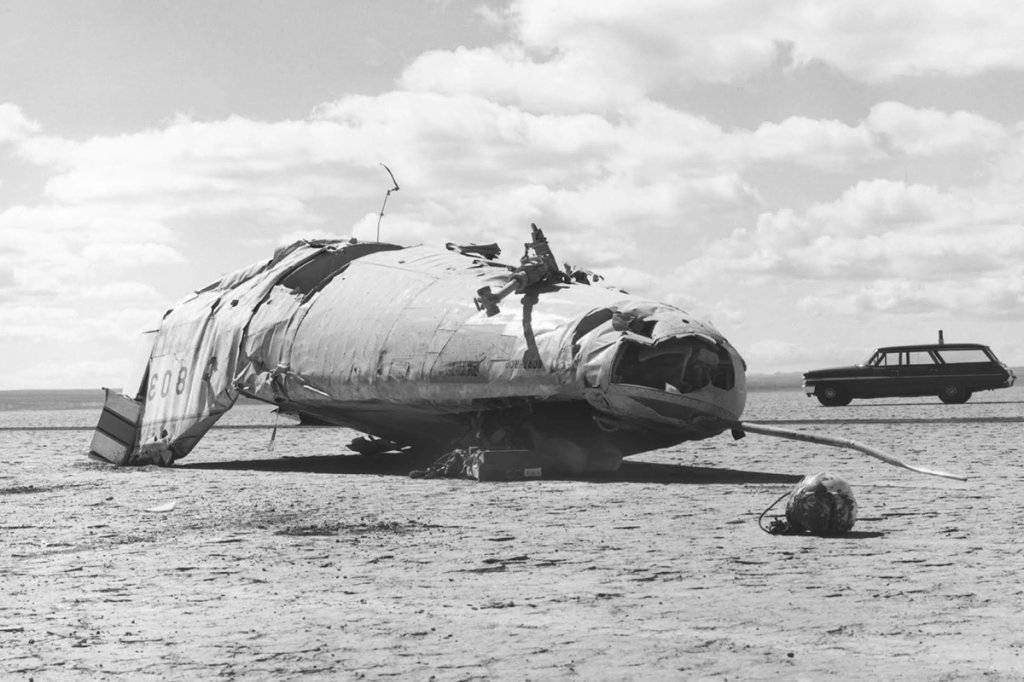
On May 10, 1967, disaster struck on its 16th and final glide flight. As the aircraft descended, it entered a pilot-induced oscillation and began rolling from side to side. Since the lifting body design has essentially no wings, the pilot has less aerodynamic leverage to stop the oscillation once it builds.
Test pilot Bruce Peterson eventually managed to get the M2-F2 under control, but new hazards emerged on final approach. He eased the aircraft over for an unobstructed landing, but the area of the lakebed was unmarked. As he approached touchdown, he lowered the landing gear and used the landing-assist system, but the gear was not fully extended and locked, and it collapsed. The aircraft rolled over six times and came to rest upside down.
Peterson was pulled from the wreckage alive and taken to UCLA Medical Center. Although seriously injured, he recovered from the crash, but later lost vision in his right eye due to a staph infection.
Although only a few people witnessed the crash live, it became one of the most famous ever recorded, later seen by millions. In 1973, the television series “The Six Million Dollar Man” debuted, and its opening credits featured footage of the crash.

The Six Million Dollar Man Opening and Closing Theme (With Intro) HD Surround
In many cases, a crash like this during development might result in the cancellation of the program, but not in this case. NASA’s approach was simple: Build another M2.
The M2-F3
The M2-F2 rose from the ashes and was rebuilt as the M2-F3. Initially, it was thought that a whole new aircraft would have to be built. The vehicle sustained significant damage to the airframe and external panels, and the crash tore off the left fin and landing gear. Northrop technicians and engineers rebuilt it while engineers made design changes based on volumes of flight-test data.
The most visible change was the addition of a center fin to address stability and pilot-induced oscillation. Other changes included reaction-control thrusters, similar in concept to those used on spacecraft, to gather detailed vehicle-control data. The rebuilt aircraft also added a liquid-fueled rocket engine for powered testing.

M2-F1 Flight Operations — Lifting Body Technology Demonstrator
In June 1970, the M2-F3 began flight testing. Early glide flights helped validate the stability improvements. Over the course of the program, the M2-F3 reached a top speed of Mach 1.6 and a maximum altitude of 71,500 feet, concluding its flight series in December 1972. The lifting body program continued with aircraft such as the X-24. Still, the M2 series proved invaluable, providing extensive data that helped validate the concept that a future space shuttle could achieve accurate, unpowered landings. When the space shuttle finally came home like an airplane, it did so with a little help from the “flying bathtub.”