
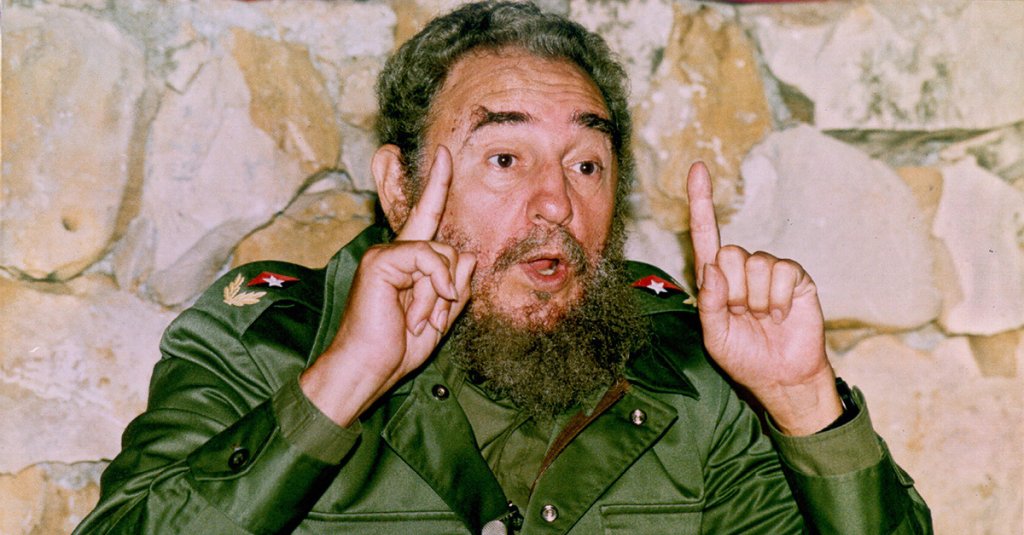
In 1958, Fidel Castro was near the end of a yearslong battle to overthrow Cuban President Fulgencio Batista. Confident of soon seizing power, Castro was already looking ahead.
What he saw was a clash with a much larger foe.
“Once this war is over, I will start what for me is a much longer and bigger war, the war I am going to wage against the Americans,” Castro confided to a friend. “I realize this will be my true destiny.”
Also Read: Why the CIA once bought up the world’s supply of LSD during the Cold War
While Castro detested the U.S., he didn’t exactly make American leaders all warm and fuzzy, either. In reality, the CIA went to great lengths to try to overthrow or kill the Cuban dictator during the Cold War—and not just during the ill-fated Bay of Pigs invasion. How many times was Castro the target of some plot? Former Cuban intelligence head Fabian Escalante provided a very specific number in his book “634 Ways to Kill Fidel.”
Not all of those involved the CIA, but some did, and they usually incorporated a James Bond level of ingenuity.
A Former Lawyer Turned Revolutionary
The son of a wealthy sugarcane farmer, Castro was born on August 13, 1926, in the rural community of Birán, Cuba. He graduated from law school in 1950, practiced for a while, and joined the Cuban People’s Party. After a coup brought Batista to power in 1952, Castro tried to work through legitimate avenues to remove the dictator.
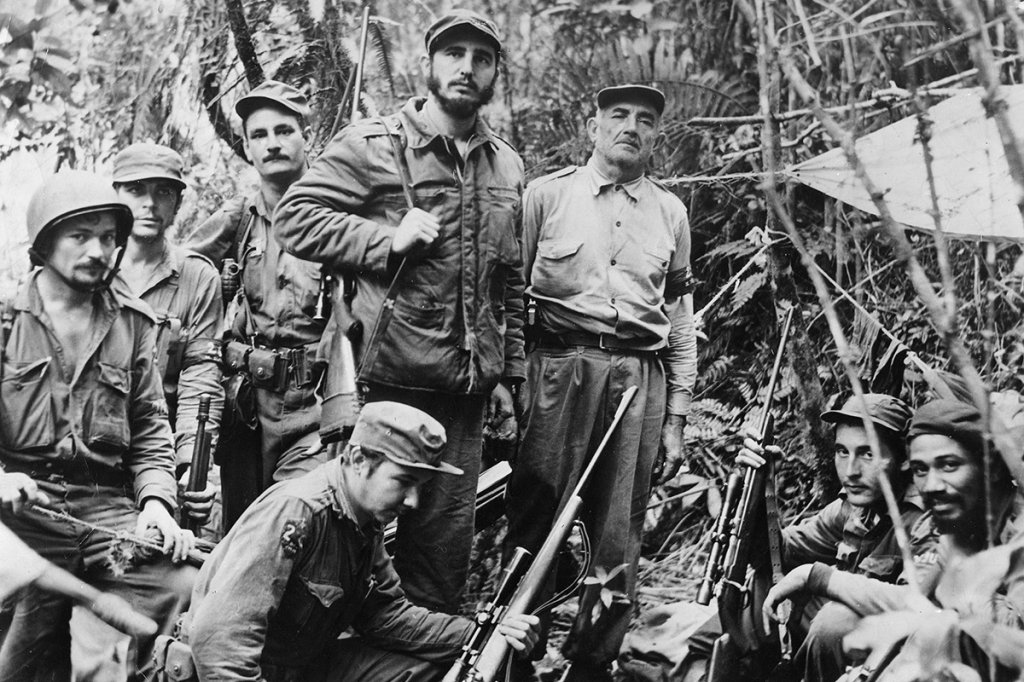
After that failed, Castro went the guerrilla route. He assembled a relatively small team of rebels, including his brother Raúl, to combat Batista’s much larger forces in 1953. In July of that year, an attack on a military barracks led to the Castros’ arrest. Fidel received a 15-year prison sentence, slightly longer than Raúl’s 13-year term.
In a case of political amnesty, both were released after two years behind bars. They fled to Mexico partly for their safety. They also went there to unite Cuban exiles and others, including Ernesto “Che” Guevara, behind their cause and consider their next moves.
“We will return when we can bring to our people the liberty and the right to live decently without despotism and without hunger,” Fidel wrote in a Cuban magazine.
The Castros and roughly 80 soldiers left Mexico for their return to Cuba on November 25, 1956. Fifty men, along with various trucks, jeeps, food, and weapons, awaited their arrival a week later.
The Castros finally got what they wanted when Batista stepped down on New Year’s Day 1959 and hightailed it off the island nation. Fidel Castro took the oath as Cuba’s prime minister on February 16, 1959.
Various Assassination Plots
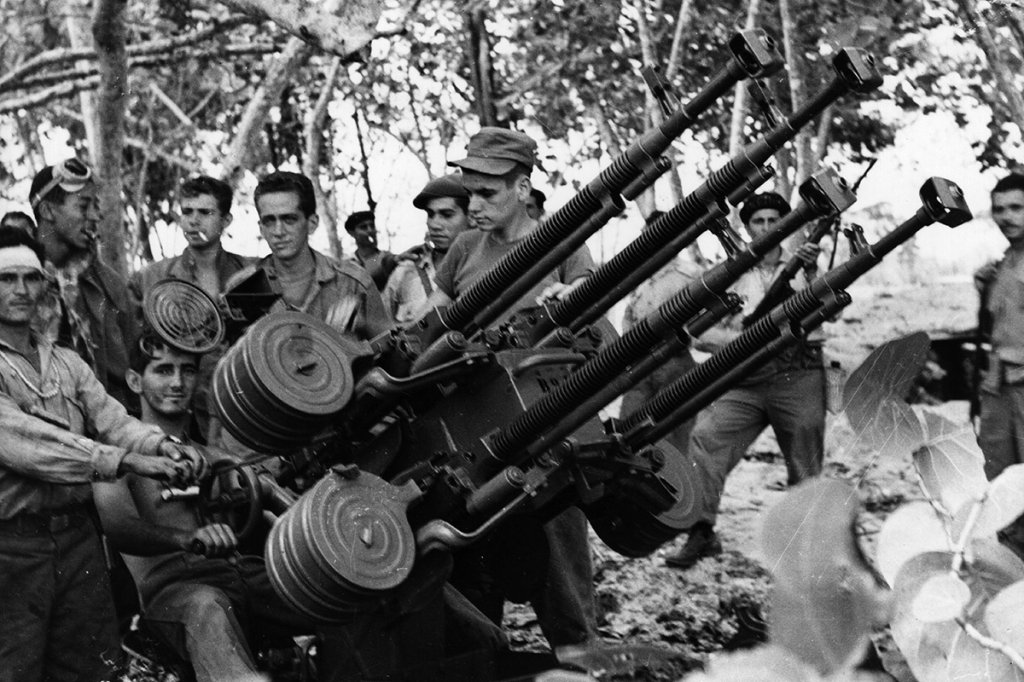
In the beginning, the U.S. didn’t know quite what to make of Castro. Its opinion of Cuba’s youthful leader lessened over time, especially when Castro declared Cuba as the Western Hemisphere’s only communist nation on April 16, 1961. The next day, a CIA-backed group of Cuban expatriates attempted to overthrow Castro’s regime. The Bay of Pigs invasion became a political and intelligence black eye after Cuban forces thwarted it in two days.
The CIA had to find other methods to rid themselves of their Castro problem. Its agents devised truly outlandish scenarios to take out the Cuban dictator, who knew he was a slippery target.
“If surviving assassination attempts were an Olympic event, I would win the gold medal,” Castro once boasted.
The CIA accepted that challenge. U.S. intelligence considered an exploding cigar, along with a poisoned pen and syringe. It also thought of contaminating Castro’s diving suit with a deadly fungus.
That was one possible way to take advantage of Castro’s love of scuba diving. Another involved seashells. The CIA devised a scheme in which it would paint a large shell, fill it with explosives, and place it in the waters where Castro liked to dive. When he reached out for it, his touch was supposed to detonate the shell.
Deeming it impractical, the CIA never executed that plan.
The U.S. intelligence community wasn’t done. To topple Castro’s government, the CIA even consulted with mobsters, including Sam Giancana. Giancana was on the FBI’s 10 Most Wanted list at the time. It didn’t matter. The unholy alliance between the CIA and the mob never led to Castro’s ouster.
Former Lover Says Castro Handed Her a Gun
Early in Castro’s reign, the CIA recruited his former lover, Marita Lorenz, in its quest to eliminate him. (CIA contact Frank Sturgis—who was among the burglars involved in Watergate in 1972—helped convince Lorenz to go along with the mission.)
The intelligence agency provided Lorenz, who was only 20 years old at the time, with poison pills to mix into Castro’s drink. She inadvertently ruined the pills by placing them in her face cream while traveling. They dissolved in the cosmetic, rendering them useless. It didn’t matter because Lorenz couldn’t go through with it anyway.
When Castro learned of the plot, he confronted Lorenz. Supremely confident she wouldn’t do anything, Castro handed the young woman his gun, then he taunted her.
“He didn’t even flinch,” Lorenz recounted in the November 1993 issue of Vanity Fair. “And he said, ‘You can’t kill me. Nobody can kill me.’ And he kind of smiled and chewed on his cigar…. I felt deflated. He was so sure of me. He grabbed me. We made love.”
Needless to say, that wasn’t what the CIA expected.
What Castro Left Behind
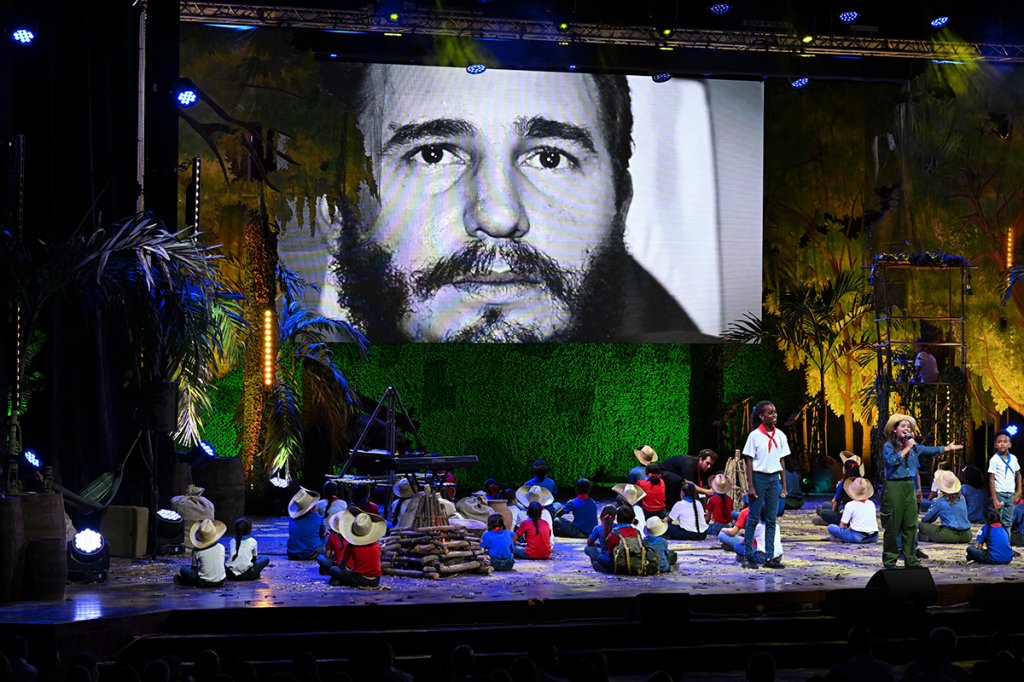
Whatever U.S. intelligence tried, it didn’t work.
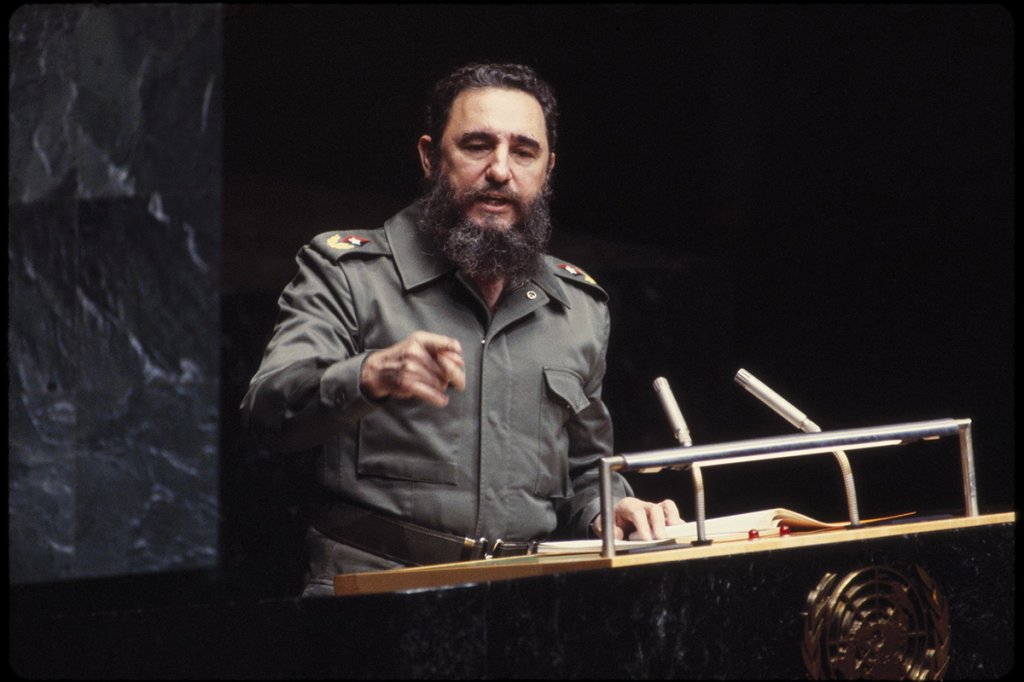
Castro remained in power for 49 years, stepping down in 2008. Raúl replaced him and served as president for a decade. Today, Miguel Díaz-Canel holds that title on the communist island just 90 miles south of Key West, Florida.
Although Fidel Castro died on November 25, 2016, at the age of 90, he remains a topic of conversation in Cuba. That was especially true last week, when Cubans marked the late dictator’s 100th birthday. It came at a time where Cubans have struggled under the weight of a crippling fuel embargo and economic sanctions from the U.S.
Argelia Mustelier, a 61-year-old retiree, misses Castro’s leadership.
“Fidel left us everything, everything good that came from Cuba’s revolutionary process,” Mustelier said, according to The Associated Press. “In these difficult times we’re living through, he would have found a way to bring some happiness to his country and his people.”
Cristian Cohello, 27, was only a young boy when Castro’s reign ended.
“Our generation didn’t experience him as an active leader,” Cohello said. “What we saw was a less visible Fidel who rarely appeared in public. What remains of Fidel Castro right now, of what he left behind, is nothing, absolutely nothing.”
Don’t Miss the Best of We Are The Mighty
• When the CIA used Howard Hughes as a cover to retrieve a Soviet submarine
• Vietnam vet Bill Roedy left the Army for cable TV—and helped win the Cold War
• The sensational defection of Stalin’s daughter to the US during the Cold War


Loading comments…
Comments couldn’t be loaded. Please refresh the page.