
The views and opinion expressed in this article are those of the author and do not necessarily reflect the views or positions of any entities mentioned.
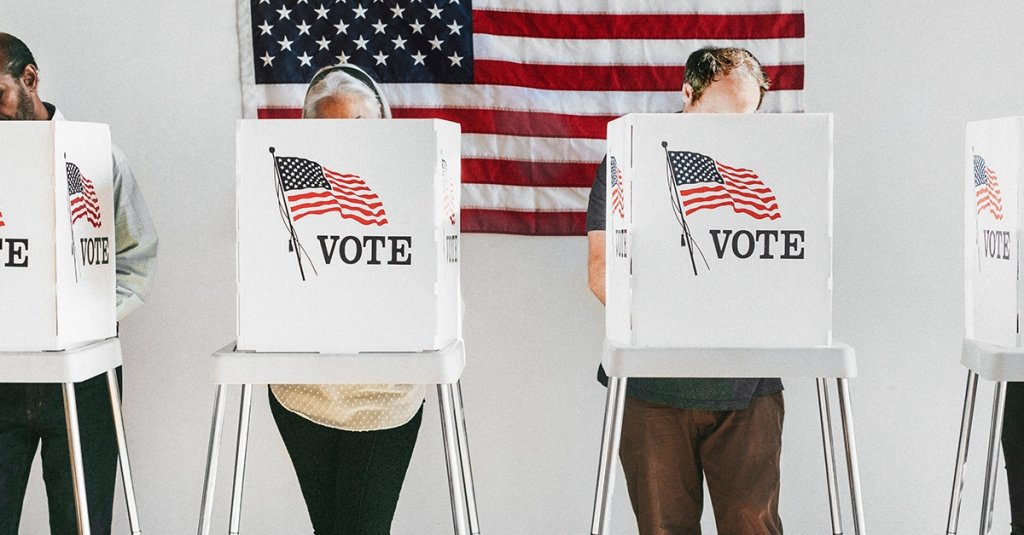
Five weeks before the midterms, I want to tell you about a question we asked 10,000 military spouses almost by accident: we asked them if they voted.
The question was one of three civic engagement items we borrowed from the Census Bureau’s survey and tucked into the National Military Family Association’s Joanne Holbrook Patton Military Spouse Scholarship application out of genuine curiosity. The scholarship is open to spouses of all stripes—active duty, Guard, Reserve, retiree, disabled veteran, surviving—so the answers came from all of them.
We asked how often they and their neighbors did favors for each other—watched each other’s kids, house sat, lent a tool. Military spouses do it at nearly double the rate of Americans generally. They’re helping a few times a week, a few times a month—the same rhythm of the help we find ourselves needing during long trainings and deployments. Nearly eight in ten military spouses had formally volunteered—more than half had done so at least monthly.
These aren’t people disconnected from their communities. These are people who hold their communities together with their bare hands.
Then we asked whether they’d voted in the past year.
Among active duty spouses, 42% had. Every other kind of military spouse in the same pool—Guard, Reserve, retiree, disabled veteran, surviving—voted at 57% to 76%. When we broke it down by education, the gap held at every level: an active duty spouse with a bachelor’s degree voted at the rate of a some-college spouse in any other category.
It held across rank. It held across income. The one thing that predicted the shortfall was active duty status itself. It wasn’t about who these spouses were. It was about where they were.
Why?
Most Americans vote where they live, and they learn what’s on the ballot the way you learn anything about your hometown: by being there. An active duty family arrives at a new installation, builds a support network from nothing, and moves again in two or three years. Most of us keep our voter registration in our home state or our service member’s state of legal residence, sometimes a thousand miles from where we sleep.
In a presidential year, that costs a stamp. In a year like this one—a school board, a district attorney, a county commissioner, a judge—it costs knowing the election exists, requesting a ballot in time, and having any basis to choose among candidates in a county you left in 2021.
I have spent my life in military families. I grew up in one, I’m a former military spouse, I’m raising three military-connected children. And as much as I hate to admit it, I once missed a consequential election because I couldn’t get my old address, my new address, and my registration reconciled in time. I’m fairly sure I filled out an absentee ballot wrong another year. And I do this for a living.
So here’s what I want to say to every military spouse reading this: Register where you’re stationed.
Not because it’s your civic duty. You’ve already done more civic duty than most people will in a lifetime. Register because you have a stake in this place, right now, whether your driver’s license says so or not.
The school board sets the date when before-care and after-care registration opens—and if you’ve ever missed that deadline because you’d just moved, you know it’s not a small thing. In towns where military families are a quarter of the enrollment, that date might get set without a single one of us in the room.
The county decides which roads get fixed, including the one your spouse drives to the gate at 0500, and the difference between a 15-minute commute and a 40-minute one is an hour a day you don’t get back between deployments and trainings and whatever else the military throws at you this year. The zoning board decides whether there’s a childcare center within ten miles of post. The library board decides whether it’s open on Saturdays.
None of those people are elected in Washington. They’re elected in the county you live in, by the people who show up. And right now, that isn’t us.
Yes, there are things to check. Your state of legal residence for taxes doesn’t have to change when your voter registration does; talk to your installation legal office if you’re not sure. But the mechanism is a form at the DMV or a state website, and it takes ten minutes. Most states’ deadlines for November are in the next two weeks. It’s not too late to get registered and have a say what happens in the community where you’re living.
You live there. You get a say.
One more thing: The federal government surveys active duty service members after every election and finds they vote about 24 points below civilians. It has never once surveyed their spouses. To get current data, we had to ask about voting in our scholarship application.
You’re the people holding your community together, wherever you go. Our volunteering and favors data show that. But you’re not being counted where you live. Your community is the one outside the gate. Go put your name on its rolls.
If you would like to submit an opinion for publication, it must be exclusive to We Are The Mighty. It should be a strong argument about an issue affecting the military, veterans, or the greater military-connected community, between 400 and 1,000 jargon-free words, and submitted as the body of an email rather than an attachment.
Send submissions to info@wearethemighty.com with “OPINION” in the subject line. Please include an email address and phone number. We will protect the identities of current military members who wish to publish an opinion.
Don’t Miss the Best of We Are The Mighty
• Dale Dye says ‘decoration inflation’ turns medals into participation trophies
• It’s time for the VA to recognize spouse proxy for catastrophic veteran illnesses
• I served nearly 30 years explaining policy. The Survivor Benefit Plan still blindsided me.


Loading comments…
Comments couldn’t be loaded. Please refresh the page.