Food during World War II was in a category all its own. Although the United States had emerged from the Great Depression, the need for war materials sparked a system of rationing, which in turn led to a patriotic food culture designed to support the men fighting the global war. Nothing, it seemed, was safe from sweeping changes.
Everything Americans ate during World War II became slightly adulterated, highly substituted, or heavily rebranded. The goal was to make everything last a little bit longer and stretch a little bit further. Results varied and some ersatz replacements were certainly better than others, but in true “Greatest Generation” fashion, our elders sucked it up and just ate it. Some were so good, we’re still eating them. Here are the highlights and the lowlights.
9. Spam
Spoiled Ham. Something Posing As Meat. Special Army Meat. Scientifically Processed Animal Matter. Spam is the canned ham that goes by many nicknames. But more importantly, it was easy and cheap to make, pack, and ship anywhere in the world, unlikely to spoil before it got to where it was going. This means GIs and civilians alike ate a lot of it the world over – so much that they actually got sick of it.
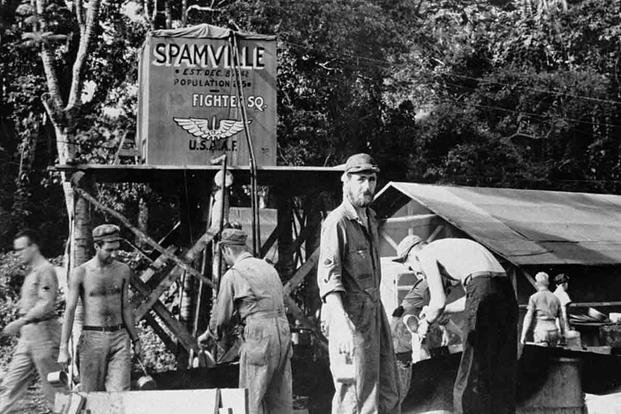
No matter what derisive nickname you or your grandad gave it, World War I veteran and Spam creator Jay Hormel didn’t give damn. He kept a file of all the hate mail he received on Spam’s behalf (presumably as he laughed all the way to the bank). His reply? “It’s alright, dammit! We eat it in our own home!”
And you know what? Hormel was right. Spam is alright. It’s alright with eggs, over rice, on toast, in sandwiches, in a box, with a fox, etc. If America can spread freedom via one salty tinned meat product, let the world have Spam.
8. Sh*t on a Shingle
This dish is neither for the faint of heart nor the lactose intolerant. It’s a meal that has powered the United States military for generations, and (as far as we know) still does. It’s a simple dish of salty lunchmeat beef in a simple white sauce, poured over toasted bread. It offers everything a growing troop needs and comes in the form of a highly consumable package of carbs, fat, and salt. It actually dates back to 1910, but it didn’t become a genuine necessity until World War II, when rationing required more creativity from Army cooks.

While “creamed chipped beef on toast” is a much-maligned staple of chow halls the world over, the truth is that it just looks unappealing. There’s nothing wrong with how it tastes, and – to this day – no dish in the American cultural lexicon has more staunch defenders than Shit on a Shingle. Yeah, I said it.
Read: 5 meals that won wars (and how to make them)
7. Mock Apple Pie
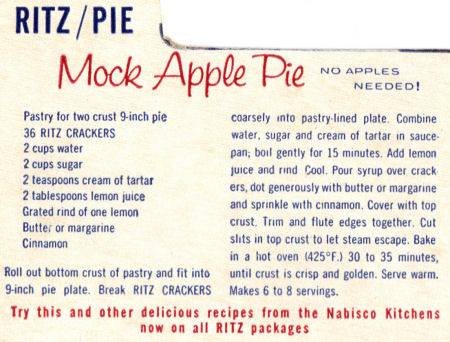
Long story short: there are no apples in Mock Apple Pie, hence the name “mock apple.” But it looks like a real apple pie, smells like a real apple pie, and – god save us – tastes like one too. But what’s posing as apples are actually crackers. And while technically, Mock Apple Pie dates back to the apple-starved Civil War South, it was a World War II-era recipe from Nabisco’s Ritz crackers that enshrined it as an American World War II food legend.
6. Depression Cakes
We’re not talking about eating a whole cake because you’re depressed (we’re also not against that practice). The “Depression” in Despression Cakes refers to the Great Depression. Also known as “Whacky Cakes” or “War Cakes,” the Depression Cakes were popularized during World War II but date back further, because there were a lot of places where milk, eggs, or butter were hard to come by in America. Today, it still has some pretty hardcore fans.
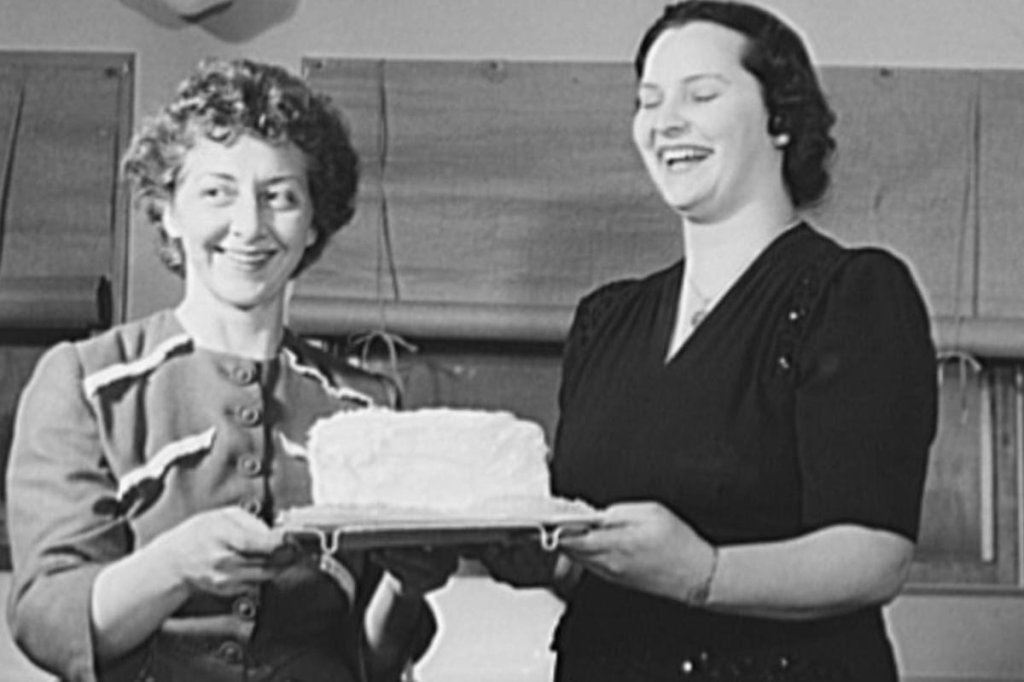
Feel free to look up one of the many recipes out there, but the gist is that you could use leftover fats (some recipes even include bacon fat, which is intriguing) and dried fruit together with the rest of the standard ingredients to make a passable cake. Modern recipes, however, include vegetable oil and sugar (which was rationed during World War II). Most importantly, you won’t even miss the butter, milk, or eggs. It’s the most fun a vegan can have.
5. Modern Margarine

Today’s margarine is just not the same as the margarine the Greatest Generation grew up eating. We’re not saying it hits different, the way a Coca-Cola from a McDonald’s fountain is different from drinking a can of Coke. Modern margarine is literally, chemically different.
In the days before World War II rationing, margarine was made using a combination of vegetable oils and animal fats. By the end of the war, the animal fats were on their way out, and by 1950, they were gone completely, replaced by hydrogenated vegetable oils.
4. Meatless Meatloaf
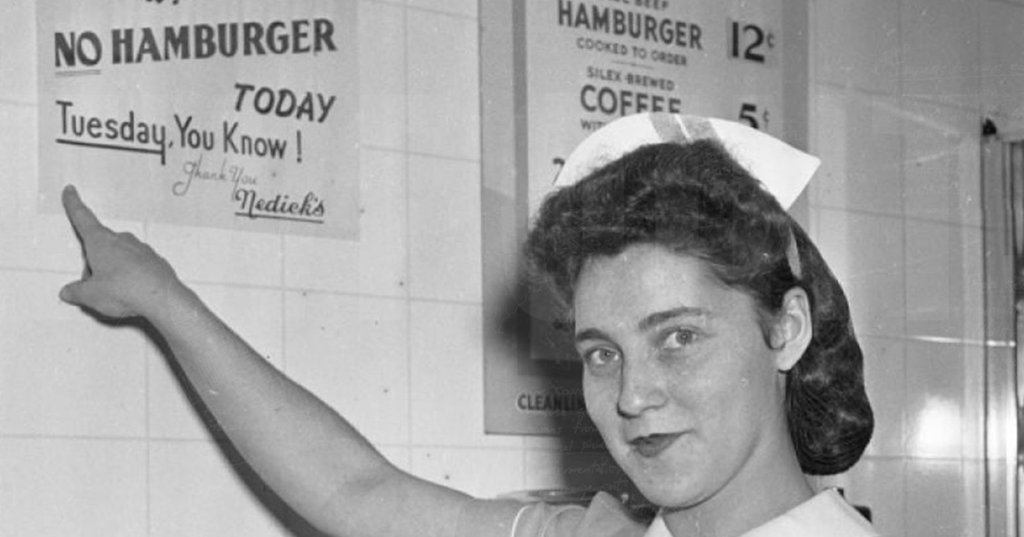
Today, we think of “Meatless Mondays” as a way to be a little bit healthier and help avoid cardiovascular issues. During World War II, the U.S. government began rationing meat, and reviving the World War I (and less alliterative) campaign of “Meatless Tuesdays.” The promise to curb meat consumption and demand meant that not only was more meat getting to the front lines, but there was also more room to ship other war materials.
In response, people began creating replacements for meat dishes, slapping the word “meatless” onto their regular names and disappointing everyone involved.

Perhaps the most absurd was “Meatless Meatloaf,” which takes everything you love about meatloaf out of the meatloaf. Instead, this recipe used beans. What kind of beans was apparently not important. The flavor we’re left with comes from celery, onion, salt and pepper, and *maybe* some herbs.
3. Organ Meats
Today, many Americans scoff at the idea of calf’s liver. Or chicken hearts. Or beef tongue. Or any one of the numerous ways human beings have created to make the most of the animals we kill for food every day. Meanwhile, other countries and cultures have been making delicacies of organ meats (also known as “offal”) for centuries.
Foie Gras, Haggis, Menudo, and the world-famous Anticuchos transcend national boundaries and menus, but good luck getting your American cousin to chow down.
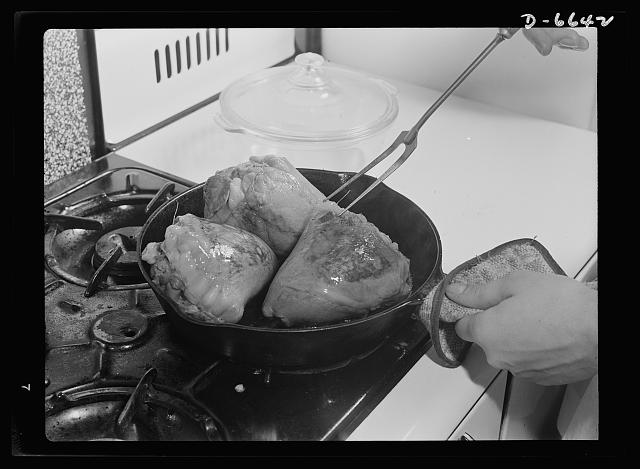
Meat joined the ration lists in March 1943, but people back home still needed a reliable source of protein. So the U.S. government (led by former President Herbert Hoover) hired famous anthropologist Margaret Mead and renowned psychologist Kurt Lewin to win American hearts and minds towards eating animal hearts and minds.
Offal was rebranded “variety meat,” and since V-meats weren’t used by the military (because U.S. troops wouldn’t eat them), the ration points needed to buy them were much lower. The problem was that Americans didn’t care for things like “heart loaf.”
2. Walnut Cheese Patties
Nuts were an important source of protein for Americans during World War II, because (like beans) they weren’t rationed. Cheese, however, would be rationed in March of 1943, but something tasty was needed to bring together this bland blend of chopped walnuts, breadcrumbs, onions, and eggs and make it palatable. The idea was that this mixture would be turned into patties, fried, and served like a hamburger, but it’s hard to imagine enjoying this chunky garbage heap.
1. “Roosevelt”-Style Coffee
Roosevelt Coffee is simply coffee brewed from grounds that have already been used. Coffee was among the first household staples to be rationed, as early as November 1942. While this sounds like a dig against then-President Franklin D. Roosevelt, it’s just a sign of the times. Roosevelt was a multi-millionaire from a wealthy, renowned family, but even he stopped drinking coffee when rationing began. Since the ration was one pound of coffee per family for six weeks (less than one cup per day), coffee lovers needed to make it last.