

For most people, Easter is a day of worship, celebration, chocolate eggs, and maybe a ham. For John Ripley, it included the memory of another miracle: that day in 1972 when he dangled from the Dong Ha Bridge for three hours as North Vietnamese soldiers took potshots at him. He was too busy attaching 500 pounds of explosives to the bridge while single-handedly halting an advance of 20,000 North Vietnamese to shoot back.
Also Read: 8 of the most terrifying Vietnam War booby traps
It’s almost impossible to describe John Ripley’s incredible feat in a single headline. He wasn’t just proof that the Marine Corps is right to include pull-ups in its fitness tests. He was constantly exposed to enemy fire as he made his way around the one bridge that could not be allowed to fall to the communists. Hauling the explosives by hand, he knew that he was the only thing standing in the way of 200 tanks and the unprepared South Vietnamese waiting on the other side of the Cua Viet River.
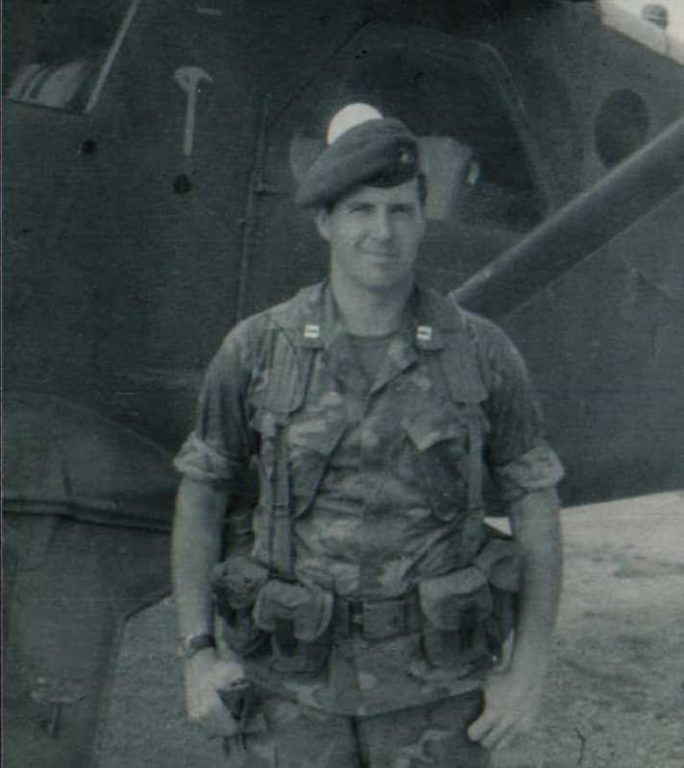
Then-Capt. John Ripley was an American advisor in the northern regions of South Vietnam in 1972. He’d spent years becoming the sort of Marine who could function when everything around him was collapsing. He first enlisted in 1957, earned an appointment to the U.S. Naval Academy, graduated with a degree in electrical engineering in 1962, and went on to compile one of the most impressive training résumés of the era.
He served with Force Recon, completed Army Airborne and Ranger training, and finished the Royal Marines Commando course. In other words, if the job involved pain, cold, heights, heavy loads, sleep deprivation, or the danger of dying somewhere far from home, Ripley was prepared for it.
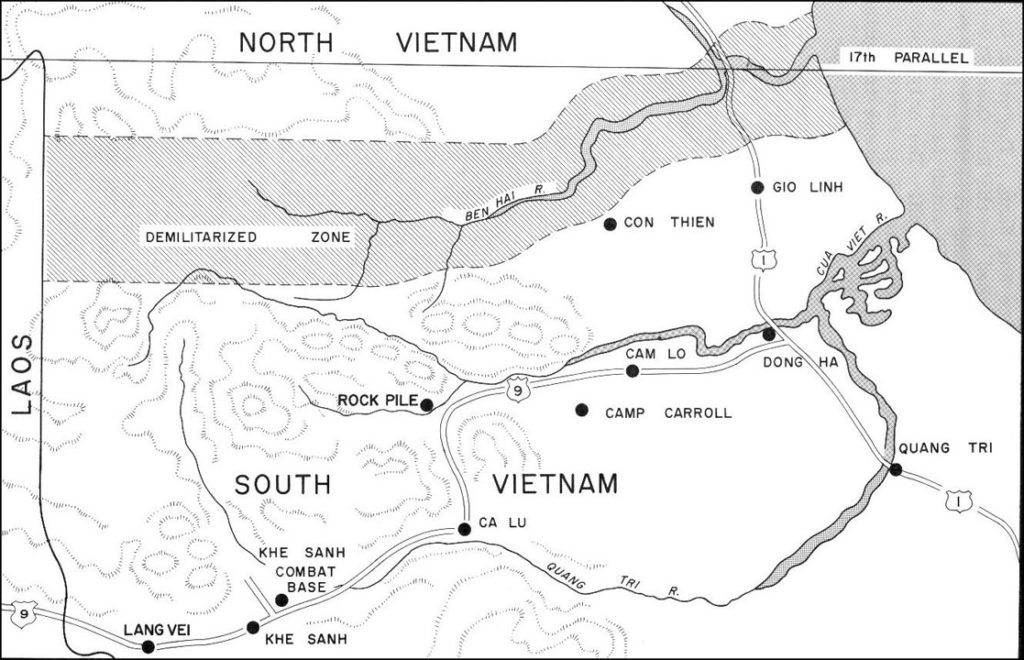
It was his second tour in Vietnam, and this time he was stationed at Camp Carroll, a firebase between Khe Sanh and Dong Ha, working with South Vietnamese troops. Things were mostly quiet for a time. Then, on March 30, 1972, North Vietnam launched its largest, most ambitious attack since the 1968 Tet Offensive.
It was a massive, three-pronged invasion of South Vietnam that began with over 120,000 North Vietnamese troops and 600 heavy tanks attacking across the Demilitarized Zone (DMZ), into the Central Highlands.
The prong Ripley was facing was 20,000-strong, supported by 200 tanks. Its goal was to drive down Vietnam’s Highway 1 and capture Quang Tri. Before it could do that, it had to cross the bridge at Dong Ha. And that’s where the Easter Offensive met Capt. John Ripley.
The NVA had long been testing the defenses at American and South Vietnamese firebases in his area of responsibility, but they would test the perimeters and quickly disengage. This time, they didn’t stop. Enemy artillery started raining shells on all the firebases in the area. The NVA was throwing everything they had at South Vietnam: 14 divisions and 26 independent regiments.
As Camp Carroll was overrun and its South Vietnamese garrison surrendered, Ripley and another American escaped aboard a CH-47 Chinook. The helicopter took on too many fleeing South Vietnamese troops and was forced to crash land on Highway 1, near Dong Ha.
This was bad news for everyone involved. It was bad for the people aboard the Chinook because no one likes to crash. It was bad for the communists because now John Ripley was on the scene.
At Dong Ha, a town close to the DMZ that separated North from South, he found a number of South Vietnamese Marines who had no intention of surrendering. He also found the North Vietnamese tanks and self-propelled artillery, which were backed up for six miles, and all waiting to cross the Cua Viet River.
“We didn’t have the wherewithal to stop that many tanks. We had little hand-held weapons. And we certainly didn’t have anything on the scale that was needed to deal with the threat, Ripley later told Leatherneck Magazine. “Originally, 20 tanks had been reported.”
With the monsoon season limiting American air support and the North Vietnamese already in control of one half of the bridge, Ripley decided he had to blow up the bridge. By himself, if necessary.
Another American, Maj. James Smock, drove him to the bridge in a tank, and Ripley headed below, where he found five South Vietnamese engineers trying to rig the bridge to blow. They had 500 pounds of TNT. The problem was the way the explosives were laid out; the bridge wouldn’t be completely destroyed, and the NVA would still be able to cross. They’d have to be rearranged.
By hand.
With tanks and guns shooting at those hands.
Meanwhile, 90-pound South Vietnamese Marine Sgt. Huynh Van Luom dashed onto the bridge in what Ripley called “the bravest single act of heroism I’ve ever heard of, witnessed or experienced.”
Huynh fired two M72 light antitank assault weapon rounds at the lead NVA tank. The first shot missed, but the second hit the tank turret, stopping it cold. The entire column was stopped. It couldn’t move and couldn’t turn around.
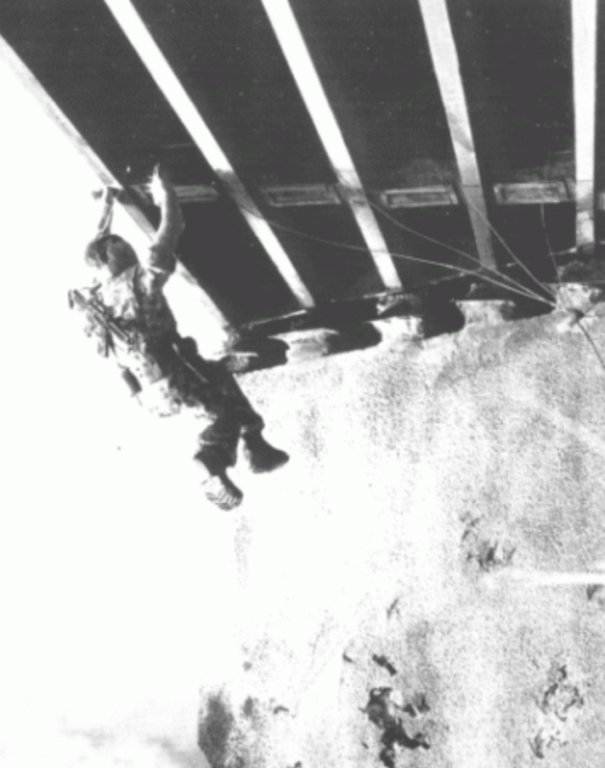
The South Vietnamese engineers below the bridge took off as Ripley climbed over the razor wire barrier designed to keep people from doing what he was about to do. He climbed hand over hand as Smock pushed the explosives out to him. Ripley grabbed the box and moved it to a better location.
“I would hand-walk out, then swing up to get my heels into the I-beam,” Ripley said, recalling that he was still wearing all his web gear and slung rifle. “Then I’d swing down on one T-beam and then leap over and grab another T-beam.”
As the pair worked, they could see the enemy sitting at the other end of the bridge.
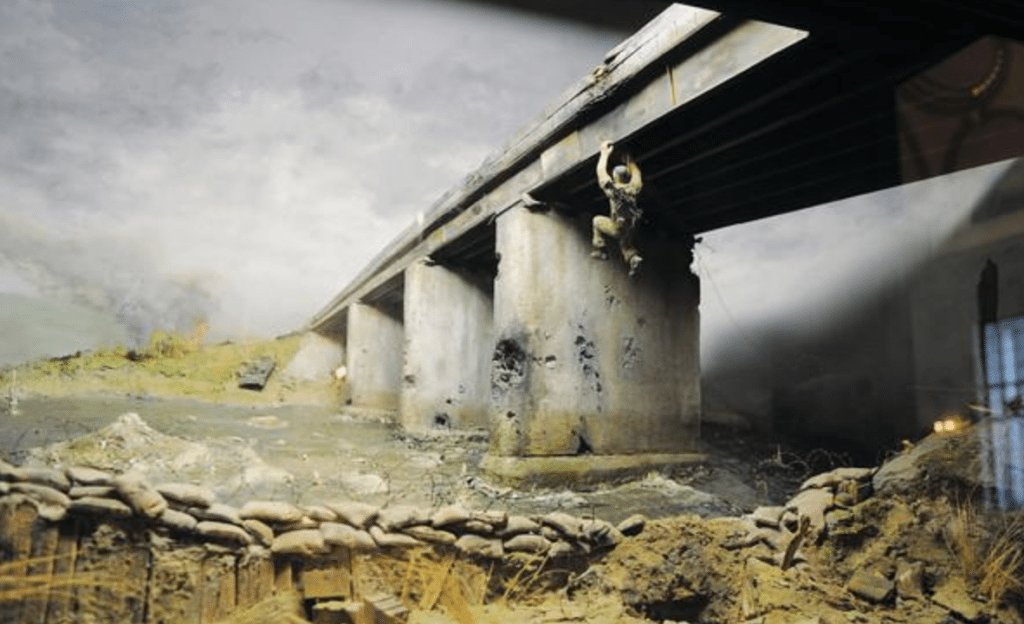
For nearly three hours, Ripley dangled under the Dong Ha Bridge, rigging it to blow, and frustrating the enemy trying to kill him. To make matters worse, Ripley couldn’t find the electric blasting caps, so he had to use timed fuses—fuses with an unknown time, set with his mouth.
As he lay there gagging on the time fuses, he noticed the “doggone” set of electric blasting caps. So he climbed over the barbed wire, rigged the explosives with caps, and did the same to blow up the railway bridge at the same time. He then ran wires from the caps, as he pulled back to friendly lines. He rigged the wires to detonate using a Jeep battery.
“I scraped the terminals, touched the wire to it, and… nothing,” he recalled. “Scraped it again, still nothing. Just as I was standing there thinking, ‘What am I going to do now?’ I was thrown to the ground. The time fuses had worked! ” Ripley still sounds surprised. “I guess that’s why they always say to double prime! ”
His effort on the bridge that day may have been the decisive factor that kept the North from taking Saigon during the Easter Offensive. South Vietnam’s capital would fall in 1975, long after the United States left South Vietnam. But it didn’t happen while Ripley was there. He received the Navy Cross for his actions at Dong Ha, stayed in the Marine Corps, and later taught at the Naval Academy. He eventually retired as a colonel in 1992.
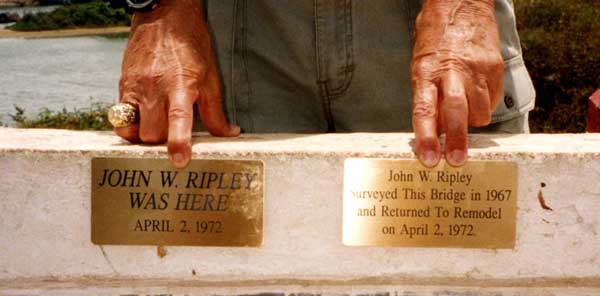
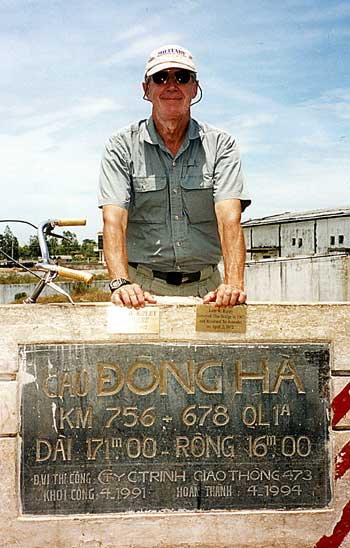
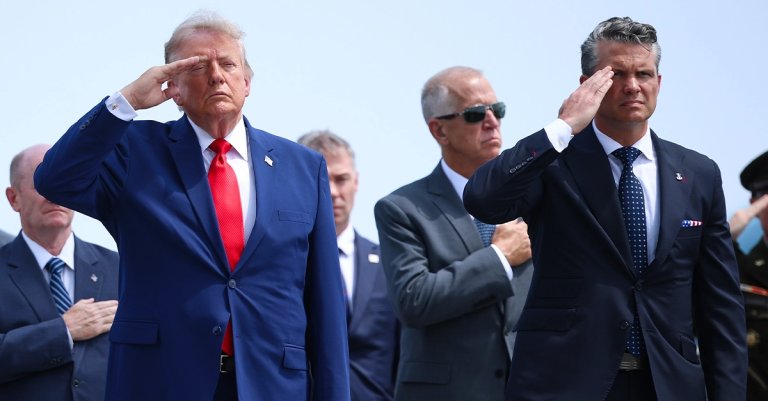
John Ripley died in 2008 at the age of 69, but not before making a trip back to Dong Ha with some of his buddies from L/3/3 Marines in 1997. On Mar. 3, 2026, the U.S. Senate passed the authorization to finally upgrade John Ripley’s Navy Cross to the Medal of Honor. The bill will head to the White House for President Donald Trump’s signature.
Don’t Miss the Best of We Are The Mighty
• ‘The Iron Major:’ James Capers Jr.’s long road to the Medal of Honor
• A World War II POW will receive the Medal of Honor
• He fought seven MiGs 70 years ago—he’s getting the Medal of Honor
Loading comments…
Comments couldn’t be loaded. Please refresh the page.