
In January 1991, a British Special Air Service (SAS) team flew into Iraq on a Chinook helicopter. Just a few days later, U.S. and coalition forces launched Operation Desert Storm’s air war to devastate Saddam Hussein’s army as it occupied Kuwait.
Eight men from the SAS detachment, codenamed Bravo Two Zero, planned to insert into Iraq and set up an observation post to monitor Iraq’s main supply route into Kuwait. The men of Bravo Two Zero proceeded on foot 1.2 miles from their landing zone.
Also Read: What the Soviet Union thought as it watched Operation Desert Storm
Right away, things began to go wrong. To escape capture, torture, and an uncertain fate, one of the British special operators had to walk out of there toward Syria—190 miles away.
Poor Communications

Bravo Two Zero: SAS Veteran On Being Part Of The Failed Gulf War Mission
The first thing that went wrong for the SAS was its communications. While its home base was receiving its transmissions, nothing came back from the British headquarters. The men pressed on.
But they never made it to the would-be observation post. On the way, a shepherd discovered the team, and the special operators ditched much of their gear and hightailed it out of the area.
As they moved, they began to hear the telltale rumble of treads on the ground. Believing they were about to encounter an Iraqi tank, the SAS prepared for an ambush. Only it wasn’t a tank. It was an Iraqi construction bulldozer, and the driver was as shocked as the SAS was.
When the driver left, the British knew the jig was up, but the next time they encountered heavy vehicles, it was not a construction crew. Iraqi armored vehicles caught up to them and were in such close proximity that the British soldiers fired at their pursuers to slow them down.
Iraq troops soon joined the APCs in their pursuit of the British as they humped it back to their original entry point, hoping a helicopter would soon find them. But the helicopter never came. By January 24, 1991, the group was on its way to the emergency exfiltration route… north to Syria.
Since the British were looking for the soldiers to be headed south toward Saudi Arabia, the SAS were never going to be seen by coalition aircraft unless it was by accident. Even after the group got split up during a dark night, they pressed onward and northward.
A Horrific Ordeal
Along the way, the men tried to hijack a vehicle, but Iraqi army checkpoints hampered their progress and the walk continued. Eventually, two men died of exposure in the Iraqi desert. Iraqi civilians shot and killed another special operator. Five were captured, interrogated and tortured before they were released to the International Red Cross.
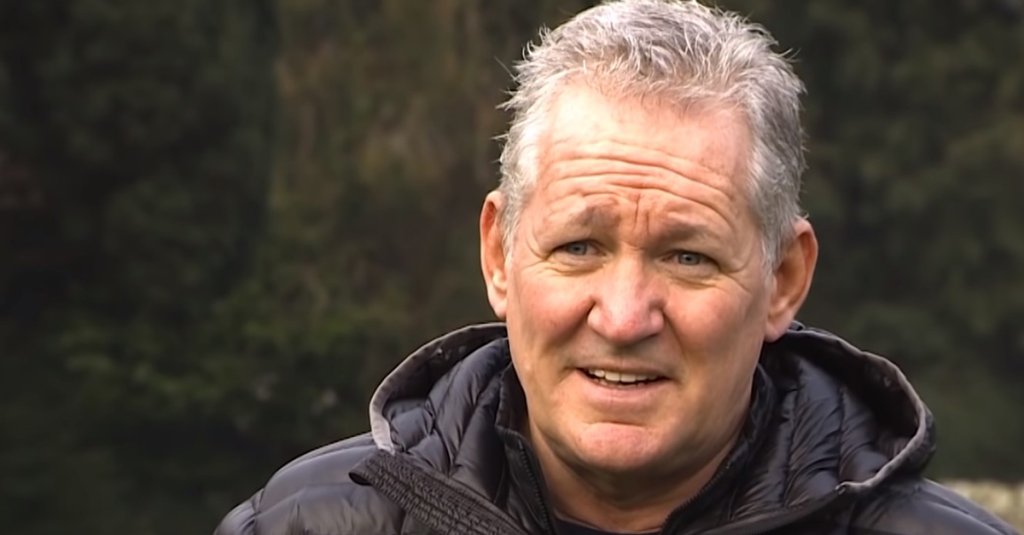
One of the men, Colin Armstrong, kept walking for nearly 190 miles in bitterly cold conditions for seven days and eight nights.
In an interview with BFBS Forces News, which covers the British military, Armstrong said he didn’t have any food with him and didn’t drink any water for basically the last three days of his journey.
“I started hallucinating and seeing visions of my daughter,” Armstrong said in the interview. “It was that vivid. I was putting my hand out to get a hold of her, and she was talking to me.
“I eventually crossed the border, but I wasn’t 100% sure it was the real border. I carried on walking and collapsed against a wall. I’d broken my nose. When I came to, in the distance, I could see a small house with smoke coming out. I thought, ‘I’ve got to get water because I’m going to die today if I don’t.’”
At that point, Armstrong reached Abu Kamal, Syria, and the Syrians eventually handed him over to the United Kingdom. He lost 38 pounds during his incredible trek and sustained radiation poisoning after drinking contaminated water. Armstrong said he also sustained injuries from the cold, blistered feet, bed sores, and a damaged liver.
He received the Military Medal for his escape.
Armstrong later chronicled his desert journey under the pen name Chris Ryan, along with a number of other books.
Don’t Miss the Best of We Are The Mighty
• Veterans suffering from Gulf War Illness won a 30-year war for recognition
• This dominating F-16 pilot ruled the skies over Desert Storm
• 21 facts about the First Gulf War
Featured
Loading comments…
Comments couldn’t be loaded. Please refresh the page.