The traditional role of an Indigenous “warrior” involved more than just fighting enemies. Warriors were men in communities who cared for people, helped during times of difficulties, and were committed to ensuring their tribes survived. Because warriors were so highly regarded, boys were trained from an early age to develop the mental, emotional, and physical strength required of them.
Many tribes had several specific warrior subgroups within their communities, each with its own ceremonies and ways of life. The warrior tradition was integral to Indigenous life, and this call encouraged many Indigenous people to serve in the military. In addition to wanting to defend the United States, the military offered economic security and a way off the reservation, an opportunity for education, training, and travel.
More than 12,000 Indigenous American Indians served in World War I, about 25% of the male population at the time. During World War II, an estimated 44,000 men and women served.

World War I Training and Recruitment
Navajo Code is thought to have been established from the many conflicts experienced by Indigenous people. The earliest reports of the relationship between Code Talkers and the military date back to World War I, when the Choctaw language was used to relay messages about surprise attacks on German forces.
World War I veteran Philip Johnston suggested that the Marine Corps adopt a similar communication strategy for World War II. Though he was not Indigenous, Johnston had grown up on a Navajo reservation and knew about the successful use of Native languages like Choctaw as codes during World War I.
During the war, more than 400 Navajos were recruited as Code Talkers, and their training was intense. Some Code Talkers enlisted while others were drafted. At the height of the Code Talker involvement in World War II, there were service personnel from more than 16 tribes. But the Navajo code itself was a deliberate U.S. Marine Corps project in 1942, built by the original group of 29 Navajo Marines.
Constructing the Code
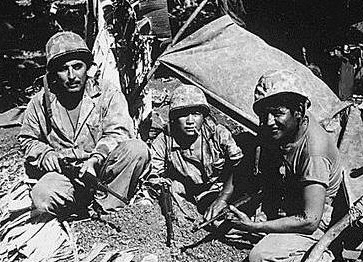
Many American Indian Code Talkers simply used their everyday tribal languages to convey messages; these straightforward translations became known as Type Two codes. In 1942, the Marine Corps recruited 29 Navajo men for a special assignment. Organized as Platoon 382, they developed, memorized, and implemented a new Navajo-based code.
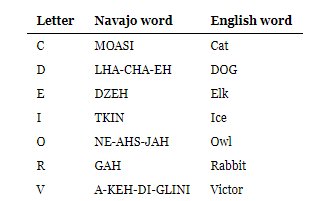
This Navajo system was one of several Type One codes, formally developed codes based on Native languages such as Navajo, Hopi, Comanche, and Meskwaki, that translated English into a structured, coded message. To create their Type One code, the original 29 Navajo Code Talkers selected a Navajo word for each letter of the English alphabet, often choosing familiar animals to make the code easier to remember.
Here’s an example of the words they used:
Code Talkers were also required to develop specialized military terms for planes, ships, and weapons. After reviewing the images of these items, the Code Talker squad came up with words that seemed to fit the pictures.
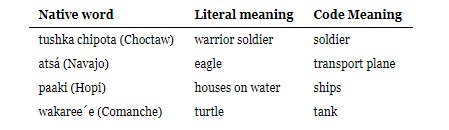
To transmit code, a Code Talker was given a message in English, which was then translated and sent to another Code Talker. To avoid detection, none of these messages was written down until they were received.
Code Talkers needed to be intelligent and brave to ensure they survived some of the most dangerous battles and remained calm under fire. They served proudly and with honor and distinction, and their actions provided critical support in several campaigns in the Pacific and are credited with saving thousands of fellow Americans’ lives. The Navajo and Hopi served in the Pacific in the war against Japan, while the Comanches fought the Germans in Europe, and the Meskwakis fought the Germans in North Africa. Code Talkers from other tribes served in various locations throughout the European and Pacific theaters.
There are very few Code Talkers left alive today, but it’s clear that the outcome of World War II would have been much different without their efforts.