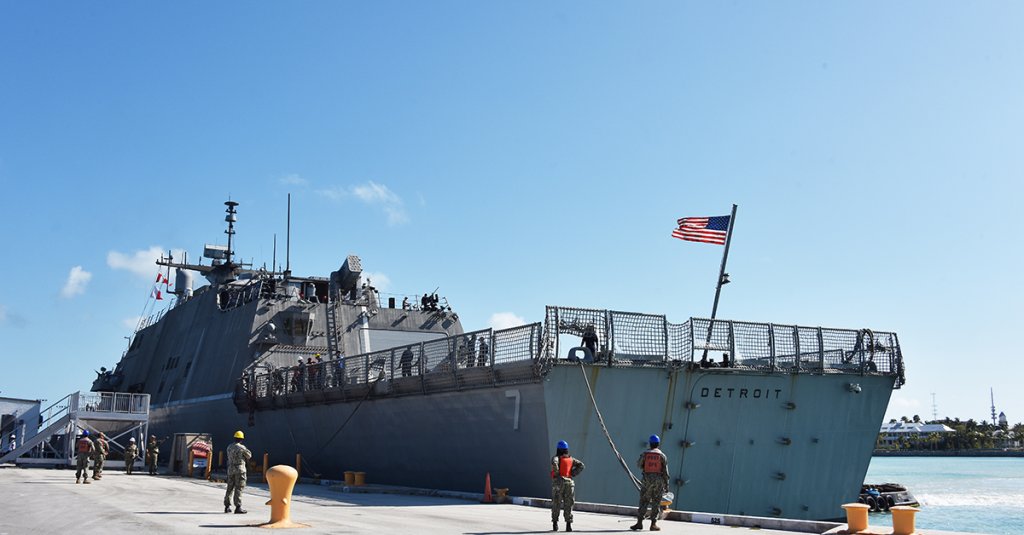
There was a time not too long ago when the U.S. Navy looked toward the Littoral Combat Ship with so much hope.
Take on enemies at sea? These fast, light warships could do that. Hunt mines? Yep, the LCS was down with that, too. Sink submarines? No problem.
Related: Did Russia actually get its LCS right?
But that’s the thing about hope: It can come crashing down when it runs head-on into reality. When it came to Littoral Combat Ships, we can charitably say that they weren’t billed as advertised.
Since the first LCS, the USS Freedom, was commissioned in 2008, the ships have encountered one problem after another. Cracks in the hull. Breakdowns at sea. Weapons system failures. Transmission issues. We could go on, but that would just be piling on. You get the idea.
The LCS Known as ‘Dry Dock One’
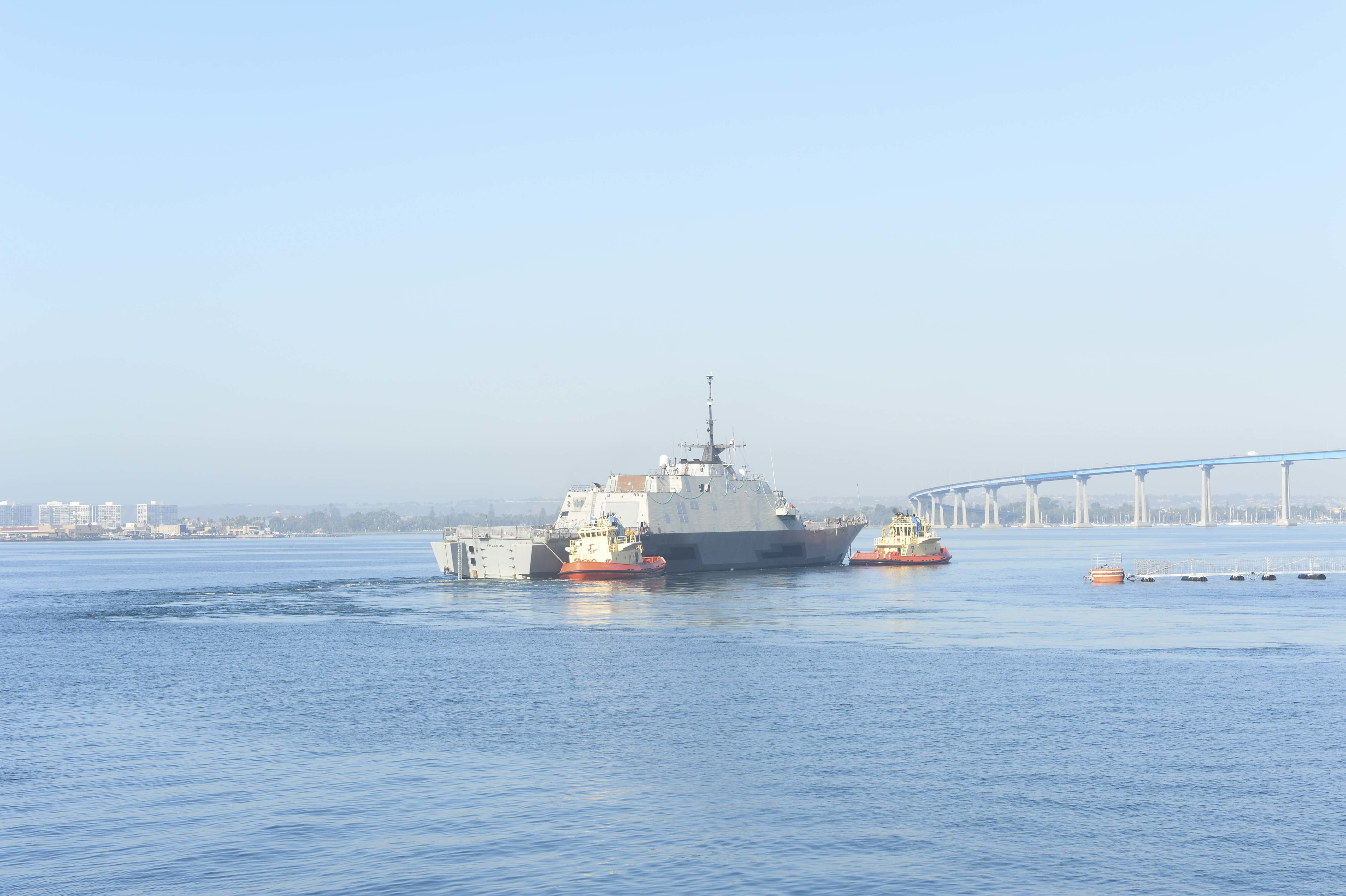
In some respects, the USS Freedom, commissioned in 2008, became the poster child for the failure of Littoral Combat Ships. While it achieved some successes, the Freedom required so many repairs that it was mockingly called “Dry Dock One,” because it spent so much time in port, according to a Pro Publica investigation of how Littoral Combat Ships went wrong.
That investigation revealed that the Navy and lawmakers, unable or unwilling to admit their mistakes, pushed to build more LCS even as issues with existing ones persisted and piled up like overdue credit-card bills. The rush to produce more inevitably emphasized quantity over quality, with the price tag running into the hundreds of billions.
With a tab like that, it can be easy for those whose wallets are benefiting not to want to discontinue on the LCS program. The pressure to forge ahead, literally at any cost, was immense. Still, that didn’t make it the right thing to do.
“Each ship ultimately cost more than twice the original estimate,” Pro Publica reported. “Worse, they were hobbled by an array of mechanical failures and were never able to carry out the missions envisaged by their champions.”
Those champions wouldn’t include many sailors and officers, whose jobs it were to fix the ships. They spent so much time doing that (instead of actually, let’s say, taking them out to sea) that many experienced mental-health issues, Pro Publica reported.
Problems with the LCS cropped up as if they were part of a running joke that no one (especially the crew members) saw funny. During a 10-month span that began in late 2015, five LCS broke down. The string of breakdowns began with the USS Milwaukee, which actually conked out on its way to its homeport. Then there were failures involving the USS Fort Worth, the USS Freedom (that poor ship), USS Coronado, and finally the USS Montgomery.
“It did not seem, from what we were looking at, that it was a systemic problem,” former Navy Secretary Ray Mabus said.
Downsizing the Number of Littoral Combat Ships
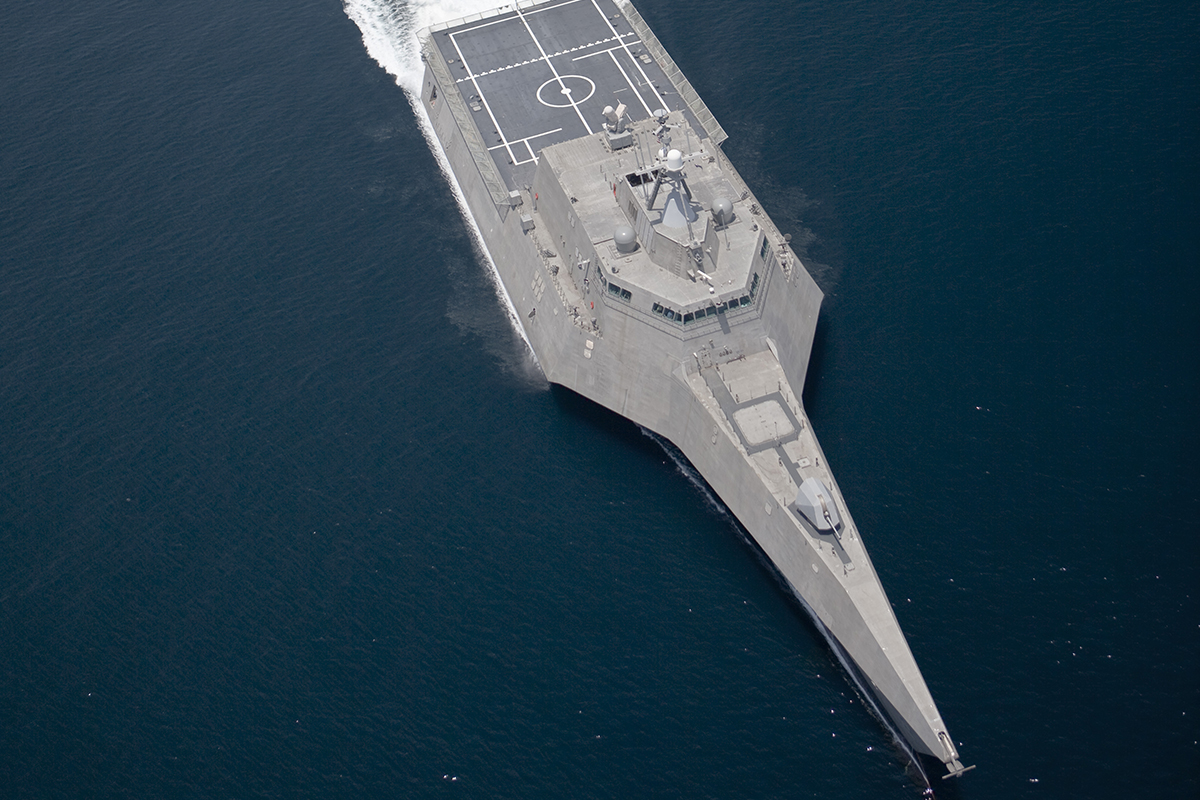
Back in the beginning, no one could have conceived how the LCS program could be plagued with so many errors. In the 2000s, the original plan was for the Navy to develop a group of 52 LCS. The Navy ultimately ordered 35, and seven of those have been decommissioned as of early 2025, according to Stephen Wills, a navalist with the Center for Maritime Strategy.
While the LCS has been a headache for so many, Wills wrote that they could still prove useful.
“LCS has not turned out as planned in many ways and has ended up costing much more than any of the original estimates for the two variants,” Wills said. “That said, in the event of war with China, every ship will be needed, and it would be foolish to scrap any LCS, even those currently decommissioned in the reserve fleet.”
The Freedom, who went out of active service in 2021, is one of those decommissioned LCS. The final LCS to be commissioned was the USS Pierre in November 2025 in Panama City, Florida.
What’s Next?
Why America’s Littoral Combat Ship is NOT in combat
While some LCS are still in commission, the Navy is forging ahead.
It had plans to build Constellation-class guided-missile frigates until that program was cut short. Instead, the Navy is forging ahead with the FF(X) ship design, which taps into “a growing willingness to trade near-term combat ambition for speed, cost control, and industrial-base stability.”
That all sounds promising, but then again, so did Littoral Combat Ships at one point. Here’s hoping the Navy’s latest iteration of small-surface combatant has a better future than LCS.