As Andrew Nydegger’s symptoms progressed, his doctor tried to figure out what was wrong.
The doctor sought an answer but couldn’t find one before going on leave for a couple of weeks. A nurse practitioner took over Nydegger’s case. Nydegger, a Korean translator in the United States Air Force at the time, found the switch unsettling.
“I kind of felt that he was a major, she was a captain, and he was a doctor. She was a nurse practitioner,” Nydegger told We Are The Mighty. “I felt like I was getting downgraded in care.”
Also Read: 10 reasons to become a military nurse
Nydegger needn’t have worried. Like doctors, nurse practitioners are trained to diagnose conditions and prescribe treatments. In Nydegger’s instance, his nurse practitioner aggressively pursued trying to determine what caused his symptoms, which he politely declined to reveal.
She was unrelenting, working after hours and researching possible causes. All Nydegger wanted was an answer, and roughly six months after his health began to decline, she gave him one.
He had an adrenal tumor.
A Different Career Path
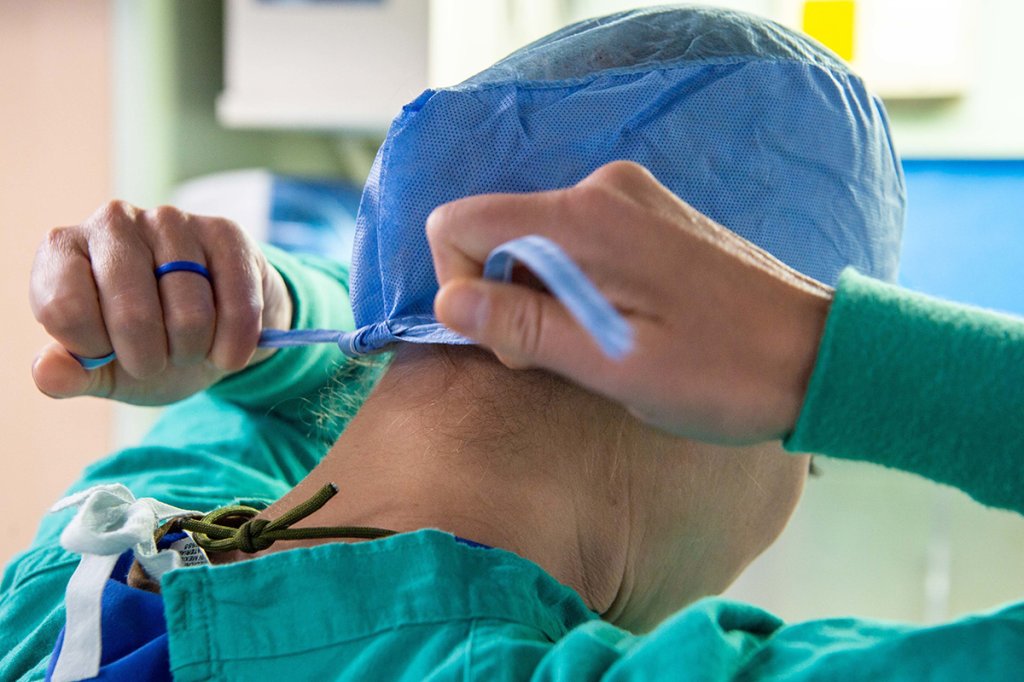
Nydegger, who is fine now, never forgot that nurse practitioner and the other nurses who cared for him during a difficult time. He worked an entry-level banking job before enlisting in the military and then planned to pursue a law career after getting out.
That all changed after he received a medical discharge after nearly two years in the Air Force.
The nurses who handled Nydegger’s care with professionalism and compassion thoroughly impressed him. He decided that was the path for him. Nydegger earned a bachelor’s degree from the University of Utah. He then followed with a master’s degree from Western Governors University and a doctorate from Samford University in Alabama.
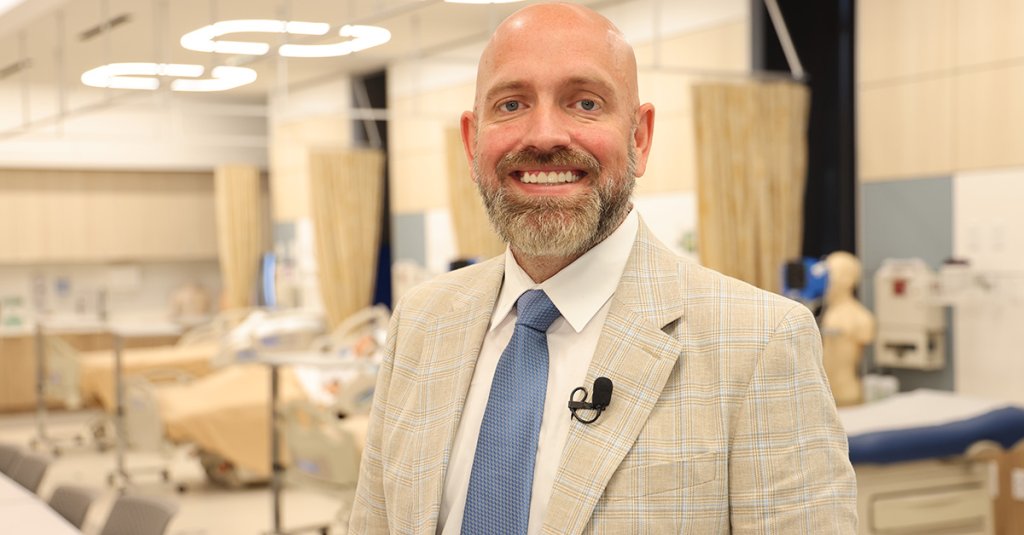
Since 2010, Nydegger has been a nurse. Westcliff University, a private, for-profit school in California, appointed Nydegger in May as the dean of its College of Nursing.
“One of the great pieces of being in the service is that you can hold your head high at the end of the day, knowing you’re doing good work and very meaningful work,” he said. “You are living with integrity. I had a very young family, and I wanted something that I could… show my young kids and wife that what I was doing was meaningful and impactful.
“Nursing gave that to me.”
How the Military and Nursing Are Alike
Nydegger comes from a military family. His father was in the Army Reserve during the Vietnam War, and both of his grandfathers served during World War II.
Although his medical condition cut short his time in the military, Nydegger learned plenty while in uniform.
He told WATM that so many skills he learned in the military are applicable to what he does now. They include—but are not limited to—learning how to lead, delegate, and develop critical thinking skills. Making decisions under pressure also is crucial in both the military and in nursing. Then there’s being a good communicator and advocate.
Just like when Nydegger served his country, he finds nursing equally stimulating, both physically and mentally.
“It goes way beyond just the walls of a hospital,” Nydegger said.
Challenging Time for Nursing
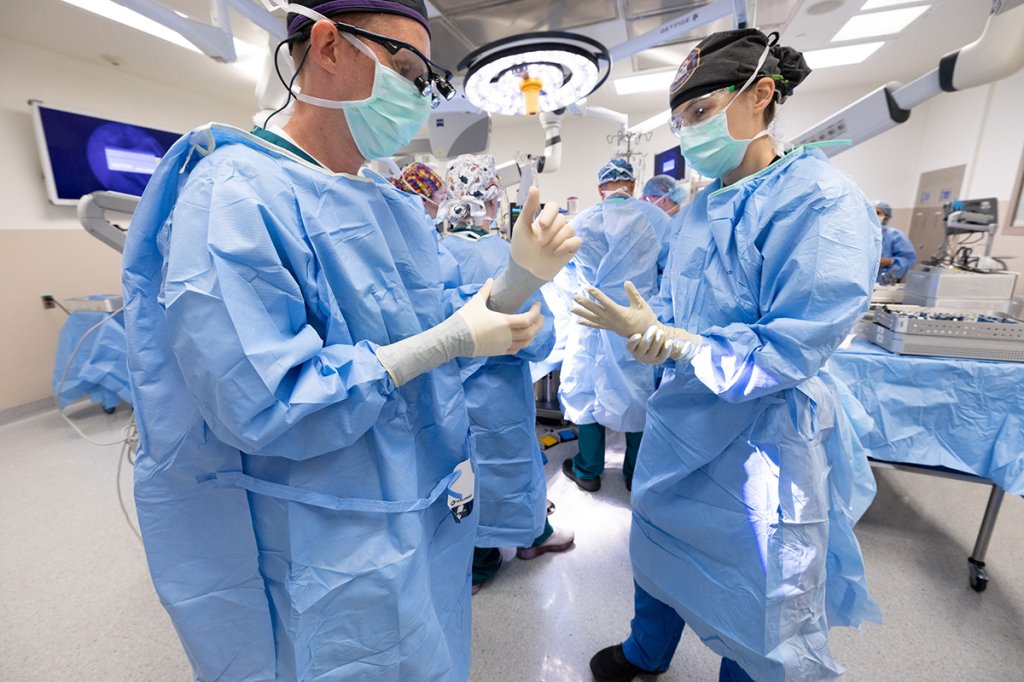
Nydegger assumes his position as dean at Westcliff as America confronts a nursing shortage. The U.S. will face a deficit of at least 78,000 registered nurses by 2035, according to the university.
Health care consistently ranks as one of the country’s fastest-growing professions. That is unlikely to change. The Bureau of Labor Statistics estimates that the need for nurse practitioners specifically should grow by 40% through 2034.
At the same time, the profession faces attrition because of issues including burnout, older nurses retiring, and an ever-aging population. Factor in increased demand for nurses, and not enough supply currently is there to fill those gaps.
“Nursing is one of those recession-proof, AI-proof jobs,” Nydegger said. “It’s not going away anytime soon, as far as I can see. It’s very stable.”
Nydegger found nursing suitable for what he was looking for when he transitioned out of the military. He saw it as a way to pay it forward after a nurse practitioner—of whom he was initially skeptical—set him on a path to recovery.
In his WATM interview, Nydegger said he sometimes wonders whether he would have found nursing if he hadn’t gotten sick.
“I think about it pretty often,” he said. “I’m just glad that this is the path that the universe decided for me. We don’t always get to make our own decisions in life.”