
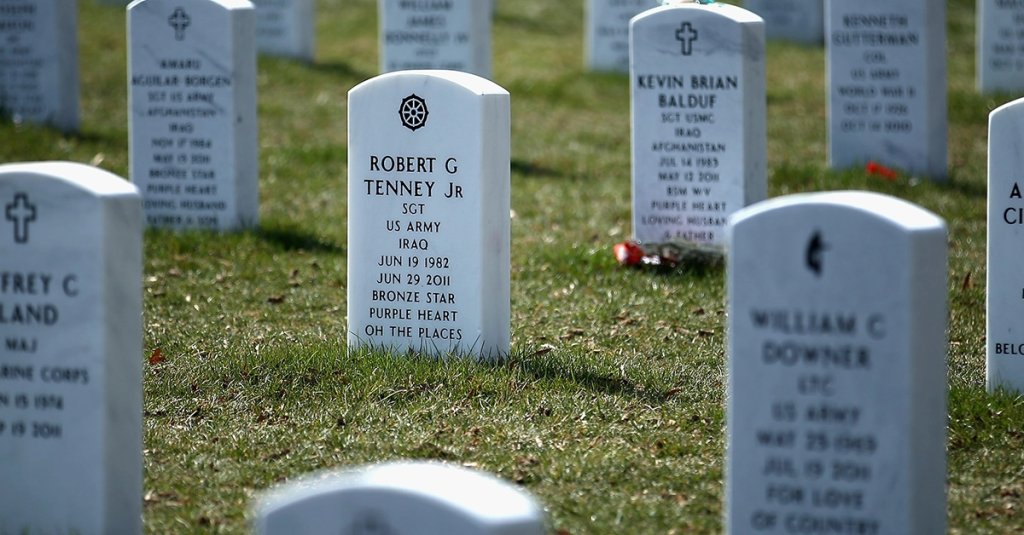
The Department of Defense policy that dropped 180 faiths from its list of recognized religions is bad news for Unitarians, Druids, and dozens of other belief systems. But when it comes to veterans facing the hereafter, the Department of Veterans Affairs still has you all covered.
Read Next: An Air Force vet created an app to geolocate gravesites and digitize cemetery records
One of the benefits of service is that the VA provides a free government headstone or marker for any eligible, honorably discharged veteran buried in any cemetery worldwide.
The families only have to pay for getting it into the cemetery. Chance are you’ve seen one of these before. Survivors choose what goes on the marker: the veteran’s branch of service, highest rank, awards, dates of life, and an official emblem of belief.
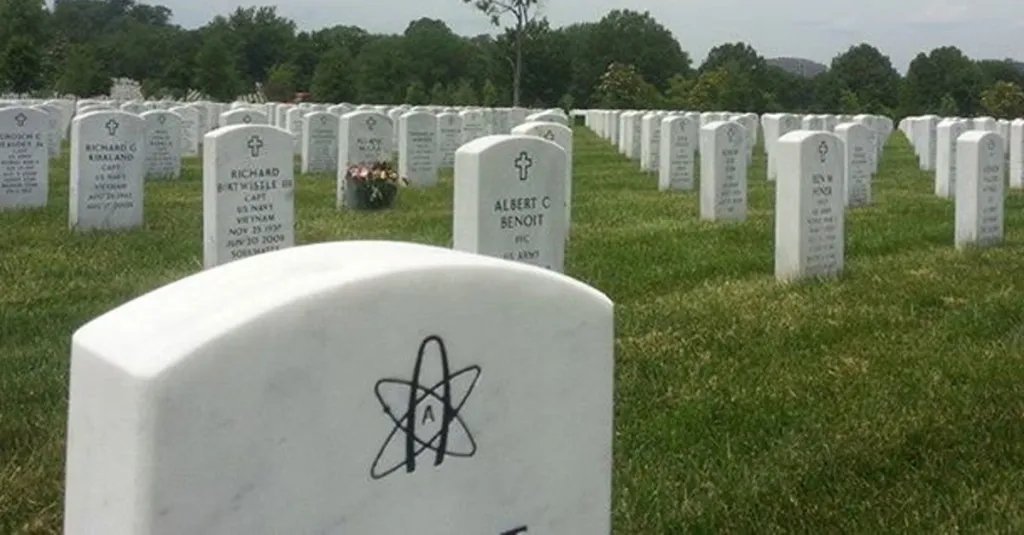
And here’s where the VA’s policy strays from the Defense Department.
In June 2026, Defense Secretary Pete Hegseth announced a dramatic streamlining of the U.S. military’s list of recognized religions, cutting the roster from more than 180 to 31. The stated goal was to make it easier for chaplains to more practically support the faithful serving in uniform.
Agnostics still receive recognition, as do Hindus, Muslims, and Skihs, along with 21 flavors of Christian. Buddhism, Baha’i, and Judaism also made the cut. Everyone else is lumped in to either No Religion or Other Religions. Critics argued that it served to marginalized minority faiths.
Veterans who practice Shinto, Zoroastrianism, Wicca, and others will have to deal with this for the rest of the lives. But not in their deaths, because the VA still recognizes so many more religions. A tombstone is, after all, the last support a veteran will need from the VA.
The National Cemetery Administration’s list of available emblems of belief currently contains 84 different symbols, covering a wide range of faiths, from the very specific Wisconsin Evangelical Lutheran Synod and the Ukrainian Tryzub Cross to the Charismatic Messianic Evangelistic. There’s even an Ankh for veteran Rastafarians and the Hammer of Thor for the Norse Pagans.
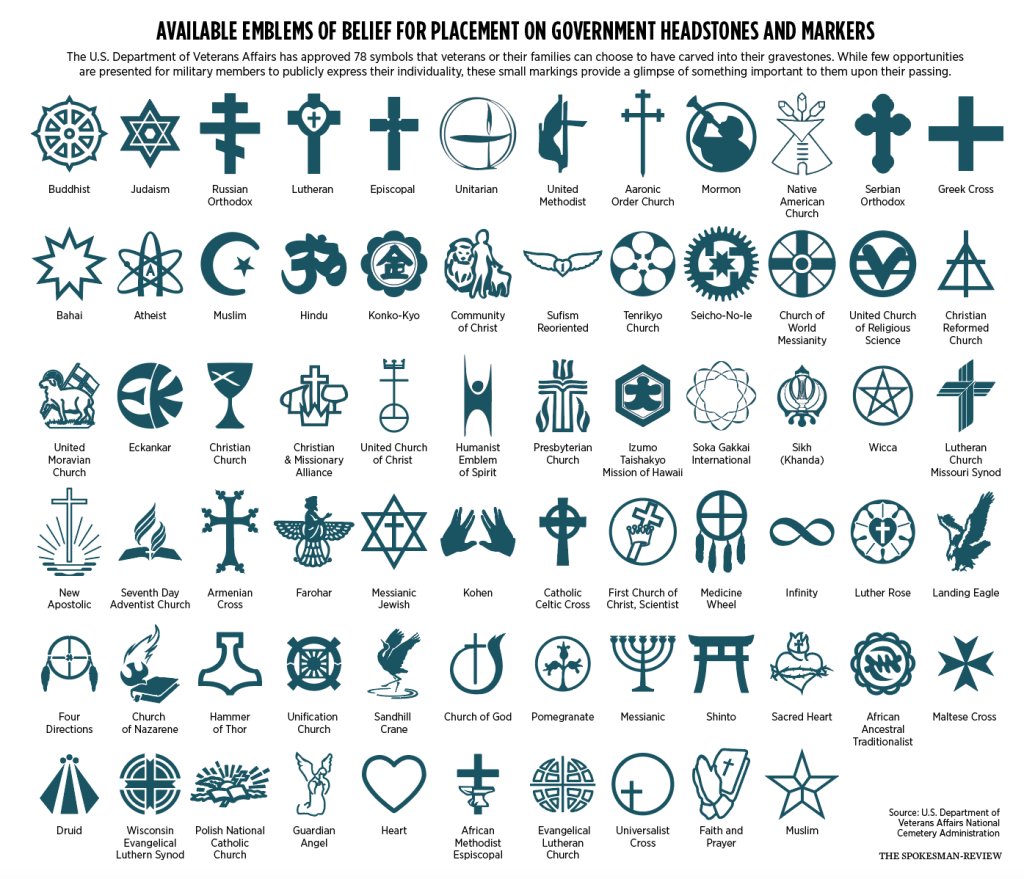
The NCA even recognizes that their list of 84 symbols, while extensive, is far from exhaustive. The deceased’s next-of-kin, a person authorized in writing by the next-of-kin, or a personal representative authorized in writing by the decedent can request to add an emblem to the already long list.
All they have to do is prove that there is a need for the icon to be added to the list, that the deceased “sincerely held the belief” associated with the symbol, and “submit a three-inch diameter, digitized, black and white representation of the requested emblem that is free of copyright or trademark” to the Evidence Intake Center, found here:
NCA FP Evidence Intake Center
P.O. Box 5237
Janesville, WI 53547
While the VA clearly has a much more open mind when it comes to service members’ personal beliefs, there are some things it won’t put on a gravestone. These include anything “that would have an adverse impact on the dignity and solemnity of cemeteries,” graphic depictions of “sexual organs or activities that are shocking, titillating, or pandering in nature,” or any course or abusive language or imagery—probably because the request for penis drawings would overwhelm the VA system.
Don’t Miss the Best of We Are The Mighty
• Congress considers legislation to vastly improve VA dental benefits
• ‘The Deadly Gap:’ Veterans wait to get benefits until it’s too late
• Find all your veterans benefits in one place with the HonorEarned tool
Loading comments…
Comments couldn’t be loaded. Please refresh the page.