The country known as Georgia derives its name from the Persian word “Gurgan,” meaning the land of the wolves. To the Persians, it refers to the “frightening and heroic people of that territory.” That’s one helluva lineage.
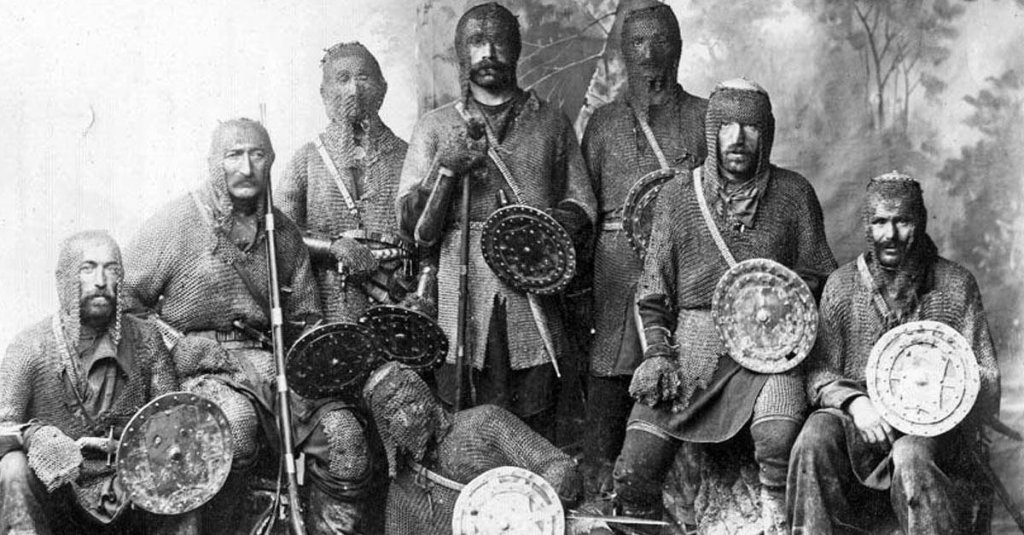
Heroic doesn’t even begin to fully describe the Georgians. At no time was this fact more evident than at the outset of World War I, when a troop of crusader knights in full Medieval armor marched right up to the governor’s house in the Georgian capital of modern-day Tbilisi (then called Tiflis).
Related: After more than 100 years, World War I battlefields are uninhabitable
“Where’s the war?” They asked. “We hear there’s a war.”
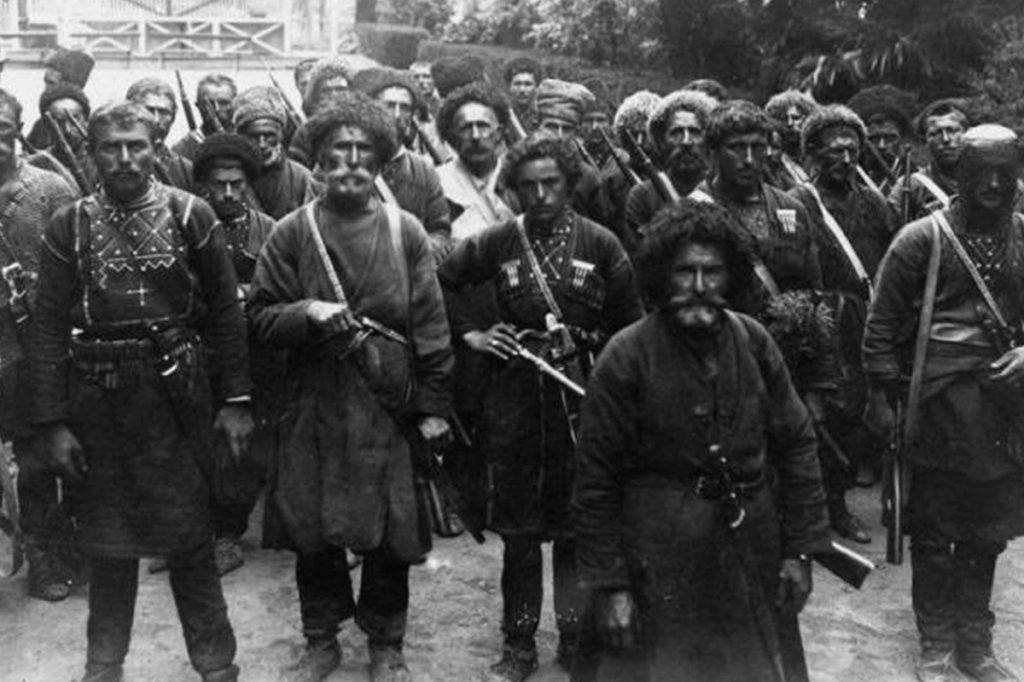
In 1914, the Russian Empire declared war on the Ottoman Empire (Turkey) as part of its alliance with the Triple Entente in Western Europe. At the time, Russia was much bigger than the post-Soviet country we know today. After the fall of the USSR, many countries (including Georgia) declared themselves independent states.
At the onset of World War I, the territory was loyal to the Russian Czar, and the Russian population was predominantly serf-like. So naturally, they would be called upon to contribute troops to a war effort. That wasn’t the knights’ motivation, however. According to local legend, they were loyal only to Georgia and its leaders.
But the news that World War I was officially underway apparently took some time to filter to the countryside, because it took until the spring of 1915 for the Georgian knights to arrive. Moreover, it’s unclear if the Georgians knew that weapons of war had changed from swords and shields to firearms and trenches—and it’s even less clear if they would care one way or another.
In his 1935 book, “Seven League Boots,” the American adventurer Richard Halliburton wrote about this encounter with the knights.
“In the spring of 1915, some months after Russia’s declaration of war against Turkey, a band of twelfth-century Crusaders, covered from head to foot in rusty chain armour and carrying shields and broad-swords [sic] came riding on horseback down the main avenue of Tiflis. People’s eyes almost popped out of their heads. Obviously, this was no cinema company going on location. These were Crusaders—or their ghosts.”
The Knights were known locally as Khevsureti, a group of fighters allegedly descended from Medieval Crusaders, whose armor bore the Crusaders’ motto and the Crusader Cross (which now adorns the flag of the modern Republic of Georgia). The truth behind the Khevsurs’ Crusader origins is disputed, but what isn’t disputed is that they showed up to fight World War I wearing Crusader armor.

Whether they were descended from Crusaders or not, the Khevsureti were a warrior people who held massive funerary horse races, drank heavily enough “to give Vikings a run for their money,” and fought epic sword duels with each other (while drunk).
Although the Khevsureti fought alongside the Russian Army on many occasions throughout history, not just in World War I, it’s unlikely that their Russian allies would have allowed them to enter battle with broadswords and chain mail armor. Then again, it wouldn’t be the only time the Allied powers used strange body armor in brutal trench warfare.
Don’t Miss the Best of We Are The Mighty
• That time an entire battle stopped to watch two soldiers in a fistfight
• These Air Force ‘rods from God’ could hit with the force of a nuclear weapon
• This E-4’s grave is the most dangerous gravesite in the world