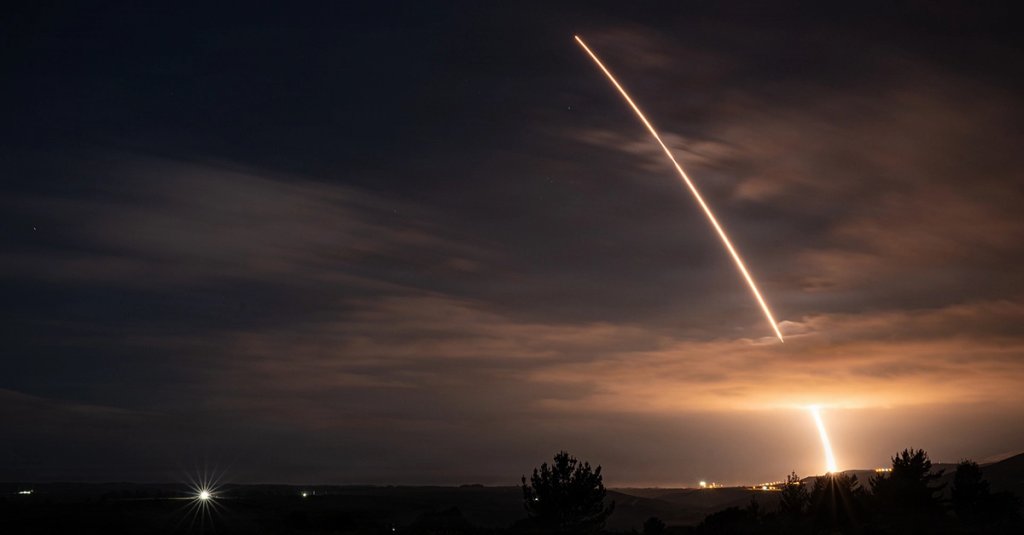
Beneath the vast, empty plains of Wyoming, one of the deadliest forces on Earth, the Minuteman 3 ICBM, sits in silent readiness. Although its true power isn’t in its launch capability, it’s in the “silent signal” it sends to adversaries. That signal is a warning: “Today is not the day.”
Also: The 5 best exotic weapons in history
Ensuring that warning is heard, however, is not a job for machines. It is a relentless, 24/7 human mission executed by the 1,367 personnel of the 90th Security Forces Group. As Newsweek’s ‘Unconventional’ host Naveed Jamali saw firsthand at F.E. Warren Air Force Base, this is a mission of staggering scale and surprising youth.
These defenders patrol thousands of square miles, train for unimaginable scenarios, and execute flawless, high-stakes nuclear convoy operations.

Inside the Secret Mission to Guard America’s Nuclear Missiles
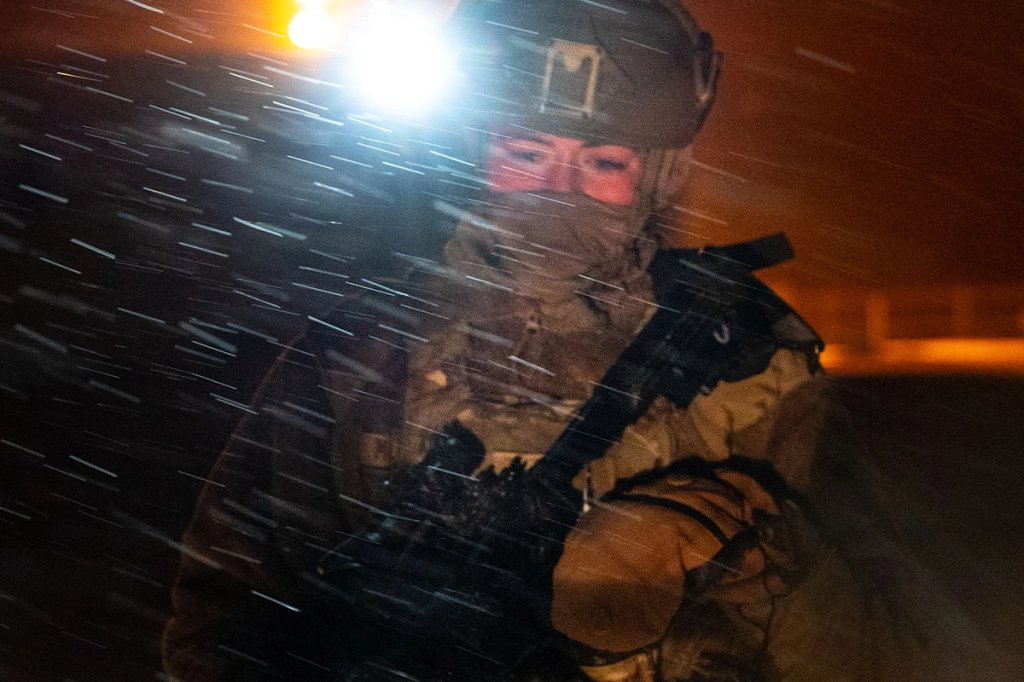
The most impressive “unconventional” truth of the ICBM mission is the age of its security force. The average age is 23.7 Many of the airmen we trust with the nation’s most devastating weapons are barely old enough to rent a car. Yet, they choose to bear a responsibility that allows no room for error or lapse in judgment.
For them, this isn’t a job in the traditional sense; it’s more of a calling that demands a level of perfection and constant vigilance across terrain quite different from their brethren in the sea and air. Jamali went behind the scenes of that vigilance with the 90th Security Forces Group (SFG) at F.E. Warren Air Force Base in Wyoming and the young troops who work to keep America’s enemies awake at night.
Securing an ‘Anchor’ Spread Across Three States
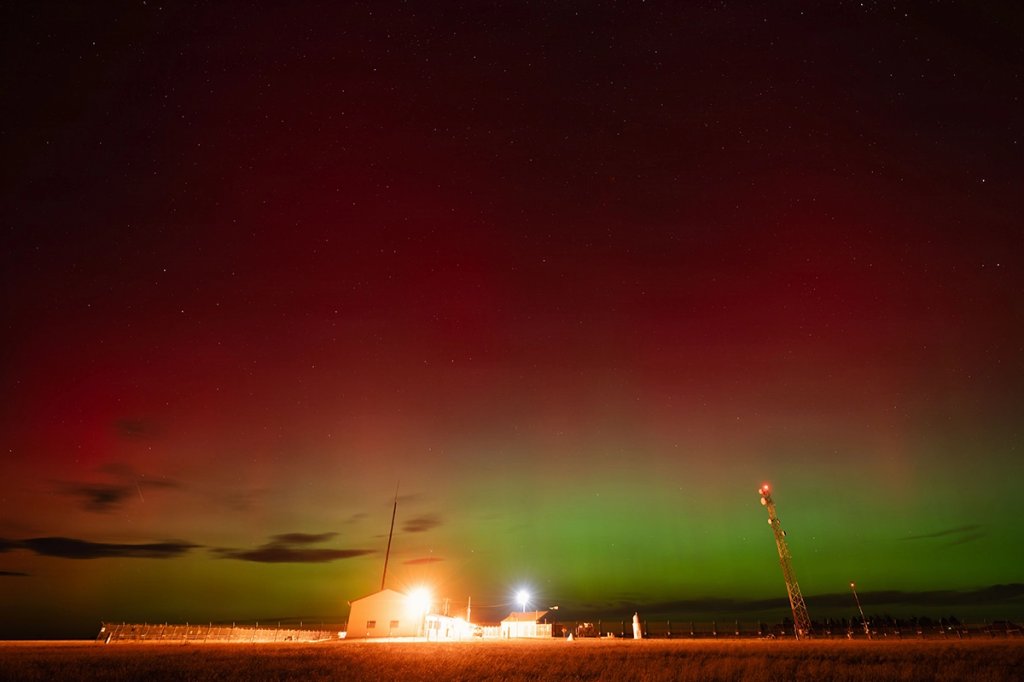
Unlike the other two legs of the nuclear triad (bombers and submarines), the land-based missiles don’t move. They are the “anchor,” a fixed, known quantity that the enemy must account for at all times.
This is both an advantage and a unique security challenge. The complex houses more than 100 missiles and is dispersed across 9,600 square miles, forcing the 1,367 defenders to drive over four million miles a year just to patrol the vast expanse, according to 90th SFG commander Col. Justin Secrest. The sheer distance alone is a defense, but it is also a logistical battle that must be conquered daily.
Speed, Surprise, and Violence of Action
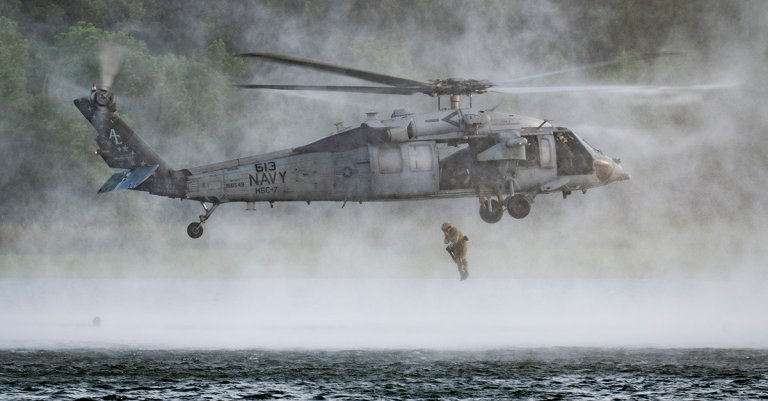
Deterrence is only credible if the force protecting it is lethal, precise, and always ready. At a “shoot house” on Camp Gernzie, some 90 minutes away, the Tactical Response Force (TRF) trains for the worst-case scenario: retaking a seized nuclear site. Their doctrine is built on “speed, surprise, and violence of action”. These are the operators who would be inserted by helicopter if a site were ever compromised, trained to neutralize the threat with overwhelming force.
The most surreal display of this security happens on the open road. Jamali witnessed the transfer of a nuclear component, an operation that requires a heavily armed ground convoy and UH-1N Huey helicopters providing overwatch with 30-caliber machine guns.
It’s a cinematic show of force, yet it has to “hide in plain sight.” As the convoy, transporting the most dangerous cargo in America, moves along the interstate, civilian traffic passes by in the next lane, completely oblivious. The choreography is flawless, the execution perfect. It has to be. As the airmen who guard them repeatedly emphasize: these are nuclear weapons. That’s all anyone really needs to say.
The Future: An Ever-Evolving Watch
The mission never ends; therefore, the tools are evolving to match this inevitability. The aging Hueys are being phased out in favor of the faster, more capable MH-139 Grey Wolf. The Minuteman III missile itself is set to be replaced by the next-generation LGM-35A Sentinel.
The hardware will change, but the core responsibility remains absolute. As one defender put it, “America demands security of its nuclear weapons.”
In the barren plains of Middle America, these young airmen hold that line. They are the human element of deterrence, the reason the rest of us never have to live through the worst-case scenario. Through every patrol, convoy, and security flight, they remind our adversaries, again and again, that today is not the day.