When the United States military wanted to disable Venezuela’s air defense system so it could capture the country’s president, Nicolás Maduro, it had just the aircraft for the job.
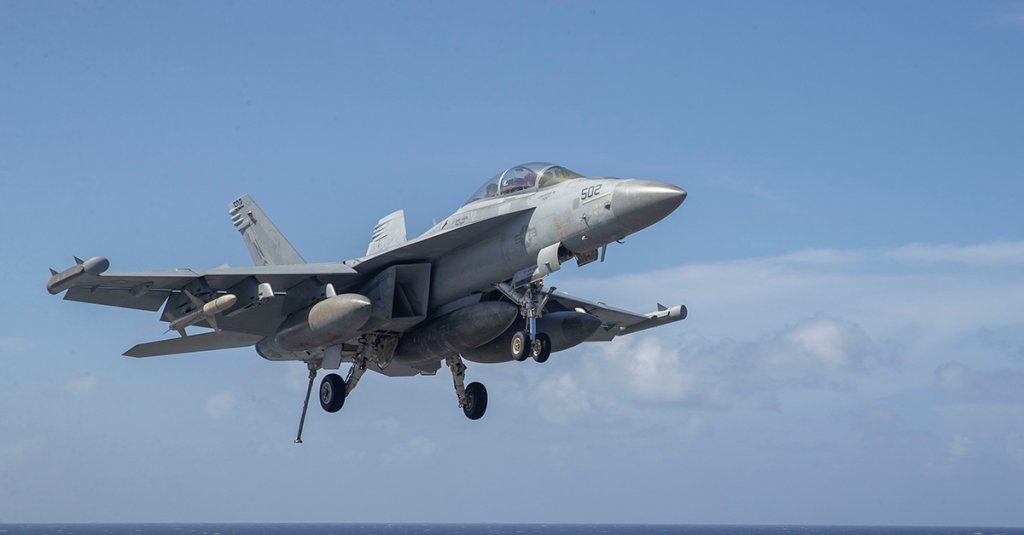
The EA-18G Growler.
Related: Here’s how the EA-6B Prowler rules the skies
In part because of the Growler’s proficiency at jamming an opponent’s radar, Maduro and his wife, Cilia Flores, are now being held in the Metropolitan Detention Center in Brooklyn, N.Y.
Since the Growler’s first flight in 2006, the U.S. Navy has deployed the EA-18G Growler around the world for tactical airborne electronic attacks. It’s the only one in the Navy’s arsenal with that capability as of late 2024, according to the U.S. Naval Institute.
Each Growler costs about $67 million. It’s not exactly pocket change, but the return on investment is pretty darn good. It was first deployed to protect innocent civilians during the civil war in Libya in 2011, a mission known as Operation Odyssey Dawn. Operation Absolute Resolve, during which the Maduros were captured, is just the most recent example of the Growler’s usefulness.
The Growler’s Jamming Capabilities

This Aircraft Is a Marvel of Electronic Warfare
More than 150 aircraft are believed to have taken part in the Venezuelan mission, including bombers, fighters and drones.
The Growler, a variant of the F/A aircraft with enhanced electronic warfare capabilities, disables radar through various methods. One is aerial electronic jamming, according to Smithsonian magazine.
“[The] practice can make a flight of attack airplanes accompanied by a Growler vanish from enemy radar screens in a storm of disorienting electromagnetic noise, like an orchestra drowning out a bugle,” the magazine reported. “Or a Growler can slouch into passive mode, eavesdropping on the enemy for extended periods to gather intelligence.”
Either way works on the front lines. When it comes to military aircraft, the Growler can jam with the best of them. Besides aerial electronic jamming, the Growler is capable of standoff jamming, which is when it “[stands] backs and [jams] for other airplanes,” according to the Smithsonian magazine.
Then there is modified escort jamming, during which it can keep up with, say, a Super Hornet and target an enemy’s anti-aircraft missile system. Whether that system is in the air or the ground makes little difference to the Growler. It can render either useless with brutal efficiency.
Also Read: This bomber made the B-52 look puny
Where the Growler Is Based
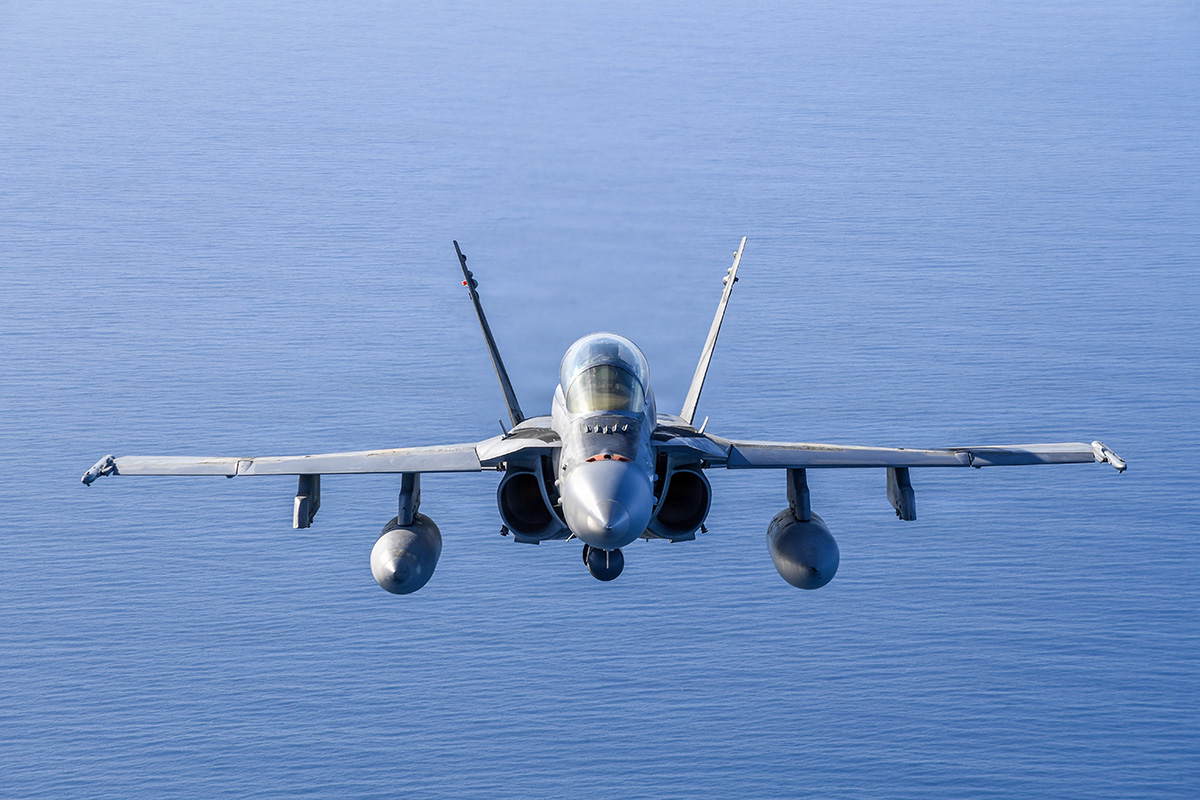
At the time of its introduction, the Growler was the U.S. military’s first newly designed warfare aircraft in 3½ decades, according to Naval Air Systems Command. Weighing more than 33,000 pounds empty, it was conceived to replace the EA-6B Prowler. The first Growler was delivered in 2008 to Electronic Attack Squadron (VAQ) 129 at Naval Air Station Whidbey Island, Washington. All but one EA-18G Growler squadron is based at Whidbey Island, per a NAVAIR fact sheet; one squadron (VAQ-141) is operated out of Marine Corps Air Station Iwakuni, Japan.
Outside of the U.S. Defense Department, the Growler is operated cooperatively with the Royal Australian Air Force, NAVAIR reported.
The Growler’s Specifications
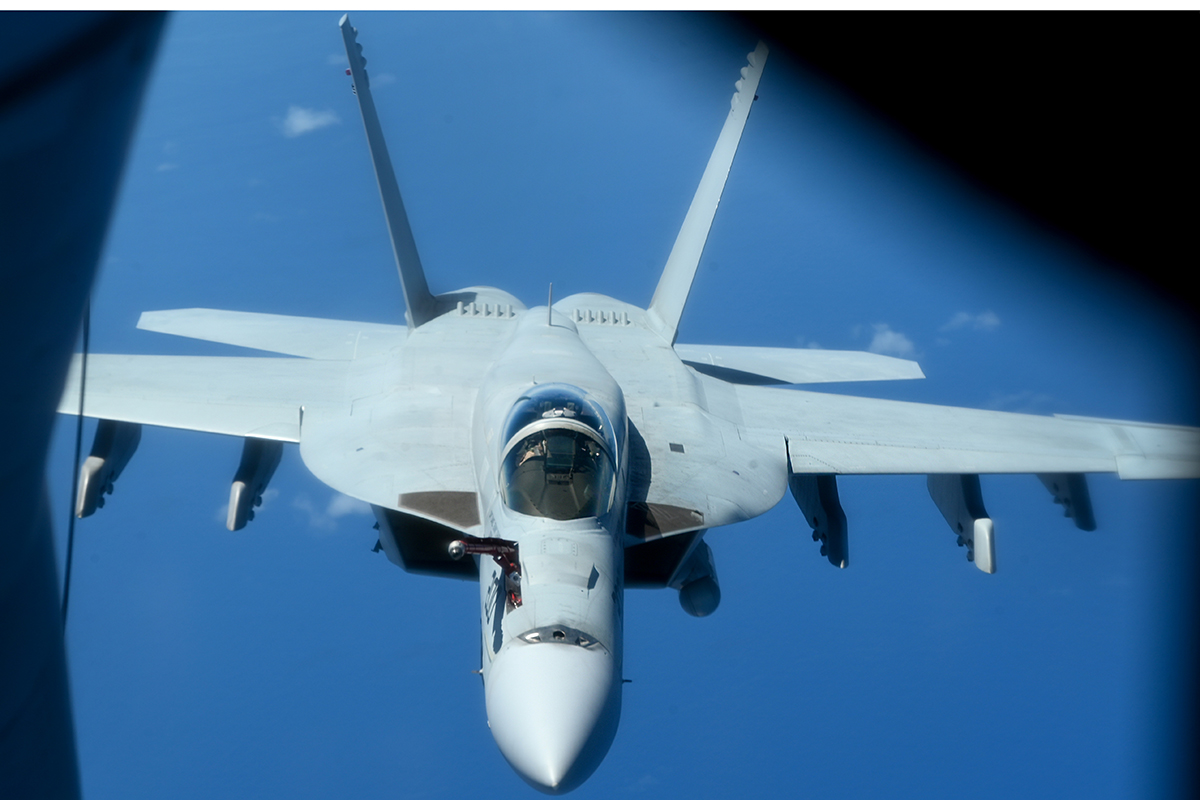
Manufactured by Boeing, the EA-18G Growler is 60 feet long, 16 feet tall and has a wingspan of 45 feet, according to specifications released by NAVAIR. It weighs almost 33,100 pounds when empty and can reach an altitude of 50,000 feet.
The Growler has a range in combat of more than 850 nautical miles and is armed with two AIM-120 air-to-air missiles, three ALQ-99 tactical jamming systems, and two AGM-88 HARM air-to-surface missiles. If all that sounds very high tech to you, you’re not wrong.
But here’s the bottom line: All of those instruments can locate, jam and destroy enemy radar in under a minute. When lives are at stake, time is crucial, and if you’re an enemy of the U.S., the Growler is not your friend.
The Navy is not satisfied, though. In November 2025, it was reported that the service is looking to add an Automatic Ground Collision Avoidance System (AGCAS) to the EA-18G Growler and F/A-18E/F Super Hornet.
Enemy radars don’t stand a chance.